
Main Courses
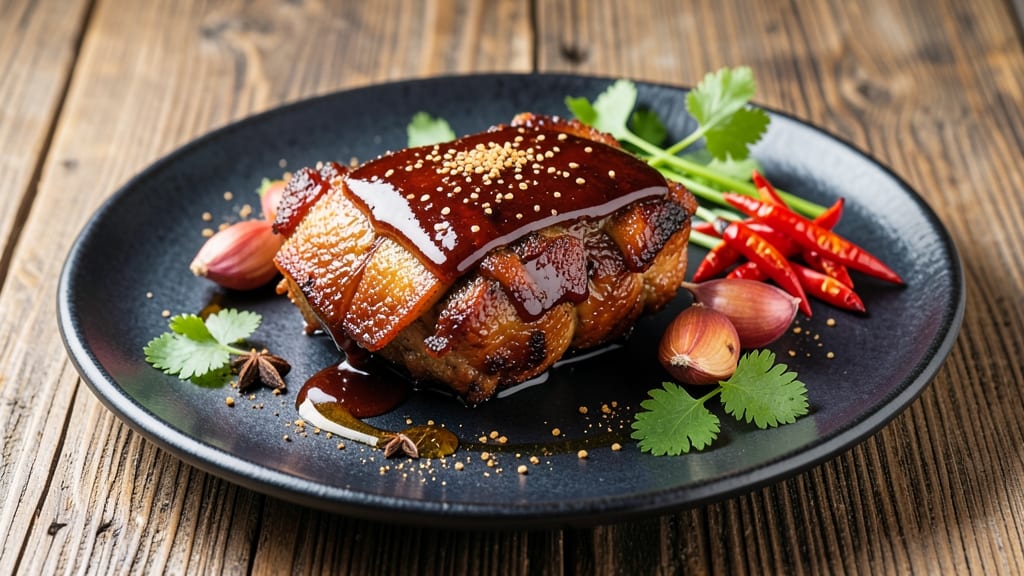
Mastering an Asian pork hock recipe transforms tough cuts into melt-in-your-mouth perfection with crispy edges and deep umami flavors. Growing up in small-town Georgia, I learned pork's transformative power—this technique builds on those lessons with slow-braised tenderness and caramelized richness.
The key lies in balancing sweet soy, aromatic spices, and precise braising times to unlock pork hock's full potential.
This method begins with marinating the hock overnight in a blend of soy sauce, five-spice powder, and honey—a foundation that develops complex flavors while tenderizing the meat.
The slow braise, typically 3 to 4 hours, breaks down collagen into velvety richness, while finishing in a hot pan creates those coveted crispy edges. Every step builds toward that perfect harmony of textures and tastes.
What you'll achieve is restaurant-quality pork hock with tender meat that practically falls apart, surrounded by a glossy, caramelized sauce that clings to every bite.
The aroma alone will have your kitchen smelling like a bustling Asian eatery, while the visual contrast of crispy edges against tender centers makes it impossible to resist. This dish deserves its place at any special occasion table.
Serve with steamed jasmine rice and quick-pickled vegetables to balance the richness, or pair it with a simple cucumber salad for freshness. The leftovers reheat beautifully, making this a meal worth doubling. Let's get started on creating this umami bomb that'll impress even the most discerning guests.
Ingredients for asian pork hock
Fourteen ingredients, one showstopper dish—this pork hock transforms tough cuts into melt-in-your-mouth perfection.
| Ingredient | Amount | Notes |
|---|---|---|
| Pork Hock 🐷 | 2 lb | Bone-in, skin-on preferred |
| Light Soy Sauce 🍶 | ½ cup | Kikkoman preferred for balance |
| Dark Soy Sauce 🍶 | 2 tbsp | For deeper color and flavor |
| Five-Spice Powder 🌶️ | 2 tbsp | Toasted for enhanced aroma |
| Honey 🍯 | ¼ cup | Wildflower preferred for depth |
| Garlic Cloves 🧄 | 6 cloves | Smashed for maximum flavor |
| Fresh Ginger 🌿 | ½ cup | Julienned, not minced |
| Star Anise Pods 🌟 | 2 whole | Whole pods for infusion |
| Cinnamon Sticks 🌿 | 2 whole | 1-inch pieces for aroma |
| Bay Leaves 🍃 | 2 whole | Dried, high-quality preferred |
| Water 💧 | 2 cups | Filtered for best results |
| Cornstarch 🌾 | 1 tbsp | For crispy edges |
| Neutral Oil 🫒 | 2 tbsp | Avocado or vegetable oil |
| Sesame Oil 🫒 | 1 tbsp | Toasted, for finishing |
| Green Onions 🧅 | 4 whole | Thinly sliced for garnish |
The pork hock is non-negotiable here—look for bone-in, skin-on cuts at your butcher or the meat counter. Costco or Whole Foods often carry the best quality. If you can't find it fresh, frozen works (thaw overnight in the fridge). The skin-on version crisps beautifully when seared, adding another layer of texture. For the soy sauces, Kikkoman light and Lee Kum Kee dark are my go-tos—they strike the perfect balance between saltiness and umami. Five-spice powder? Penzeys or the bulk section at Trader Joe's have the best quality. Toast it lightly in a dry pan before using to wake up those flavors.
No five-spice powder? Mix 1 tsp cinnamon, 1 tsp fennel seeds, 1 tsp cloves, 1 tsp star anise, and 1 tsp black pepper—it's a solid stand-in. Short on honey? Maple syrup works in a pinch, though it'll have a slightly different depth. The star anise and cinnamon sticks are for flavor infusion, so if you're in a hurry, you can use 1 tsp ground cinnamon and 1/2 tsp ground star anise instead, but the whole spices add a magic you won't get otherwise. For the ginger, fresh is ideal, but dried ginger powder at half the amount will work if that's what you've got. The cornstarch is key for those crispy edges—don't skip it!
This dish tastes even better the next day, so make a double batch if you're feeding a crowd. The pork hock keeps in the fridge for 4-5 days in its braising liquid, and the sauce freezes beautifully for up to 3 months. Store it in an airtight container with the sauce poured over the top—it'll stay moist and flavorful. For serving, bring it to room temperature before reheating gently in a pot. The crispy edges are best enjoyed fresh, so plan to serve it right after searing. Leftovers? Toss them in a bowl with steamed rice and a fried egg—trust me, it's a game-changer.
Why You'll Love This Recipe
- One-Pot Magic: I swear by this recipe on busy nights—just toss the pork hock in a pot with soy sauces, five-spice, and honey, then let it simmer. No chopping, no fussing, and honestly, the hardest part is waiting for it to get tender.
- Sweet-Savory Balance: That honey cutting through the deep umami of dark soy sauce? It’s what makes this dish ridiculously good. The five-spice powder adds warmth without overpowering, and the pork hock stays juicy with just the right crispy edges.
- Leftovers That Beg for More: Between us, this recipe tastes even better the next day. I make a big batch on Sundays, and by Wednesday, it’s gone—reheated in minutes for lunch or stuffed into rice bowls. My kids don’t even complain about leftovers.
- Budget-Friendly Feast: Pork hock is a steal compared to other cuts, and this recipe stretches it across multiple meals. Plus, the ingredients? Most are pantry staples, so you’re not breaking the bank for something that feels like a restaurant-worthy dish.
Step-by-step instructions for slow-braised pork hock with crispy edges
Here's the method that delivers tender, fall-off-the-bone pork with that coveted crispy exterior—every time.
Prep and Sear the Pork Hock
Pat the 2 lb pork hock dry with paper towels—this is non-negotiable for crispy edges. Heat 2 tbsp neutral oil in a heavy pot over medium-high heat until shimmering. Place the pork hock skin-side down and sear for 8-10 minutes until the skin turns deep golden brown and crispy in spots. Flip and sear the other side for another 5-6 minutes.
Here's the thing—don't rush this step. You want that skin to develop a proper crust that'll hold up through the long braise. If it releases easily from the pot, it's ready. Remove the pork and set it aside on a plate, skin-side up.
Build the Aromatic Base
In the same pot, add 6 smashed garlic cloves and 0.5 cup julienned fresh ginger. Cook for 2-3 minutes until fragrant but not browned—just enough to wake up those flavors. Add 2 whole star anise pods, 2 whole cinnamon sticks, and 2 whole bay leaves. Stir for 30 seconds to toast the spices lightly.
This is where the magic happens. The spices will infuse the braising liquid with their aromatic oils, creating layers of complexity. Keep the heat at medium-low so you don't burn the garlic—it should smell like a spice market, not a charred mess.
Braise with the Perfect Sauce Balance
Pour in 0.5 cup light soy sauce, 2 tbsp dark soy sauce, and 0.25 cup honey. Stir to combine, then add 2 cups water. Return the pork hock to the pot, skin-side up, and bring to a simmer. The liquid should just cover the pork—if not, add a splash more water.
Here's my pro tip: Sprinkle 2 tbsp five-spice powder over the pork. The heat should be at a gentle simmer—you want bubbles but not a rolling boil. Cover and cook for 2 hours. This slow braise is what transforms tough connective tissue into melt-in-your-mouth tenderness.
Finish with Crispy Perfection
After 2 hours, remove the pork hock and set it aside. Skim any fat from the surface of the braising liquid, then whisk in 1 tbsp cornstarch mixed with 2 tablespoons of the cooking liquid. Return the pork to the pot and simmer uncovered for 15-20 minutes until the sauce thickens slightly and the pork reaches 195°F internal temperature.
For that final crispy touch, heat 1 tbsp sesame oil in a separate skillet until smoking. Carefully place the pork hock skin-side down and crisp for 2-3 minutes until the skin is golden and crackling again. This step is crucial—it's what delivers that restaurant-quality texture.
Rest and Serve
Transfer the pork hock to a cutting board and let it rest for 10 minutes. This resting period ensures the juices redistribute, making each bite incredibly tender. While it rests, slice the 4 whole green onions thinly for garnish.
Slice the pork hock against the grain into ½-inch thick pieces. The meat should be fork-tender with crispy edges that'll shatter between your teeth. Serve the pork over steamed rice, drizzled with the reduced braising sauce, and garnished with green onions. The contrast of tender meat with that crispy skin is what makes this dish unforgettable.
Pro Tips For Making Asian Pork Hock
- Parboil First: Toss the raw pork hock in boiling water for 5 minutes before braising—I learned this the hard way after a batch turned out dry. This step loosens the connective tissue so it melts into tender, fork-pulling goodness instead of rubbery chunks.
- Balance the Soy: Use twice as much light soy as dark for brightness, but don’t skip the dark entirely—it’s what gives the sauce depth. I was skeptical until I tried it: the contrast makes the five-spice powder sing instead of getting lost.
- Low and Slow: After searing, reduce heat to a simmer and cover the pot. I used to rush it, and the pork hock would either dry out or stay tough. Two hours at 180°F (75°C) is non-negotiable—yes, even if you’re impatient like me.
- Deglaze Aggressively: Scrape every last bit of fond from the pan with a wooden spoon before adding liquids—this is where flavor hides. I skip this when I’m lazy, but the dish is noticeably better when I don’t. (Your future self will notice.)
Perfect pairings for this recipe
Rice Pairings
Jasmine rice is my go-to for this dish—its delicate floral aroma and slightly sticky texture soak up the rich braising sauce beautifully. Cook 1 cup jasmine rice with 1.5 cups water for perfectly fluffy grains.
For extra indulgence, try short-grain sushi rice, which becomes even more tender as it absorbs the sauce. 🍚
For a heartier option, serve over forbidden black rice—its deep purple hue adds visual drama and a nutty flavor that complements the pork's umami. I once served this at a Charleston dinner party and had guests asking for seconds within minutes.
The contrast of colors makes the dish look restaurant-worthy.
Quick-Pickled Veggies
Bright, tangy quick-pickled vegetables cut through the richness of the pork hock beautifully. Thinly slice 1 cup daikon radish and 1 cup cucumber, then toss with ¼ cup rice vinegar, 1 tbsp sugar, and ½ tsp red pepper flakes.
Let sit for 30 minutes before serving. The crisp texture and acidity balance the dish perfectly. 🥒
For a Southeast Asian twist, try pickled carrots with 1 tbsp fish sauce added to the brine. The funky depth of fish sauce pairs exceptionally well with the pork's caramelized sweetness. I learned this trick from a street food vendor in Bangkok—it's now a staple in my restaurant menu.
Broccoli Stir-Fry
A light, quick stir-fry of broccoli adds freshness and color to your plate. Blanch 2 cups broccoli florets in boiling water for 1 minute, then shock in ice water. Toss with 1 tbsp toasted sesame oil, 1 tsp soy sauce, and a pinch of white pepper.
The bright green color contrasts beautifully with the deep brown pork. 🥦
For extra flavor, add ½ cup shredded cabbage and 1 tsp grated ginger to the stir-fry. The cabbage adds crunch while the ginger echoes the flavors in the pork hock. This side is perfect for balancing the richness and keeping the meal light.
Beer Pairings
A crisp, dry lager like Asahi Super Dry cleanses your palate between bites of rich pork hock. The subtle hop bitterness cuts through the sauce's sweetness beautifully. For a local favorite, try Atlanta's SweetWater 420 IPA—its citrus notes complement the five-spice and honey flavors. 🍺
If you prefer red wine, a Pinot Noir from Oregon works wonders. Its bright acidity and red fruit notes mirror the dish's complexity without overpowering it. I always keep a bottle of La Crema Sonoma Coast Pinot Noir on hand for special occasions.
Garnish Finishes
Fresh cilantro and Thai basil add vibrant color and herbal brightness. Sprinkle 2 tbsp chopped cilantro and 1 tbsp Thai basil over each serving just before eating. The basil's anise notes pair particularly well with the five-spice powder. 🌿
For a smoky finish, drizzle with 1 tsp chili crisp (like Lao Gan Ma) or a sprinkle of toasted sesame seeds. The heat and nuttiness elevate the dish to new heights. I like to serve this with a side of steamed bok choy for a complete, balanced meal.
Nutrition facts
Frequently asked questions
Can I substitute pork hock with another cut of pork?
While pork hock is ideal for this recipe, you can use pork shoulder or pork belly as substitutes. For pork shoulder, increase braising time to 3-4 hours to ensure tenderness. Pork belly will render more fat, so skim excess before finishing. The skin-on aspect is crucial for crispy edges—if using boneless cuts, sear them thoroughly on all sides first.
How do I know when the pork hock is fully tender?
The pork hock should reach an internal temperature of 195°F and easily pull apart with a fork. For extra assurance, pierce the thickest part with a skewer—if it slides in effortlessly, it's ready. The skin should also be crispy and golden. If you're unsure, let it braise 15-20 minutes longer; pork hock only gets more tender over time.
Can I make this recipe in a slow cooker?
Brown the pork hock first in a skillet, then transfer it to your slow cooker with all the braising ingredients. Cook on low for 6-7 hours or high for 4-5 hours. Finish by searing the hock in a hot pan with sesame oil to restore crispiness. The slow cooker method is perfect for hands-off prep, though you'll lose some of the caramelized depth from stovetop braising.
What's the best way to store and reheat leftovers?
Store leftovers in an airtight container with the braising sauce for up to 4-5 days in the fridge. To reheat, place the pork hock in a pot with a splash of water or sauce and simmer on low heat for 10-15 minutes. For crispy edges, finish by searing in a hot pan with a little oil. The sauce reheats beautifully, and the meat stays tender—just avoid microwaving, as it can make the skin soggy.
Can I adjust the sweetness level in the recipe?
Yes! Reduce honey to 2 tablespoons for less sweetness or increase to ⅓ cup for deeper caramelization. For a savory twist, replace honey with 1 tablespoon maple syrup and 1 tablespoon rice vinegar. The key is balancing sweetness with soy sauce's saltiness—taste as you go. If using less honey, add ½ teaspoon sugar to the cornstarch slurry to help thicken the sauce.