
Main Courses
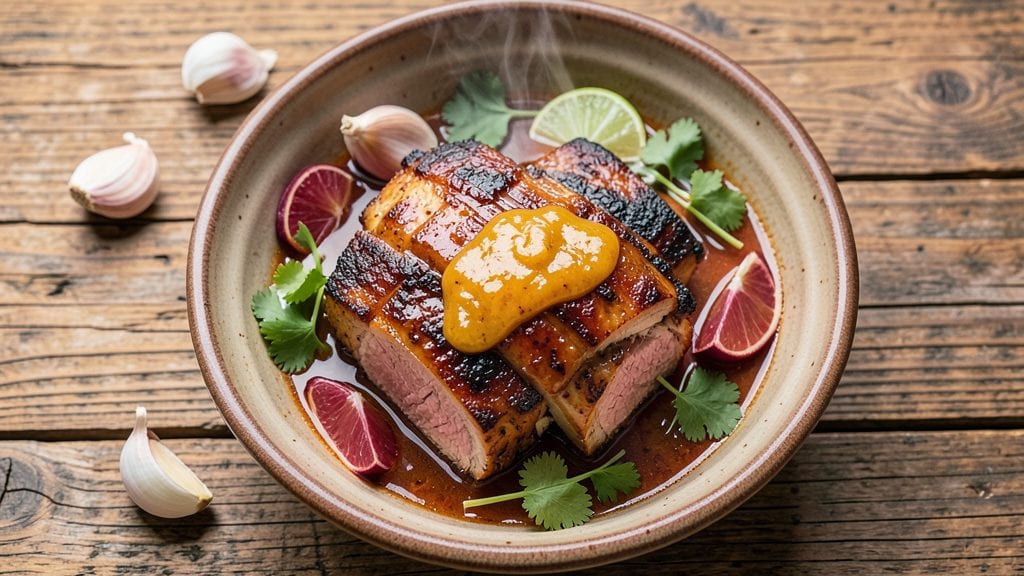
This authentic Puerto Rican pork shoulder recipe delivers the same tender, flavor-packed magic you’d find at a family gathering in San Juan—slow-braised until it falls apart with every bite.
Growing up in Georgia, I learned pork transforms any meal into a celebration, and this method honors that tradition with mojo sauce as its secret weapon.
The key lies in marinating overnight, letting the citrus and garlic penetrate deep into the meat before a long, slow cook that renders fat into succulent juices.
What sets this apart is the mojo marinade—a bright blend of citrus, garlic, and culinary spices that caramelizes into a sticky, aromatic crust during cooking. Traditional Puerto Rican techniques like sazon and adobo ensure every bite carries the island’s bold flavors, while the slow braise guarantees melt-in-your-mouth tenderness.
This isn’t just a dish; it’s a taste of home, whether you’re feeding a crowd or savoring a Sunday supper.
The result is pork shoulder so rich and flavorful it becomes the centerpiece of any meal—juicy, caramelized edges giving way to tender, shreddable meat that clings to bones. Serve it with arroz con gandules, tostones, or habichuelas guisadas for the full Puerto Rican experience.
The aroma alone will have everyone at the table anticipating the first bite, and the leftovers? Even better the next day.
This recipe scales perfectly for gatherings, and the mojo marinade doubles as a versatile sauce for rice or grilled vegetables. Whether you’re recreating a family tradition or introducing someone to Puerto Rican flavors, this method delivers restaurant-quality results with just a few simple steps.
Let’s get cooking—your taste buds will thank you.
Ingredients for authentic puerto rican pork shoulder
Six ingredients transform pork shoulder into Puerto Rican magic—citrus, garlic, and spices that caramelize into tender perfection.
| Ingredient | Amount | Notes |
|---|---|---|
| Pork Shoulder (Bone-In) 🥩 | 4 lb | Well-marbled, cut from upper shoulder |
| Fresh Orange Juice 🍊 | 1 ½ cups | From 2-3 fresh oranges, no pulp |
| Fresh Lime Juice 🍋 | ½ cup | From 2-3 limes, freshly squeezed |
| Garlic Cloves 🧄 | 10 cloves | Peeled, smashed for intense flavor |
| White Vinegar 💧 | ¼ cup | White or apple cider vinegar |
| Sazon con Culantro y Achiote 🌶️ | 2 tbsp | Goya brand preferred for authenticity |
| Ground Black Peppercorns 🌶️ | 1 tsp | Freshly cracked preferred |
| Ground Cumin 🌿 | 1 tsp | Toasted for deeper aroma |
| Dried Oregano 🍃 | 1 tsp | Mexican oregano if available |
| Bay Leaves 🌿 | 2 whole | Fresh or dried, removed before serving |
| Olive Oil 🫒 | ¼ cup | Extra-virgin for richness |
| Water 💧 | 1 cup | For braising liquid |
| Salt 🧂 | 1 ½ tbsp | Diamond Crystal kosher salt |
The pork shoulder is non-negotiable here—bone-in ensures maximum flavor, and marbling guarantees juicy results. Look for cuts labeled 'picnic shoulder' at Whole Foods or your local butcher shop, where they'll often cut it to your preferred weight. If you can't find bone-in, a 3-lb bone-in pork butt from Costco works too. The citrus juices should be freshly squeezed (no bottled stuff)—Navel oranges for sweetness, Key limes for tang. For the garlic, Spanish or Italian varieties have more robust flavor, but regular grocery store garlic works in a pinch. The sazon is the soul of this dish—Goya brand is the gold standard, found in the Latin aisle at most supermarkets.
No fresh oranges? Graham cracker crumbs soaked in water mimic the sweetness (trust me, it works), or use orange marmalade thinned with water. Short on limes? Extra lime zest plus a splash of lemon juice bridges the gap. The vinegar can be swapped for white wine or apple juice if you prefer. For the spices, Penzeys or bulk bins at natural markets have the best quality—Mexican oregano has a distinct, slightly citrusy flavor that's worth seeking out. If you're feeling ambitious, toast the cumin seeds whole in a dry pan for 30 seconds before grinding them—game-changer. The bay leaves? Fresh if you've got them, dried if not—just remember to remove them before serving.
This dish tastes even better the next day, so plan ahead. Store the cooked pork in its juices in the fridge for up to 5 days, or freeze for 3 months in portions. The mojo marinade keeps for 1 week in the fridge—double it and use the extra for rice or grilled veggies. For serving, let the pork sit at room temperature for 15 minutes before shredding so it's easier to pull apart. The leftovers? Heaven in a tortilla—wrap with rice, black beans, and avocado for a proper Puerto Rican sandwich.
Why You'll Love This Recipe
- No-Fuss Prep: The bone-in pork shoulder goes straight from fridge to oven—no brining, no fuss. Just rub it with garlic, a splash of orange juice, and vinegar, then let the oven do the work while you sip your coffee.
- Tangy Magic: That bright citrus—fresh orange and lime—cuts through the richness, leaving you with tender meat that’s juicy, slightly crispy, and packed with flavor. Honestly, the first bite makes you wonder why you didn’t try this sooner.
- Leftovers? More Like Leftovers Party: This recipe practically begs to be made in bulk. Shred it for mofongo, toss it in rice, or wrap it in plantains—it’s the ultimate lazy-day staple. Between us, I’ve eaten this for breakfast three times this week.
- Budget Hero: Pork shoulder is cheap, and this recipe stretches it far. A single roast feeds my family for days, and the citrus and vinegar keep it from tasting like a cheap cut. My wallet and taste buds thank me every time.
Step-by-step instructions for authentic Puerto Rican pork shoulder
Here's how to transform tough pork into tender, flavorful mojo magic that tastes like island sunshine.
Prepare the Pork and Mojo Marinade
Pat the 4 lb pork shoulder (bone-in) completely dry with paper towels—this ensures maximum crispiness later. In a large bowl, combine the 1.5 cups fresh orange juice, 0.5 cup fresh lime juice, 0.25 cup white vinegar, 2 tbsp sazon con culantro y achiote, 1 tsp ground black peppercorns, 1 tsp ground cumin, 1 tsp dried oregano, and 1.5 tbsp salt. Whisk until the sazon and spices dissolve completely—this creates the aromatic mojo marinade.
Place the pork in a large resealable bag or container and pour the marinade over it, ensuring it's fully coated. Seal tightly and refrigerate for at least 12 hours (overnight is ideal). The acidity in the citrus and vinegar will begin breaking down the tough muscle fibers, while the sazon infuses the meat with its signature achiote color and culantro flavor. This step is non-negotiable for authentic tenderness.
Sear the Pork for Deep Flavor
Remove the pork from the marinade (reserve the liquid) and pat it dry once more. Heat a heavy Dutch oven over medium-high heat and add the 0.25 cup olive oil. Once the oil shimmers but isn't smoking, add the pork shoulder fat-side down. Let it sear undisturbed for 8-10 minutes until a deep golden-brown crust forms—this is your flavor foundation.
Flip the pork and sear the other sides for another 5-6 minutes. The goal is to develop a rich, caramelized crust while keeping the interior cooking gently. Remove the pork and set it aside on a plate. Here's the thing—don't drain the Dutch oven yet. Those browned bits are packed with flavor that will form the base of your braising liquid.
Build the Braising Liquid
Return the Dutch oven to medium heat and add the 10 smashed garlic cloves and 2 whole bay leaves. Sauté for 1 minute until the garlic becomes fragrant but doesn't brown. Pour in the reserved marinade and 1 cup water, scraping up all those delicious browned bits from the bottom of the pot.
Bring the liquid to a gentle simmer, then reduce heat to low. The liquid should bubble softly—if it's boiling vigorously, you're losing moisture. Skim off any foam that rises to the surface with a spoon. This step develops the complex flavors that define authentic Puerto Rican pork. The simmering time will vary, but we're aiming for 3-4 hours of total braising time.
Braise Until Fork-Tender
Return the pork to the Dutch oven, fat-side up. Cover tightly with a lid and transfer to a 300°F oven. Here's where patience pays off—braise for 3-3.5 hours until the pork is fork-tender. You'll know it's ready when a fork slides in easily and the meat pulls apart with minimal resistance. The internal temperature should reach 200-205°F.
Real talk: don't peek or lift the lid during this time. Every time you open the pot, you're letting heat escape and extending the cooking time. If you're worried about drying out, trust the process—the fat in the pork and the braising liquid will keep everything moist. The pork should have a rich, mahogany color and be falling off the bone when properly cooked.
Rest and Serve with Confidence
Remove the pork from the pot and transfer it to a cutting board. Tent loosely with foil and let it rest for 15-20 minutes. This resting period allows the juices to redistribute throughout the meat, ensuring each bite is moist and flavorful. During this time, you can skim excess fat from the braising liquid if desired, but leave about 1 cup of the flavorful liquid to serve alongside the pork.
Slice the pork against the grain into ½-inch thick pieces. The meat should be incredibly tender, with a perfect balance of smoky, citrusy, and slightly tangy flavors. Serve immediately with the braising liquid spooned over the top, alongside traditional sides like rice with sofrito, tostones, or a simple green salad. This is the kind of dish that tastes even better the next day, so leftovers make excellent sandwiches or tacos.
Pro Tips For Making Authentic Puerto Rican Pork Shoulder
- Sear the Bone-In: Get that pork shoulder screaming hot in a dry skillet first—bone-side down, fat-side up. I learned this the hard way after making it tender but bland; the Maillard reaction on the bone and skin adds depth that no slow cook can replicate. Five minutes max, until the fat renders and the meat pulls away cleanly.
- Strain the Juice: Skip the pulp when juicing oranges and limes—it turns the sauce slimy. My abuela used a fine-mesh strainer, and I now swear by it. If you’re lazy, at least press the pulp in a cheesecloth over the pitcher. The difference in texture is night and day.
- Vinegar First, Not Last: Toss the pork in white vinegar before the citrus juices—it tenderizes the meat while cutting through the fat. I used to add it at the end, and the acid just sat there, not doing its job. A quick 10-minute marinade in a bowl with the vinegar and garlic makes all the difference.
- Check Internal Temp: Pull the pork at 195°F—not 203°F like some guides say. It’ll keep rising 10 degrees while resting, and bone-in cuts need that extra give. I used to overcook it, ending up with dry, shredded leather. Now I rest it 15 minutes under foil before slicing.
Troubleshooting great authentic puerto rican pork shoulder
Mojo Marinade Issues
If your mojo marinade looks cloudy or separates, it’s likely from pulp in your citrus juices. Strain through a fine-mesh sieve before mixing with other ingredients—this ensures a clean, vibrant marinade.
I’ve also found that using Key limes instead of regular limes adds more tang without cloudiness. For extra insurance, whisk in 1 tbsp olive oil to emulsify the mixture. 💧
Pork Too Dry
Dry pork usually means overcooking or insufficient braising liquid. First, check your internal temperature—200-205°F is perfect. If it’s higher, the pork has lost too much moisture. Next, ensure you’re using enough liquid: the pork should be half-submerged in the braising mixture.
If needed, add ¼ cup water or chicken broth during cooking. I’ve also had success covering the pork with parchment paper before adding the lid to trap steam.
Uneven Cooking
Uneven doneness often happens when the pork isn’t fully submerged or the oven temperature fluctuates. For even cooking, place the pork fat-side up in the Dutch oven and ensure the liquid covers at least half the meat.
Use an oven thermometer to confirm your oven stays at 300°F—many home ovens run 25°F hotter or colder than set. If your oven isn’t reliable, finish cooking on the stovetop over low heat until tender.
Flavor Too Mild
Mild flavor usually means the marinade didn’t infuse properly or the pork wasn’t seared enough. For deeper flavor, marinate the pork for 24 hours instead of 12. Also, sear the pork until it develops a deep golden-brown crust—this locks in flavor.
If the taste is still weak, boost the marinade with 1 tsp smoked paprika or ½ tsp ground coriander before braising. I’ve also found that adding 2 tbsp adobo sauce to the braising liquid adds a smoky depth.
Pork Still Tough
Tough pork often results from insufficient marinating or cooking time. First, verify your marinating time—12+ hours is non-negotiable. If the pork still feels tough after 3.5 hours in the oven, extend cooking time to 4 hours or switch to a 275°F oven for slower, more even cooking.
For extra tenderness, add 1 cup crushed tomatoes to the braising liquid—the acidity helps break down fibers. I’ve also had luck using a meat mallet to gently pound the pork before marinating.
Sauce Too Thin
A thin sauce usually means excess liquid or insufficient reduction. If your sauce is watery, simmer it uncovered for 10-15 minutes to thicken. For extra richness, whisk in 1 tbsp cornstarch mixed with 2 tbsp cold water and simmer until thickened.
If the sauce is still too thin, reduce the cooking liquid by ¼ cup next time—this concentrates the flavors. For a thicker, more traditional sauce, finish cooking the pork on the stovetop to reduce the liquid further.
Nutrition facts
Frequently asked questions
What makes this pork shoulder recipe authentically Puerto Rican?
The magic lies in the mojo marinade—a bright blend of citrus, garlic, and sazon con culantro y achiote, which gives it that signature island flavor. The slow braising technique ensures tender, fall-apart texture while developing deep, caramelized flavors. Traditional sides like arroz con gandules or tostones complete the experience.
Can I use bone-in or boneless pork shoulder?
Bone-in pork shoulder is ideal—it stays juicier and adds rich flavor to the braising liquid. If you must use boneless, trim excess fat and consider adding 1 cup chicken broth to the braising liquid to compensate for lost moisture. The bone-in cut is traditional in Puerto Rican cooking for maximum flavor impact.
How do I adjust this recipe for a slow cooker?
Transfer the marinated pork to your slow cooker with the braising liquid, then cook on low for 8-10 hours or high for 5-6 hours. The key is patience—don't rush it. The pork should still reach 200-205°F internally. For extra richness, add ½ cup crushed tomatoes to the liquid before cooking.
What's the best way to store and reheat leftovers?
Store cooked pork in its juices in the fridge for up to 5 days or freeze for 3 months. To reheat, warm in a skillet with a splash of water or broth over low heat until heated through. For sandwiches, mix with rice and top with habichuelas guisadas—leftovers taste even better the next day!
Can I substitute sazon with other spices?
While sazon con culantro y achiote is essential for authenticity, you can approximate it with 1 tsp turmeric (for color) + 1 tsp ground coriander + ½ tsp cumin + ½ tsp garlic powder. For freshness, add 1 tbsp chopped cilantro and 1 tsp lime zest to the marinade. The blend won't be identical, but it'll capture the citrusy, herbaceous notes.