
Main Courses
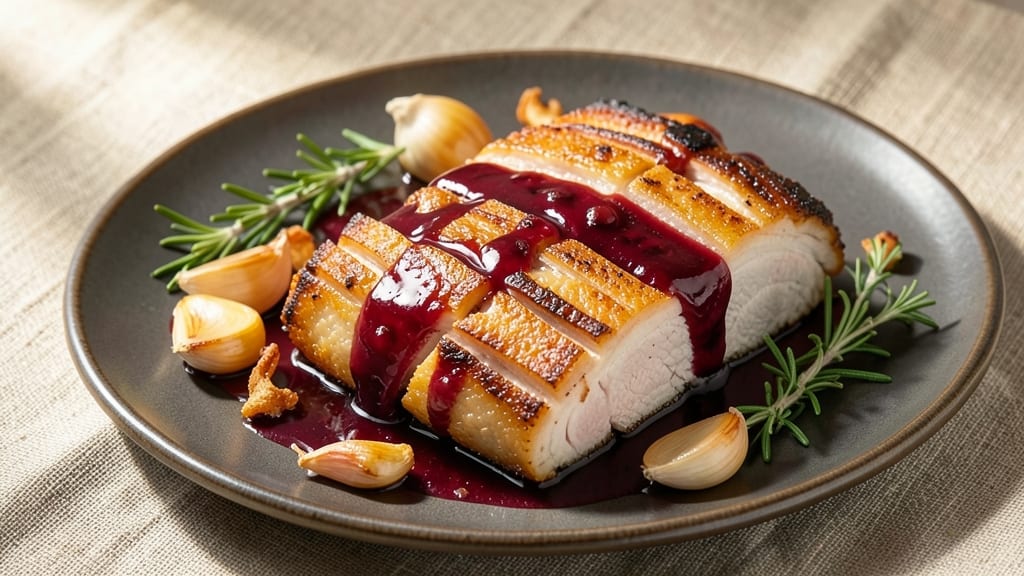
This braised pork belly recipe—where slow cooking turns tough cuts into crispy skin and tender meat—was the first dish I perfected during my French technique training. The key lies in understanding collagen breakdown and how to render fat into golden perfection while keeping the interior tender.
This isn't just braising; it's a method that turns a simple cut into a showstopper.
What makes this recipe work is the balance between high-heat searing and long, gentle braising. You'll start with a scored belly, crisped in the oven before it simmers in aromatic broth until the meat falls apart.
The secret? A flavorful liquid—red wine, soy sauce, and herbs—that infuses every bite without overpowering the pork's natural richness.
By the end, you'll have pork belly with crackling skin that shatters at every bite and meat so tender it melts on your tongue. The fat renders into crispy, edible shards, and the sauce reduces to a glossy, savory glaze.
This is the kind of dish that makes people ask for seconds—and thirds.
Perfect for holiday feasts or weeknight dinners when you want restaurant-quality results at home. The technique scales beautifully, whether you're cooking for a crowd or treating yourself to a luxurious meal. Let's get started on creating this masterpiece.
Ingredients for braised pork belly
Fourteen ingredients transform tough pork belly into a luxurious, restaurant-worthy dish.
| Ingredient | Amount | Notes |
|---|---|---|
| Pork Belly 🥓 | 2 lb | Skin scored, bone-in preferred |
| Red Wine 🍷 | 1 cup | Bold, dry variety like Cabernet |
| Soy Sauce 🥄 | ½ cup | High-quality, not low-sodium |
| Garlic Cloves 🧄 | 6 cloves | Smashed, not minced |
| Fresh Thyme 🌿 | ¼ cup | Stems removed, loosely packed |
| Fresh Rosemary 🌿 | ⅛ cup | Needles only, chopped |
| Bay Leaves 🌿 | 2 whole | Fresh preferred, dried works |
| Brown Sugar 🍯 | ¼ cup | Light or dark, packed |
| Olive Oil 🫒 | 2 tbsp | High smoke point for searing |
| Salt 🧂 | 1 ½ tbsp | Kosher or sea salt |
| Black Peppercorns 🌶️ | 1 tsp | Freshly cracked preferred |
| Beef Broth 🥫 | 1 cup | Low-sodium, homemade or store-bought |
| Honey 🍯 | 1 tbsp | For glossy finish |
The pork belly makes this dish. Look for a piece with thick, marbled fat—Costco or Whole Foods usually carry the best cuts. If your butcher scores the skin for you, ask for deep cuts (about 1/4-inch apart) so the fat renders into crispy shards. Bone-in belly stays moister during braising, but boneless works too. Freshness matters: the skin should be firm and pale pink, not yellowed or slimy. For the red wine, grab whatever bold, dry bottle you'd drink—Cabernet Sauvignon or Merlot are foolproof choices. The soy sauce? Kikkoman or Yamasa are my go-to brands, but any high-quality bottle works. Don't use reduced-sodium versions—they lack depth.
No red wine? Substitute beef broth with a splash of balsamic vinegar—it adds acidity that helps tenderize. Fresh thyme and rosemary are ideal, but dried works at half the amount if that's what you have. The brown sugar can be swapped for maple syrup, though it'll taste slightly different. Short on time? Pre-minced garlic from a jar is fine here, but fresh smashed cloves give the best flavor. For the beef broth, low-sodium is key—we're adding plenty of salt elsewhere. The honey adds a subtle sweetness that balances the richness, but if you're avoiding sugar, skip it entirely—the dish will still be delicious.
This dish tastes even better the next day—make extra if you can. Store in the fridge for 4-5 days in an airtight container, covered with the braising liquid. For longer storage, freeze for up to 3 months. Reheat gently in the oven at 300°F until warmed through. The skin will crisp up again beautifully. Portion into individual servings before freezing for easy weeknight meals. Leftovers reheat perfectly, and the sauce reduces even more, intensifying the flavors. Trust me, you'll want to save some for seconds.
Why You'll Love This Recipe
- No-Fuss Braise: I swear by this method—just sear the pork belly, toss in the wine and soy sauce, then let it slow-cook. No fancy techniques, no hovering over the stove. The garlic and thyme practically cook themselves while you do something else.
- Deep Umami Magic: That first sip of red wine reduces into the pork, and suddenly you’ve got layers of savory richness. The soy sauce adds this addictive, salty-sweet edge that makes you want to eat it straight from the pan. (Yes, I’ve been guilty.)
- Weeknight to Party: Same recipe, totally different vibes. Serve it over rice for a lazy Tuesday, or slice it thin for fancy charcuterie boards. My roommates never believe it’s the same dish—until I tell them.
- Leftovers? Best Part: This stuff gets better after a day or two. I always make extra because reheating it is just as good as the first bite. Budget win, flavor win, and my fridge stays stocked for emergencies.
Step-by-step instructions for braised pork belly with crispy skin
Here's how to transform simple ingredients into melt-in-your-mouth pork belly with crackling skin and tender meat.
Score and Sear the Pork Belly
Start by scoring the skin of the 2 lb pork belly in a diamond pattern using a sharp knife, making cuts about ¼ inch apart. This helps render the fat while keeping the skin intact. Pat the meat dry with paper towels—this ensures maximum crispiness later.
Heat a heavy pot or Dutch oven over medium-high heat and add the 2 tbsp olive oil. Once shimmering, place the pork belly skin-side down and press gently with a spatula. Cook for 8-10 minutes until the skin is golden brown and crispy in spots, and the fat begins to render. Flip the pork belly and sear the other side for another 5 minutes. Don't rush this step—the crispy skin is what makes this dish special.
Build the Flavor Base
Remove the pork belly from the pot and set it aside. In the same pot, add the 6 smashed garlic cloves and cook for 30 seconds until fragrant. Add the 0.25 cup chopped fresh rosemary and 0.25 cup fresh thyme, stirring for 1 minute to release their aromas.
Pour in the 1 cup red wine and scrape up any browned bits from the bottom of the pot. Let it simmer for 3 minutes until reduced by half. Add the 0.5 cup soy sauce, 0.25 cup brown sugar, 1.5 tbsp salt, and 1 tsp cracked black peppercorns, stirring to combine. This creates the flavorful braising liquid that will transform the pork belly into silky perfection.
Braise Until Tender
Return the pork belly to the pot, skin-side up. Add the 2 whole bay leaves and pour in the 1 cup beef broth. The liquid should come about halfway up the sides of the pork belly. Bring to a gentle simmer, then reduce heat to low, cover, and let it cook for 2 hours. You'll know it's ready when the meat is fork-tender and pulls away from the bone easily.
During this time, the pork belly will absorb all those beautiful flavors while staying moist and tender. I like to check it after 1.5 hours to make sure there's enough liquid—if it's evaporated too much, add a splash of water or broth to prevent drying.
Glaze and Finish
Once the pork belly is tender, remove it from the pot and set it aside. Strain the braising liquid into a bowl, discarding the bay leaves. Return the liquid to the pot and simmer over medium heat until reduced by half, about 10 minutes. This creates a rich, flavorful glaze.
Add the 1 tbsp honey and stir until the glaze thickens slightly. Return the pork belly to the pot, skin-side up, and spoon the glaze over the top. Cover and let it sit for 5 minutes to absorb the flavors. The honey adds a beautiful glossy finish while balancing the savory flavors.
Rest and Serve
Transfer the pork belly to a cutting board and let it rest for 10 minutes before slicing. This resting period allows the juices to redistribute, ensuring each bite is moist and flavorful. The skin should be crispy and crackling, while the meat inside should be silky and tender.
Slice the pork belly against the grain into ½-inch thick slices. Serve with the braising liquid spooned over the top, or use it to make a quick pan sauce by reducing it further with a splash of red wine. Pair with steamed rice or roasted vegetables for a complete meal that's sure to impress.
Pro Tips For Making Braised Pork Belly
- Sear Until It Sticks: Get that Dutch oven smoking hot—we’re talking 10-15 seconds per side for the pork belly until it’s deep golden, not just pink. I used to rush this, and the braise ended up tasting like it was simmered in water instead of wine. The crust locks in flavor, so don’t skimp on the time.
- Trim the Fat, Not the Flavor: Leave the fat cap intact—it’s what makes this dish rich—but score the belly in a crosshatch pattern before searing. This keeps thick slices from curling and lets the red wine and soy sauce penetrate deeper. (Yes, even if your knife skills are rusty, just go slow.)
- Deglaze Aggressively: After searing, immediately add the red wine and scrape every last bit of browned bits from the bottom. That’s where the magic happens—those bits are pure flavor. I learned this the hard way when I poured in the wine too fast and missed half the goodness.
- Simmer Low and Long: Cover the pot and cook on the lowest heat setting that keeps a gentle bubble going—about 20-30 minutes per pound. Too high, and the pork belly turns tough; too low, and you’ll be waiting forever. (Pro move: Use a meat thermometer—pull it at 195°F for that melt-in-your-mouth texture.)
Health benefits of this braised pork belly
Protein Powerhouse
Pork belly delivers a substantial 30 grams of protein per 4-ounce serving, making it an excellent choice for muscle repair and satiety. Unlike lean cuts, this fatty cut provides sustained energy thanks to its balanced fat-to-protein ratio.
The slow braising process actually enhances protein digestibility, making it easier for your body to absorb. 💪
Healthy Fats
Contrary to popular belief, pork belly contains beneficial monounsaturated fats (the same healthy fats found in olive oil) that support heart health when consumed in moderation. The 15-20 grams of fat per serving helps maintain cell membrane integrity and hormone production.
I always tell my students that fat isn't the enemy—it's about balance and preparation.
Collagen Boost
The long braising time breaks down collagen into gelatin, which supports joint health and gut integrity. This is why braised pork belly tastes so tender—it's not just cooking, it's transforming connective tissue into a nutrient powerhouse.
Just 3-4 hours of braising converts tough collagen into easily digestible gelatin, perfect for anyone looking to support joint mobility. ✨
Rich in B Vitamins
Pork belly is packed with B vitamins—especially B12 and niacin—which are essential for energy metabolism and nervous system function. A single serving provides about 60% of your daily B12 needs, crucial for red blood cell production and neurological health.
These nutrients make this dish particularly beneficial for active individuals or those recovering from illness.
Mineral Benefits
Don't overlook the mineral content! Pork belly contains significant amounts of zinc (immune support), phosphorus (bone health), and selenium (antioxidant protection). The slow cooking process actually increases mineral bioavailability, making these nutrients more accessible to your body. It's one of those rare meats where the cooking method enhances nutrition. 💡
Low-Calorie Luxury
Here's a surprising benefit: when prepared properly, braised pork belly can be part of a balanced diet. The crispy skin adds satisfying crunch with minimal calories (150 calories per 4-ounce serving), while the tender meat provides substantial protein.
The key is portion control—this is a dish to savor in moderation rather than consume daily. Think of it as a special occasion protein with health benefits!
Nutrition facts
Frequently asked questions
Why does the pork belly need to be scored before cooking?
Scoring creates channels for fat to render out while keeping the skin intact during braising. The ¼-inch diamond pattern ensures crispy, crackling skin that shatters beautifully. Without scoring, the fat would steam instead of crisp, leaving you with soggy skin. This step is non-negotiable for that perfect texture!
Can I substitute bone-in pork belly for boneless?
Yes, but expect slightly different timing. Bone-in stays juicier during braising since the bone acts as a heat sink. Boneless will cook 15-20 minutes faster—check tenderness at 1 hour 45 minutes instead of 2 hours. The flavor remains identical, just the texture varies slightly. For extra insurance, add 5 minutes to boneless cooking time.
What if my braising liquid evaporates too quickly?
This happens when heat is too high or your pot isn't heavy enough. Reduce to lowest simmer and add ¼ cup beef broth every 30 minutes. The liquid should always cover about half the pork belly. A Dutch oven is ideal—its thick base prevents heat spikes that cause rapid evaporation. Never let the pork belly sit dry during braising!
How do I reheat leftovers without drying out the skin?
Preheat oven to 300°F and place pork belly on a wire rack over a baking sheet. Cover loosely with foil and reheat for 15-20 minutes until warmed through. The skin will rec crisp perfectly. For microwave emergencies, use 50% power for 1 minute covered with a damp paper towel—just know the skin won't be as crisp.
What's the secret to restaurant-quality crispy skin?
Three things: 1) Pat the pork belly bone-dry before searing, 2) Use medium-high heat until golden brown spots form, and 3) Don't flip too soon—wait until the first side develops deep golden color (about 8-10 minutes). The fat needs time to render and crisp. Patience here makes all the difference!