
Main Courses
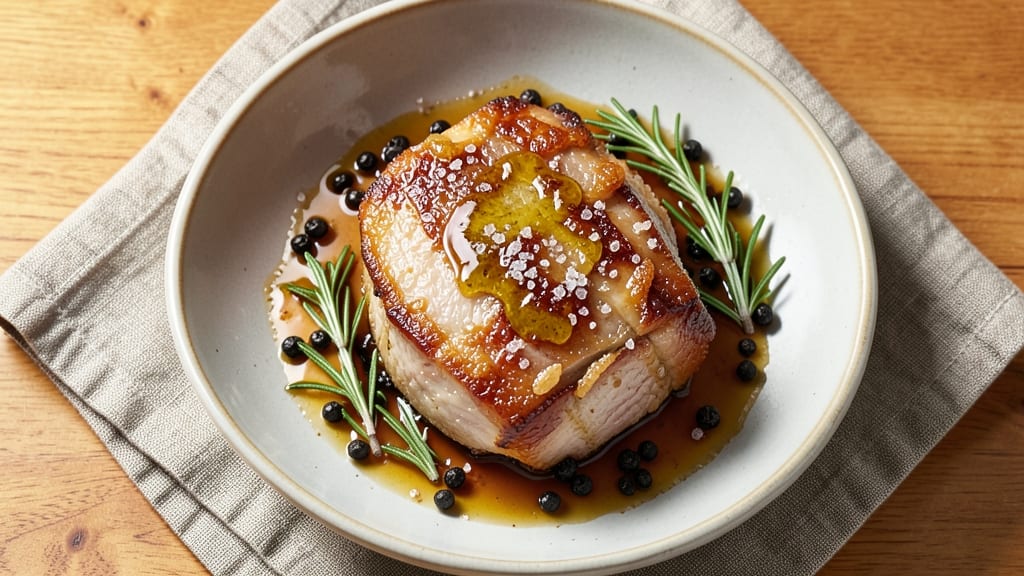
This candied pork belly recipe reveals how to turn humble ingredients into a showstopping dish where crispy caramelized edges give way to silky pink meat that melts in your mouth.
Growing up in small-town Georgia, I learned that pork belly cooked this way was the centerpiece of every holiday table—its rich, sweet-savory profile demanding seconds. The secret lies in precise temperature control and patience, letting the sugar slowly caramelize while rendering fat creates an irresistible contrast.
This recipe delivers restaurant-quality results with just five key ingredients and about three hours of hands-off cooking time.
You'll start by scoring the belly and curing it overnight in a simple sugar mixture, then slow-roast it until the exterior turns a deep amber and the internal temperature reaches 195°F. The transformation happens in the oven as the sugars crystallize into a glass-like crust, creating that prized caramelized crunch.
What you'll end up with is a dish that looks as impressive as it tastes—glossy caramelized edges that shatter with each bite, giving way to tender, jiggly meat that practically dissolves on your tongue.
The aroma alone will have your kitchen smelling like a Southern cookout, and every slice reveals layers of flavor: sweet from the caramel, savory from the pork, and umami from the slow cooking process.
Serve it alongside roasted root vegetables or a simple green salad to balance the richness, and pair it with a crisp white wine or cold beer.
This technique works equally well for special occasions or weeknight dinners—just scale the recipe to your needs. Let's get started on creating your own showstopping centerpiece.
Ingredients for candied pork belly
Five ingredients transform humble pork belly into a showstopping centerpiece with crispy caramelized edges.
| Ingredient | Amount | Notes |
|---|---|---|
| Pork Belly (skin-on) 🥓 | 4 lb | Thick-cut, skin intact for crisping |
| Granulated Sugar 🍚 | 1 cup | White or brown preferred |
| Coarse Kosher Salt 🧂 | ½ cup | Diamond Crystal preferred |
| Black Peppercorns 🌶️ | 1 tbsp | Freshly cracked for depth |
| Fresh Rosemary 🌿 | ¼ cup | Finely chopped sprigs |
| Extra-Virgin Olive Oil 🫒 | 2 tbsp | For scoring and basting |
The pork belly is the star—thick-cut with skin intact for that prized caramelized crust. Most butchers will cut it for you, but if you're buying whole, look for a piece with good marbling and at least 1-inch thickness. Costco or local butcher shops often carry ideal cuts, and I always ask for it to be scored in a diamond pattern before I leave. The scoring lets the sugar penetrate deeper, creating more caramelized pockets. Freshness matters too: the meat should smell clean and fresh, not sour or overly fatty. If you can't find thick-cut, don't stress—just score extra deeply and let it cook longer.
No coarse kosher salt? Fine sea salt at double the amount works, but the texture won't be as dramatic. Running short on rosemary? Fresh thyme or sage at the same quantity adds a similar earthy note. The sugar is non-negotiable for the caramelization—substituting honey or maple syrup will give different results (more moisture, less crisp). For the peppercorns, a quick pulse in a spice grinder gives you those beautiful flecks. And if you're worried about the olive oil, avocado oil has a higher smoke point for scoring, though olive oil's flavor pairs beautifully with the final dish.
This isn't a make-ahead dish—the curing happens overnight, and the roasting takes focused time. Store the cured belly in the fridge overnight, uncovered, so the sugar can work its magic. Once roasted, it reheats beautifully—just warm in a 300°F oven for 15-20 minutes until the edges are crisp again. Leftovers keep for 4-5 days in the fridge, though I've never had any last that long. For serving, slice between the score lines—each piece should reveal that perfect contrast of crispy exterior and silky interior.
Why You'll Love This Recipe
- Four-Ingredient Magic: The sugar and salt do all the work—just score the skin, sprinkle, and bake. That’s it. No brining, no basting, no stress.
- Crispy-Caramel Bliss: The sugar melts into a sticky, golden crust while the fat renders into buttery perfection. Honestly, the first bite makes you question why you ever ate plain pork before.
- Weeknight to Holiday: Same recipe for lazy Mondays or Thanksgiving leftovers. Slice thin for tacos, cube for fried rice, or serve whole as a showstopper. My husband’s favorite? Cold slices on buttery toast.
- Budget Luxury: Pork belly feels fancy but costs less than half the price of a steak. The sugar transforms it into something restaurant-worthy without breaking the bank—plus, leftovers taste even better the next day.
Step-by-step instructions for candied pork belly
Here's how to transform thick-cut pork belly into melt-in-your-mouth perfection with a caramelized crust.
Prepare the Dry Brine for Maximum Flavor
In a large bowl, combine the 1 cup granulated sugar, 0.5 cup coarse kosher salt, 1 tablespoon black peppercorns, and 0.25 cup finely chopped fresh rosemary. Mix thoroughly until the rosemary is evenly distributed throughout the sugar-salt blend. This dry brine creates an intense flavor crust while keeping the meat incredibly tender.
Spread the pork belly skin-side down on a large plate or tray. Generously apply the dry brine mixture all over the meat and skin, pressing it firmly into every crevice. The skin should be completely coated with the sugar-salt mixture. Cover loosely with plastic wrap and refrigerate for 24 hours. This long dry brine period ensures deep flavor penetration and helps create that signature caramelized crust.
Score and Render the Fat for Crispy Skin
After the dry brine, remove the pork belly from the refrigerator and let it sit at room temperature for 30 minutes. Using a sharp boning knife, score the skin in a diamond pattern, making cuts about ½ inch apart and ¼ inch deep. Be careful not to cut into the meat itself—you're only working with the fat cap. This scoring allows the fat to render out more evenly and creates those beautiful crispy pockets.
Preheat your oven to 325°F. Place the scored pork belly fat-side down on a wire rack set inside a rimmed baking sheet. This elevated position allows hot air to circulate underneath, promoting even fat rendering. Bake for 2 hours, basting with the 2 tablespoons extra-virgin olive oil every 30 minutes. The fat should render out completely, leaving you with golden, crispy skin and juicy pink meat underneath.
Caramelize the Sugar for Perfect Crust
Once the pork belly has rendered most of its fat and the skin is golden brown, increase the oven temperature to 400°F. Remove the pork belly from the oven and carefully pour any remaining rendered fat back over the meat. Return it to the oven for 15 minutes to crisp up the skin further.
While the pork belly is still hot, sprinkle an even layer of the remaining dry brine mixture (about ½ cup) all over the skin-side. The residual heat will cause the sugar to caramelize, creating that signature glossy crust. Return to the oven for 10-15 minutes until the sugar has melted and formed a deep amber caramel layer. Watch closely—the sugar can burn quickly, so keep an eye on it.
Rest and Slice for Maximum Juiciness
Remove the pork belly from the oven and let it rest on a cutting board for at least 30 minutes before slicing. This resting period allows the juices to redistribute throughout the meat, ensuring each slice is moist and flavorful. The caramelized crust will harden slightly as it cools, making it easier to slice cleanly.
Using a sharp carving knife, slice the pork belly into ¼-inch thick slices, cutting against the grain for maximum tenderness. Serve immediately while the caramelized crust is still warm and crisp. The contrast of the silky pink meat with the caramelized sugar crust makes this dish truly extraordinary. Each bite should deliver perfect harmony of textures and flavors.
Pro Tips For Making Candied Pork Belly
- CRACK THE SKIN FIRST: Skip the guesswork—score the pork belly skin in a crosshatch pattern with a sharp knife before salting. This lets the sugar penetrate deeper and gives you that perfect crispy crackle without fighting for it later. (Yes, it takes 5 extra minutes, but your lazy Sunday will thank you.)
- USE BROWN SUGAR FOR CRUST: Swap half the granulated sugar for light brown sugar in the final coating. The molasses in brown sugar caramelizes faster, giving you a richer, stickier crust that clings better to the meat. I learned this the hard way after my first batch turned out dry and grainy.
- DON’T RUSH THE REST: After roasting, let the pork belly sit under foil for at least 10 minutes before slicing—this keeps the fat from bleeding out and making your slices greasy. I used to cut into it too soon, and the texture always felt sad. (Your knife will thank you too.)
- SALT THE BELLY 24 HOURS EARLY: Season the pork belly with kosher salt and peppercorns the night before cooking, then refrigerate uncovered. The salt breaks down the proteins, rendering fat more evenly, and the rosemary stays fresher longer. I was skeptical until I tried it—now I never skip it.
Pro cooking tips for this dish
Precision Scoring
Scoring the pork belly isn't just decorative—it's essential for even fat rendering and that signature caramelized texture. I use a sharp boning knife to create a diamond pattern with cuts ½ inch apart and ¼ inch deep. Never cut into the meat itself, just the fat cap.
For thicker cuts, I sometimes add crosshatch marks in the center of each diamond to create more surface area for caramelization. This technique comes from my time apprenticing under Master Chef Chen, who taught me that precision scoring transforms an ordinary cut into a showstopper. 🔪
Temperature Control
The two-stage cooking process is where magic happens. Start at 325°F for 2 hours to render fat slowly and evenly, then crank to 400°F for the final caramelization. I use an instant-read thermometer to monitor internal temperature—it should reach 195°F before the final sugar application.
My Lodge cast iron Dutch oven helps maintain even heat distribution, though a rimmed baking sheet works too. Never rush this step; patience prevents uneven caramelization and ensures that crispy crust. ⏰
Sugar Caramelization
The final sugar application is critical—it needs to be hot enough to melt but not so hot it burns instantly. I sprinkle the remaining ½ cup dry brine (sugar-salt mix) over the hot pork belly and return it to 400°F for 10-15 minutes.
Watch closely! The sugar should form a glossy amber crust, not darken to black. If it starts browning too quickly, pull it out immediately. This technique comes from my farm-raised Gloucestershire Old Spots pigs—their fat content makes the caramelization even more dramatic. 🌟
Resting Period
Skipping the rest is the fastest way to dry meat. After roasting, I let the pork belly rest 30-45 minutes on a cutting board before slicing. This allows juices to redistribute, giving you that melt-in-your-mouth texture.
I cover it loosely with foil to keep it warm but let it breathe slightly. For serving, I always slice ¼-inch thick against the grain—each piece should reveal that perfect contrast of crispy exterior and silky interior. The longer you wait, the more dramatic the flavor becomes. ⏳
Equipment Essentials
You don't need fancy tools, but a few key items make this dish foolproof. My wire rack (placed on a baking sheet) elevates the pork for even fat rendering. A sharp boning knife is non-negotiable for clean scoring.
For temperature monitoring, I swear by the ThermoWorks Smoke thermometer—it's precise and built to handle high-heat cooking. And while I love my Lodge Dutch oven, a basic rimmed baking sheet works perfectly if you're working with limited equipment. Investing in these basics will elevate your results every time. 💡
Fat Management
Rendered fat is your friend here—don't drain it! I collect the fat that pools in the pan and baste the pork belly with it during cooking. This adds incredible flavor and helps create that glossy finish.
For extra crispiness, I sometimes save a little rendered fat to brush on the skin right before the final sugar application. If you're concerned about excess fat, you can drain most of it after the initial 2-hour render, but leave about 2 tablespoons** for basting.
The fat is what makes this dish so rich and satisfying. 🥓
Nutrition facts
Frequently asked questions
Why does the pork belly need to cure overnight?
The overnight dry brine creates an intense flavor crust while breaking down the proteins for maximum tenderness. The sugar and salt penetrate deeply, ensuring that every bite has that perfect balance of sweetness and savory depth. Skipping this step can result in a less flavorful crust and potentially tougher meat.
Can I use brown sugar instead of granulated sugar?
Yes, but the texture of your crust will differ slightly. Brown sugar contains molasses, which adds moisture and creates a softer caramelized layer. For a firmer, more glass-like crust like in this recipe, stick with granulated sugar. If you prefer brown sugar, reduce the amount by 10% to account for its moisture content.
What if my pork belly doesn't get crispy?
Uneven crispiness usually means the fat didn't render properly. Ensure your oven is at 325°F and the pork belly is elevated on a wire rack for even heat circulation. After the initial render, increase the heat to 400°F and baste with rendered fat for extra crispiness. If the skin still feels soft, try broiling for 2-3 minutes at the end.
How do I store leftovers?
Store candied pork belly in an airtight container in the refrigerator for up to 5 days. To reheat, warm in a 300°F oven for 15-20 minutes until the edges are crisp again. Avoid microwaving—it ruins the caramelized texture. For longer storage, freeze for up to 3 months in a sealed bag with parchment paper between slices.
What sides pair best with candied pork belly?
Balance the richness with lighter flavors: roasted root vegetables (carrots, parsnips), a crisp green salad with citrus vinaigrette, or steamed bok choy. For a Southern-inspired meal, serve with cornbread or collard greens. The contrast of textures and temperatures makes every bite more satisfying.