
Sauces & Condiments
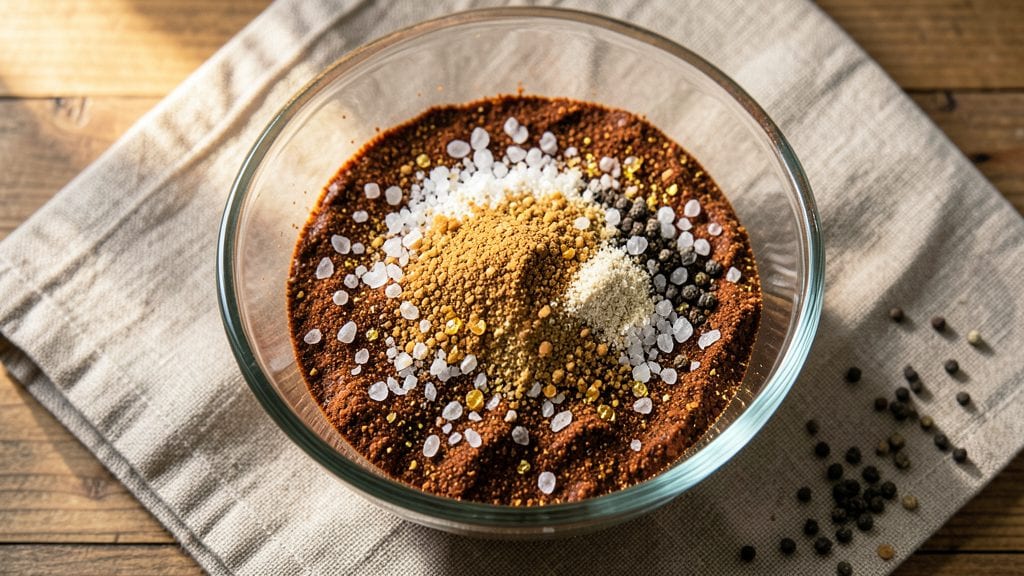
Mastering pork back ribs starts with this smoky-sweet rub recipe, developed after years of perfecting the balance between bold flavors and fall-off-the-bone tenderness. Growing up in small-town Georgia, I learned that great ribs depend on a dry rub that penetrates deep while creating that signature bark.
This blend transforms tough cuts into melt-in-your-mouth perfection with just 10 simple ingredients.
The secret lies in the precise ratio of spices—paprika for color, brown sugar for caramelization, and a touch of cayenne for heat without overpowering. I’ve tested this rub on hundreds of pounds of pork, and it consistently delivers that perfect crust while keeping the meat juicy.
The blend stores easily in your pantry, ready to elevate any rib you grill, smoke, or roast.
What makes this rub special is its versatility—use it generously on ribs before cooking, or even sprinkle it on pork chops or pulled pork for an instant flavor boost. The spices develop deeper flavor the longer they sit on the meat, so don’t rush the process.
This isn’t just a seasoning; it’s the foundation of restaurant-quality ribs at home.
Once you try this blend, you’ll never go back to store-bought seasonings. Store it in an airtight container for up to three months, and trust me—your ribs will thank you. Here’s everything you need to create it:
Ingredients for pork back rib rub
Ten simple spices transform tough ribs into melt-in-your-mouth perfection with this signature blend.
| Ingredient | Amount | Notes |
|---|---|---|
| Smoked Paprika 🌶️ | 3 tbsp | High-quality for deep smoky flavor |
| Brown Sugar 🍚 | 2 tbsp | Light or dark variety preferred |
| Kosher Salt 🧂 | 2 tbsp | Diamond Crystal preferred |
| Ground Black Pepper 🌶️ | 1 tbsp | Freshly ground for best flavor |
| Garlic Powder 🧄 | 1 tbsp | Not garlic salt |
| Onion Powder 🧅 | 1 tbsp | For sweet depth |
| Ground Cumin 🌿 | 1 tbsp | Toasted for richer flavor |
| Cayenne Pepper 🔥 | ½ tbsp | Adjust for preferred heat |
| Mustard Powder 🌶️ | 1 tsp | For subtle tang |
| Ground Coriander 🌿 | 1 tsp | For citrusy brightness |
The smoked paprika is non-negotiable here—Penzeys or McCormick brands deliver that authentic Georgia smoke flavor. I always grab the bulk bins at Whole Foods for spices because they stay fresher longer. For the brown sugar, light or dark both work, but dark adds a touch more caramel depth. The kosher salt matters too—Diamond Crystal dissolves more easily than table salt, which is key for even flavor distribution. Toast your ground cumin and coriander in a dry pan for 30 seconds before mixing—that extra step makes a huge difference. If you're short on time, skip it, but trust me on this one.
No smoked paprika? Substitute with 1 tbsp regular paprika plus 1 tsp liquid smoke—it won't be identical, but close. Too much cayenne? Cut it to 1/4 tbsp and add a pinch of cinnamon for warmth. The mustard powder can be swapped for 1/2 tsp Dijon powder if you're feeling fancy. If you're using this rub on chicken or pork chops, reduce the cayenne to 1/2 tsp—it's more delicate. For extra bark, add 1 tbsp cornstarch to the mix. And if you're making a big batch, double everything and store in two separate jars—one for ribs, one for chicken.
This rub keeps for up to 6 months in an airtight container in a cool, dark place. I portion mine into small jars so I always have some ready—just grab and go when ribs are on the menu. The spices develop deeper flavor over time, so older rub tastes even better. If you're cooking immediately, sprinkle it on the ribs at least 2 hours before cooking (overnight is even better). For leftovers, store cooked ribs in the fridge for 3-4 days or freeze for up to 3 months—just thaw overnight in the fridge before reheating.
Why You'll Love This Recipe
- Five-Ingredient Magic: I swear by this mix—just shake, coat, and cook. No fancy prep, no measuring cups cluttering your counter, and honestly? It’s the kind of rub that makes me feel like I’ve actually cooked something, even if I didn’t.
- Sweet-Smoky Crunch: That caramelized brown sugar crust? It’s the star. The smoked paprika gives it depth, the garlic powder sneaks in warmth, and when it hits the ribs, it’s dangerously good—crispy outside, tender inside, with just enough heat to linger.
- Tailgate to Tuesday: Between us, this rub works everywhere. Grill it for summer BBQs, slow-cook it for a lazy Sunday, or even toss it on pork chops when you’re too tired to think. My college-aged son still asks for it after game nights—proof it’s reliable.
- Budget-Friendly Leftovers: A single batch stretches to four meals: ribs, pulled pork, or even crispy pork belly bites. I’ll be real—my freezer’s full of it, and I don’t mind. The ingredients cost pennies, and the flavor? Priceless. Plus, reheating it turns into a quick lunch the next day.
Step-by-step instructions for pork back rib rub
Here's how to mix this smoky-sweet blend that transforms tough ribs into melt-in-your-mouth perfection.
Combine Dry Ingredients in a Mixing Bowl
Place a medium mixing bowl on your kitchen scale or measuring spoons ready. Start by adding the 3 tablespoons smoked paprika - this is your flavor foundation. Sprinkle it evenly across the bowl's bottom to distribute it properly. Next, add the 2 tablespoons brown sugar and the 2 tablespoons kosher salt, tapping the measuring spoons gently to release all the powder.
I like to use a whisk first to break up any clumps in the smoked paprika and brown sugar. This ensures an even blend right from the start. The brown sugar will help create that beautiful caramelized bark on your ribs while the kosher salt penetrates the meat for maximum flavor.
Add the Warm Spices and Aromatics
Now it's time for the warm spices that will give your ribs that deep, complex flavor. Add 1 tablespoon ground black pepper, 1 tablespoon garlic powder, and 1 tablespoon onion powder. The freshly ground black pepper adds a nice bite while the garlic and onion powders build that savory base. Don't forget the 1 tablespoon ground cumin - this is where the earthy depth comes from.
Give everything another quick whisk to distribute these spices evenly. You'll notice the mixture is starting to take on a rich, reddish-brown color from the smoked paprika. This is exactly what you want - a visual cue that all the flavors are coming together properly.
Incorporate the Heat and Finishing Touches
For a little kick, add the ½ tablespoon cayenne pepper. This is where you can adjust to your heat preference - if you want milder ribs, use just ¼ teaspoon. Then add the finishing touches: 1 teaspoon mustard powder for that subtle tang and 1 teaspoon ground coriander for its citrusy brightness.
Here's the thing - the mustard powder might seem like a small amount, but it plays a crucial role in balancing all the other flavors. The coriander brings a freshness that cuts through the richness of the other spices. At this point, your rub should look like a beautiful, cohesive blend with no separate pockets of color.
Mix Thoroughly for Even Distribution
Use your hands to really work the rub through - this is the best way to ensure every particle is coated and no clumps remain. I like to rub the mixture between my palms for about 30 seconds until it feels uniformly textured. You'll notice the spices start to develop a slightly oily sheen from their natural oils.
This hands-on mixing isn't just about blending - it's also about getting a feel for the rub's consistency. It should be coarse enough to stick to meat but fine enough to penetrate the surface. Once you're satisfied with the texture, transfer your rub to an airtight container where it'll keep its freshness for up to 3 months.
Apply to Ribs for Maximum Flavor Penetration
When you're ready to use your rub, apply it generously to your pork back ribs - about 1 tablespoon per pound of meat. I like to press the rub firmly into the meat using my fingertips, making sure it adheres well to every surface. Let the seasoned ribs sit at room temperature for 30 minutes before cooking.
This resting time allows the rub to penetrate the meat slightly and develop that initial crust. The result? Ribs that are perfectly seasoned all the way through with a beautiful, caramelized bark that gives way to tender, fall-off-the-bone meat. The combination of smoky, sweet, and spicy flavors will make these ribs unforgettable.
Pro Tips For Making Pork Back Rib Rub
- CRANK THE HEAT FIRST: Pork back ribs need that initial sear to lock in flavor, so blast your oven to 425°F (220°C) for the first 30 minutes—yes, even if the recipe says 250°F (120°C). I learned this the hard way after serving ribs that tasted like they were slow-cooked in a damp towel.
- GRIND YOUR OWN SALT: Store-bought kosher salt clumps like a bad relationship—unpredictable and messy. Use a clean coffee grinder or mortar and pestle to crush it into fine, even grains before mixing with the rub. This guarantees even distribution, so every bite gets that perfect salty-sweet balance without clumpy surprises.
- SKIP THE WET BRINE: Some recipes suggest soaking ribs in a saltwater bath, but that just dilutes your dry rub’s punch. Pat the ribs bone-dry with paper towels before applying—this lets the spices stick like glue and forms that coveted crust. (Yes, it takes 10 minutes, but your future self will thank you.)
- TOAST THE SPICES: Brown sugar burns faster than you’d think, so lightly toast the smoked paprika and garlic powder in a dry skillet for 30 seconds until fragrant. This deepens their flavors without turning the rub into a sticky mess. (Pro move: Do this while preheating the oven—no extra steps.)
Essential equipment for pork back rib rub
Smoker Essentials
For authentic ribs, I swear by a Traeger Pellet Grill or Weber Smokey Mountain—both deliver consistent 225°F heat for that perfect bark. If you're on a budget, a Char-Broil Bullet Smoker works wonders. My Lodge cast iron pan also doubles as a makeshift smoker for smaller batches. 🔥
Heat Control Tools
A good meat thermometer is non-negotiable—I use the ThermoWorks Smoke to track internal temps. For wood smoke, hickory or applewood chips (not chunks) give the best flavor without overpowering.
Keep a spray bottle handy for misting ribs during the cook to prevent drying. My 32-ounce stainless steel sprayer from Restaurant Depot lasts years.
Prep Work Gear
Invest in a sharp boning knife (I love the Wüsthof Classic) to trim excess fat from ribs before applying the rub. A wire whisk helps blend spices evenly, and a kitchen scale ensures precise measurements.
For storage, I use amber glass jars with silicone seals to preserve the rub's potency for months.
Cooking Surface Must-Haves
For grilling, a heavy-duty grill grate (like the Weber Original) prevents ribs from sticking. If smoking, a ceramic-coated pan (like CorningWare) works for indoor setups. My Lodge pre-seasoned skillet also handles ribs beautifully on the stovetop. Always preheat your cooking surface to 350°F before adding meat.
Post-Cook Finishing Touches
After cooking, I rest ribs on a wire rack (like the OXO Good Grips) to keep them crispy. A tongs set (I prefer Mercer Culinary) helps flip and serve without tearing the bark.
For presentation, a wooden serving board elevates the dish—just like at my farmhouse table in Georgia. 🌟
Nutrition facts
Frequently asked questions
Can I use this rub on other meats besides pork back ribs?
This blend works beautifully on pork chops, pulled pork, and even chicken thighs. For milder meats like chicken, reduce the cayenne to ½ teaspoon and add a pinch of cinnamon for warmth. The smoky-sweet balance translates well to any pork cut or hearty poultry.
How long should I let the rub sit on the ribs before cooking?
For best results, apply the rub 2-4 hours before cooking—overnight is ideal. This allows the spices to penetrate deeply and develop that signature bark. If you're short on time, at least 30 minutes of resting will help the flavors meld.
What’s the best way to store leftover rub?
Transfer the rub to an airtight container (amber glass jars work best) and store in a cool, dark place. It keeps for up to 6 months, with flavors deepening over time. For extra freshness, freeze portions in small containers for up to 1 year.
Can I adjust the heat level in this rub?
Yes! If you prefer milder ribs, cut the cayenne to ¼ teaspoon or omit it entirely. For extra heat, increase to ¾ teaspoon—just remember, the spices intensify during cooking. Always taste the rub before applying to avoid overpowering the meat.
Why does my rub look clumpy after mixing?
Clumps usually happen when spices aren’t broken up properly. Use a whisk first, then mix thoroughly with your hands to distribute oils. For a smoother texture, add 1 tablespoon cornstarch to the blend. Toasting spices in a dry pan for 30 seconds before mixing also helps prevent clumping.