Sauces & Condiments
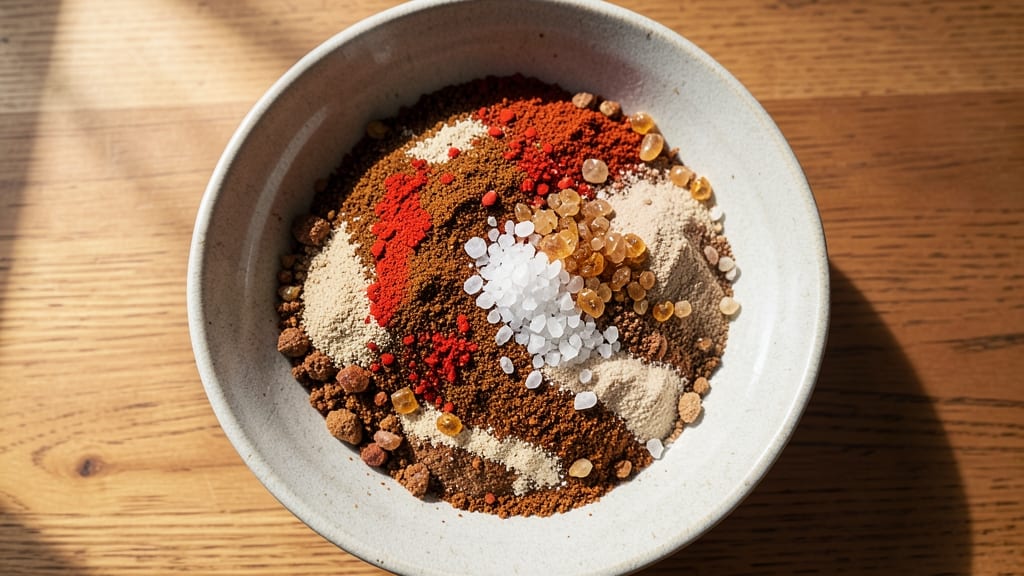
Mastering the perfect pork belly dry rub transforms ordinary meat into a smoky-sweet masterpiece that’ll have everyone asking for seconds. Growing up in small-town Georgia, I learned that the right seasoning blend could elevate simple pork into something unforgettable—this recipe delivers that same magic with precision.
The blend balances sweet, smoky, and savory notes to create crispy bark while keeping the interior tender.
This pork belly dry rub recipe uses just six simple ingredients—paprika, brown sugar, garlic powder, onion powder, smoked paprika, and salt—measured in exact proportions for consistent results every time.
Applying 2 tablespoons per pound of pork belly ensures even coverage, while a 30-minute rest before cooking lets the spices penetrate deeply. The secret lies in the smoked paprika, which adds that signature BBQ aroma without overpowering the natural pork flavor.
What you’ll achieve is pork belly with a perfect crust—deep mahogany brown, crackling with crispness, and infused with layers of flavor that linger long after the first bite. The sweetness caramelizes beautifully during cooking, creating a sticky, caramelized glaze that ties everything together.
This dry rub works equally well for roasting, grilling, or smoking, making it versatile for any cooking method.
Store the leftover rub in an airtight container for up to three months, ready to elevate future pork projects. Whether you’re preparing a holiday centerpiece or a weeknight treat, this blend delivers professional-quality results with minimal effort. Let’s get seasoning!
Ingredients for pork belly dry rub
Six essential ingredients transform pork belly into a smoky-sweet masterpiece with restaurant-quality bark.
| Ingredient | Amount | Notes |
|---|---|---|
| Smoked Paprika 🌶️ | 3 tbsp | High-quality smoked variety for authentic aroma |
| Paprika 🌶️ | 2 tbsp | Sweet or mild for balanced sweetness |
| Light Brown Sugar 🍯 | 2 tbsp | Packed, for optimal caramelization |
| Garlic Powder 🧄 | 1 tbsp | Freshly ground preferred for depth |
| Onion Powder 🧅 | 1 tbsp | Finely ground for even distribution |
| Diamond Crystal Kosher Salt 🧂 | 1 ½ tsp | Coarse grain for proper seasoning balance |
The smoked paprika is non-negotiable for that signature BBQ aroma—Penzeys or McCormick smoked varieties deliver the most authentic flavor. Brown sugar should be packed to avoid measuring errors, and light brown sugar caramelizes more predictably than dark. For the powders, Diamond Crystal garlic and onion powders offer superior freshness compared to generic brands. Store-bought pre-mixed rubs can't compete with this blend's precision, especially when you control the ratios. If you're using this for a holiday feast, double the batch—it disappears fast.
No smoked paprika? Substitute 1 tbsp regular paprika plus 1 tsp liquid smoke, though the flavor won't be identical. Light brown sugar unavailable? White sugar works in a pinch, but expect slightly less caramelization. For a deeper garlic note, add 1/2 tsp granulated garlic alongside the powder. The kosher salt is crucial—avoid table salt, as its finer grain will over-salt the rub. If you're short on time, toast the spices in a dry pan for 30 seconds to deepen their flavors before mixing.
This rub stays potent for up to 3 months in an airtight container away from moisture. For long-term storage, freeze portions in ice cube trays—perfect for single-use applications. The blend works equally well for pork belly, ribs, or even chicken thighs. For best results, apply 2 tbsp per pound of meat and let it rest for 30 minutes before cooking to ensure even penetration. The leftovers? Use them within 2 weeks for optimal flavor, or freeze for extended shelf life.
Why You'll Love This Recipe
- Five-Ingredient Magic: I swear by this combo—just mix, rub, and let the oven do the work. No chopping, no fussing, and honestly, the hardest part is waiting for the aroma to fill your kitchen.
- Sweet-Savory Crust: That caramelized sugar crust? It’s the star—crunchy outside, tender inside, with just enough smoky depth from the paprika to make it feel like a restaurant dish. (Yes, even on a Tuesday night.)
- Leftovers That Shine: Cook once, eat twice (or three times). Slice the pork thin for sandwiches, cube it for fried rice, or serve it cold in tacos—it’s that versatile. My freezer’s always stocked with this stuff.
- Budget-Friendly Feast: A single pork belly stretches into meals for days, and this dry rub costs pennies. Between us, I’ve fed a crowd of six for under $20 with this trick—plus, the leftovers taste even better the next day.
Step-by-step instructions for pork belly dry rub recipe
Here's how to combine these ingredients into a perfect, balanced rub that delivers smoky-sweet depth and crispy texture.
Measure All Ingredients Precisely
Begin by gathering all components in a medium mixing bowl. Use a measuring spoon to add the 3 tablespoons smoked paprika first—this is your flavor foundation. The high-quality smoked variety will provide that authentic, wood-fired aroma that defines great pork belly. Next, add the 2 tablespoons paprika—this sweet or mild version balances the smokiness while adding subtle color.
For the sweet element, measure out the 2 tablespoons light brown sugar using a packed measuring spoon. The sugar should be level but firmly packed to ensure optimal caramelization during cooking. This step is critical; under-packing will reduce the rub's ability to create that coveted crispy bark on the pork belly. Keep all ingredients dry—moisture at this stage will prevent even distribution and create clumps.
Incorporate the Powders for Even Distribution
Add the 1 tablespoon garlic powder and 1 tablespoon onion powder to the bowl. These powders should be finely ground to ensure they disperse evenly throughout the rub. I recommend using freshly ground garlic and onion powders if possible—they provide superior depth of flavor compared to pre-ground versions that can lose potency over time. Use a whisk to gently break up any potential clumps in the powders before combining.
This is where the magic happens: the aromatic powders infuse the base mixture with savory complexity. The garlic and onion powders work together to create a well-rounded seasoning profile that complements the smoky-sweet elements. At this stage, you should see a uniform blend forming, though it may still appear slightly granular. This texture is normal and will become finer as you proceed.
Add the Salt and Final Adjustments
Measure out the 1.5 teaspoons Diamond Crystal kosher salt and add it to the bowl. The coarse grain of Diamond Crystal salt is essential for proper seasoning balance—it dissolves more slowly than table salt, allowing for gradual flavor release during cooking. Use a small spoon to ensure you measure the salt precisely, as this amount is carefully calibrated to complement the other ingredients without overpowering them.
At this point, you should have a dry, coarse mixture that resembles coarse sandpaper. The rub should be uniformly colored with a deep reddish-brown hue from the paprika blend. If you notice any areas that appear too dry or clumpy, use a fork to gently break them apart. The texture should be free-flowing enough to adhere well to pork belly without clumping during application.
Mix Thoroughly for Perfect Consistency
Transfer the mixture to a clean, dry bowl and use a fork or small whisk to combine all ingredients thoroughly. Work in small batches if necessary to ensure every particle is evenly distributed. You're aiming for a rub that looks like fine, dry sand—this consistency guarantees even coverage when applied to the pork belly. The mixture should coat the back of a spoon uniformly without forming clumps.
This final mixing step is where you achieve the perfect balance of all components. The smoked paprika provides depth, the sugar adds sweetness, the powders contribute savory notes, and the salt ties everything together. The result should be a rub that's aromatic when you crush a small amount between your fingers, with no single ingredient overpowering the others. Store in an airtight container until ready to use—this rub will keep its potency for up to 3 months.
Pro Tips For Making Pork Belly Dry Rub
- Preheat Your Rub: Toss the dry rub ingredients in a small bowl first—don’t just sprinkle them straight onto cold pork belly. Warm spices release their oils better when mixed, and the sugar won’t clump like it does when dumped directly from the bag. I learned this the hard way when my first batch turned into a sticky mess.
- Pat It Dry: Use paper towels to blot the pork belly thoroughly—no wet spots. Moisture on the surface prevents the rub from sticking properly, and it’ll burn before it caramelizes. I skip this step sometimes, and the crust never gets that perfect golden crackle.
- Low and Slow First: Start with the oven at 275°F (135°C) for the first 45 minutes—even if you’re eager to crisp it up. This lets the fat render evenly without the rub turning to ash. After that, crank it to 425°F (220°C) for the final hour. Trust me, the patience pays off.
- Toast the Spices: Lightly toast the smoked paprika and regular paprika in a dry skillet for 30 seconds before mixing. It deepens their flavor and cuts the bitterness that can overpower the sweetness of the brown sugar. Sounds weird, but it works—my grandmother swore by this, and she was right.
Storing and reheating this recipe
Refrigerator Storage
Store your pork belly dry rub in an airtight container—I prefer amber glass jars from Ball because they block light and preserve flavor. Keep it in a cool, dark place for up to 3 months, though I find it stays freshest for about 2 months.
The spices maintain their potency longer when protected from moisture and air. Honestly, I’ve had this rub last even longer when stored properly, but I like to make fresh batches every few months to ensure peak flavor. 🌶️
Freezer Preservation
For maximum shelf life, divide the rub into ice cube trays and freeze. Once solid, transfer the cubes to a freezer-safe bag and label with the date. This method keeps the rub fresh for up to 6 months without losing its aromatic punch.
I use this technique when I know I won’t use the entire batch within 3 months—it’s perfect for single-use applications like quick weeknight meals. Just thaw in the fridge overnight before using. ❄️
Reheating Pork Belly
If you’ve cooked pork belly with this rub and stored leftovers, reheat in a 350°F oven for 10-15 minutes until internal temperature reaches 165°F. Wrap the pork tightly in aluminum foil to retain moisture and prevent drying out.
For a crispier finish, broil for the last 2 minutes—just watch it closely to avoid burning. I often reheat slices this way for sandwiches or tacos, and it always tastes like it came fresh off the grill. 🔥
Reviving Old Rub
If your dry rub starts to lose its aroma, revive it by toasting the spices in a dry skillet over medium heat for 1-2 minutes. Stir constantly to prevent burning, then let cool before using.
This trick works wonders for bringing back the depth of flavor, especially if you’ve stored the rub for a few months. I do this with my vintage cast iron skillet—it’s become a go-to technique for me whenever I need to refresh a batch.
The heat reactivates the spices, making them smell and taste almost as fresh as new. ✨
Application Reminders
Before applying the rub to fresh pork belly, let it sit at room temperature for 15-20 minutes. This ensures even coverage and better adhesion. I also like to pat the pork dry with paper towels before seasoning—it helps the rub stick better and creates a more uniform crust.
Apply 2 tablespoons per pound of pork belly, pressing gently to make sure the spices adhere evenly. The rub will caramelize beautifully during cooking, giving you that perfect crispy bark every time. 💪
Leftovers Strategy
If you have extra pork belly after cooking, store it in the fridge for up to 5 days or freeze for 3 months. When reheating, use the oven method described earlier.
For a quick fix, I’ve even microwaved slices on high for 30 seconds with a damp paper towel—it’s not perfect, but it works in a pinch. The key is to always reheat until the internal temperature reaches 165°F to ensure safety and maintain texture. 💡
Nutrition facts
Frequently asked questions
Can I use this dry rub on other meats besides pork belly?
This versatile blend works beautifully on pork ribs, chicken thighs, or even brisket. The balance of sweet and smoky flavors enhances fatty cuts while adding depth to leaner meats. Just adjust the amount—use 1 tbsp per pound for chicken to avoid overpowering the natural flavor.
Why does my pork belly crust turn out too sweet or not sweet enough?
The brown sugar is key for caramelization, but cooking method matters too. For a deeper sweetness, roast at 325°F for longer—this lets the sugar fully caramelize. Too little sweetness? Try adding 1 extra tsp brown sugar to the rub or brush with a honey glaze during cooking. The sugar needs time to melt and react with the meat's natural fats.
How do I prevent the rub from clumping when storing?
Store the rub in an airtight container with a paper towel underneath to absorb any moisture. Avoid metal containers—they can cause condensation. For extra protection, place a silica gel packet in the container. If clumps form, simply crush them with your fingers or a fork before using. Proper storage keeps the rub dry and potent for months.
Can I make this rub spicier?
Yes! Add ½ tsp cayenne pepper or 1 tsp crushed red pepper flakes for heat. For a smokier kick, increase the smoked paprika to 4 tbsp total. Always taste-test small amounts first—spice levels vary by brand. If using cayenne, reduce the regular paprika by ½ tbsp to maintain balance.
What's the best way to apply the rub for maximum flavor?
Pat the pork belly completely dry with paper towels first—this helps the rub adhere. Apply 2 tbsp per pound in a thin, even layer, pressing gently to ensure coverage. Let it rest for 30 minutes before cooking to allow spices to penetrate. For extra crispiness, apply a second layer right before placing in the oven or on the grill.