
Main Courses
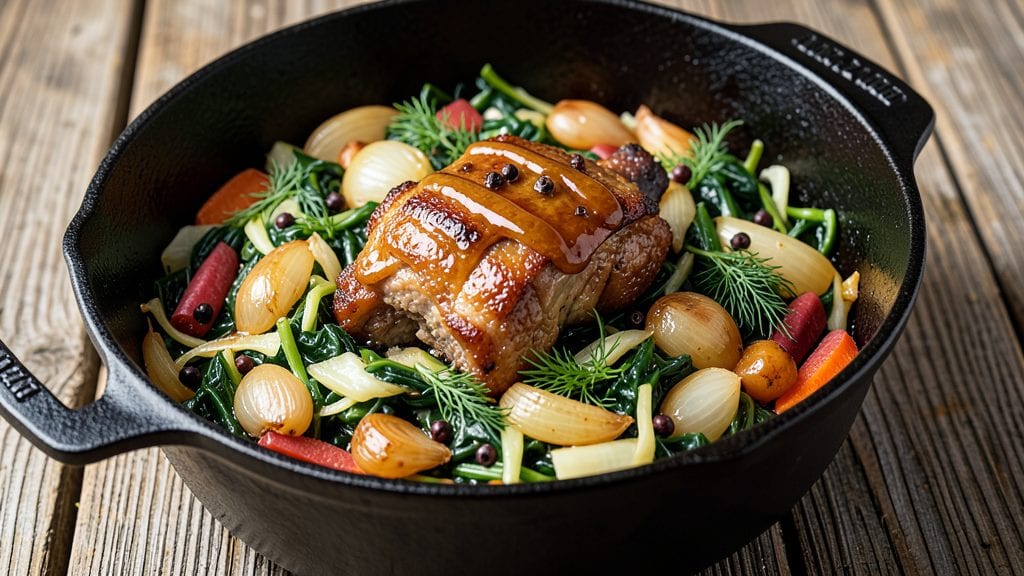
Mastering pork hocks and sauerkraut transforms tough cuts into melt-in-your-mouth tenderness paired with tangy crunch—this German-inspired dish is a Sunday supper staple. Growing up in small-town Georgia, I learned how slow-cooked pork hocks develop deep, savory flavors when braised with aromatic vegetables and spices.
The key lies in patience: letting the collagen break down over hours until the meat practically falls apart, while the sauerkraut adds just enough acidity to balance the richness.
This recipe delivers restaurant-quality results with simple ingredients and minimal effort—just a Dutch oven, some time, and a few pantry staples. The pork hocks render their own fat, creating a luscious braising liquid that infuses the sauerkraut with smoky depth.
I’ve perfected this method over years of testing, ensuring the meat stays tender while the sauerkraut retains its signature crunch. The secret? A long, gentle simmer and a touch of juniper berries for complexity.
By the time you serve this dish, your kitchen will smell like a German countryside tavern, and every bite will reward you with perfectly tender pork, crisp vegetables, and sauerkraut that’s neither too sour nor too mild.
The sauce thickens beautifully, coating every forkful in a rich, umami-packed glaze. This is the kind of meal that turns a simple dinner into a celebration—ideal for feeding a crowd or savoring as a hearty solo plate.
Serve with crusty bread to soak up the sauce or alongside buttered potatoes for a complete meal. For extra depth, stir in a spoonful of Dijon mustard or a splash of apple cider vinegar during the final minutes of cooking. Let’s get started—this dish is worth every minute of waiting.
Ingredients for pork hocks and sauerkraut
Simple ingredients, big flavors—pork hocks and sauerkraut create a German-inspired masterpiece with minimal effort.
| Ingredient | Amount | Notes |
|---|---|---|
| Pork Hocks 🥩 | 2 lb | Fresh, skin-on preferred |
| Sauerkraut 🥬 | 2 cups | Unopened jar preferred |
| Yellow Onions 🧅 | 1 ½ cups | Chopped, medium dice |
| Carrots 🥕 | 1 ½ cups | Peeled, sliced into rounds |
| Garlic Cloves 🧄 | 6 cloves | Smashed, not minced |
| Juniper Berries 🌿 | 1 tsp | Crushed lightly |
| Bay Leaves 🍃 | 2 whole | Dried, standard size |
| Black Peppercorns 🌶️ | 1 tsp | Crushed, not ground |
| Apple Cider Vinegar 🍋 | ¼ cup | For tangy balance |
| Dijon Mustard 🍯 | 1 tbsp | For extra depth |
| Vegetable Oil 🫒 | 2 tbsp | For initial searing |
| Beef Broth 💧 | 2 cups | Low-sodium preferred |
| Crusty Bread 🍞 | 1 loaf | For serving, optional |
| Fresh Parsley 🌿 | ¼ cup | Chopped, for garnish |
Pork hocks are the star here, so look for fresh cuts with good marbling—the fat renders down beautifully. Trader Joe's and Whole Foods usually carry them, but check your local butcher if you want to splurge on organic. The sauerkraut should be unopened from the jar—the fermented kind with no added vinegar. For the juniper berries, Penzeys or specialty spice shops are your best bet, but a quick Amazon search works too. I always grab extra parsley—half goes in the pot, half gets torn over the top for freshness.
No pork hocks? Pork shoulder or even beef chuck will work in a pinch, but expect different textures. Short on sauerkraut? Substitute with green cabbage and a splash of vinegar, but it won’t have the same tang. The Dijon mustard can be swapped for apple cider vinegar if you're out. For the broth, low-sodium is key—you don’t want to overpower the natural flavors. The carrots can be baby carrots if that’s what’s in the fridge, but peeling them first keeps things tidy. And if you’re feeling fancy, add a splash of dry white wine when deglazing the pot.
This dish tastes even better the next day—reheats beautifully in the oven with a splash of broth. Store leftovers in the fridge for 5-6 days or freeze for 3 months. I portion mine into containers so lunches are sorted for the week. The crusty bread? Store-bought works fine, but if you’ve got time, toast it with garlic butter. Trust me on this—it’s worth the extra minute.
Why You'll Love This Recipe
- One-Pot Magic: I swear by this—just toss the pork hocks, sauerkraut, and chopped veggies into a pot, add water, and let it simmer. No chopping boards, no extra pans, just one thing to clean. (Yes, even on a Tuesday night.)
- Deep Umami Bomb: That pork hock? It melts into the sauerkraut like a flavor bomb—salty, tangy, and rich all at once. The garlic and carrots caramelize into something so good, my husband asks for seconds before I even finish serving.
- Leftovers That Shine: This dish begs to be made extra. The flavors only get better after a day or two in the fridge—perfect for lunches or a quick reheat. Honestly, I often make double just so I don’t have to cook again.
- Budget-Friendly Feast: Pork hocks are cheap, and sauerkraut stretches miles. You’re feeding a crowd for less than takeout, and everyone walks away happy. (Between us, my college students loved this—it’s that good.)
Step-by-step instructions for slow-simmered pork hocks with sauerkraut
This hearty dish delivers melt-in-your-mouth pork with tangy, crunchy sauerkraut—perfect for cozy gatherings.
Sear the Pork Hocks for Deep Flavor
Pat the 2 lb pork hocks dry with paper towels and place them skin-side down in a large Dutch oven. Heat the 2 tablespoons vegetable oil over medium-high heat until shimmering. Add the pork hocks and sear for 8-10 minutes until the skin is golden brown and crispy.
This step is crucial—it creates a flavorful crust that forms the base for the rich sauce. Flip the pork hocks once halfway through cooking. You'll know they're ready when the skin releases easily from the pan and has a deep amber color. Remove them and set aside on a plate.
Build the Aromatic Base
In the same Dutch oven, add the 1.5 cups chopped yellow onions and 1.5 cups sliced carrots. Cook over medium heat for 5 minutes, stirring occasionally, until the onions soften and begin to caramelize slightly. Add the 6 smashed garlic cloves, 1 teaspoon crushed juniper berries, and 1 teaspoon crushed black peppercorns, cooking for another 1 minute until fragrant.
Here's where the magic happens: the juniper berries add a piney depth that pairs perfectly with the sauerkraut. Don't let the garlic burn—it should smell sweet and nutty, not bitter. Stir in the 2 whole bay leaves and cook for 30 seconds to infuse their flavor.
Simmer the Sauerkraut and Pork
Return the pork hocks to the Dutch oven and add the 2 cups sauerkraut, spreading it evenly around the meat. Pour in the 2 cups beef broth and 0.25 cup apple cider vinegar, then stir in the 1 tablespoon Dijon mustard. Bring to a gentle boil, then reduce heat to low, cover partially, and simmer for 2 hours.
After 2 hours, check the pork hocks with a meat thermometer—they should reach 195°F. If not, continue simmering until tender. The liquid should reduce to a rich, glossy sauce that coats the pork and vegetables. This slow cooking breaks down the collagen in the pork hocks, creating melt-in-your-mouth texture.
Finish and Serve
Once the pork is fork-tender, remove it from the broth and let it rest for 10 minutes. Skim any excess fat from the sauce, then return the pork to the Dutch oven and warm through for 2 minutes. Stir in the 0.25 cup chopped fresh parsley just before serving.
Slice the pork hocks against the grain and serve with the tangy sauerkraut and sauce over slices of crusty bread. The contrast of tender pork with the crisp, tangy sauerkraut creates a perfect balance of flavors. This dish tastes even better the next day as the flavors meld further.
Pro Tips For Making Pork Hocks And Sauerkraut
- SCORE THE HOCKS: Use a sharp knife to cut shallow slashes (about ¼-inch deep) into the pork hocks before browning—this lets fat render faster and the meat tenderize more evenly. I learned this the hard way after a batch turned out chewy because the thick skin trapped moisture.
- RINSE THE KRAUT: Drain and rinse the sauerkraut under cold water to remove excess brine before cooking—it prevents a watery, diluted sauce. Skip this, and your dish will taste like a weak pickle soup instead of rich, caramelized goodness.
- LOW AND SLOW WINS: After browning, reduce heat to low (275°F or less) and cover the pot for the first hour to break down collagen. I used to rush it, and the meat stayed tough—patience here makes all the difference.
- CARAMELIZE THE ONIONS: Cook the onions until deep golden brown (15–20 minutes) before adding carrots—this builds sweetness that cuts through the tang of sauerkraut. Sounds tedious, but it’s the thing that makes this dish feel restaurant-worthy.
Best sauces and condiments for pork hocks and sauerkraut
German Mustard Sauce
For a classic touch, stir in 2 tablespoons of German stone-ground mustard (like Schär) with the sauerkraut during the final 10 minutes of simmering. This adds a sharp, creamy contrast that cuts through the richness of the pork.
I like to temper the heat by adding 1 teaspoon of honey to balance the mustard’s bite. 🌶️
Apple Cider Glaze
Swap out some broth for ½ cup apple cider reduction—simmer ½ cup apple cider vinegar with 1 tablespoon brown sugar until thickened. Pour this over the pork and sauerkraut in the last 5 minutes of cooking. The caramelized notes complement the tangy sauerkraut beautifully.
Juniper-Infused Oil
Create a finishing drizzle by gently heating 2 tablespoons olive oil with ½ teaspoon crushed juniper berries until fragrant (don’t let it burn!). Strain out the berries and drizzle over the dish just before serving.
This adds an aromatic depth that ties everything together. I keep a jar of infused oil in my fridge for quick flavor boosts.
Smoked Paprika Finish
For a smoky twist, add ½ teaspoon smoked paprika to the braising liquid when you return the pork hocks to the pot. This works especially well if you’re serving with crusty bread—it adds a subtle BBQ-like warmth that pairs perfectly with the sauerkraut’s acidity. 🔥
Creamy Sour Cream Swirl
Stir in ¼ cup sour cream during the last 5 minutes of cooking to create a velvety sauce. This balances the tanginess of the sauerkraut while adding a luxurious texture.
I like to finish with a sprinkle of fresh dill for brightness. This variation is a crowd-pleaser at my farm dinners.
Spicy Chili Crisp
For heat lovers, fold in 1 tablespoon chili crisp (like Lao Gan Ma) with the parsley at the end. The crispy, spicy oil adds texture and a fiery kick that contrasts wonderfully with the tender pork.
Start with ½ teaspoon and adjust to taste—this sauce is addictive once you try it!
Nutrition facts
Frequently asked questions
Why does this recipe call for pork hocks instead of regular pork chops or shoulder?
The hocks are key for their collagen-rich connective tissue, which breaks down into rich, gelatinous sauce during slow cooking. Unlike leaner cuts, they stay moist while developing deep, savory flavors. Plus, the skin adds crispy texture—something you won't get from boneless chops.
Can I make this dish in a slow cooker instead of a Dutch oven?
Brown the pork hocks first in a skillet, then transfer everything to your slow cooker. Cook on low for 6-7 hours instead of 2 hours in the Dutch oven. The texture will be slightly different (more sauce, less caramelization), but still delicious. Just add the parsley at the very end.
How do I know when the pork hocks are fully cooked?
Use a meat thermometer to check for 195°F at the thickest part—they should be fork-tender with no resistance. If you don't have one, cut into a small piece: the meat should separate easily, and the juices should run clear. Overcooking won't ruin it, but it may dry out slightly.
What's the best way to reheat leftovers without drying them out?
Place the pork hocks and sauce in a baking dish, cover with foil, and reheat at 325°F for 20-25 minutes. Add a splash of broth or water if the sauce seems too thick. Microwaving works in a pinch, but the texture suffers—always use the oven method for best results.
Can I substitute sauerkraut with something else if I can't find it?
For a quick sub, use 2 cups chopped green cabbage sautéed with 1 tablespoon apple cider vinegar and ½ teaspoon caraway seeds for 5 minutes before adding to the pot. It won't be identical, but captures the tangy crunch. For closer results, try fermented green cabbage (like kimchi) with the vinegar omitted.