Main Courses
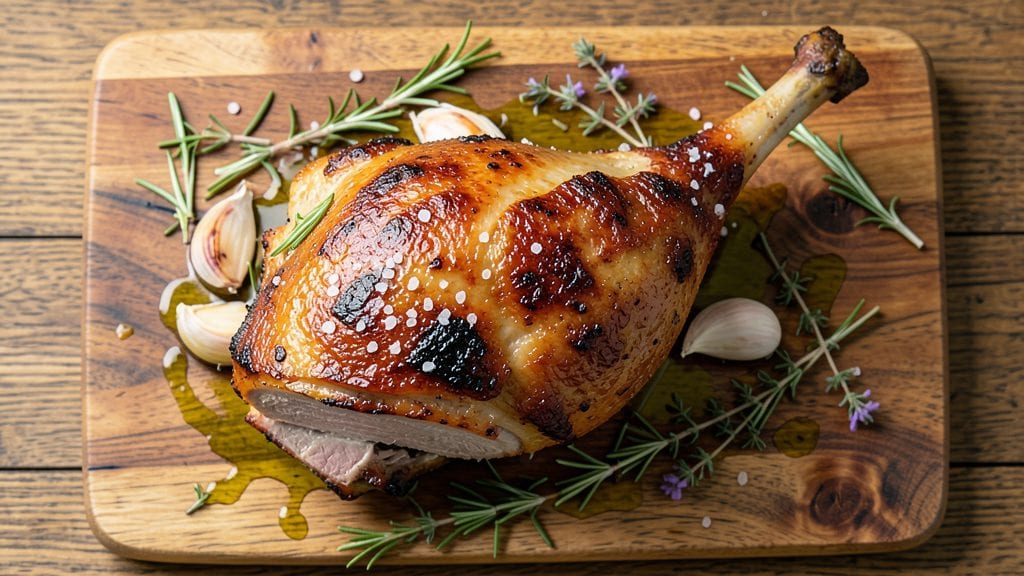
This pork leg recipe transforms tough cuts into melt-in-your-mouth perfection—crispy skin crackling with each bite, juicy pink meat that falls apart at the touch. This recipe combines traditional slow-roasting techniques with a modern herb crust for restaurant-quality results at home.
The secret lies in precise timing, basting, and understanding when to pull it from the oven for that ideal internal temperature.
What sets this pork leg apart is the balance between crispy exterior and tender interior. You'll start with a dry-brined pork leg, which ensures moisture retention while the skin develops that coveted crackling texture.
A simple herb crust—garlic, rosemary, and thyme—adds aromatic depth without overpowering the natural pork flavor. The slow-roasting process, combined with occasional basting, guarantees juicy, fall-apart tenderness.
By the time you serve this masterpiece, your kitchen will smell like a European countryside feast. The crispy skin gives way to succulent, pink-hued meat that practically melts in your mouth.
This dish pairs beautifully with classic sides like roasted potatoes, caramelized onions, or a crisp green salad. The leftovers reheat wonderfully, making it a perfect meal-prep candidate for busy weeks.
Whether you're preparing for a special occasion or simply craving a showstopping centerpiece, this pork leg recipe delivers professional-quality results with minimal fuss. The key is patience—letting the pork work its magic in the oven while you focus on perfecting the sides.
Ready to elevate your roast game? Let's get started.
Ingredients for pork leg
Six pounds of pork leg, aromatic herbs, and a dry brine secret for restaurant-quality crispy skin and juicy magic.
| Ingredient | Amount | Notes |
|---|---|---|
| Pork Leg (Bone-In) 🐖 | 6 lb | Center-cut, skin-on for crispiness |
| Diamond Crystal Kosher Salt 🧂 | ½ cup | For dry brine, coarse grain preferred |
| Fresh Rosemary 🌿 | ¼ cup | Finely chopped, stems removed |
| Fresh Thyme 🌿 | ⅛ cup | Leaves only, stems discarded |
| Garlic Cloves 🧄 | 8 cloves | Peeled, minced for crust |
| Extra-Virgin Olive Oil 🫒 | ¼ cup | For basting and crust |
| Unsalted Butter 🧈 | ¼ cup | Softened, for skin crisping |
| Honey 🍯 | 2 tbsp | For glaze, local preferred |
| Mustard Powder 🌶️ | 1 tsp | Dijon-style for depth |
| Ground Black Pepper 🌶️ | 1 ½ tsp | Freshly cracked, coarse grind |
| Fresh Sage Leaves 🌿 | 0.1 cup | Chopped, for aroma |
| Apple Cider Vinegar 🍎 | 1 tbsp | For basting liquid |
| Yellow Onion 🧅 | 1 whole | Quartered, for basting |
The pork leg is non-negotiable here—center-cut bone-in gives you the best balance of flavor and fat for rendering. Skip the pre-cut supermarket pieces; ask your butcher for a 6-pound leg with a thick layer of fat cap. The skin needs time to crisp, so don't trim it. For the dry brine, Diamond Crystal kosher salt is ideal—its coarse texture clings better than table salt. I always buy mine in bulk from Whole Foods or my local specialty butcher. Fresh herbs are a must: rosemary and thyme from the grocery store's produce section should smell vibrant, not wilted. If they're past their prime, dried works at one-third the amount, but fresh delivers that restaurant-quality aroma.
No fresh rosemary? Substitute dried at one-third the quantity, but toast it first in a dry pan for 30 seconds to wake up the flavor. Short on time? Pre-chopped herb mixes from Trader Joe's save effort without sacrificing quality. The honey glaze can be swapped for maple syrup or brown sugar, but honey adds that subtle floral note. For the mustard powder, Dijon-style gives the best depth—regular yellow mustard won't cut it. The apple cider vinegar in the basting liquid adds brightness; if you're out, white wine vinegar works too. The onion in the basting isn't just for flavor—it helps keep the pork moist during roasting. Use a yellow onion for mild sweetness or a red for color.
This pork leg needs patience—plan for 3-4 hours in the oven. The dry brine should sit overnight, uncovered in the fridge. For storage, wrap leftovers tightly in foil and refrigerate for up to 4 days. It reheats beautifully—wrap in foil and warm in a 350°F oven for 20 minutes. The crispy skin will soften slightly but still deliver that satisfying crunch. Freeze portions for up to 3 months by wrapping tightly in plastic wrap before foil. Thaw overnight in the fridge before reheating.
Why You'll Love This Recipe
- One-Pan Magic: I swear by this recipe because it’s that simple—just salt, herbs, and garlic on a single sheet pan. No chopping, no fuss, and the oven does all the work while I sip my coffee.
- Crispy-Creamy Payoff: That bone-in magic transforms the pork into melt-in-your-mouth tenderness with a crackling crust. The rosemary and thyme? They infuse the meat like a fragrant hug—herby, garlicky, and impossible to resist.
- Leftovers That Shine: Between us, this recipe makes so much more than you need. I’ll be real: my family fights over the slices the next day, and I’ve even turned cold cuts into sandwiches or fried rice without breaking a sweat.
- Budget-Friendly Feast: A whole pork leg costs less than takeout for four, and it feeds a crowd. Honestly, I’ve used this for potlucks, game days, and lazy Sundays—it’s my go-to when I want to impress without overspending.
Step-by-step instructions for slow-roasted pork leg
Here's how to transform a simple pork leg into showstopping crispy skin and melt-in-your-mouth pink perfection.
Dry Brine the Pork Leg for Maximum Flavor
Place the 6 lb pork leg (bone-in) skin-side up on a wire rack set over a rimmed baking sheet. Pat the skin completely dry with paper towels—this is non-negotiable for crispiness. In a small bowl, combine the 0.5 cup Diamond Crystal kosher salt, 1.5 tsp ground black pepper, 1 tsp mustard powder, and 0.125 cup fresh thyme leaves. Rub this mixture all over the pork leg, pressing firmly into the skin and working it into crevices. The salt will draw out moisture, creating that legendary crackling crust.
Cover loosely with plastic wrap and refrigerate for 12-24 hours. This dry brine transforms the meat from ordinary to extraordinary—trust me, the wait is worth it. After brining, remove the pork from the fridge and let it sit at room temperature for 1 hour before roasting. This ensures even cooking and prevents chilling the oven.
Build the Herb Crust and Prepare the Basting Mixture
In a small bowl, mix together the 0.25 cup extra-virgin olive oil, 0.25 cup unsalted butter (softened), 2 tbsp honey, 1 tbsp apple cider vinegar, 0.25 cup finely chopped fresh rosemary, 0.1 cup chopped fresh sage leaves, and the 8 minced garlic cloves. Spread this mixture all over the pork leg, pressing it into the skin to create an aromatic crust. Quarter the 1 whole yellow onion and place it in a small saucepan with ½ cup water—this will create a flavorful basting liquid.
Preheat your oven to 325°F. The low temperature is key here—it allows the collagen to break down slowly, resulting in that irresistible juicy texture. Place the pork leg fat-side up on a rack in a roasting pan. The rack ensures air circulates all around, preventing soggy skin. Pour the onion-water mixture into the pan—this will steam during cooking, keeping the meat moist.
Roast Low and Slow Until Probe-Tender
Roast the pork leg for 3 hours at 325°F. After this initial period, increase the oven temperature to 375°F and continue roasting for another 1.5-2 hours, basting every 45 minutes with the accumulated pan juices. You're aiming for an internal temperature of 195-203°F when measured in the thickest part of the meat—this is when the pork becomes fork-tender and pulls apart easily. The skin should be deep golden brown with crispy patches that crackle when touched.
Here's the thing—don't rush this step. The collagen needs time to transform into gelatin, which is what makes pulled pork so irresistible. If the skin starts to darken too quickly, tent it loosely with foil to prevent over-browning while still allowing it to crisp. The pork is done when it reaches probe-tender perfection, not when it hits a specific temperature.
Rest and Crisp the Skin to Perfection
Once the pork reaches the desired internal temperature, transfer it to a cutting board and tent loosely with foil. Let it rest for 30 minutes—this allows the juices to redistribute throughout the meat. While it rests, increase your oven temperature to 425°F. This final crisping step is what separates good pork from extraordinary pork.
Place the rested pork leg back in the oven, skin-side up, and roast for 15-20 minutes until the skin is deep mahogany brown and crispy enough to crackle. The high heat caramelizes the sugars in the skin, creating that coveted crispy texture while keeping the interior juicy. The pork should pull apart with just a gentle tug—this is your cue that it's ready to serve.
Pro Tips For Making Pork Leg
- Trim the Fat First: Scrape off that thick layer of fat on the skin side—yes, it’s messy, but it keeps your pork from rendering grease like a soggy disaster. I learned this the hard way when my first attempt left a greasy pan and a pork leg that tasted more like bacon fat than herb-crusted perfection.
- Salt the Night Before: Toss the pork leg in 2 tablespoons of kosher salt (and a little black pepper) before you even think about cooking. Let it sit uncovered in the fridge overnight—this seasons the meat deep, not just on the surface, and prevents dryness. (Yes, even if you’re impatient like me, this makes a real difference.)
- Skip the Crowding: If you’re roasting, don’t stack garlic cloves or herbs on top like a decorative centerpiece—scatter them loosely around the pork. Overcrowding steams the meat instead of browning it, and you’ll end up with sad, pale garlic that tastes like it was boiled. Give that pork leg room to breathe.
- Start Hot, Finish Low: Blast the oven to 425°F (220°C) for the first 20 minutes to render fat and crisp the skin—then drop to 325°F (165°C) for the rest. I used to ignore this, and my pork would either burn on the outside or stay raw inside. The high heat seals the juices; the low heat does the slow work. No shortcuts here.
Regional styles of pork leg
German Slow-Roasted
In Germany, pork leg is often slow-roasted with a focus on crispy skin and minimal seasoning. The secret here is a dry brine with just 1 tsp kosher salt per pound and fresh black pepper, then roasted at 275°F for 4-5 hours until the internal temperature hits 203°F.
The Germans call this Schweinehaxe, and they serve it with red cabbage and buttered potatoes. The key difference? They skip the herb crust and rely on the natural fat rendering for flavor. 🌍
Caribbean Jerk Style
For a bold twist, try a Caribbean jerk-inspired pork leg. Marinate the meat overnight in a blend of 2 tbsp jerk seasoning (like Badia or Epices), 1 tbsp soy sauce, 1 tbsp brown sugar, and 1 lime.
Roast at 300°F for 3 hours, then finish with a 425°F broil for 10 minutes to crisp the skin. Serve with mango salsa and rice and peas. The jerk spices add a smoky, spicy kick that pairs perfectly with tropical flavors. 🌶️
Spanish Cochinillo
In Spain, cochinillo asado is a beloved dish featuring a young, milk-fed pork leg. The secret is roasting it at 350°F for 2-3 hours until the skin is golden and crispy.
Season simply with salt and a sprinkle of smoked paprika, then serve with roasted garlic potatoes and simple green salad. The Spanish method emphasizes simplicity, letting the natural sweetness of the pork shine through.
The result is tender, juicy meat with a delicate skin that practically dissolves in your mouth. 🇪🇸
Southern BBQ Pulled
For a Southern-style pulled pork leg, slow-cook it in a smoker at 225°F for 6-8 hours with a mix of yellow mustard, brown sugar, and apple cider vinegar as the mop. Once it reaches 203°F, shred the meat and mix it with the cooking juices.
Serve on buns with coleslaw or over mac and cheese. The Southern approach focuses on tenderness and smoky flavor, making it perfect for sandwiches or tacos. 🍖
Asian Five-Spice Glaze
Give your pork leg an Asian twist with a five-spice glaze. Mix 1 tbsp Chinese five-spice powder, 2 tbsp honey, 1 tbsp soy sauce, and 1 tbsp rice vinegar, then brush it on the pork during the last 30 minutes of roasting at 375°F.
The glaze caramelizes beautifully, creating a sticky, aromatic crust. Pair it with steamed jasmine rice and stir-fried bok choy for a fusion feast. The five-spice blend adds warmth and depth that complements the pork perfectly. 🌏
Nutrition facts
Frequently asked questions
Why does the recipe call for a dry brine instead of a wet brine?
A dry brine creates the perfect crispy skin while keeping the meat juicy. The salt draws out moisture, which then reabsorbs during cooking, creating a crackling crust without making the pork soggy. Wet brines work differently—they infuse flavor but can't produce the same crispy texture. For this recipe, the dry method is key to achieving that coveted restaurant-quality skin.
How do I know when the pork leg is fully cooked?
Use a meat thermometer to check the internal temperature in the thickest part of the meat. Aim for 195-203°F—this is when the pork becomes fork-tender and pulls apart easily. The skin should also be deep golden brown with crispy patches. If you don't have a thermometer, cut into the thickest part; it should feel tender and juicy, not firm or rubbery.
Can I make this recipe without a wire rack?
Yes, but your pork leg might not get as crispy. Place the pork leg directly on a roasting pan, but make sure the fat side is up. To improve air circulation, prop up the sides of the pan with aluminum foil or a small baking sheet to create a slight gap. This helps prevent soggy skin, though it won't be as perfect as using a rack.
What's the best way to reheat leftover pork leg?
Wrap the leftovers tightly in foil and reheat in a 350°F oven for 20-30 minutes until warmed through. The skin will soften slightly but still hold some crispiness. For sandwiches or pulled pork, reheat in a skillet with a splash of broth or apple juice to keep it moist. Avoid microwaving—it can make the meat dry and the skin rubbery.
Can I substitute pork shoulder for pork leg?
No, pork shoulder and pork leg are different cuts with distinct textures and cooking methods. Pork leg has more fat and connective tissue, making it ideal for slow roasting with crispy skin. Shoulder is better for pulled pork or braised dishes. If you're set on using shoulder, adjust the cooking time and method accordingly—it won't yield the same results as a pork leg.