
Main Courses
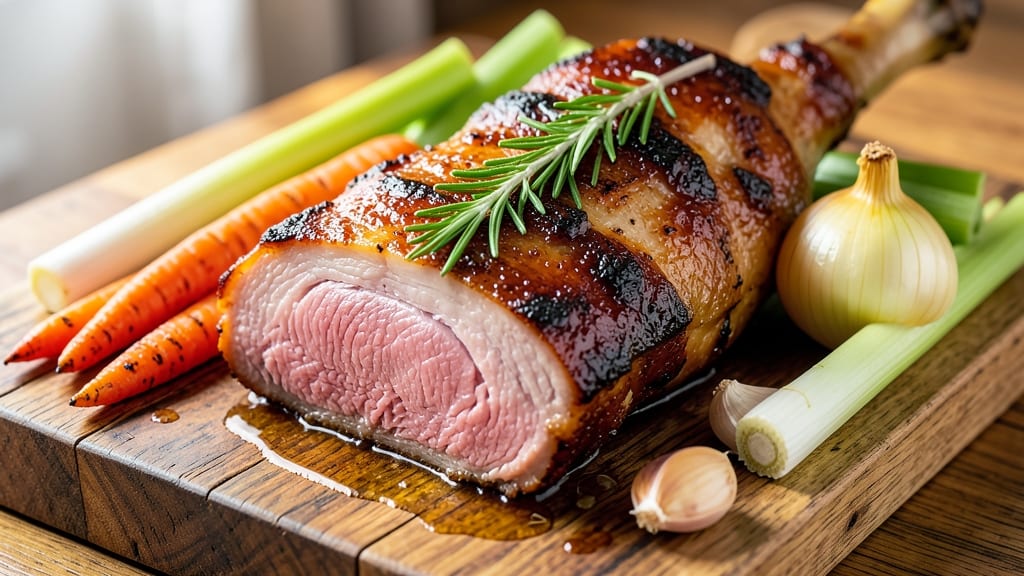
Slow-braising pork legs transforms tough cuts into melt-in-your-mouth perfection that falls apart with every pull. Standing on a step stool in my Nonna's kitchen in Sicily, I first learned how slow cooking magic turns simple ingredients into something extraordinary.
The secret? Low heat, liquid, and time—no fancy equipment needed, just patience and a little love.
This method works wonders with pork shoulder, ham, or leg roast—whatever cut you choose, the result is the same: tender, juicy meat that's so flavorful, it disappears faster than you can say "second helping."
The slow braise breaks down collagen into rich, velvety sauce that clings to every bite, making even the most budget-friendly cut taste like a special occasion. It's the kind of dish that makes your kitchen smell like a Sunday family dinner.
By the time you're done, you'll have pork so tender it practically shreds itself, with a glossy glaze that adds just the right amount of sweetness to balance the savory meat. The best part? This recipe is foolproof—no guesswork, no stress, just pure, satisfying results.
Serve it with crusty bread to soak up every last drop of that flavorful sauce, and get ready for compliments that'll make you the star of the dinner table.
Whether you're feeding a crowd or just craving comfort food, this pork leg recipe delivers restaurant-quality tenderness with minimal effort. Here's how to make it happen—your taste buds will thank you.
Ingredients for pork legs
Four pounds of pork plus a handful of pantry staples—this is your ticket to melt-in-your-mouth perfection.
| Ingredient | Amount | Notes |
|---|---|---|
| Pork Leg Roast 🍖 | 4 lb | Bone-in, skin-on preferred |
| Yellow Onion 🧅 | 2 whole | Sliced into wedges |
| Carrots 🥕 | 4 whole | Medium size, peeled |
| Celery Stalks 🌿 | 3 whole | Cut into 2-inch pieces |
| Garlic Cloves 🧄 | 6 cloves | Smashed, not minced |
| Fresh Rosemary 🌿 | ¼ cup | Chopped, stems removed |
| Fresh Thyme 🌿 | ¼ cup | Leaves only, chopped |
| Dry Red Wine 🍷 | 1 ½ cups | Bold variety like Cabernet |
| Beef Broth 💧 | 2 cups | Low-sodium preferred |
| Tomato Paste 🍅 | ¼ cup | Smooth, not chunky |
| Olive Oil 🫒 | ¼ cup | Extra-virgin for richness |
| Brown Sugar 🍯 | ¼ cup | Light or dark preferred |
| Salt 🧂 | 1 ½ tsp | Kosher or sea salt |
| Black Pepper 🌶️ | 1 tsp | Freshly ground preferred |
| Balsamic Vinegar 🍶 | 2 tbsp | For finishing glaze |
The pork leg is the star, so don't skimp on quality. Bone-in, skin-on gives you the best flavor and texture—Costco or Whole Foods usually have great cuts at reasonable prices. If you can't find a whole leg, a pork shoulder works just as well. Look for good marbling and vibrant color. The onions, carrots, and celery form the aromatic base—Trader Joe's sells pre-cut mirepoix if you're short on time. Fresh herbs make all the difference here, so grab them from the store's produce section and use them within a week for maximum flavor.
No red wine? Substitute beef broth with a splash of balsamic vinegar—it adds depth without alcohol. Short on fresh rosemary or thyme? Dried works at one-third the amount, but fresh is worth the trip to the store. The tomato paste can be a squeeze tube from Trader Joe's for convenience, but a can works too. For the brown sugar, light or dark both work—pick what you have. The balsamic vinegar adds that glossy glaze at the end, so don't skip it if you can help it. If you're making this ahead, the flavors only get better over time—it's one of the reasons this recipe is foolproof.
This dish tastes even better the next day, so plan ahead. Store leftovers in the fridge for up to 5 days or freeze for 3 months. The sauce thickens as it cools, so a splash of broth or water brings it back to perfection when reheating. I like to portion mine into containers for easy lunches—just add a side of crusty bread and you've got a meal that feels like a restaurant dinner. The pork will practically fall apart when you pull it, so use tongs or a fork to shred it directly into bowls.
Why You'll Love This Recipe
- The secret’s in the slow cook: golden, crackling skin on the outside, tender enough to fall apart inside. Add a splash of apple cider vinegar at the end, and you’ve got that perfect balance—sweet, savory, with a little tang that makes every bite worth it.
- One-Pot Magic: I swear by this—just toss the pork leg in with chopped onions, carrots, celery, and garlic, cover with broth, and let the oven do the work. No flipping, no fussing, no extra dishes. That’s my kind of dinner.
- Crispy-Creamy Payoff: The secret’s in the slow cook: golden, crackling skin on the outside, tender enough to fall apart inside. Add a splash of apple cider vinegar at the end, and you’ve got that perfect balance—sweet, savory, with a little tang that makes every bite worth it.
- Party in a Pan: Between us, this is my go-to for gatherings. Feed six with ease, and the leftovers? Even better the next day. (Yes, even on a Tuesday night.) Plus, the aroma fills the whole house—guests will think you slaved away for hours.
Step-by-step instructions for slow-braised pork legs
Here's how to transform a simple pork leg into melt-in-your-mouth perfection.
Sear the Pork Leg for Deep Flavor
Pat the 4 lb pork leg roast dry with paper towels—this ensures maximum crispiness. Heat the 0.25 cup olive oil in a large Dutch oven over medium-high heat until shimmering. Place the pork leg fat-side down and sear for 10-12 minutes until the skin is golden brown and crispy in spots. Flip and sear the other side for another 5 minutes.
Here's the thing—don't rush this step. The pork should develop a deep golden crust that locks in juices during the long braise. If you notice the fat burning before the skin crisps, reduce heat slightly and give it more time. The goal is that rich, caramelized flavor that forms the foundation of your dish.
Build the Aromatic Base
Remove the pork leg and set it aside. In the same Dutch oven, add the sliced 2 whole yellow onion wedges, 4 whole carrots (cut into 2-inch chunks), and 3 whole celery stalks (cut into 2-inch pieces). Cook for 8-10 minutes until the vegetables begin to soften and release their natural sweetness.
Add the 6 smashed garlic cloves, 0.25 cup chopped fresh rosemary, and 0.25 cup chopped fresh thyme. Stir everything together and cook for another 2 minutes until fragrant. This aromatic base is what transforms simple vegetables into flavor bombs that infuse the pork throughout the braising process.
Deglaze and Simmer the Braising Liquid
Pour in the 1.5 cups dry red wine, scraping up all the browned bits from the bottom of the pot with a wooden spoon. Let it simmer for 5 minutes until the wine reduces by about half. Stir in the 2 cups beef broth, 0.25 cup tomato paste, 0.25 cup brown sugar, 1.5 tsp salt, and 1 tsp black pepper. Bring to a gentle boil.
This is where the magic happens—the wine's acidity helps tenderize the meat while the sugar and tomato paste create a rich, glossy sauce. The broth provides moisture that keeps the pork juicy during the long cook. Don't skip the stirring here—you want all those spices evenly distributed throughout the liquid.
Braise Until Fork-Tender
Return the pork leg to the Dutch oven, fat-side up. Cover tightly with a lid and transfer to a preheated 300°F oven. Braise for 3 to 3.5 hours, depending on your oven, until the pork is fork-tender and the internal temperature reaches 200°F. Here's the secret: I check for doneness by inserting a knife into the thickest part—if it slides in easily and the juices run clear, it's perfect.
Real talk: Your oven might run hot, so start checking at the 2.5-hour mark. The pork should be so tender it practically falls apart when you pull it out. If you notice the liquid evaporating too quickly, add a splash of water or broth to maintain moisture—this keeps the pork from drying out.
Finish with Balsamic Glaze
Remove the pork leg and let it rest for 15 minutes before serving. Skim any excess fat from the braising liquid, then return the pot to medium heat. Add the 2 tbsp balsamic vinegar and simmer for 3-4 minutes until slightly reduced and syrupy. This glaze adds a beautiful finish that ties all the flavors together.
Slice the pork leg against the grain into ½-inch thick pieces. Serve the meat with the braising liquid spooned over the top and the roasted vegetables on the side. Each bite should be incredibly tender with layers of flavor from the wine, herbs, and caramelized crust. The balsamic glaze adds that perfect sweet-tangy finish that makes this dish truly irresistible.
Pro Tips For Making Pork Legs
- CRANK THE OVEN TO 425°F FIRST: I used to start low and slow, but pork legs need that initial blast to render fat fast and lock in flavor. Hit 425°F for 30 minutes—yes, even if your oven takes 15 minutes to preheat—then drop to 300°F. That crust? Non-negotiable for juicy meat.
- PEEL AND CHOP VEGETABLES SMALL: Whole carrots and celery stalks turn to mush. Dice onions into ¼-inch chunks, carrots into ½-inch pieces, and celery into ½-inch batons. They’ll soften evenly and infuse flavor without falling apart—no one wants a soggy side dish.
- DON’T SKIP THE REST: I learned this the hard way—cutting into pork legs right out of the oven dries them out. Give it a solid 20-30 minutes under foil before slicing. The juices redistribute, and the meat stays tender. (Your future self will thank you.)
- USE A MEAT THERMOMETER: Guessing is how you end up with dry pork. Aim for 145°F internal temp—no peeking! The carryover cooking will push it to 150°F. If you don’t have one, start checking at 135°F and plan for 10-15 minutes extra. (Yes, even if the recipe says "until done.")
Perfect pairings for this pork legs
Classic Italian Sides
My Nonna always served pork legs with creamy polenta—just 1 cup polenta cooked in 4 cups chicken broth until thick and creamy. Stir in 2 tbsp butter and a pinch of nutmeg at the end for that authentic touch.
The soft texture soaks up all the braising sauce beautifully. 🌿
For a lighter option, try roasted rosemary potatoes—toss 2 lbs baby potatoes with 2 tbsp olive oil, 1 tbsp fresh rosemary, and 1 tsp garlic powder. Roast at 400°F for 35-40 minutes until golden. The crispy edges contrast perfectly with the tender pork.
Fresh Garden Pairings
Nothing beats a crisp arugula salad with lemon vinaigrette to cut through the richness. Toss 4 cups baby arugula with 2 tbsp olive oil, 1 tbsp lemon juice, and a pinch of salt and pepper.
Add ¼ cup shaved Parmesan for extra depth. This salad adds a peppery freshness that balances the wine-braised pork beautifully. 🥗
For a heartier side, grilled asparagus with lemon zest is a winner. Toss 1 bunch asparagus (trimmed) with 1 tbsp olive oil, zest of 1 lemon, and ½ tsp salt. Grill for 4-5 minutes per side until tender-crisp. The bright acidity cleanses your palate between bites.
Bread and Sauces
You can't go wrong with crusty Italian bread for soaking up that delicious braising sauce. Warm slices in the oven at 350°F for 5 minutes to make them extra crispy. I love using a ciabatta roll from my local Italian deli—it's perfect for tearing into chunks and dipping. 🍞
For an extra-special touch, serve with apple mostarda—a sweet and tangy condiment made with sliced apples, mustard, and honey. The sweetness complements the savory pork beautifully.
You can find it at specialty Italian markets or make your own by simmering 2 cups apple slices with ¼ cup Dijon mustard and 2 tbsp honey for 15 minutes.
Wine and Beer Pairings
A bold Chianti Classico from Tuscany is my go-to wine pairing—its medium-body and dry finish stand up to the rich flavors of the pork. Look for a Sangiovese-based wine with notes of cherry and earth. The acidity cuts through the fat, making each bite more refreshing. 🍷
If you prefer beer, a Belgian-style dubbel like Westmalle Tripel works wonders. The caramel and spice notes complement the brown sugar in the braising liquid, while the hops add a nice contrast. For a lighter option, a pilsner like Peroni keeps things crisp and refreshing.
Nutrition facts
Frequently asked questions
What's the difference between pork leg roast and pork shoulder?
A pork leg roast comes from the ham portion (rear leg) and has more connective tissue, making it perfect for slow braising. Pork shoulder (butt) is from the front and has more fat marbling. Both work here, but the leg roast stays juicier during long cooking. For this recipe, either cut works—just adjust cooking time if using shoulder (it may need 15-20 minutes longer).
Can I make this in a slow cooker instead of the oven?
Sear the pork first, then transfer everything to a slow cooker. Cook on low for 8-10 hours or high for 5-6 hours. The liquid will be thinner, so reduce it on the stove after cooking to make a glaze. Just add 1 cup broth at the end to thicken. The texture will be slightly different but still incredibly tender.
Why does my pork leg turn out tough instead of tender?
This usually happens from one of three things: not enough cooking time (aim for 200°F internal temp), skipping the rest time (always let it rest 15 minutes before slicing), or too high heat (keep oven at 300°F max). The key is patience—the collagen needs time to break down. If it's still tough, return it to 300°F for another 30 minutes with extra liquid.
How far ahead can I prep this dish?
This recipe actually tastes better the next day! Prep everything up to Step 3 (braising liquid), cover, and refrigerate overnight. When ready to cook, sear the pork, add the prepped liquid, and braise as directed. The flavors deepen as they sit, and the pork will be even more tender. For make-ahead convenience, I often prep the night before and cook in the morning for a stress-free Sunday dinner.
What's the best way to reheat leftovers?
Reheat gently in a skillet with a splash of broth or water over low heat until warmed through (165°F). Microwaving can dry it out. For extra flavor, add a little more balsamic vinegar or a splash of red wine to the reheating liquid. Leftovers keep for 5 days in the fridge or 3 months frozen. The sauce thickens when cold, so thin with broth when reheating.