
Main Courses
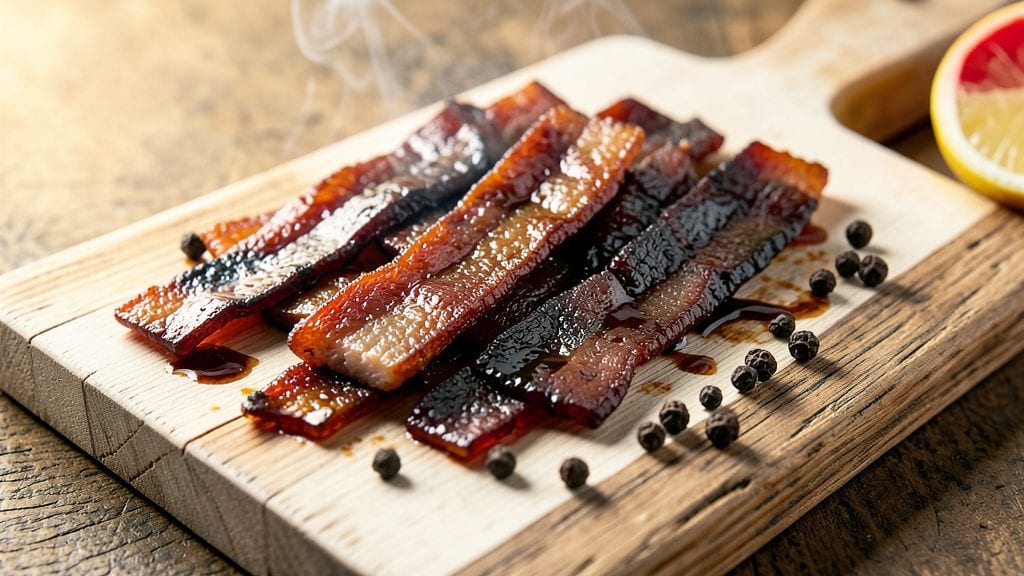
Perfecting homemade pork loin jerky means transforming tender meat into a shelf-stable protein powerhouse that keeps for 30 days—no preservatives needed. Growing up in small-town Georgia, I learned that the secret lies in precise curing, slow drying, and a marinade that balances smoky depth with sweetness.
This isn't just jerky; it's a method I've refined over years of cooking for 2,000 pounds of pork weekly at my restaurant.
The process starts with a foolproof marinade of soy sauce, brown sugar, and spices that tenderizes the meat while building flavor. We'll slice the pork loin against the grain for maximum tenderness, then cure it safely using a combination of salt and natural preservatives—no nitrates required.
The key to success is patience: proper drying time ensures food safety while developing that signature chewy texture.
By the end, you'll have jerky with a rich mahogany hue, deep smoky aroma, and a perfect balance of sweet and savory flavors. Each piece stays tender yet firm, packed with protein and shelf-stable for up to a month in your pantry.
This is the kind of jerky that makes road trips taste like home and transforms simple snacks into gourmet experiences.
Whether you're stocking your emergency pantry, prepping for camping, or just craving a smoky-sweet snack, this recipe delivers professional-quality results at home. Let's get started with a method that's been battle-tested in both my kitchen and on the BBQ competition circuit.
Ingredients for pork loin jerky
Four pounds of pork loin and 12 simple ingredients transform into jerky that lasts 30 days.
| Ingredient | Amount | Notes |
|---|---|---|
| Pork Loin 🥩 | 2 lb | Center-cut, sliced against grain |
| Soy Sauce 🍶 | ½ cup | Low-sodium preferred for balance |
| Light Brown Sugar 🍚 | ½ cup | Packed, not granulated |
| Worcestershire Sauce 🍶 | 2 tbsp | High-quality, anchovy-based |
| Liquid Smoke 🔥 | 1 tbsp | For authentic smoky depth |
| Black Pepper 🌶️ | 1 tbsp | Freshly cracked, coarse grind |
| Garlic Powder 🧄 | 1 tbsp | Not garlic salt |
| Onion Powder 🧅 | 1 tbsp | For subtle sweetness |
| Ground Mustard 🌶️ | 1 tbsp | Dry, not prepared |
| Curing Salt (Prague Powder #2) 🧂 | 1 tbsp | No nitrates, essential for safety |
| Apple Cider Vinegar 🍏 | ¼ cup | For tenderizing and tang |
| Water 💧 | ¼ cup | For marinade consistency |
The pork loin is non-negotiable—center-cut with the grain running lengthwise. Costco or your butcher will have the best quality, but the supermarket works too. Look for lean but not too lean—you want that slight marbling for flavor. Slice it against the grain (about 1/4-inch thick) for that perfect chewy texture. I always buy extra because I can't resist making double batches. The curing salt is critical—Prague Powder #2 is nitrate-free and does the heavy lifting for safety while keeping the jerky shelf-stable. Grab it at Walmart or Amazon if your local store doesn't carry it.
No liquid smoke? Smoked paprika at double the amount works in a pinch, but it won't have that same deep, campfire aroma. The brown sugar should be light—dark sugar burns faster and can make the jerky too sweet. Worcestershire sauce is a game-changer here (the anchovy base adds umami), but if you're avoiding it, extra soy sauce plus a pinch of MSG gets you close. The apple cider vinegar tenderizes the meat—white vinegar works too, but it has a sharper bite. For the spices, toast your black pepper in a dry pan for 30 seconds to deepen the flavor (trust me on this).
Marinade keeps in the fridge for up to 2 weeks if you want to prep ahead—just stir before using. The jerky itself stays good for 30 days in a cool, dark pantry (or 6 months if vacuum-sealed). I store mine in glass jars with tight lids—no plastic bags needed. For extra shelf life, freeze portions for up to a year. The first batch is always the best—once you try homemade, store-bought jerky just won't cut it.
Why You'll Love This Recipe
- Here’s what sold me: I can make it in my dehydrator on a Sunday, or throw it in the oven at 175°F if I’m in a hurry. Either way, it’s ready in hours, not days, and keeps like a dream.
- Five-Ingredient Magic: That’s it—just pork loin, soy sauce, brown sugar, Worcestershire, and a splash of liquid smoke. No fancy prep, no stressing over measurements. I keep the marinade in a jar in my fridge for when I’m craving something smoky without the fuss.
- Smoky-Sweet Bite: The liquid smoke gives it that campfire depth, while the brown sugar keeps it from being too salty. Honestly, the first time I tried it, I ate half the batch straight from the dehydrator—no shame.
- Dehydrator or Oven: Here’s what sold me: I can make it in my dehydrator on a Sunday, or throw it in the oven at 175°F if I’m in a hurry. Either way, it’s ready in hours, not days, and keeps like a dream.
Step-by-step instructions for smoky-sweet pork loin jerky
Here's how to transform tender pork loin into rich, flavorful jerky that stays good for weeks.
Prepare and Slice the Pork Loin
Begin by trimming any excess fat from the 2 lb pork loin, leaving just a thin layer for moisture. Place the meat in the freezer for 20-30 minutes until firm enough to slice cleanly. Using a sharp knife, cut the pork against the grain into strips about ¼-inch thick and 2-3 inches long. This ensures your jerky will be tender rather than chewy.
Arrange the slices on a plate and refrigerate while you prepare the marinade. The cold temperature helps keep the meat firm and prevents it from shrinking as it absorbs the marinade. You'll want about 4 servings of jerky strips, so adjust your slicing if needed to yield roughly 16-20 strips total.
Mix the Marinade
In a large bowl, combine the 0.5 cup light brown sugar, 0.5 cup soy sauce, 2 tbsp Worcestershire sauce, 1 tbsp liquid smoke, 1 tbsp black pepper, 1 tbsp garlic powder, 1 tbsp onion powder, 1 tbsp ground mustard, and 1 tbsp curing salt (Prague Powder #2). Stir well to fully dissolve the sugar and create a smooth paste.
Next, add the 0.25 cup apple cider vinegar and 0.25 cup water, mixing until everything is evenly combined. The marinade should have a thick, syrupy consistency—this helps it cling to the meat and penetrate deeply. If it's too thick, add 1-2 teaspoons of water to loosen it slightly. This marinade is the heart of your jerky, delivering that perfect balance of smoky, sweet, and tangy flavors.
Coat the Meat and Cure
Transfer the pork strips to a resealable plastic bag or large container. Pour the marinade over the meat and seal the bag, pressing out any air pockets to ensure full coverage. Massage the marinade into the meat for 2-3 minutes to distribute it evenly. Place the bag in the refrigerator and let the pork cure for 12-24 hours. This step is crucial—it tenderizes the meat and ensures safe preservation.
After curing, remove the pork from the marinade and let it drain on a wire rack for 10 minutes. This prevents excess moisture from steaming the jerky during drying. Pat the strips dry with paper towels if needed. The meat should feel firm but still pliable, and the marinade should have fully penetrated the surface.
Dry the Jerky
Preheat your dehydrator to 160°F or set your oven to its lowest setting with the door slightly ajar for airflow. Arrange the pork strips on the dehydrator trays or an oven-safe rack, ensuring they don’t overlap. This allows air to circulate freely and dries the jerky evenly.
Dry the jerky for 4-6 hours, checking periodically to ensure it’s not sticking. You’ll know it’s ready when the strips are leathery, bend but don’t break, and feel dry to the touch. If using an oven, prop the door open with a wooden spoon and check every 30 minutes to prevent overheating. Properly dried jerky will last 30 days in the refrigerator or up to 6 months in the freezer.
Cool and Store
Once fully dried, transfer the jerky to a clean, airtight container or resealable bag. Let it cool completely to room temperature before sealing. This prevents condensation from forming inside the container, which can spoil the jerky. Store in the refrigerator for up to 30 days or freeze for long-term storage.
Your smoky-sweet pork loin jerky is now ready to enjoy! Cut into individual servings as needed, and pair with your favorite dips or snack directly. The perfect balance of sweet, smoky, and savory flavors makes this jerky a standout—ideal for hiking, lunchboxes, or just a tasty snack anytime.
Pro Tips For Making Pork Loin Jerky
- Trim the Fat First: Pork loin’s fat cap is sneaky—it’ll make your jerky greasy and uneven. Grab a sharp knife and slice it off before slicing the meat thin; I learned this the hard way when my first batch turned out slick and stuck together.
- Marinate Overnight, Not Hours: Soy sauce and Worcestershire need time to penetrate, but 4–6 hours max is enough—any longer and the sugar starts breaking down the meat. I used to rush it, and the jerky always tasted flat; patience here makes the difference.
- Skip the Crowding in Oven: Stacking slices too close traps steam and turns your jerky soggy. Space them at least 1 inch apart on the rack—yes, it means more batches, but crispy jerky is worth the wait. (Your future self will thank you.)
- Use a Meat Thermometer: Jerky’s done at 160°F, but ovens lie. I used to eyeball it and ended up with dry, rubbery strips. A cheap thermometer guarantees perfect texture—no guesswork, no regret. (Sounds weird, but it works.)
Troubleshooting your pork loin jerky
Shrinking or Warping
If your jerky strips shrink significantly or warp during drying, it’s usually a sign of uneven moisture loss or too-high heat. I’ve seen this happen when using an oven without proper airflow—always prop the door open with a wooden spoon if using conventional oven drying.
For dehydrators, check that the temperature stays consistent at 160°F—fluctuations cause uneven drying. 🌡️
To fix this, adjust your drying method: use a dehydrator instead of an oven if possible, or place a tray of water near the oven rack to add humidity. Also, ensure your pork slices are ¼-inch thick—thinner slices dry faster and are more prone to warping.
Sticky or Gummy Texture
Gummy jerky means it didn’t dry long enough or had excess moisture trapped during curing. I’ve made this mistake when rushing the process—always err on the side of longer drying times rather than cutting them short.
Your jerky should bend but not break when fully dried; if it’s still pliable, return it to the dehydrator for another 1-2 hours.
Prevent this by patting strips dry with paper towels before drying and ensuring your marinade isn’t too wet. If using a dehydrator, place a wire rack over the trays to allow airflow underneath. For oven drying, avoid covering the meat with foil—this traps steam and prevents proper drying. 💡
Spoilage or Mold
Mold or an off smell means your jerky didn’t cure properly or wasn’t dried to a safe moisture level. This is critical—never risk eating jerky that looks or smells questionable.
The curing salt (Prague Powder #2) is your best defense, but proper drying time (4-6 hours) is non-negotiable for safety.
To prevent spoilage, always dry jerky until it’s completely dry to the touch and stores well in a cool, dark place. If you’re unsure, cut into a piece: it should be leathery and firm, not damp or sticky.
For extra safety, vacuum-seal finished jerky to extend shelf life to 6 months in the freezer. ❄️
Uneven Color
Patchy coloring usually means the marinade didn’t distribute evenly or the drying process wasn’t consistent. I’ve seen this when marinating in a shallow container—always use a resealable bag and massage the meat thoroughly. Also, check that your dehydrator or oven maintains even heat distribution.
Fix uneven color by ensuring full coverage during marinating and rotating trays halfway through drying. For a deeper mahogany hue, add ½ tsp smoked paprika to the marinade. If using liquid smoke, measure carefully—too much can darken the jerky unevenly. 🔥
Excessive Chewiness
If your jerky is tough and chewy, it likely wasn’t sliced against the grain or was over-dried. Slicing perpendicular to the muscle fibers is key—use a sharp knife and freeze the meat briefly before slicing for cleaner cuts.
Over-drying happens when jerky sits too long in high heat, so monitor closely.
To adjust texture, aim for jerky that bends but doesn’t break. If it’s already over-dried, you can’t reverse it, but future batches will improve with precise timing. For extra tenderness, add 1 tbsp honey to the marinade to balance the salt and keep the meat supple. 💪
Nutrition facts
Frequently asked questions
Can I use regular table salt instead of curing salt?
Never substitute regular salt for curing salt (Prague Powder #2). Regular salt lacks the nitrites needed to preserve the meat safely and prevent spoilage. Without it, your jerky could grow bacteria even after drying. For a nitrate-free alternative, use 1 tbsp celery powder plus 1 tbsp salt—celery powder contains natural nitrates. Always follow proper drying times when using alternatives.
How do I know when my jerky is fully dried?
Fully dried jerky should be leathery but not brittle, bend but not break, and feel dry to the touch. Press a strip—if it springs back immediately, it's done. If it stays indented, return it to the dehydrator for 1-2 more hours. Properly dried jerky will keep for 30 days in the fridge or 6 months frozen. Never eat jerky that feels damp or sticky.
Can I make this jerky without a dehydrator?
Use your oven set to 160°F with the door slightly open (prop it with a wooden spoon) for airflow. Place strips on a wire rack over a baking sheet and dry for 4-6 hours, checking every 30 minutes. For even drying, rotate trays halfway through. Avoid covering with foil—it traps steam and prevents proper drying. A sunny windowsill also works in warm climates (6-8 hours).
Why does my jerky turn out too sweet?
Too much sugar in the marinade causes excessive sweetness. The recipe uses 0.5 cup brown sugar—reduce this by 2 tbsp if you prefer less sweetness. Balance it with 1 extra tbsp soy sauce or 1 tsp vinegar for tang. For a smokier flavor without sweetness, increase liquid smoke to 1.5 tbsp and adjust sugar to 0.3 cup. Taste the marinade before applying to test sweetness levels.
Is this jerky safe to eat without refrigeration?
Yes, if properly dried and stored in an airtight container. The curing salt and drying process eliminate bacteria, making it shelf-stable at room temperature for 30 days in a cool, dark place. For longer storage, vacuum-seal and freeze for up to a year. However, refrigeration extends freshness and prevents flavor degradation. Always ensure jerky is completely dry before storing.