
Main Courses
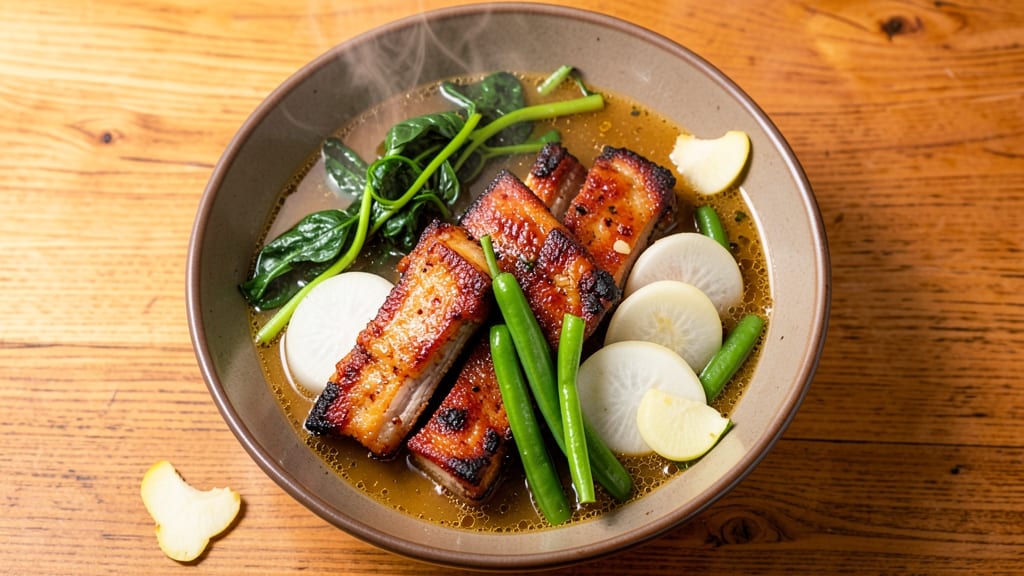
This sinigang pork ribs recipe brings the comforting tang of Filipino sour soup to your table, where tender meat melts into a broth so vibrant it feels like summer in every spoonful.
Growing up, I first tasted sinigang at my grandmother’s kitchen—her tamarind broth simmered for hours, balancing sour, savory, and umami in perfect harmony. The ribs, fall-off-the-bone tender, soak up the broth’s essence, while vegetables like radish and kangkong add texture and freshness that cut through the richness.
The secret lies in the tamarind paste, which builds the broth’s signature sourness without overpowering the pork’s natural sweetness. I’ve adapted the recipe to use pork ribs—a cut that holds up beautifully to long simmering, delivering deep flavor and satisfying texture.
Unlike quick soups, this dish rewards patience, with each layer of ingredient adding complexity as it cooks. The result? A bowl that’s equal parts nourishing and indulgent, where every bite tells a story of tradition and home.
What makes this recipe stand out is the balance—tangy yet savory, tender yet robust, and packed with vegetables that transform into edible jewels.
The broth starts clear but deepens into a golden, aromatic liquid that clings to the ribs, while the vegetables soften just enough to absorb the flavors without disappearing.
This is comfort food at its finest: a dish that feeds the soul as much as it satisfies hunger, and one that proves even the most humble ingredients can become extraordinary with care.
Perfect for family gatherings or a cozy weeknight dinner, this sinigang adapts easily to seasonal vegetables or protein preferences. Whether you’re recreating a taste of home or exploring Filipino flavors for the first time, the key is letting the broth work its magic.
Let’s get cooking—your taste buds are about to embark on a journey to the Philippines, one spoonful at a time.
Ingredients for sinigang pork ribs
Pork ribs, tamarind paste, and fresh vegetables—this sour broth transforms humble ingredients into a symphony of tangy, savory perfection.
| Ingredient | Amount | Notes |
|---|---|---|
| Pork Ribs 🍖 | 2 ½ lb | Baby back or spare ribs, cut into 2-inch pieces |
| Tamarind Paste 🍋 | ½ cup | Filipino tamarind preferred, or substitute with lime juice |
| Daikon Radish 🥕 | 1 whole | Cut into 1-inch thick slices |
| Kangkong (Water Spinach) 🌿 | 2 cups | Fresh, stems trimmed |
| Green String Beans 🍃 | 1 cup | Trimmed, cut into 2-inch pieces |
| Fresh Ginger 🧄 | ½ inch | Peeled, sliced thinly |
| Fresh Ginger 🧄 | 2 tbsp | Grated, for broth |
| Onion 🧅 | 1 whole | Yellow or white, sliced |
| Garlic Cloves 🧄 | 6 cloves | Minced, for depth |
| Fish Sauce 🐟 | 2 tbsp | Red Boat preferred |
| Soy Sauce 🥫 | 2 tbsp | For umami balance |
| Sugar 🍚 | 1 tbsp | White granulated |
| Salt 🧂 | 1 tsp | Diamond Crystal preferred |
| Black Peppercorns 🌶️ | ½ tsp | Crushed, for heat |
| Bay Leaves 🌿 | 2 whole | For aromatic depth |
The pork ribs are the heart of this dish—baby back or spare ribs work best, cut into uniform 2-inch pieces for even cooking. Look for ribs with good marbling at Filipino markets or the meat section of Whole Foods. If you can't find tamarind paste, Filipino tamarind blocks (sold at Asian markets) or even lime juice in a pinch will do, though the flavor won't be identical. The daikon radish and kangkong are non-negotiable for texture—they soften beautifully without disappearing, adding that signature crunch. For kangkong, Asian grocery stores usually carry it fresh, but if you can't find it, baby spinach works in a pinch, though the flavor won't be the same.
No tamarind? Lime juice plus a pinch of sugar mimics the sourness, but you'll lose that complex depth. The fish sauce and soy sauce are where the umami magic happens—Red Boat fish sauce is my go-to, but any good-quality brand works. The ginger needs to be fresh; dried won't cut it here. For the vegetables, baby carrots or cabbage can stand in for daikon if needed, but they won't have the same melt-in-your-mouth quality. The bay leaves add subtle earthiness—don't skip them, but remove them before serving. Pro tip: Toast the whole spices (black peppercorns, bay leaves) in a dry pan for 30 seconds before adding to the broth for extra aroma.
This broth tastes even better the next day—plan ahead and let it develop overnight. Store in the fridge for up to 5 days or freeze for 3 months. The ribs reheat beautifully; just warm the broth first, then add the meat. For leftovers, portion the ribs and vegetables separately—they absorb flavors differently when reheated. The broth reduces as it cools, so add a splash of water before reheating if it's too thick. And if you make a big batch? Double the vegetables—they make this dish feel extra special.
Why You'll Love This Recipe
- Tamarind Magic in Minutes: Honestly, the tamarind paste does all the heavy lifting here. Just simmer it with water and a pinch of salt—no fancy reductions, no straining—just that tangy, umami-rich broth ready in 10 minutes. The ribs fall apart on their own while you chop the daikon and string beans, which take less time than scrolling through your phone.
- Soup So Good It’s Addictive: Between us, the pork ribs get this irresistible balance—crispy edges from the quick sear, then tender enough to melt in your mouth. That sour-sweet tamarind broth cuts through the richness, and the daikon’s mild crunch keeps every bite exciting. (Yes, even on a Tuesday night.)
- Leftovers That Beg for Seconds: This soup actually improves the next day. The flavors meld even deeper, and the ribs stay juicy if you reheat them gently. I’ve brought it to work in a thermos, and my coworkers keep asking for the recipe—no one wants to share their secret weapon, but here we are.
- Budget-Friendly Family Feast: Pork ribs are cheaper than you think, and daikon lasts forever in the fridge. A single batch feeds four for dinner and two more for lunch, with barely any waste. Plus, the kangkong and string beans stretch the meal without breaking the bank—my kids fight over the last bowl, and that’s saying something.
Step-by-step instructions for sinigang pork ribs
Here's how to create a rich, tangy tamarind broth that tenderizes pork ribs perfectly.
Prepare the Pork Ribs and Vegetables
Begin by cutting the 2.5 lb pork ribs into 2-inch pieces—this ensures even cooking and faster absorption of the broth's flavors. Pat them dry with paper towels to remove excess moisture, which helps develop a better sear later. Set aside the ribs in a bowl.
Next, prepare the vegetables: Peel and slice the 1 whole daikon radish into 1-inch thick slices, trim the stems from the 2 cups kangkong (water spinach), and cut the 1 cup green string beans into 2-inch pieces. Thinly slice the 0.5-inch fresh ginger and grate the 2 tbsp fresh ginger for the broth. Finely chop the 1 whole onion and mince the 6 cloves garlic. These vegetables will add layers of flavor and texture to the dish.
Sear the Pork Ribs for Depth of Flavor
Heat a large pot or Dutch oven over medium-high heat. Add the pork ribs in a single layer, letting them sear undisturbed for 3-4 minutes until they develop a golden-brown crust. This step is crucial—it locks in the juices and adds a rich, caramelized flavor to the broth. Once browned, carefully flip the ribs and sear the other side for another 3-4 minutes. Remove the ribs and set them aside temporarily.
In the same pot, add a splash of water to deglaze, scraping up any browned bits from the bottom. These bits, called fond, are packed with flavor and will infuse into the broth. This step ensures you don't waste any of the delicious caramelized goodness.
Build the Tangy Tamarind Broth
Return the pot to medium heat and add the sliced onion and minced garlic. Sauté for 2-3 minutes until the onion becomes translucent and the garlic releases its aromatic fragrance. This step forms the flavor base of your broth.
Add the 0.5 cup tamarind paste, 2 tbsp fish sauce, 2 tbsp soy sauce, 1 tbsp sugar, 1 tsp salt, and 0.5 tsp crushed black peppercorns. Stir well to combine, then pour in 8 cups of water. Bring the mixture to a gentle boil, then reduce the heat to low. Add the 2 whole bay leaves and let the broth simmer for 15 minutes, allowing the flavors to meld together. You'll notice the tamarind paste dissolving into the water, creating a tangy, slightly sour broth that's the heart of this dish.
Cook the Pork Ribs and Vegetables
Return the seared pork ribs to the pot, ensuring they're fully submerged in the broth. Cover the pot and let it simmer over low heat for 1 hour and 15 minutes, or until the ribs are fork-tender. The broth should be rich and deeply flavored, with the pork falling off the bone easily. You'll know it's done when the meat pulls apart with minimal resistance.
About 30 minutes before the ribs are fully cooked, add the sliced daikon radish, green string beans, and kangkong to the pot. These vegetables will absorb the broth's flavors and become tender without overcooking. Stir gently to distribute them evenly.
Finish and Serve
Once the pork ribs are tender and the vegetables are cooked through, taste the broth and adjust the seasoning if needed. You might need a bit more fish sauce for umami or a splash of tamarind paste to enhance the tanginess. Remove the bay leaves before serving, as they're used only for flavor during cooking.
Ladle the sinigang pork ribs into serving bowls, ensuring each portion has an equal share of ribs, vegetables, and broth. The result should be a harmonious blend of tender pork, vibrant vegetables, and a tangy, savory broth that's both comforting and refreshing. Serve immediately while the broth is still steaming hot, and enjoy the perfect balance of flavors in every bite.
Pro Tips For Making Sinigang Pork Ribs
- Blister the Ribs First: Hit the pork ribs with a blowtorch or broiler for 3-4 minutes on each side before simmering—this caramelizes the edges and cuts through the fat, so the tamarind broth doesn’t turn greasy. I used to skip this, and the ribs would just float like sad, greasy logs.
- Soak Tamarind Paste: Mix the tamarind paste with a splash of warm water (about ¼ cup) to dissolve it completely before adding to the broth—this prevents clumpy, bitter pockets. I learned this the hard way when I got a mouthful of undissolved paste mid-bite.
- Salt the Daikon Early: Toss the daikon radish slices in salt and let them sit for 10 minutes before adding to the broth—this draws out excess water and keeps the broth from turning watery. Sounds weird, but it works: the radish stays crisp, and the broth stays rich.
- Add Greens in Stages: Toss the kangkong and string beans into the broth just 2-3 minutes before serving—overcooking turns them mushy, and you’ll end up with a sad, limp pile. I was skeptical until I tried it, and now I never add them earlier.
Creative variations of this recipe
Filipino-Style Sinigang
This is the classic version I grew up with—tamarind paste as the star, balanced with fish sauce and soy sauce for depth. The broth should be bright and tangy, with just enough sweetness from the sugar to round out the flavors.
I like to use baby back ribs for their tenderness, but spare ribs work too if you prefer more robust flavor. The key is low-and-slow cooking—let the ribs simmer until they’re so tender they fall apart at the touch. 🌶️
Spicy Sinigang
For heat lovers, add 1-2 tbsp of minced siling labuyo (Filipino chili) or 2-3 slices of fresh chili to the broth while simmering. The heat will mellow slightly as it cooks, but it’ll still pack a punch.
I also like to finish each bowl with a sprinkle of crushed dried chili flakes for extra kick. If you can’t find siling labuyo, red chili flakes or Thai bird’s eye chilies work in a pinch.
Vegetarian Sinigang
Swap the pork ribs for extra-firm tofu or mushrooms (shiitake or oyster work best). Press the tofu to remove excess water, then cube it and pan-fry until golden before adding to the broth.
For mushrooms, use 8 oz sliced shiitake and sauté them with the onions and garlic. The umami from the mushrooms will deepen the broth’s flavor, making it just as satisfying without meat. 💫
Quick-Prep Sinigang
For a faster version, use pre-cut pork ribs (available at some Asian markets) and frozen kangkong (thawed and drained). Reduce the simmering time to 1 hour and add the vegetables 15 minutes before serving.
If you’re short on time, instant tamarind powder (like those sold in Asian grocery stores) can replace the paste—just dissolve 2 tbsp in the water instead. This version still delivers big flavor, just with less hands-on time.
Creamy Sinigang
Add ½ cup coconut milk to the broth during the last 15 minutes of cooking for a richer, creamier texture. This works especially well with the vegetarian version or if you’re serving it to kids who might find the tanginess too bold.
The coconut milk also pairs beautifully with the daikon radish and kangkong, adding a subtle sweetness that balances the sourness. Stir gently to avoid curdling—don’t let it boil after adding the coconut milk.
Regional Twist: Bicol Sinigang
Inspired by the Bicol region, this version swaps tamarind for 1 cup coconut milk and adds 1 tbsp of bagoong (fermented shrimp paste) to the broth for a funky, umami depth.
The ribs cook in this creamy, slightly sweet broth until fork-tender, and the vegetables (especially eggplant) soak up the rich flavors. Serve with steamed rice and a side of atchara (pickled papaya) to cut through the richness.
This is my go-to when I want a cozier, more indulgent take on sinigang. 🌟
Nutrition facts
Frequently asked questions
Can I substitute tamarind paste with something else if I can't find it?
Yes! For a quick substitute, mix ¼ cup lime juice with 1 tbsp sugar to mimic the sourness. For a closer match, try Filipino tamarind blocks (available at Asian markets) or even calamansi juice if you're in the Philippines. The broth will still be tangy, though the depth of flavor won't be identical.
How do I know when the pork ribs are fully cooked?
The ribs are done when they're fork-tender and fall apart easily—this usually takes 1 hour 15 minutes of simmering. Test by piercing the thickest piece with a fork; if it slides in with minimal resistance and the meat pulls apart cleanly, they're ready. Overcooking can make them mushy, so keep an eye on them.
What's the best way to store leftovers?
Store the broth and ribs separately in airtight containers in the fridge for up to 5 days. Reheat the broth first, then add the ribs to warm through. For longer storage, freeze for 3 months. The vegetables reheat best when added fresh—don't freeze them with the broth.
Can I make this recipe less sour?
Reduce the tamarind paste to ¼ cup and add 1 extra tbsp of sugar to balance the flavors. For a milder taste, you can also dilute the broth with ½ cup extra water before serving. The key is adjusting while the broth is still hot so you can taste the changes.
What vegetables work best if I can't find kangkong or daikon?
For daikon, try baby carrots or cabbage—they hold up well but won't have the same melt-in-your-mouth texture. For kangkong, baby spinach or watercress are good substitutes, though the flavor won't be identical. The most important thing is keeping a mix of textures in your soup.