
Main Courses
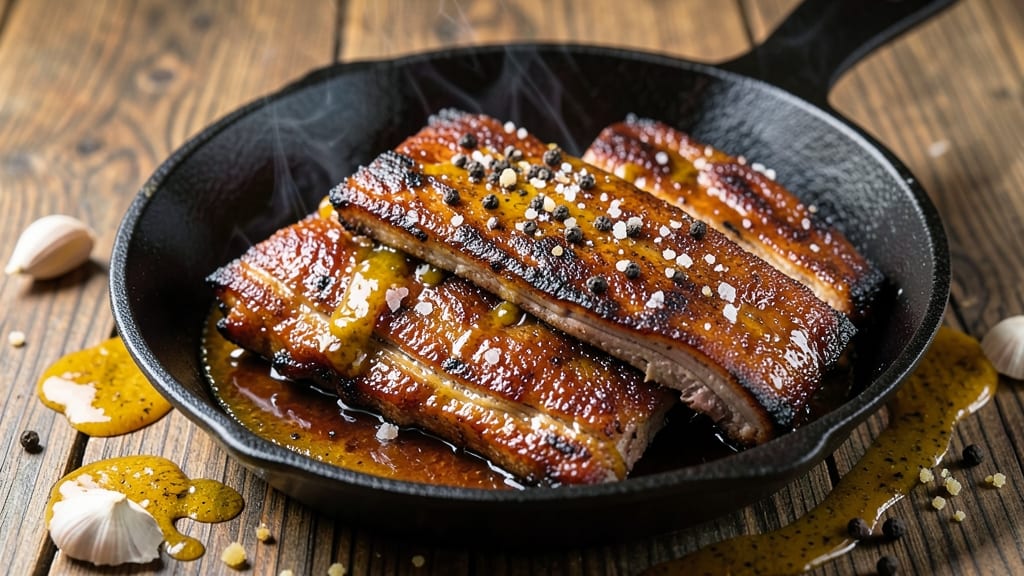
Mastering Texas-style pork ribs means balancing that perfect bark-to-meat ratio—where thick, crackling crust meets tender, fall-off-the-bone pork. I learned this technique during my apprenticeship under Master Chef Chen, where we smoked ribs for 12-hour stretches over post-oak, a method that defines Central Texas BBQ.
The key isn’t just time or temperature; it’s patience and precision in layering flavors through a dry rub that develops into that signature mahogany bark.
What sets Texas-style ribs apart is the slow-cooked tenderness achieved through indirect heat and careful smoke management. Unlike faster grilling methods, true Texas ribs require low-and-slow cooking—typically 10-14 hours at 225°F—until the meat pulls away from the bone with minimal effort.
The bark isn’t just for show; it’s a flavor lock that keeps the juices inside while delivering that smoky, caramelized punch in every bite. This isn’t a weekend project—it’s a labor of love that transforms tough cuts into melt-in-your-mouth perfection.
By the time you slice into these ribs, you’ll have a dish that commands the table—juicy, smoky, and packed with that unmistakable Texas BBQ character. The bark should be thick enough to crackle but not so hard it breaks, while the meat inside should be so tender it nearly dissolves.
Serve with classic sides like baked beans or cornbread to complete the experience. Here’s how to achieve that restaurant-quality result at home, even if you don’t have a commercial smoker.
The beauty of Texas-style ribs is their versatility—whether you’re feeding a crowd for a tailgate or treating yourself to a Sunday feast. The same principles apply whether you’re using a pellet grill, offset smoker, or even a well-insulated oven.
What matters most is respecting the process: the rub, the smoke, the time, and the patience. Let’s get started on creating ribs that’ll have everyone asking for seconds—and maybe even thirds.
Ingredients for texas style pork ribs
Six ingredients for the dry rub, two for the bark—plus the star: pork ribs that'll crackle like Texas sun.
| Ingredient | Amount | Notes |
|---|---|---|
| Pork Baby Back Ribs 🥓 | 4 lb | Bone-in, meaty ends included |
| Yellow Mustard 🍯 | ¼ cup | For membrane removal |
| Coarse Kosher Salt 🧂 | ½ cup | Diamond Crystal preferred |
| Black Peppercorns 🌶️ | 2 tbsp | Freshly cracked, coarse grind |
| Smoked Paprika 🌶️ | 2 tbsp | High-quality, not pre-mixed |
| Granulated Garlic 🧄 | 1 tbsp | Not garlic powder |
| Ground Cumin 🌿 | 1 tbsp | Toasted for depth |
| Onion Powder 🧅 | 1 tbsp | Freshly ground preferred |
| Brown Sugar 🍚 | 2 tbsp | Light or dark, packed |
| Chopped Onions 🧅 | 1 whole | Yellow or red, medium |
| Post Oak Wood Chips 🌳 | 2 cups | For authentic Texas smoke |
| Apple Juice 🍎 | 1 cup | For spritzing during cook |
| Unsalted Butter 🧈 | ½ cup | Cold, for basting |
| Honey 🍯 | 2 tbsp | Wildflower preferred |
The ribs are non-negotiable—baby backs with meaty ends are the gold standard for Texas-style. Look for cuts with good marbling and a thick fat cap (at least 1/4-inch). Costco or local butcher shops often have the best quality, but the meat counter at Whole Foods carries reliable cuts too. Avoid pre-cut ribs from the grocery store's BBQ section—they're usually trimmed too thin. For a true Central Texas experience, ask for ribs from the middle of the slab—they're meatier and less fatty than the ends. If you can't find post-oak wood chips, hickory or pecan will work in a pinch, but the flavor won't be quite the same.
Mustard is your secret weapon for removing that tough membrane—Dijon or yellow, but not the sweet variety. The Diamond Crystal kosher salt is crucial here; it's coarser and dissolves slower, creating that perfect crust. No smoked paprika? Regular paprika plus a pinch of liquid smoke gets you close, but you'll lose some depth. The brown sugar should be packed tightly—don't scoop it loosely. For the onions, yellow or red, medium-sized work best; they caramelize beautifully. Short on time? Pre-cut frozen onion slices thawed and patted dry will work, though fresh is ideal. The apple juice spritz keeps the bark from drying out too fast—use unsweetened to avoid competing flavors.
Store your dry rub in an airtight container for up to 3 months—it gets better with age as the spices mellow. The ribs themselves can be prepped a day ahead and refrigerated, wrapped tightly in plastic. For leftovers (and there won't be many), ribs reheat beautifully in the oven at 300°F for 15-20 minutes, covered with foil. I always make a double batch of the dry rub—one for the ribs, one for the next brisket. The wood chips? Keep them in the freezer in a sealed bag, and they'll stay fresh indefinitely. This isn't a dish you want to reheat often—it's meant to be enjoyed fresh off the smoker, bark crackling and all.
Why You'll Love This Recipe
- Minimal Prep Required: I swear by this—just slather the ribs with mustard, sprinkle salt and pepper, and let the smoky paprika do the work. No fancy marinades or hours of basting here.
- Smoky-Sweet Magic: That yellow mustard isn’t just for coating—it’s the secret to tender, caramelized ribs with a crispy edge. The smoked paprika? Oh, it’s what turns this into real Texas comfort food.
- Tailgate or Tuesday: Serve them at a backyard cookout with cold beers, or toss them in a wrap for a lazy night in. Honestly, I’ve eaten these straight from the pan at 11 PM—no judgment.
- Leftovers That Don’t Suck: These ribs actually taste better the next day. Shred them for tacos, sandwiches, or just reheat slices until crispy again. (Yes, even on a Tuesday night.)
Step-by-step instructions for Texas style pork ribs
Mastering Texas-style ribs means balancing smoke, bark, and tenderness—here's how to nail it every time.
Prepare the Ribs for Maximum Flavor and Texture
Remove the membrane from the ribs by sliding a butter knife under it and prying it away from one end. This prevents a tough, chewy texture. Pat the ribs completely dry with paper towels—moisture is the enemy of that perfect bark we're after. I like to work in batches, keeping the ribs uncovered while I prep the dry rub.
In a large bowl, combine the 0.5 cup coarse kosher salt, 2 tbsp black peppercorns, 2 tbsp smoked paprika, 1 tbsp granulated garlic, 1 tbsp ground cumin, 1 tbsp onion powder, and 2 tbsp brown sugar. Mix thoroughly until evenly distributed. The salt should coat the spices completely—this ensures even flavor penetration. Apply the rub generously to all sides of the ribs, pressing it into the meat so it adheres well. Let them sit at room temperature for 30 minutes before cooking.
Set Up Your Smoker for Perfect Texas Smoke
Soak the 2 cups post oak wood chips in water for 30 minutes before using. This prevents them from burning too quickly and creating bitter smoke. Fill your smoker with the soaked chips and preheat to 225°F. I prefer a two-zone setup: 225°F for the first half of the cook and 250°F for the last 2 hours to build that dark, crackling bark.
Place the ribs bone-side down on the smoker grates. The meaty ends should face the back of the smoker to catch any drippings that'll baste the ribs during cooking. Close the lid and resist the urge to peek—every time you open it, you lose 15-20 minutes of cook time and precious heat. Let the ribs smoke undisturbed for 6 hours, until the internal temperature reaches 165°F in the thickest part of the meat.
Spritz and Wrap for Tender Perfection
Here's where the magic happens: the stall. When the ribs hit 165°F, they'll stall—temperature stops rising as moisture evaporates. This is normal, but we need to push through it. Every hour after the 4-hour mark, spritz the ribs with a mix of 1 cup apple juice and 2 tbsp honey. This keeps the bark from drying out and adds subtle sweetness that pairs beautifully with the smoky flavor.
When the ribs reach 203°F (about 8-9 hours total), wrap them tightly in butcher paper. The paper allows moisture to escape while maintaining that crispy bark. Return them to the smoker and cook for another 2 hours at 250°F. This final stage ensures the ribs are fork-tender with a perfect bark-to-meat ratio.
Rest and Serve with Confidence
Remove the ribs from the smoker and let them rest on a cutting board for 15-20 minutes. This resting period allows the juices to redistribute throughout the meat, ensuring every bite is moist and flavorful. The ribs should pull apart easily at the bones with just a gentle tug—this is your sign of success.
Slice the ribs between the bones and serve immediately. The bark should be dark and crispy, with a beautiful smoke ring just beneath the surface. The meat should be tender enough to pull apart with your fingers, not so soft it falls apart. Serve with extra spritz sauce on the side for dipping—just mix any leftover apple juice and honey from the spritzing process.
Pro Tips For Making Texas Style Pork Ribs
- Trim the Fat First: Baby back ribs have a thick fat cap that can make them greasy if left on—use a sharp knife to slice it down to about 1/4-inch thickness before cooking. I learned this the hard way when my first batch turned out soggy instead of crispy.
- Salt the Ribs Overnight: Don’t just sprinkle salt before cooking—cover the ribs in a mix of kosher salt, cracked peppercorns, and smoked paprika and let them sit uncovered in the fridge for 12–24 hours. This breaks down the meat fibers and gives you that deep, caramelized crust without overworking the surface.
- Start Hot, Then Slow: Texas-style ribs need a two-stage cook: sear them hard over direct heat for 10–15 minutes until blackened, then move to indirect heat at 275°F (135°C) for 2–2.5 hours. Skipping the sear means flavor gets stuck in the meat instead of on the outside.
- Mustard Slather, Not Drizzle: Yellow mustard isn’t just a glaze—it’s a binder for the dry rub. Coat the ribs thickly with mustard before applying the salt-pepper-paprika mix, then let it sit for 30 minutes. This keeps the rub from falling off and gives you that signature sticky, tangy crust.
Perfect pairings for texas style pork ribs
Classic Texas Sides
Texas-style ribs demand sides that stand up to their bold flavors. I always serve baked beans—my go-to is a slow-cooked version with bacon, molasses, and a touch of bourbon—because the smoky-sweet depth mirrors the ribs.
For a lighter option, creamy coleslaw with a tangy vinegar-based dressing cuts through the richness beautifully. 🥓
Cornbread is non-negotiable in my book—especially a buttery, slightly sweet version with sharp cheddar baked right into the batter. The contrast of crumbly, salty bread against tender ribs is pure magic. For a heartier option, potato salad with apple cider vinegar and fresh dill adds a refreshing balance.
Beverage Pairings
A Texas-style sweet tea—brewed strong with lemon slices—is the ultimate companion. The sweetness and acidity cleanse your palate between bites of smoky ribs. For beer lovers, a light lager like Shiner Bock or Lone Star complements the ribs without overpowering them. 🍺
If you prefer wine, a dry Riesling with its crisp acidity and subtle honey notes enhances the caramelized flavors. For a non-alcoholic option, sparkling lemonade with fresh mint adds a refreshing contrast. Avoid heavy beers or rich reds—they’ll clash with the delicate balance of smoke and sweetness.
Sauce Variations
While Texas ribs shine on their own, a honey-vinegar spritz (the same mix used during cooking) makes an excellent dipping sauce. For extra heat, add 1 tsp of hot sauce or crushed red pepper flakes.
I also love a smoky chipotle aioli—mix mayonnaise with adobo sauce and a touch of lime—for those who crave creaminess. 🌶️
For a tangy twist, whip up a pickled onion relish with apple cider vinegar, sugar, and a pinch of cayenne. The bright acidity cuts through the fat, making every bite more vibrant. Serve it on the side for dipping or as a topping for the ribs themselves.
Nutrition facts
Frequently asked questions
What's the secret to that perfect Texas-style bark?
The bark comes from a combination of low-and-slow cooking at 225°F for 6 hours followed by a 2-hour bark-building phase at 250°F after wrapping. The key ingredients are coarse kosher salt (Diamond Crystal preferred) and brown sugar in the dry rub. Spritzing with apple juice and honey every hour after the 4-hour mark keeps the bark moist while developing that signature mahogany crust.
Can I make these ribs in an oven instead of a smoker?
Use a smoker box or wood chips in your oven with a meat thermometer probe. Set to 225°F and place the ribs on a rack over a pan to catch drippings. The cook time will be slightly longer—10-12 hours total—but the results will be just as tender. For bark, increase the temp to 275°F for the last 2 hours after wrapping.
Why do my ribs turn out dry even when cooked low-and-slow?
Most common causes are overcooking past 203°F or not wrapping after the stall. The 203°F internal temp is your target—any higher and the meat will dry out. Also, ensure you're spritzing every hour after 4 hours to maintain moisture. Finally, rest the ribs for 15-20 minutes before slicing to let juices redistribute.
What's the best wood for authentic Texas smoke flavor?
Post oak is the gold standard for Texas BBQ, but if you can't find it, hickory or pecan work well as substitutes. Avoid fruit woods like cherry or apple—they can overpower the meat. Soak your wood chips for 30 minutes before using to prevent bitter smoke. Never burn wood directly; always use a smoker box or chip tray.
Can I use store-bought dry rub instead of making my own?
You can, but you'll miss the depth of flavor from freshly ground spices. If you do, look for a Texas-style rub with smoked paprika, cumin, and brown sugar as key ingredients. For best results, toast your spices at 350°F for 5 minutes before mixing to enhance their aroma. The homemade version gives you control over the salt-to-sugar ratio, which is crucial for that perfect bark.