
Main Courses
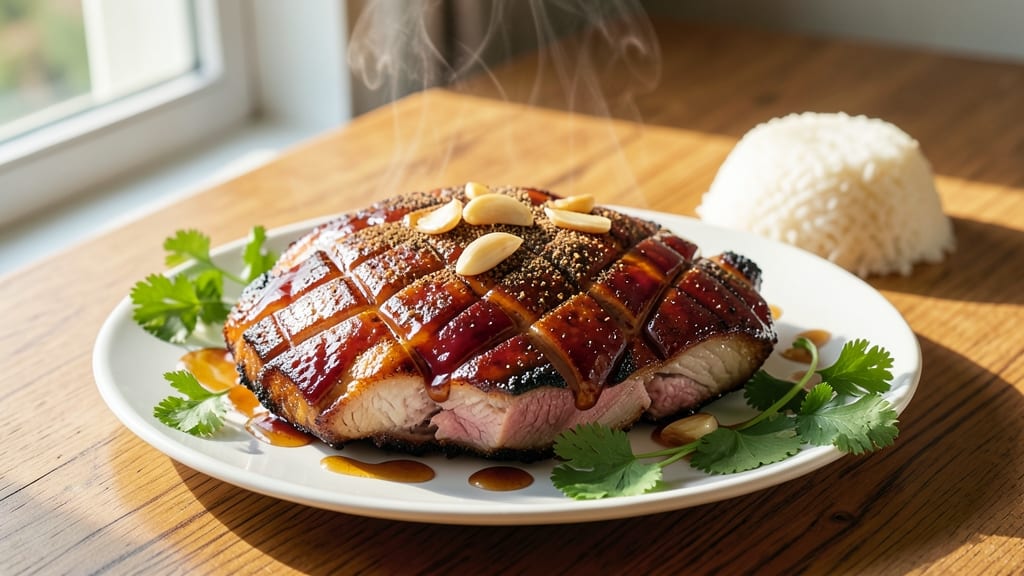
Mastering Cantonese Char Siu pork belly transforms simple pork into a restaurant-worthy centerpiece with its signature sticky-sweet glaze that caramelizes to shatter. The secret lies in balancing hoisin, honey, and five-spice powder during an overnight marinade, followed by precise roasting techniques that create that coveted glossy bark.
I’ve refined this method over years of testing—both traditional oven-roasting and modern air-fryer adaptations—to ensure perfect results every time.
The magic happens in the marinade, where hoisin’s umami depth meets honey’s caramel sweetness, all enhanced by star anise, cloves, and cinnamon. This blend penetrates the pork belly overnight, ensuring tender meat with a glaze that’s both sticky and crackly.
For the roasting, high heat is key—whether you use a broiler, grill, or air fryer—to develop that signature caramelized crust while keeping the interior juicy. The result? Pork belly so flavorful it disappears from plates.
Serve this Char Siu pork belly sliced over steamed jasmine rice, paired with quick-pickled cucumbers or stir-fried bok choy for a complete Cantonese feast. The glaze’s complexity shines alongside the rice’s mild aroma, while the pickled vegetables cut through the richness.
For a modern twist, drizzle with chili oil or serve with a lychee martini to elevate the experience. This dish delivers professional-quality results with a method anyone can master.
Whether you follow the classic oven-roast or experiment with air-frying for a quicker version, the principles remain the same: patience in marinating and precision in cooking. The reward? Pork belly so tender and flavorful it rivals any dim sum spot. Let’s get cooking—your taste buds will thank you.
Ingredients for Char Siu pork belly
Pork belly, hoisin, and five-spice powder—these three ingredients build the foundation for Cantonese Char Siu magic.
| Ingredient | Amount | Notes |
|---|---|---|
| Pork Belly 🥓 | 2 lb | Skin-on, cut into 1-inch thick slices |
| Hoisin Sauce 🍶 | ½ cup | Store-bought or homemade |
| Honey 🍯 | ⅓ cup | Wildflower preferred for depth |
| Brown Sugar 🍚 | ¼ cup | Light or dark, packed |
| Five-Spice Powder 🌶️ | 2 tbsp | Authentic Chinese blend |
| Garlic Cloves 🧄 | 6 cloves | Minced, fresh preferred |
| Fresh Ginger 🌿 | 2 tbsp | Grated, peeled, fresh |
| Soy Sauce 🍶 | ¼ cup | Dark or light, not low-sodium |
| Sesame Oil 🫒 | 1 tbsp | Toasted, for aroma |
| Star Anise 🌟 | 2 whole | Whole pods, crushed |
| Cloves 🌿 | 4 whole | Whole, lightly crushed |
| Cinnamon Stick 🍃 | 1 whole | 1-inch piece, lightly crushed |
| Cornstarch 🌾 | 1 tbsp | For glaze thickening |
| Jasmine Rice 🍚 | 1 ½ cups | Uncooked, for serving |
| Vegetable Oil 🫒 | 2 tbsp | High smoke point for roasting |
The pork belly is non-negotiable here—look for thick cuts with good marbling from Asian markets or specialty butchers. Costco often carries vacuum-sealed pork belly that’s perfect for this recipe. If your cut is too thick, slice it down to about 1-inch—this ensures even cooking and that coveted caramelized bark. The hoisin sauce should be thick and rich; Lee Kum Kee is my go-to brand, but any quality store-bought or homemade version works. For the five-spice powder, Penzeys or the bulk bins at H Mart carry authentic blends that make all the difference.
No five-spice powder? Mix 1 tsp each of ground cinnamon, cloves, fennel seeds, star anise, and Szechuan peppercorns—it’s not identical, but it gets you close. Running out of hoisin? Substitute 2 tbsp soy sauce plus 1 tbsp honey and 1 tsp sugar. The ginger and garlic can be swapped for 1 tbsp each of ginger paste and garlic paste if you’re in a rush, though fresh is always better. If your pork belly is lean, trim off any fat to avoid flare-ups during roasting. The sesame oil adds depth—use toasted for maximum aroma, but regular will work in a pinch.
Marinate the pork belly overnight for maximum flavor penetration, but if you're short on time, at least 4 hours will work. Store the marinade in an airtight container in the fridge. The cooked Char Siu keeps for 5 days in the fridge, though it’s best served within 2 days for peak texture. For leftovers, reheat in a skillet over medium heat until warmed through. The jasmine rice? Cook it fresh—it pairs perfectly with the smoky-sweet pork. Freeze cooked Char Siu for up to 3 months by wrapping it tightly in plastic wrap.
Why You'll Love This Recipe
- One-Pan Magic: I swear by this—just toss the pork belly in a marinade of hoisin, honey, and five-spice, slap it on a tray, and let the oven do the work. No chopping, no flipping, no stress.
- Sweet-Savory Bliss: That sticky glaze? It’s the kind of flavor that sticks with you. The honey caramelizes into something rich, while the five-spice adds warmth—like a hug in every bite.
- Leftover Hero: Between us, this pork belly keeps perfectly for days. Cold slices in rice bowls? Yes. Sandwiches? Absolutely. Even reheated, it’s still that same addictive mix of smoky and sweet.
- Budget Stretch: Pork belly might sound fancy, but a slab goes a long way. Marinate once, cook once, and suddenly you’ve got meals for the whole week without breaking the bank.
Step-by-step instructions for Char Siu pork belly
Here's how to transform simple pork belly into restaurant-quality Cantonese BBQ with a shatteringly crisp glaze.
Prepare the Pork Belly for Maximum Flavor
Start by scoring the pork belly skin in a diamond pattern with a sharp knife, being careful not to cut into the meat. This creates channels for the marinade to penetrate deeply and helps render fat during cooking. Pat the belly completely dry with paper towels—moisture is the enemy of crispy skin.
In a small bowl, combine the 2 tablespoons five-spice powder, 6 minced garlic cloves, 2 tablespoons grated fresh ginger, 2 crushed whole star anise, 4 crushed whole cloves, and 1-inch crushed cinnamon stick. This aromatic blend forms the backbone of the char siu flavor profile. Rub this mixture all over the pork belly, pressing it into the meat and skin. Let it marinate uncovered in the refrigerator for at least 4 hours, or overnight for deeper flavor penetration.
Create the Glazing Sauce
In a medium saucepan, combine the 0.5 cup hoisin sauce, 0.33 cup honey, 0.25 cup brown sugar, 0.25 cup soy sauce, and 1 tablespoon sesame oil. Bring to a gentle simmer over medium heat, stirring constantly to dissolve the sugars. The mixture will bubble vigorously at first, so reduce heat slightly to maintain a steady simmer.
Simmer for 10-12 minutes until the sauce reduces by about one-third and becomes syrupy. You're looking for a thick, glossy consistency that coats the back of a spoon. If it reduces too quickly, add 1 tablespoon water to prevent burning. Remove from heat and let cool slightly while you prepare the pork.
Roast the Pork Belly to Crispy Perfection
Preheat your oven to 375°F. Heat 2 tablespoons vegetable oil in a large oven-safe skillet over medium-high heat. Place the marinated pork belly in the skillet, skin-side down, and sear for 3-4 minutes until golden brown. Flip carefully and sear the meat side for another 2-3 minutes. Transfer the skillet to the preheated oven.
Roast uncovered for 30-35 minutes, basting with the reserved glaze every 10 minutes using a basting brush. The pork is done when it reaches an internal temperature of 195°F and the skin is deep mahogany brown with visible crackling. If the glaze starts to dry out too quickly, add 1 tablespoon water to maintain moisture.
Thicken the Glaze and Finish
Remove the pork from the oven and transfer it to a cutting board. Tent loosely with foil and let rest for 10 minutes—this crucial step allows the juices to redistribute for maximum tenderness.
Return the skillet with any accumulated juices to the stovetop over medium heat. Sprinkle in 1 tablespoon cornstarch mixed with 1 tablespoon water, whisking constantly until the glaze thickens to a glossy, syrupy consistency. Pour this enhanced glaze over the rested pork belly, coating it evenly. Slice into ½-inch thick pieces and serve immediately over 1.5 cups cooked jasmine rice for the perfect Cantonese meal.
Pro Tips For Making Char Siu Pork Belly
- SCORE THE BELLY: Use a sharp knife or meat tenderizer to make shallow cuts (about 1/4-inch deep) across the fat cap—this lets the marinade penetrate deeper and renders the fat more evenly. I learned this the hard way after a batch where the outside was sticky but the inside tasted bland.
- BALANCE THE SWEETNESS: Mix your hoisin, honey, and brown sugar before adding five-spice—this lets the flavors meld, not compete. Too much honey upfront? Add a splash of rice vinegar or soy sauce to cut the cloying edge. (Yes, even if you’re impatient like me.)
- LOW AND SLOW FIRST: Start broiling or roasting at 350°F (175°C) for the first 20 minutes—this cooks the pork gently so it doesn’t shrink into a tough, chewy mess. After that, crank the heat to caramelize the glaze, but skip this step and you’ll end up with undercooked edges.
- REST BEFORE SLICING: Tent the pork with foil and let it sit for 5–10 minutes after cooking—this keeps the slices from falling apart when you serve. I was skeptical until I tried it; the difference in texture is night and day. (Your future self will thank you.)
Dietary considerations for this Char Siu pork belly
Gluten-Free Adaptation
Traditional Char Siu relies on hoisin and soy sauce, both of which contain gluten. To make this gluten-free, swap the 0.5 cup hoisin sauce for 0.3 cup gluten-free tamari plus 2 tbsp gluten-free hoisin substitute (like San-J Tamari or homemade blend with fermented gluten-free soybeans).
Use gluten-free soy sauce instead of regular soy sauce. The flavor profile remains rich and complex, just without the gluten. Test your gluten-free substitutes first to ensure they reduce properly in the glaze. 🌱
Sugar-Free Version
For a sugar-conscious approach, reduce the 0.33 cup honey and 0.25 cup brown sugar to just 2 tbsp honey and replace the rest with 0.25 cup sugar-free maple syrup or 0.25 cup monk fruit sweetener. The glaze will still caramelize beautifully, though the texture may be slightly less sticky.
Balance the sweetness with an extra 1 tbsp soy sauce to deepen the umami. This works especially well for those managing blood sugar levels. 💡
Dairy-Free Considerations
Char Siu pork belly is naturally dairy-free, but always double-check your ingredients. The standard recipe doesn't include dairy, but if you're serving with sides like egg custard or fried rice with cheese, opt for dairy-free alternatives.
For example, use coconut milk-based custard or vegan cheese. The pork belly's rich, caramelized flavors stand alone beautifully without dairy, making this dish inherently adaptable. 🥗
Allergen-Friendly Swaps
If you're accommodating nut allergies, ensure your sesame oil is pure and not processed in shared facilities with nuts. For sesame allergies, replace it with 1 tbsp avocado oil or toasted coconut oil (if coconut allergies aren't a concern).
The five-spice powder is typically safe, but check for cross-contamination warnings if severe allergies are present. Always verify ingredient labels, especially for store-bought hoisin and soy sauce. 💪
Low-Sodium Options
To reduce sodium, use low-sodium soy sauce (like Kikkoman Low Sodium) and cut the amount by half. Balance the flavor by adding an extra 1 tbsp honey or 1 tbsp rice vinegar to maintain depth.
The glaze will still be flavorful, though slightly less salty. This version pairs perfectly with steamed bok choy or cucumber salad to keep the meal balanced. 🧂
Nutrition facts
Frequently asked questions about Cantonese pork belly
Can I use regular pork chops instead of pork belly?
The fat content in pork belly is essential for that signature caramelized crust. For a similar texture, use bone-in pork shoulder cut into 1-inch thick slices. Lean cuts like chops will dry out and lack the rich, fatty flavor that makes Char Siu special.
How do I fix soggy skin after cooking?
Soggy skin happens when moisture gets trapped. Always pat the pork belly completely dry before marinating, and ensure your oven rack is in the middle position for even heat circulation. For extra crispiness, broil the pork for the final 2-3 minutes to set the glaze.
What's the best way to reheat leftovers?
Slice the pork belly first, then reheat in a skillet over medium heat with 1 tbsp water or broth for 3-4 minutes until warmed through. Microwaving makes the skin rubbery. Store leftovers in an airtight container for up to 5 days.
Can I make Char Siu pork belly in an air fryer?
Yes! Preheat the air fryer to 375°F and cook the marinated pork belly for 12-15 minutes, flipping halfway. Brush with glaze during the last 5 minutes for a glossy finish. The air fryer works best for smaller cuts (under 1 lb).
Why did my glaze turn too thick?
Over-reducing the sauce happens when heat is too high. For the glaze, maintain a gentle simmer and stir frequently. If it thickens too much, whisk in 1 tbsp water while cooking. The ideal consistency should coat the back of a spoon but still be pourable.