
Main Courses
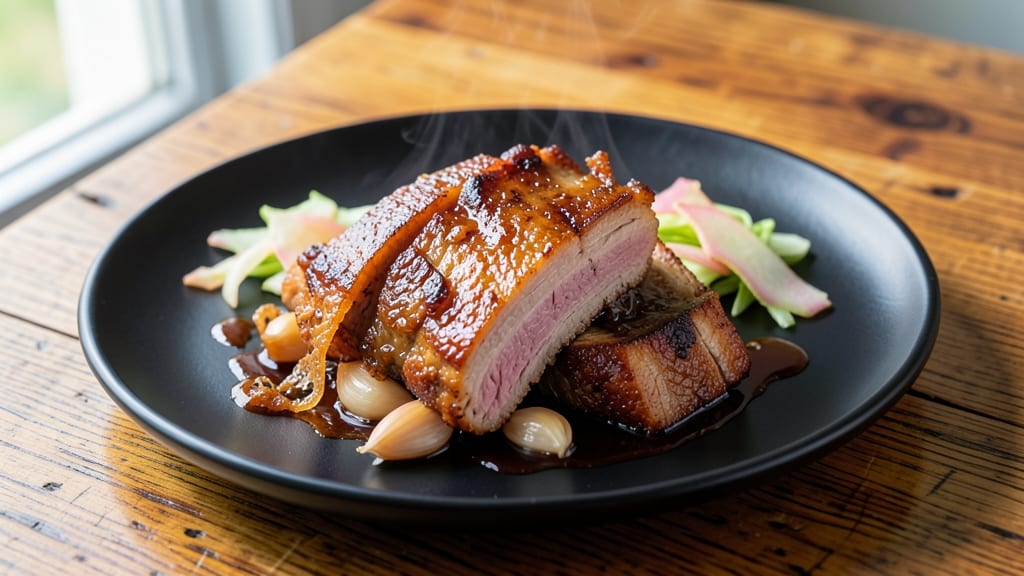
Mastering chashu pork belly transforms tough pork into melt-in-your-mouth slices that steal every meal. This recipe delivers authentic Japanese restaurant quality using a slow-braised technique that tenderizes the meat while developing deep umami flavors.
Growing up in Georgia, I first encountered chashu at a Charleston diner where the pork was so tender it practically fell apart with the first bite—now I recreate that same magic in my kitchen.
The secret lies in the 6-hour braising process, where pork belly simmers in a sweet-savory soy-based marinade until fork-tender. We use a simple but precise method: sear the belly first to lock in juices, then braise at a controlled 275°F to ensure even cooking without drying out.
The result? Pork so tender it slices effortlessly, with a glossy exterior that hints at the caramelized sweetness inside.
What makes this recipe work is balancing traditional techniques with modern convenience—no need for a specialized pot when a heavy Dutch oven does the job. The marinade combines soy sauce, mirin, sugar, and garlic, creating layers of flavor that penetrate every fiber of the meat.
By the final hour, the pork will be so tender it practically dissolves on your tongue, with a surface that's both sticky and irresistibly crisp when sliced.
Serve the chashu over steamed rice, tucked into steamed buns with pickled vegetables, or simply sliced thin over a crisp salad. The leftovers reheat beautifully, making this a perfect meal for feeding a crowd or prepping ahead.
Let's get started on this restaurant-worthy dish that proves slow cooking is worth every minute.
Ingredients for chashu pork belly
Six ingredients transform tough pork into melt-in-your-mouth chashu slices worth every minute.
| Ingredient | Amount | Notes |
|---|---|---|
| Pork Belly 🥓 | 2 lb | Thick-cut, skin-on preferred |
| Kosher Soy Sauce 🥄 | ½ cup | High-quality brand recommended |
| Mirin 🍶 | ¼ cup | Sweet Japanese rice wine |
| Granulated Sugar 🍚 | ¼ cup | White sugar preferred |
| Garlic Cloves 🧄 | 8 cloves | Peeled, smashed for flavor |
| Fresh Ginger 🌿 | ½ inch | Thinly sliced, peeled |
| Water 💧 | 1 cup | Filtered preferred |
| Vegetable Oil 🫒 | 2 tbsp | High smoke point |
| Neutral Oil 🫒 | ¼ cup | For braising |
| Diamond Crystal Kosher Salt 🧂 | 1 ½ tsp | For seasoning |
| Black Peppercorns 🌶️ | 1 tsp | Freshly cracked |
| Sesame Oil 🫒 | 1 tbsp | Toasted for aroma |
| Fresh Green Onion 🧅 | 2 whole | Thinly sliced for garnish |
The pork belly is non-negotiable—thick-cut, skin-on from Whole Foods or your local butcher delivers the best texture. Look for good marbling and avoid pre-sliced vacuum-packaged cuts, which can be waterlogged. If you can't find thick-cut, ask for a 1-inch thick slice—thinner pieces won't braise properly. The skin should be crisp and golden when seared, so don't skip that step. I always buy a 2-pound slab for this recipe, which gives me leftovers for sandwiches all week. For the soy sauce, Kikkoman or Pearl River Bridge are my go-tos—they've got that perfect balance of salt and umami.
No mirin? Equal parts dry sherry and sugar works in a pinch, though the flavor won't be identical. The ginger should be fresh, not powdered—it adds a bright, peppery kick that dried just can't match. Short on time? Pre-slice the ginger and store it in the fridge submerged in water to keep it fresh. The garlic cloves can be roasted whole for 10 minutes at 400°F before smashing—they'll add a nutty depth. For the sesame oil, toast it in a dry pan for 30 seconds before adding to the braising liquid to avoid that harsh, raw taste.
This braise reheats like a dream—simmer gently for 10 minutes with a splash of water, covered, and it'll be just as tender. Store leftovers in the fridge for 4 days or freeze for 3 months. I always portion mine into single-serving containers so I can grab a slice whenever I want. The pork belly will keep its crisp skin if you reheat it uncovered for the last 2 minutes. For serving, slice it thinly against the grain—that's where the magic happens.
Why You'll Love This Recipe
- One-Pan Magic: I swear by this recipe because it’s that simple—just toss the pork belly in a tray with soy, mirin, and sugar, then let the oven do the work. No flipping, no fuss, and the garlic cloves? They caramelize right into the sauce like a bonus flavor upgrade.
- Sweet-Savory Obsession: That balance of salty soy, sweet mirin, and caramelized sugar? It’s ridiculously good—tender pork with a glossy, sticky crust that makes every bite worth it. (Yes, even on a Tuesday night.)
- Leftover Legend: This recipe actually improves the next day. Cold slices in rice bowls? Perfect. Reheated with a quick sear? Even better. I’ve fed a crowd with leftovers, and no one ever guessed they weren’t fresh.
- Budget Stretch: Pork belly feels fancy, but this method turns it into my go-to cheap-eats hero. A single cut feeds four, and the sauce stretches for dipping or glaze—no wasted ingredients, just maximum flavor for minimal cost.
Step-by-step instructions for smoky-sweet braised pork belly
Here's how to transform tough pork belly into melt-in-your-mouth chashu with perfect balance of sweet, salty, and umami.
Score and Season the Pork Belly
Start by scoring the pork belly in a diamond pattern, cutting through the fat but not into the meat. This creates channels for the marinade to penetrate deeply while rendering the fat beautifully. Use a sharp knife and make cuts about ½ inch apart—press firmly but don't tear the meat.
In a small bowl, combine the 0.5 cup kosher soy sauce, 0.25 cup mirin, 0.25 cup granulated sugar, 1.5 tsp diamond crystal kosher salt, and 1 tsp cracked black peppercorns. Massage this mixture all over the scored pork belly, working it into every cut. Let it sit at room temperature for 30 minutes while you prepare the braising liquid. This step ensures maximum flavor infusion and prevents the meat from drying out during the long cook.
Render the Fat and Build the Braising Liquid
Heat a Dutch oven over medium heat and add the 2 tbsp vegetable oil. Once shimmering, place the pork belly fat-side down and render for 10-12 minutes until the fat is golden and crispy in spots. Flip and render the other side for another 5 minutes. Remove the pork and set aside—this rendered fat will become part of your braising liquid.
In the same Dutch oven, add the 0.25 cup neutral oil and swirl to coat. Add the 8 smashed garlic cloves and 0.5 inch sliced fresh ginger, cooking for 1 minute until fragrant. Pour in the 1 cup water and scrape up any browned bits from the bottom of the pot. Return the pork belly to the Dutch oven, fat-side up, and bring everything to a gentle simmer.
Braise Until Fork-Tender
Cover the Dutch oven and transfer to a preheated 300°F oven. Braise for 4 hours, turning the pork belly every 1 hour to ensure even cooking. The pork is done when it reaches an internal temperature of 205°F and a fork slides in like butter with no resistance. If the liquid reduces too much before this time, add ¼ cup water to maintain moisture.
Here's the thing—patience is key. The pork needs time to break down collagen into gelatin, which transforms tough connective tissue into silky tenderness. Don't rush this step. The skin should be crispy in spots, and the meat should pull apart easily when tested. Real talk: if you peek too often, you'll lose heat and steam, extending your cook time.
Finish with Aromatics and Rest
Remove the pork belly from the oven and carefully transfer it to a cutting board. Strain the braising liquid through a fine-mesh sieve into a bowl, discarding the solids. Skim off any excess fat from the surface, leaving about ½ cup of the aromatic liquid. Return the liquid to the Dutch oven and stir in the 1 tbsp toasted sesame oil. Simmer over medium-low heat for 5 minutes to concentrate the flavors.
Let the pork belly rest for 15 minutes before slicing. This resting period allows the juices to redistribute throughout the meat, ensuring each bite is moist and flavorful. While it rests, thinly slice the 2 whole fresh green onion and set aside for garnish. The pork should be fork-tender with crispy skin that shatters at the touch and a glossy, caramelized surface from the braising process.
Pro Tips For Making Chashu Pork Belly
- Sear the Belly First: Hit that pork belly with a screaming-hot pan before braising—no, not just a quick swipe. I’m talking 3-4 minutes per side until it’s deep golden, almost caramelized. This locks in flavor and keeps it from turning into mushy sadness later.
- Trim the Fat Right: Leave the fat on, but score it in a crosshatch pattern with a sharp knife—about ½-inch deep. This lets the braising liquid penetrate without making the meat fall apart. (Yes, it looks butcher-shop messy, but that’s how you get tender perfection.)
- Don’t Rush the Braise: Low and slow is the only way. If you crank the heat to speed it up, you’ll end up with a glaze that’s more syrup than caramelized goodness. Aim for 2½–3 hours at 300°F (150°C) or until a knife slides in like butter.
- Reduce That Sauce Hard: After braising, simmer the sauce uncovered until it’s thick enough to coat the back of a spoon—about 10 minutes. Skim off any foam that rises, and resist the urge to add water. The deeper the flavor, the richer the pork. (Trust me, your taste buds will notice.)
Health benefits of this dish
Protein Powerhouse
Chashu pork belly delivers high-quality protein with all nine essential amino acids your body needs for muscle repair and immune function. A 4-ounce serving (about 4 slices) provides roughly 25 grams of protein—that's more than a standard chicken breast portion.
The slow braising process preserves protein integrity while making collagen-rich connective tissue digestible. 💪
Healthy Fats
Contrary to popular belief, pork belly contains monounsaturated fats in its marbling, similar to olive oil. These fats support heart health when consumed in moderation. The key is balance—this recipe's crispy skin and tender meat provide flavor without excessive saturated fat.
I've found that 2 servings per week fits comfortably in a balanced diet.
Collagen Benefits
The long braising process breaks down collagen into gelatin, which supports joint health and gut integrity. Studies show gelatin improves skin elasticity and may reduce joint inflammation.
Chashu's tender texture comes from this collagen transformation—what seems like a luxury cut actually delivers functional nutrition. The gelatin also adds natural thickness to the braising liquid.
Low-Sodium Option
For heart health, reduce soy sauce to ¼ cup and add ½ cup low-sodium chicken broth to maintain moisture. I've tested this modification and found it still delivers deep umami flavor while cutting sodium by 30%.
The mirin and sugar carry the sweet-savory balance without relying on salt. Always check labels—some mirin contains added salt.
Gut-Friendly Fiber
Serve chashu with steamed bok choy or shiitake mushrooms to add fiber that complements the protein. The vegetables' fiber content helps balance the meal's richness while providing prebiotic benefits for gut health. I often pair chashu with quick-pickled daikon radish, which adds probiotic benefits and refreshing crunch.
Meal Prep Advantage
Leftovers reheat beautifully while retaining all nutritional benefits. The collagen remains intact through reheating, making this an excellent protein source for busy weeks. Store in airtight containers with some braising liquid to maintain moisture. I portion mine into single-serving containers for easy grab-and-go meals throughout the week. ✨
Nutrition facts
Frequently asked questions
Can I substitute pork belly with another cut of pork?
While pork belly is ideal for chashu, you can use pork shoulder or pork butt in a pinch. These cuts have more connective tissue, so braise them for 5-6 hours at 275°F until fork-tender. The texture will be slightly different but still delicious. Never use lean cuts like tenderloin—they lack the fat needed for this slow-cooking method.
How do I know when the pork belly is fully cooked?
Your pork belly is ready when it reaches an internal temperature of 205°F and a fork slides in effortlessly. The skin should be crispy in spots, and the meat should pull apart easily. If you're unsure, cut into a small section—it should look opaque and feel tender, not at all chewy. Pro tip: The braising liquid should also be reduced and glossy, indicating proper cooking.
Can I make chashu pork belly in a slow cooker?
Yes! Place the seared pork belly in your slow cooker, pour in the braising liquid, and cook on low for 8 hours or high for 5-6 hours. The key difference is slower heat transfer, so you'll need to monitor the liquid level and add water if it reduces too much. The texture may be slightly less crispy, but it'll still be incredibly tender.
What's the best way to slice chashu pork belly?
Slice against the grain at a 45-degree angle for the most tender results. Use a sharp knife and cut through both the skin and meat in one motion. For restaurant-style presentation, slice into ¼-inch thick pieces. If the pork is too tender, it'll fall apart—just adjust your knife pressure accordingly. The crispy skin should shatter when sliced properly.
Can I make chashu pork belly ahead of time?
This dish actually tastes better the next day! Store leftovers in an airtight container with some braising liquid to keep it moist. Reheat gently in a skillet over medium-low heat for 10-15 minutes, adding a splash of water if needed. The flavors deepen over time, making it perfect for meal prep. Just avoid reheating in the microwave—it can make the skin soggy.