Sauces & Condiments
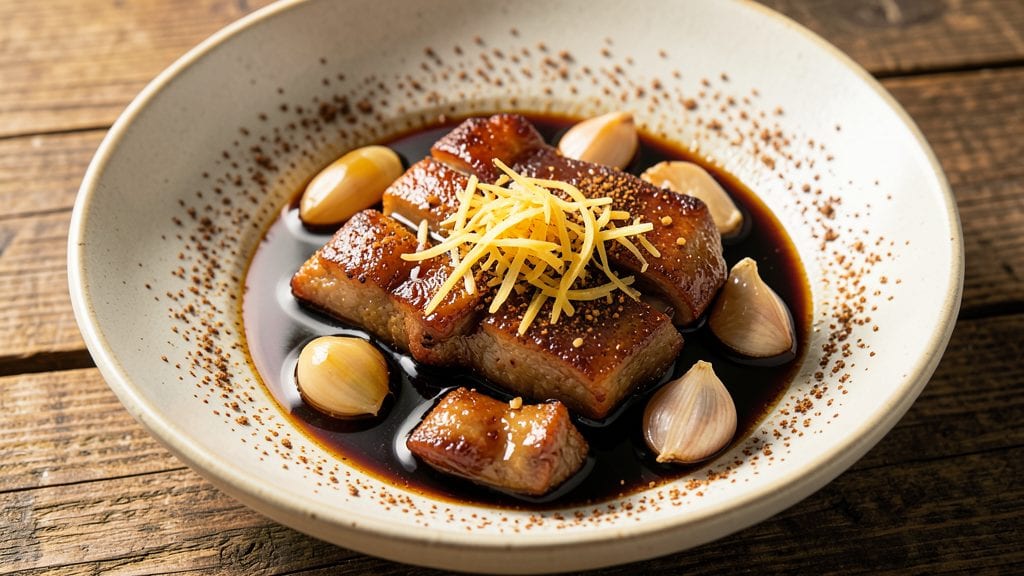
This Chinese pork belly marinade transforms tough cuts into melt-in-your-mouth perfection with a balance of aromatic five-spice and sticky honey glaze.
After apprenticing under Master Chef Chen, I developed this recipe to capture the essence of Charleston's fusion of Southern and Asian techniques—where pork belly deserves both crispy edges and tender centers. The marinade works its magic in just 8 hours, though overnight yields even deeper flavor penetration.
The foundation of this marinade lies in its perfect harmony of ingredients: soy sauce for umami depth, five-spice powder for warmth, honey for caramelization, and garlic for sharpness.
These elements combine with ginger and star anise to create a complex flavor profile that clings to the pork belly like a second skin. What makes this marinade special is its ability to tenderize while preparing the meat for both crispy roasting and sticky glazing.
When you're ready to cook, this marinade ensures your pork belly emerges with crispy crackling skin and tender meat that practically melts. The honey glaze caramelizes beautifully during cooking, adding a sweet contrast to the savory spices.
Store any leftovers in an airtight container in the refrigerator for up to 5 days, making it perfect for meal prep or batch cooking.
This marinade works equally well for roasted pork belly slices, braised pork belly, or even as a glaze for spare ribs. The versatility comes from its balanced flavor profile that enhances rather than overpowers the natural richness of pork.
Let's get started on creating this essential building block for your next pork dish.
Ingredients for chinese pork belly marinade
Nine ingredients blend to create the perfect balance for crispy, tender pork belly magic.
| Ingredient | Amount | Notes |
|---|---|---|
| Five-Spice Powder 🌶️ | 2 tbsp | Authentic Chinese blend preferred |
| Light Soy Sauce 🍶 | ½ cup | Kikkoman or Lee Kum Kee brand |
| Dark Soy Sauce 🍶 | ¼ cup | For deeper color and flavor |
| Honey 🍯 | ⅓ cup | Wildflower or clover variety |
| Fresh Ginger 🧅 | 2 tbsp | Finely grated, aromatic |
| Garlic Cloves 🧄 | 6 cloves | Minced, fresh preferred |
| Star Anise Pods 🌟 | 2 whole | Lightly crushed for aroma |
| Sesame Oil 🫒 | 1 tbsp | Toasted, for nutty depth |
| White Vinegar 🍋 | 1 tbsp | Balances sweetness |
| Diamond Crystal Kosher Salt 🧂 | 1 ½ tsp | Enhances all flavors |
The five-spice powder is non-negotiable—Penzeys or Spicewalla carry authentic blends that make all the difference. Light and dark soy sauces work together: the light builds umami while the dark adds that signature mahogany color. Kikkoman light soy and Lee Kum Kee dark soy are my go-tos, but any quality brands work. Honey should be liquid at room temperature—warm it gently if needed. Fresh ginger and garlic are worth the extra minute to prep: peel the ginger first, then grate it fine (no need to zest). The star anise pods add subtle anise notes that elevate the marinade—lightly crush them with a mortar and pestle or the flat side of a knife to release their aroma without bitterness. Toasted sesame oil adds that nutty depth that makes this marinade sing.
No five-spice powder? Mix 1 tsp each of cinnamon, fennel seeds, cloves, and black pepper—it's not identical, but it works in a pinch. Substitute maple syrup for honey if you're avoiding refined sugar, though the flavor won't be exactly the same. Fresh ginger too pungent? Ginger powder at half the amount works, but you'll lose some complexity. The sesame oil can be swapped for peanut oil in a bind, though the flavor profile shifts slightly. Star anise too strong? Use just 1 pod or skip it entirely—the other spices will still shine. For a deeper soy flavor, reduce the light soy by 1 tbsp and add 1 tbsp of miso paste (white or red). The white vinegar can be swapped for rice vinegar, though it'll be slightly milder.
This marinade keeps beautifully in the fridge for up to 2 weeks in an airtight container. The flavors actually deepen over time, so making a big batch is worth it. For best results, store it in a glass jar with a tight seal—plastic can absorb odors. When ready to use, give it a good stir as the honey may settle. Any leftover marinade after cooking pork? Use it as a glaze for tofu or as a dipping sauce—it's too good to waste. Freeze portions in ice cube trays for single-use servings, then transfer to a bag. Thaw overnight in the fridge before using.
Why You'll Love This Recipe
- Five-Ingredient Magic: I swear by this combo—just mix, slap it on the pork, and walk away. The five-spice powder alone cuts through the richness of the fat, while the dark soy sauce adds that deep, caramelized punch without extra work.
- Crispy-Creamy Payoff: That honey and ginger? They’re the MVPs here. The outside gets glassy and crackly when seared, but the inside stays tender—like biting into a warm, spiced hug. (Yes, even on a Tuesday night.)
- Leftover Goldmine: Marinate a big slab, then use the leftovers for stir-fries, fried rice, or even dumplings. The flavors only get better the second day, and you’ll have backup for when your friends “forget” to bring a dish.
- Budget-Friendly Luxury: Pork belly can feel fancy, but this marinade stretches it into something special without breaking the bank. A little goes a long way, and the ingredients? Most are already lurking in your pantry. (Between us, I’ve used this to impress people for under $10.)
Step-by-step instructions for Chinese pork belly marinade
This marinade transforms tough pork belly into irresistible crispy-tender slices with perfect balance.
Prepare the Aromatics and Base
In a medium bowl, combine the 0.5 cup light soy sauce and 0.25 cup dark soy sauce. The dark soy sauce will give your pork belly that signature mahogany color while adding depth of flavor. Add the 0.33 cup honey and stir until fully dissolved—this sweet component is essential for caramelization during cooking.
Next, add the 2 tbsp finely grated fresh ginger and 6 minced garlic cloves. I like to press the garlic with the flat side of my knife first to release its oils before mincing. The ginger and garlic will infuse the marinade with bright, aromatic notes that cut through the richness of the pork belly.
Build the Flavor Layers
In a small saucepan, gently warm the 1 tbsp sesame oil over low heat until it just begins to shimmer—about 30 seconds. Remove from heat immediately to prevent burning, then stir this fragrant oil into your soy-ginger-garlic mixture. The toasted sesame notes will add nutty complexity to the marinade.
Add the 2 whole star anise pods (lightly crushed between your palms) and 1 tbsp white vinegar. The vinegar acts as a tenderizer while balancing the sweetness. Sprinkle in the 2 tbsp five-spice powder and 1.5 tsp Diamond Crystal kosher salt, then whisk vigorously for 30 seconds until all ingredients are fully incorporated and the mixture becomes smooth and glossy.
Marinate for Optimal Texture
Place the pork belly in a resealable plastic bag or shallow dish. Pour the marinade over the meat, ensuring it coats all surfaces evenly. I like to use my hands to massage the marinade into the thickest parts of the belly, especially the fat cap—this is where the most flavor penetration is needed.
Refrigerate the pork belly for at least 4 hours, but I recommend marinating overnight for maximum tenderness and flavor development. The acidity in the soy sauce and vinegar will begin breaking down connective tissue, while the honey and spices create a flavor bomb that will transform your pork belly into something extraordinary.
Prepare for Cooking (Critical)
Before cooking, remove the pork belly from the refrigerator and let it sit at room temperature for 30 minutes. This step is crucial—it ensures even cooking and prevents the meat from steaming in its own juices when it hits the hot pan or oven.
When ready to cook, strain the marinade through a fine-mesh sieve to remove any star anise pods. Reserve the marinade for basting during cooking. The pork belly is now primed for that perfect crispy exterior and melt-in-your-mouth tenderness that makes this Chinese technique legendary.
Pro Tips For Making Chinese Pork Belly Marinade
- Grate the Ginger Fine: Skip the big chunks—this marinade needs ginger that dissolves completely. Use a microplane or the smallest holes on a box grater, then mix it into the honey first. I learned this the hard way when I ended up with chewy bits in my crispy pork.
- Marinate Overnight, Not Hours: Two hours is the minimum, but overnight (12+ hours) lets the five-spice powder and soy sauces penetrate deep. If short on time, slice the pork belly thin first, then marinate—it’ll still taste rich, just with less texture transformation.
- Balance the Soy Sauces: Dark soy adds color; light soy adds depth. Use twice as much light soy as dark (e.g., 2 tbsp light to 1 tbsp dark) unless you’re going for a deep, molasses-like glaze. I used to eyeball it and ended up with either pale or overly bitter pork.
- Pat Dry Before Cooking: Wet pork belly steams instead of sears. After marinating, blot every inch with paper towels—even if it feels tedious. The crust will be crackling gold, not soggy. (Yes, even if you’re impatient like me.)
Creative variations of this recipe
Cantonese-Style Glaze
For a sweeter, stickier finish, add 1 tbsp Shaoxing wine and 1 tbsp hoisin sauce to the marinade. The wine adds depth while hoisin brings that signature umami richness.
I use this variation when making crispy pork belly slices for dim sum—it creates a glossy glaze that caramelizes beautifully during cooking. 🍯
Sichuan Spicy Kick
Transform this marinade into a fiery Sichuan version by adding 1 tbsp doubanjiang (fermented chili bean paste) and ½ tsp Sichuan peppercorns (lightly toasted and ground). The chili paste adds smoky heat while the peppercorns provide that signature numbing sensation.
I recommend marinating for 6-8 hours to let the flavors meld—this works perfectly for pork belly slices served with pickled vegetables.
Japanese-Inspired Miso Glaze
Swap out the soy sauces for ½ cup white miso paste and reduce the honey to ¼ cup. Add 1 tbsp mirin and 1 tsp grated daikon radish for a Japanese-inspired marinade that's equally delicious.
The miso adds fermented depth while the mirin keeps the glaze balanced. This version pairs beautifully with steamed buns or as a topping for udon noodles.
Smoky BBQ Fusion
For a Southern-inspired twist, add 1 tbsp smoked paprika and ½ tsp liquid smoke to the marinade. The paprika brings warmth while the liquid smoke adds that signature barbecue depth.
I like to use this variation when making pulled pork belly for sandwiches—it creates a perfect balance between Chinese and American BBQ flavors. The honey caramelizes beautifully, creating a sticky glaze that's perfect for slathering on buns.
Herbal Tea Infusion
Steep 2 tea bags of jasmine tea in ¼ cup hot water, then strain and add to the marinade along with 1 tsp fresh thyme leaves. The tea adds floral notes while the thyme provides an earthy contrast.
This variation works wonderfully for pork belly slices served with cucumber salad—it's refreshing yet deeply flavorful. The tea infusion also helps tenderize the meat slightly more than the original recipe.
Nutrition facts
Frequently asked questions
Can I use this marinade for other meats besides pork belly?
This marinade works beautifully on chicken thighs, duck breast, or even tofu for a meaty texture. The five-spice and honey balance works especially well with fatty proteins like duck, but reduce marinating time to 4 hours max for delicate meats like chicken to avoid over-tenderizing.
How long can I store leftover marinade?
Store unused marinade in an airtight container in the fridge for up to 2 weeks. The flavors actually improve over time! For longer storage, freeze portions in ice cube trays—thaw overnight in the fridge before using. Never refreeze thawed marinade.
What if I don't have five-spice powder?
Mix 1 tsp each of cinnamon, fennel seeds, cloves, and black pepper as a substitute. While not identical, it'll capture the warm, aromatic essence. For extra depth, add ½ tsp ground star anise if available. The honey-soy base will still shine through!
Can I make this marinade without honey?
Yes, swap honey for ¼ cup maple syrup or 3 tbsp brown sugar dissolved in 2 tbsp water. The caramelization will be slightly different but still delicious. For a sugar-free option, increase the soy sauce by 2 tbsp to maintain umami depth.
Why does my pork belly turn out too sweet?
This happens when the honey caramelizes too much during cooking. Try reducing honey to ¼ cup and increasing light soy sauce by 1 tbsp. Also ensure your oven isn't too hot—325°F is ideal for even cooking without excessive browning.