
Main Courses
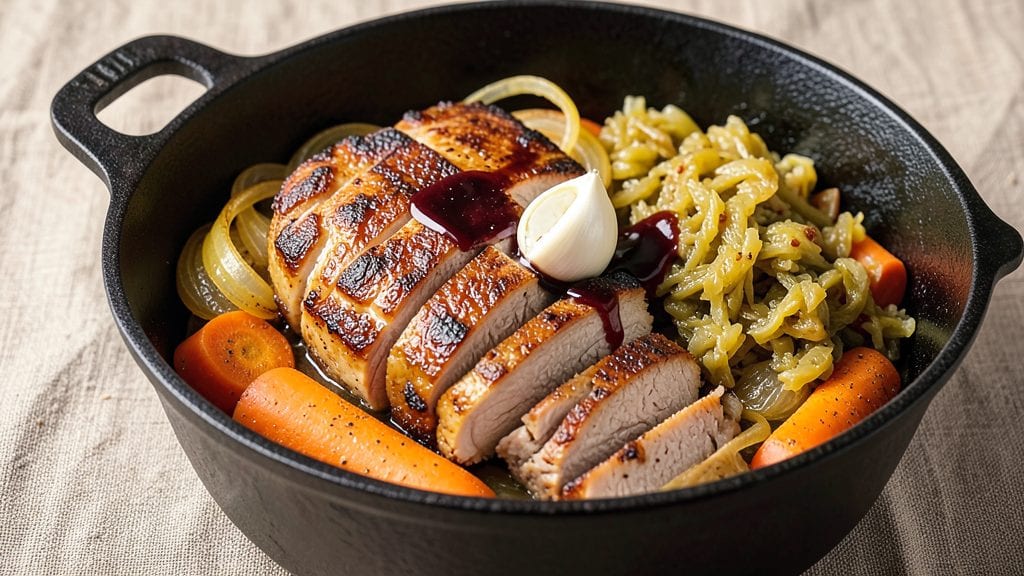
This pork and sauerkraut in Dutch oven recipe delivers the kind of deep, smoky-sour harmony that makes a weeknight dinner feel like a celebration. Growing up in small-town Georgia, I learned that slow-cooked pork with tangy sauerkraut transforms simple ingredients into something extraordinary—just like my grandmother used to make.
The secret lies in balancing the pork’s richness with the sauerkraut’s sharpness, all while letting the Dutch oven work its magic.
The beauty of this recipe is its simplicity: one pot, minimal effort, maximum flavor. You’ll start with pork—whether ribs, shoulder, or chops—and layer in sauerkraut, aromatic spices like caraway and bay leaf, and just enough liquid to create a rich, braised sauce.
The Dutch oven’s even heat ensures tender pork and perfectly softened sauerkraut, all while developing a depth of flavor that’s impossible to rush.
By the time you’re done, you’ll have a dish that’s hearty enough for a family dinner but easy enough for a weeknight. The pork will be fall-apart tender, the sauerkraut bright and tangy, and the sauce thick enough to coat every bite.
Serve it with crusty bread to soak up those last drops of smoky-sour goodness, and you’ll understand why this dish has been a staple in kitchens for generations.
This recipe scales beautifully—double it for a crowd or halve it for a cozy meal—and the leftovers reheat just as well as the first serving. Whether you’re feeding a hungry family or treating yourself to a satisfying solo dinner, this foolproof, one-pot wonder delivers restaurant-quality results without the fuss.
Ingredients for pork and sauerkraut in dutch oven
Simple ingredients that transform into a smoky, tangy Dutch oven masterpiece.
| Ingredient | Amount | Notes |
|---|---|---|
| Pork Shoulder 🥩 | 2 lb | Bone-in for best flavor |
| Sauerkraut 🥬 | 2 cups | Unopened, drained, rinsed |
| Yellow Onion 🧅 | 1 whole | Chopped into 1/2-inch pieces |
| Carrots | 2 medium | Peeled, sliced into 1/4-inch rounds |
| Garlic Cloves 🧄 | 4 cloves | Minced, fresh preferred |
| Apple Cider Vinegar 🍎 | ¼ cup | For tangy depth |
| Beef Broth 💧 | 1 cup | Low-sodium preferred |
| Ground Caraway Seeds 🌿 | 1 tbsp | Freshly ground for aroma |
| Bay Leaves 🍃 | 2 whole | Dried, standard size |
| Black Peppercorns 🌶️ | ½ tsp | Freshly cracked |
| Salt 🧂 | 1 ½ tsp | Diamond Crystal preferred |
| Unsalted Butter 🧈 | 2 tbsp | Cold, cubed for finishing |
| Fresh Thyme Leaves 🌿 | ¼ cup | Stripped from stems |
| Extra-Virgin Olive Oil 🫒 | 1 tbsp | For searing pork |
The pork shoulder is your flavor anchor—bone-in for maximum richness, and Costco or Whole Foods carry the best cuts. Look for good marbling; it melts into the sauce. Sauerkraut quality matters too: Rehr's or Bubbier's from the deli section have the right balance of tang and crunch. If you can't find those, any unopened jar works, but drain and rinse it well to cut excess acidity. The carrots? Baby carrots work fine, but whole carrots give you more control over the slices—aim for even rounds so they cook uniformly. Fresh thyme is ideal, but dried works at half the amount if that's what you've got.
No caraway seeds? Cumin seeds toasted and ground mimic the earthy warmth, though it won't be identical. Short on beef broth? Chicken broth or even water with a splash of soy sauce keeps things flavorful. The apple cider vinegar is non-negotiable for that signature tang—Bragg's is my go-to, but any good-quality vinegar does the trick. If you're feeling fancy, add a splash of dark beer (like a stout) to the broth for depth. The bay leaves? Don't skip them—they're the secret to that subtle, complex aroma that takes this dish from good to legendary. And if you're missing thyme, rosemary works too—just use a bit less.
This dish tastes even better the next day, so make extra. Store leftovers in the Dutch oven (or a sealed container) for up to 5 days—the flavors meld beautifully. For longer storage, freeze portions for 3 months. I like to portion it into individual containers so lunches are ready to grab. The butter at the end? Don't skip it—those cubes melt into the sauce, adding richness that's impossible to replicate. And if you've got crusty bread on hand, save some sauce for dipping—it's the best part.
Why You'll Love This Recipe
- One-Pot Magic: I swear by this recipe—just dump everything in the Dutch oven, let it slow-cook, and walk away. No fancy techniques, no extra pots, just that deep, smoky flavor from the pork shoulder melting into the sauerkraut.
- Leftovers for Days: Between us, this dish only gets better the next day. The flavors meld even more, and I’ve reheated portions for lunch all week without a single complaint. (My husband’s favorite, actually.)
- Budget-Friendly Feast: Pork shoulder is cheap, sauerkraut lasts forever, and you’re using basic veggies. For under $15, you feed four people a meal that tastes like it cost twice as much—no guilt, just satisfaction.
Step-by-step instructions for pork and sauerkraut in Dutch oven
This one-pot wonder delivers deep, smoky-sour flavors with minimal effort—just follow these precise steps.
Sear the Pork Shoulder for Maximum Flavor
Pat the 2 lb pork shoulder completely dry with paper towels—this ensures a proper sear. Heat the Dutch oven over medium-high heat until hot, then add 1 tablespoon extra-virgin olive oil. Once shimmering, add the pork shoulder and sear on all sides until deeply browned, about 8-10 minutes total. You're building flavor here, so don't rush this step.
While the pork sears, prepare your mise en place: chop the 1 whole yellow onion into ½-inch pieces, peel and slice the 2 medium carrots into ¼-inch rounds, and mince the 4 cloves garlic. This keeps your workflow smooth and prevents overcrowding the pan. Once browned, remove the pork and set it aside on a plate.
Build the Aromatic Base with Vegetables and Spices
In the same Dutch oven, add the chopped yellow onion and carrots. Cook over medium heat for 5-6 minutes, stirring occasionally, until the onions soften and the carrots begin to caramelize slightly. Add the minced garlic and cook for another 30 seconds until fragrant—this releases their full flavor potential.
Stir in the 1 tablespoon ground caraway seeds, 2 whole bay leaves, and 0.5 teaspoon freshly cracked black peppercorns. Cook for 1 minute to toast the spices lightly—their aroma will deepen the dish's complexity. This is where the magic happens, so don't skip this step. The spices should smell warm and inviting.
Deglaze and Simmer the Sauerkraut
Pour in the 0.25 cup apple cider vinegar and scrape up any browned bits from the bottom of the Dutch oven—this deglazing captures all the meaty flavor. Add the 2 cups drained and rinsed sauerkraut, stirring to combine. Cook for 3-4 minutes until the sauerkraut begins to soften slightly.
Next, add the 1 cup beef broth and bring the mixture to a gentle simmer. The liquid should nearly cover the sauerkraut. At this point, return the pork shoulder to the Dutch oven, fat-side up. The goal is to cook the pork low and slow, so reduce the heat to medium-low and cover the Dutch oven with a lid.
Braise Until Fork-Tender
Let the pork braise for 2 to 2.5 hours, maintaining a gentle simmer. The pork is done when it reaches an internal temperature of 203°F—this ensures it's fork-tender and falls apart easily. You'll notice the pork releases easily from the bone, and the juices run clear when pierced with a meat thermometer.
About 30 minutes before the pork is fully cooked, add the 0.25 cup fresh thyme leaves and the 1.5 teaspoons salt. This timing ensures the thyme infuses the dish without overpowering it. The thyme should be fragrant but not bitter, signaling it's ready to contribute its earthy notes.
Finish with Butter for Richness and Serve
Once the pork reaches the target temperature, remove it from the Dutch oven and let it rest on a cutting board for 15 minutes. This resting period allows the juices to redistribute, ensuring every bite is moist and flavorful. Skim any excess fat from the braising liquid, then return the Dutch oven to medium heat.
Add the 2 tablespoons cold unsalted butter to the braising liquid and stir until melted and incorporated. The butter will create a silky, velvety finish that ties all the flavors together. Taste the sauce and adjust seasoning if needed—you might need a pinch more salt to balance the tangy sauerkraut. Serve the pork sliced thickly over the sauerkraut and braising liquid, garnished with additional thyme leaves if desired.
Pro Tips For Making Pork And Sauerkraut In Dutch Oven
- CRISP THE PORK FIRST: Skip the raw pork straight into the pot—pat it very dry with paper towels, then sear it skin-side down in a hot Dutch oven for 8-10 minutes. I learned this the hard way after serving mushy pork; the crust locks in flavor and keeps it juicy. Use a splash of oil if needed, but don’t overcrowd the pan.
- DRAIN AND RINSE SAUERKRAUT: Dump that sauerkraut into a colander and give it a good rinse under cold water before adding it to the pot. The brine’s acidity can make the pork turn out tough if left unchecked—this cuts the tang while keeping the texture crisp. (Yes, even if you love sour flavors, trust me on this.)
- LOW AND SLOW WINS: After browning, reduce heat to medium-low and cover the Dutch oven. The pork shoulder needs 2.5–3 hours to tenderize—any hotter, and you’ll end up with dry meat. I used to rush this, but now I set a timer and walk away. The internal temp should hit 195°F for pull-apart perfection.
- CARROTS LAST, NOT FIRST: Toss the sliced carrots in after the pork and sauerkraut have cooked for at least 45 minutes. They’ll absorb flavors better and stay tender instead of turning to mush. (Pro move: Add a pinch of sugar to the pot when you toss them in—balances the acidity.)
Serving suggestions for this dish
Crusty Bread Pairing
There’s nothing better than serving this dish with a warm, crusty loaf of sourdough or rye bread to soak up every last drop of that smoky-sour braising liquid.
I love using a baguette or ciabatta from my local Charleston bakery—their thick crust holds up to the rich sauce while the soft interior melts into perfection. For extra flair, brush the bread with garlic-infused olive oil before serving and sprinkle with flaky sea salt. 🥖
Applesauce Contrast
The tangy sweetness of homemade applesauce cuts through the richness of the pork and sauerkraut beautifully. I prefer a spiced variety with cinnamon and a touch of nutmeg—just warm it gently in a small pot with a splash of apple cider until it’s smooth and fragrant.
Serve it on the side for dipping or dollop it directly onto each plate. For a shortcut, Mott’s Unsweetened works in a pinch, but nothing beats the homemade version.
Pickled Vegetables
Bright, crisp pickled vegetables like red cabbage, cucumbers, or radishes add a refreshing crunch and balance the hearty flavors. I often make a quick batch of quick-pickled red onions (thinly sliced onions tossed with apple cider vinegar, sugar, and a pinch of salt) to serve alongside.
The acidity in the pickles mirrors the sauerkraut, creating harmony in every bite. Store-bought pickles work too—just look for low-sugar varieties to keep the dish balanced.
Mustard Sauce Dip
A simple Dijon mustard sauce elevates this dish to restaurant-level elegance. Whisk together 2 tablespoons Dijon mustard, 2 tablespoons sour cream, 1 tablespoon apple cider vinegar, and a splash of beef broth to loosen it.
Drizzle this over the pork or serve it in a small bowl for dipping. The mustard’s sharpness complements the sauerkraut’s tang, while the creaminess smooths out the richness. For extra depth, add a teaspoon of honey to balance the heat. 🍽️
Garnish Like a Pro
Finish your plate with fresh herbs and a drizzle of high-quality olive oil to elevate the presentation. I like scattering chopped fresh parsley or chives over the top for a pop of color, along with a drizzle of aged balsamic glaze for a touch of sweetness.
A sprinkle of toasted caraway seeds adds an aromatic finish that ties everything together. These small touches make the dish feel special without overpowering the natural flavors.
Leftovers Reinvented
Turn tomorrow’s leftovers into a pork and sauerkraut sandwich with all the fixings. Pile the pork and sauerkraut onto a toasted brioche bun, add a smear of garlic aioli, and top with shredded cheese (like Gruyère or sharp cheddar).
Broil for 2-3 minutes until the cheese melts, then add a handful of arugula for freshness. It’s a game-changer for lunch or a quick dinner—trust me, your taste buds will thank you. 💡
Nutrition facts
Frequently asked questions
Can I use pork chops instead of pork shoulder for this recipe?
Pork chops work, but they'll cook much faster—about 20-25 minutes instead of hours. For best results, use bone-in chops (1-inch thick) and reduce the braising time to 1 hour after searing. Thin chops may dry out, so monitor closely and keep the lid on to retain moisture.
Why does my sauerkraut taste too sour after cooking?
Excess acidity usually means the sauerkraut wasn't drained or rinsed properly before cooking. Always drain and rinse 2 cups of sauerkraut thoroughly under cold water to remove excess brine. If it's still too sharp, add a pinch of sugar or a splash of apple cider to balance the tang.
How do I prevent the pork from drying out in the Dutch oven?
Keep the Dutch oven covered with a tight-fitting lid during braising to trap steam and moisture. Avoid lifting the lid frequently—every time you do, moisture escapes. If the liquid reduces too much, add a splash of beef broth to maintain a gentle simmer. The pork should stay moist until it reaches 203°F internally.
Can I make this recipe in an electric slow cooker instead?
Yes! Follow the same steps for searing the pork, then transfer everything to the slow cooker. Cook on low for 6-8 hours or high for 3-4 hours. The texture will be slightly different—more fall-apart tender—but still delicious. Just add 1/4 cup extra broth since slow cookers evaporate more liquid.
What's the best way to reheat leftovers?
Reheat in the Dutch oven over low heat with a splash of broth to prevent drying. Cover and warm for 10-15 minutes, stirring occasionally. For microwave reheating, cover with a damp paper towel and heat in 30-second intervals until warmed through. Never reheat pork above 165°F—it's safe at 203°F initially but should be warmed gently.