
Sauces & Condiments
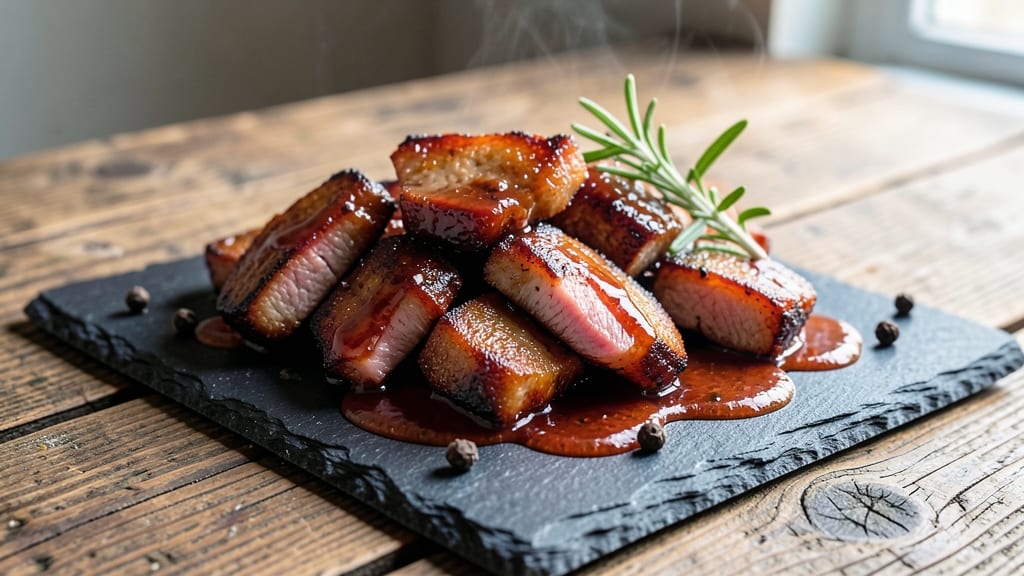
This pork belly burnt ends sauce recipe transforms rich, smoky flavors into a velvety glaze that clings to every bite like liquid gold. The secret lies in balancing caramelized brown sugar, tangy vinegar, and deep umami spices—simmered until thick and glossy.
I developed this sauce after years of perfecting the balance between sweetness and savory depth, ensuring it complements the fatty richness of burnt ends without overpowering them.
The foundation starts with a deep reduction of vinegar, sugar, and spices until it reaches a syrupy consistency, then incorporates a touch of molasses for complexity. A splash of Worcestershire adds that unmistakable umami punch, while a pinch of smoked paprika ties everything together with subtle heat.
This isn’t just a drizzle—it’s a multi-layered experience that turns ordinary burnt ends into a restaurant-worthy centerpiece.
What makes this sauce truly special is its versatility and longevity. It thickens just enough to coat the meat beautifully while remaining silky enough to spoon over roasted vegetables or crispy polenta.
Store it in the fridge for up to two weeks, or freeze for months—its flavors only deepen with time. The caramelized edges and smoky aroma alone will have everyone reaching for seconds.
Whether you’re serving these as a main course or a bold appetizer, this sauce elevates every bite with its complex, caramelized depth. The key is patience—letting the flavors meld slowly during the reduction ensures a sauce that’s richer than anything store-bought.
Ready to take your burnt ends to the next level? Let’s make this glaze.
Ingredients for pork belly burnt ends sauce
Nine ingredients, one powerful sauce. The perfect balance of sweet, smoky, and umami.
| Ingredient | Amount | Notes |
|---|---|---|
| White Wine Vinegar 🍷 | 1 cup | High-quality, aged variety |
| Light Brown Sugar 🍚 | 1 ½ cups | Packed firmly, no substitutions |
| Molasses 🍯 | ¼ cup | Unsulphured for richer flavor |
| Worcestershire Sauce 🍶 | 2 tbsp | Lea & Perrins preferred |
| Smoked Paprika 🌶️ | 1 tsp | High-quality, not pre-mixed |
| Ground Black Pepper 🌶️ | ½ tsp | Freshly cracked preferred |
| Diamond Crystal Kosher Salt 🧂 | ½ tsp | Adjust to taste, not salt substitute |
| Garlic Cloves 🧄 | 3 cloves | Fresh, peeled, minced fine |
| Extra-Virgin Olive Oil 🫒 | ¼ cup | Fruity, high-quality preferred |
| Water 💧 | ½ cup | Filtered preferred for clarity |
The vinegar and brown sugar are your flavor anchors—look for aged balsamic vinegar at Whole Foods or Trader Joe's for extra depth. The molasses should be unsulphured (check the label)—it adds that rich, almost chocolatey note that makes this sauce sing. Lea & Perrins Worcestershire is non-negotiable here; the authentic version has that perfect umami kick. Smoked paprika? Penzeys or McCormick are my go-tos, but any high-quality smoked variety works. Freshly cracked black pepper and Diamond Crystal kosher salt (it dissolves better) elevate everything. The garlic needs to be fresh—no jarred minced garbage here.
No aged balsamic? Apple cider vinegar works in a pinch, but you’ll lose some complexity. Substituting dark brown sugar for light? Reduce the water slightly—it’s more compact. Running out of Worcestershire? Soy sauce or fish sauce at half the amount adds umami, but it’s not the same. Smoked paprika too strong? Regular paprika with a pinch of liquid smoke gets you close. The olive oil matters—avoid cheap supermarket brands. Their flavors can overpower the delicate balance. And if you’re short on time, pre-minced garlic from a jar works, but fresh is always better.
This sauce keeps beautifully—up to 2 weeks refrigerated and 6 months frozen. Store it in a glass jar with a tight seal to preserve those caramelized flavors. The longer it sits, the better it gets—those flavors meld into something truly special. I like to make a double batch; it’s perfect for drizzling over burnt ends, roasted vegetables, or even crispy polenta. Freeze in ice cube trays for single-use portions—just thaw and reheat gently. The sauce thickens as it cools, so add a splash of water if it gets too stiff.
Why You'll Love This Recipe
- Pantry Magic: This sauce uses stuff you already have—no special shopping required. I’ve made it with vinegar from my pantry, molasses from a bulk bin, and Worcestershire that’s been sitting there forever. The smoked paprika? That’s the secret that turns it from "meh" to "holy smokes."
- Sweet-Smoky Umami Bomb: The brown sugar caramelizes into a glossy coat while the molasses adds depth, and that Worcestershire? Oh, it’s the umami MVP. Between us, the first time I tasted it on crispy pork belly, I nearly dropped the plate.
- Game for Any Meal: Slather it on burnt ends, toss it with roasted potatoes, or drizzle it over grilled chicken. I’ve even used it as a glaze for baked beans—don’t judge. It’s the kind of sauce that makes you want to eat everything in sight.
- Leftovers That Lie: This sauce thickens beautifully when reheated, so you’ll have extra for next week’s sandwiches or next month’s potluck. Honestly, I’ve had it last three weeks in the fridge and still taste like a million bucks. Budget win, flavor win.
Step-by-step instructions for pork belly burnt ends sauce
This rich, caramelized glaze transforms humble ingredients into a deep umami masterpiece for your burnt ends.
Create the Base with Vinegar and Sugar
In a heavy-bottomed saucepan, combine the 1 cup white wine vinegar and 1.5 cups light brown sugar. Place over medium-high heat and bring to a simmer, stirring constantly with a wooden spoon to dissolve the sugar completely. You'll notice the mixture thicken slightly as the sugar begins to caramelize—this is when those deep, complex flavors start developing.
Let it cook undisturbed for 8-10 minutes until the sugar has fully dissolved and the mixture turns a rich amber color. The aroma will be sweet and slightly tangy—this is your foundation. If you see any sugar grains sticking to the bottom, gently stir them in with a splash of water to prevent burning. Here's where patience pays off: don't rush this step, as proper caramelization creates the sauce's signature depth.
Build Umami with Molasses and Worcestershire
Once the sugar is fully incorporated, reduce heat to medium-low and stir in the 0.25 cup molasses and 2 tablespoons Worcestershire sauce. The molasses will darken the mixture immediately, adding that molasses-forward richness that pairs perfectly with pork. Let it simmer for another 5 minutes, stirring occasionally, until the sauce begins to thicken slightly and coats the back of a spoon.
This is where the magic happens—the molasses brings sweetness and depth, while the Worcestershire sauce adds that unmistakable umami punch. You'll smell the sauce transforming from sweet to complex, with hints of caramel and savory notes developing. If the sauce looks too thick, add 1 tablespoon water at a time until it reaches a pourable consistency—you want it thick enough to cling but still fluid enough to coat.
Infuse with Aromatics and Spices
Add the 0.25 cup extra-virgin olive oil, 3 minced garlic cloves, 1 teaspoon smoked paprika, 0.5 teaspoon ground black pepper, and 0.5 teaspoon Diamond Crystal kosher salt to the saucepan. Stir well to combine, then increase heat to medium and let it simmer for 3-4 minutes until the garlic is fragrant and the spices are fully incorporated.
The garlic should sizzle gently—this indicates it's releasing its oils and flavors into the sauce. The smoked paprika will add a subtle smokiness that complements the caramelized sweetness. Taste the sauce at this point and adjust the salt if needed, remembering that the burnt ends will add additional saltiness. The sauce should be balanced—sweet, tangy, smoky, and savory all at once. If it's too sharp, a pinch more sugar can help round out the flavors.
Simmer to Perfection
Pour in the 0.5 cup water and bring the sauce to a gentle simmer. Reduce heat to low and let it cook uncovered for 15-20 minutes, stirring occasionally. You're looking for the sauce to reduce by about one-third, thickening into a glossy, syrupy consistency that will beautifully coat your burnt ends.
As it simmers, the flavors will meld and deepen. The sauce should develop a rich, caramelized aroma with layers of complexity. If it starts to stick to the bottom of the pan, add another 1 tablespoon water to keep it moving. Once it reaches your desired thickness—thick enough to coat the back of a spoon but still pourable—remove it from heat. Let it cool slightly before using, as the sauce will continue to thicken as it rests.
Finish and Use Immediately
Strain the sauce through a fine-mesh sieve into a clean bowl to remove any garlic bits, if desired. Taste and adjust seasoning one final time—this is your chance to perfect the balance. The sauce should be rich, caramelized, and deeply umami with a touch of smokiness and tang.
Use the sauce immediately to glaze your burnt ends, tossing them in the warm sauce to coat evenly. The heat from the pork will help the sauce cling beautifully, creating a glossy, sticky exterior that's irresistibly flavorful. Serve the burnt ends with the sauce drizzled generously on top, or use it as a dipping sauce for extra indulgence. This sauce keeps well in the refrigerator for up to 5 days, but it's best used fresh while its flavors are at their peak.
Pro Tips For Making Pork Belly Burnt Ends Sauce
- Simmer Slow and Steady: This sauce isn’t a race—bring it to a gentle boil first, then drop the heat to a low simmer. I used to crank the heat and wonder why my sauce turned grainy or lost its depth. Let it bubble quietly for at least 15 minutes to let the brown sugar and molasses meld properly.
- Reduce Vinegar First: Cook off the white wine vinegar until it’s cut in half before adding the rest. This prevents a harsh, acidic bite and lets the sweetness of the brown sugar and molasses take over. (Yes, even if you’re impatient like me—just set a timer and walk away.)
- Toast the Paprika: Dry-toast the smoked paprika in a small pan for 30 seconds until fragrant. This deepens its flavor and cuts through the richness of the pork belly. Skip this, and you’ll taste the difference—it’ll just be there, but not there.
- Deglaze with Worcestershire: After browning the pork belly, splash in Worcestershire sauce immediately to scrape up the fond. This adds layers of umami and prevents flavor loss. I learned this the hard way—my first batch tasted bland because I rinsed the pan instead.
Pro cooking tips for this recipe
Heat Control Matters
Start with medium-high heat when combining vinegar and sugar—this ensures the sugar dissolves completely without burning. Once the mixture reaches a simmer, reduce to medium-low to prevent scorching.
I use a heavy-bottomed saucepan (like All-Clad Stainless) to distribute heat evenly and avoid hot spots that can burn the sauce. 🌡️
Patience for Caramelization
Let the vinegar and sugar simmer undisturbed for 8-10 minutes—this is where the deep caramelized flavors develop. Stirring constantly at first helps dissolve the sugar, but once it’s fully incorporated, let it cook without stirring to build those rich, complex notes.
If you see sugar grains sticking, add 1 tablespoon water to prevent burning.
Umami Layering Technique
When adding molasses and Worcestershire, reduce heat to medium-low and simmer for 5 minutes—this allows the molasses to deepen the sauce’s color and flavor without overpowering the vinegar’s tang.
The Worcestershire should infuse gradually, not all at once. Taste as you go: if it’s too sharp, a pinch of sugar balances it perfectly.
Garlic Infusion Timing
Add garlic, olive oil, and spices only after the molasses and Worcestershire have melded. Simmer for 3-4 minutes until the garlic is fragrant but not browned—this prevents bitterness. Freshly minced garlic releases more flavor than pre-minced, so take the extra 2 minutes to peel and chop it yourself. 🧄
Reduction Precision
For the final 15-20 minute reduction, maintain low heat and stir occasionally to prevent sticking. The sauce should reduce by about one-third, reaching a glossy, syrupy consistency.
If it thickens too much, add 1 tablespoon water at a time. A wire whisk helps scrape up any stuck bits from the pan’s edges.
Straining for Smoothness
Strain the sauce through a fine-mesh sieve to remove garlic bits, but don’t over-filter—some texture adds depth. Taste and adjust seasoning one last time, remembering the burnt ends will add saltiness.
Let it cool slightly before using; it thickens as it rests, so reheat with 1 tablespoon water if needed to loosen it.
Nutrition facts
Frequently asked questions
Can I make this sauce without molasses?
Yes, but you’ll lose some depth. Replace the 0.25 cup molasses with 2 tablespoons honey or 1 tablespoon maple syrup for sweetness, though molasses adds that unique caramelized richness. The sauce will still work, but it won’t have the same complex, almost chocolatey undertones.
How do I fix a sauce that’s too thin or too thick?
For a thin sauce, simmer uncovered for 5-10 extra minutes to reduce further. If it’s too thick, whisk in 1 tablespoon water at a time until it reaches a glossy, pourable consistency. Avoid adding too much liquid—this sauce should coat the back of a spoon but remain spreadable.
Can I use this sauce on other meats besides pork belly?
This sauce pairs beautifully with beef short ribs, pulled pork, or even grilled chicken thighs. The caramelized sweetness and smoky depth complement fatty, slow-cooked meats perfectly. Just adjust the seasoning slightly—leaner meats like chicken may need a touch more salt.
Why does my sauce taste too sharp or vinegary?
This usually happens if the reduction wasn’t long enough or if the sugar didn’t fully caramelize. Next time, simmer the vinegar and sugar for 10-12 minutes to deepen the flavors. If it’s already made, balance the sharpness by adding 1-2 teaspoons brown sugar or a splash of Worcestershire sauce to round out the taste.
How long can I store the sauce, and how do I reheat it?
Store in an airtight container in the fridge for up to 2 weeks or freeze for 6 months. To reheat, warm in a saucepan over low heat with 1 tablespoon water to loosen it—never microwave, as it can break the sauce’s silky texture. Stir until smooth and glossy before serving.