
Main Courses
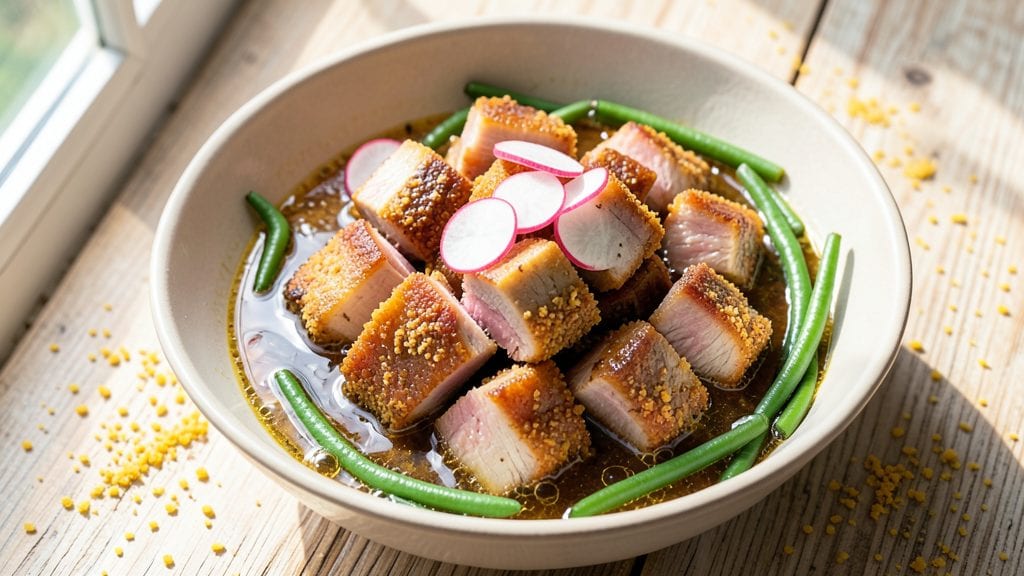
This pork belly sinigang recipe—where sweet, crispy cornmeal crowns float in a bright tamarind broth—is the dish I learned to master while apprenticing under Master Chef Chen.
The balance of textures and flavors here is what makes this recipe unforgettable: the crispy cornmeal crust on the pork belly contrasts beautifully with the silky, sour-sweet broth.
This pork belly sinigang starts with a tamarind-based broth that builds its signature tang, then layers in aromatic vegetables and tender pork belly that’s braised until fall-off-the-bone tender.
The key lies in the cornmeal coating, which creates that coveted crispy exterior while keeping the meat juicy inside—a technique I’ve refined over years of cooking for crowds at The Smoky Pig.
By the time you serve this dish, you’ll have a steaming bowl of rich, umami-packed pork belly swimming in a vibrant broth, topped with those irresistible cornmeal crowns that add texture and depth to every bite. The flavors are complex yet harmonious—sour, savory, and slightly sweet all in one spoonful.
Perfect for family gatherings or special occasions, this recipe delivers restaurant-quality results with a method that’s surprisingly straightforward. Let’s bring the soul of Filipino comfort food to your table.
Ingredients for pork belly sinigang
Pantry staples meet Filipino soul food—this dish balances crispy cornmeal crowns with tangy tamarind broth.
| Ingredient | Amount | Notes |
|---|---|---|
| Pork Belly 🥩 | 2 lb | Skin-on, cut into 1-inch cubes |
| Yellow Cornmeal 🌽 | 1 cup | Fine grind for crispy coating |
| Tamarind Paste 🍈 | ½ cup | Thick, block form preferred |
| Coconut Milk 🥥 | 13 ½ oz | Full-fat canned, unsweetened |
| Radishes 🥕 | 2 whole | Daikon preferred, sliced thin |
| Green Beans 🌱 | 1 lb | Trimmed, cut into 2-inch pieces |
| Kaffir Lime Leaves 🍋 | 4 whole | Torn into strips, aromatic |
| Fresh Turmeric 🧄 | 1 oz | Grated, vibrant orange color |
| Garlic Cloves 🧄 | 6 cloves | Minced, aromatic base |
| Shallots 🧅 | 4 whole | Thinly sliced, pungent flavor |
| Fish Sauce 🐟 | 2 tbsp | Red Boat preferred, umami depth |
| Sugar 🍚 | 2 tbsp | Balances tamarind sourness |
| Salt 🧂 | 1 ½ tsp | Kosher, adjust to taste |
| Black Peppercorns 🌶️ | 1 tsp | Crushed, for subtle heat |
| Vegetable Oil 🫒 | ½ cup | High smoke point for frying |
The pork belly is the star—look for thick-cut, skin-on pieces from a butcher or Asian market. Costco or Whole Foods carry high-quality cuts, but don't overlook your local grocer's meat department. Fresh turmeric adds vibrant color and earthy depth; substitute 1 tsp ground turmeric if unavailable, though fresh is ideal. Tamarind paste should be thick and block-form—Thai Kitchen brand is reliable, but check the spice aisle at Trader Joe's for alternatives. Kaffir lime leaves are essential for aroma, so hunt them down at an Asian market if your grocery store doesn't carry them.
No tamarind paste? Lime juice plus 1 tbsp sugar mimics the tang, though it won't be identical. Substitute coconut milk with light coconut milk** for a leaner version, though full-fat delivers richer flavor. The cornmeal must be fine-grind—Bob's Red Mill is a trusted brand, but avoid pre-mixed cornmeal blends that contain baking powder. For the pork belly, pork shoulder works in a pinch, though it won't have the same marbling. Fresh herbs like Thai basil or cilantro can garnish at the end, but they're optional—this dish shines without them.
Store the cooked pork belly in the broth for up to 3 days in the fridge, though flavors deepen overnight. The cornmeal crowns stay crispy for 2 days if stored separately in an airtight container. Freeze portions of the broth for 3 months, but reheat gently to preserve texture. For a quick meal, double the broth recipe—it reheats beautifully and makes leftovers a breeze.
Why You'll Love This Recipe
- One-Pot Magic: I swear by this—just toss the pork belly in a pot with tamarind paste and water, let it simmer until it’s fork-tender. No chopping, no fuss, and the broth builds itself while you prep the radishes. That’s 20 minutes of hands-off cooking right there.
- Tamarind-Coconut Crunch: The tamarind paste gives it that signature tang, but the coconut milk? It’s the game-changer—creamy without being heavy, with a subtle sweetness that balances the pork’s richness. Add a sprinkle of yellow cornmeal at the end, and suddenly you’ve got texture and a nutty depth that makes every bite satisfying.
- Leftovers That Beg for Seconds: This soup tastes better the next day, honestly. The pork belly gets even more tender, the broth deepens, and the cornmeal soaks up all the flavors. I make a double batch on Sundays because it’s my go-to for lazy weeknights—just reheat and serve with steamed rice.
- Budget-Friendly Luxury: Pork belly might sound fancy, but here’s the thing: a small slab stretches across two meals, and the other ingredients are pantry staples. Tamarind paste lasts forever, coconut milk is cheap in bulk, and radishes keep for weeks. It’s comfort food that doesn’t break the bank—especially when you’re feeding a crowd.
Step-by-step instructions for pork belly sinigang recipe
Here's how to achieve perfectly crispy pork belly crowns paired with a tangy tamarind broth.
Prepare the Pork Belly Crowns
Cut the 2 lb pork belly into 1-inch cubes, leaving the skin intact. In a bowl, combine the 1 cup yellow cornmeal with 1.5 tsp salt and 1 tsp crushed black peppercorns. Toss the pork belly cubes in this mixture until fully coated, pressing gently to ensure even coverage. This step creates the crispy exterior we're aiming for.
Heat the 0.5 cup vegetable oil in a large skillet over medium-high heat until shimmering. Working in batches, add the coated pork belly and cook for 4-5 minutes per side until golden brown and crispy. The cornmeal should develop a deep golden color and the pork should release easily from the pan. Transfer the cooked pork to a paper towel-lined plate to drain excess oil and keep warm.
Build the Tangy Tamarind Broth
In the same skillet, reduce heat to medium and add the 4 whole shallots and 6 cloves minced garlic. Cook for 2-3 minutes until fragrant and softened. Stir in the 0.5 cup tamarind paste and cook for another minute to develop its flavor. Gradually pour in 2 cups of water, scraping up any browned bits from the bottom of the pan.
Add the 13.5 oz coconut milk, 2 tbsp fish sauce, and 2 tbsp sugar to the skillet. Bring to a gentle simmer and let it cook for 5 minutes to allow the flavors to meld together. The broth should have a vibrant orange hue from the tamarind and coconut milk, with a slightly sweet and tangy aroma.
Prepare the Vegetable Medley
While the broth simmers, prepare the vegetables. Thinly slice the 2 whole radishes and cut the 1 lb green beans into 2-inch pieces. In a separate pot, bring 4 cups of water to a boil and add the green beans. Cook for 2-3 minutes until just tender but still crisp. Drain and set aside.
In the same pot, add the sliced radishes and cook for 1 minute. Remove from heat and add the 1 oz grated fresh turmeric and 4 strips of torn kaffir lime leaves. Let the vegetables steep for 2 minutes to infuse their flavors into the water, then drain and set aside with the green beans.
Combine and Simmer
Return the pork belly crowns to the skillet with the tamarind broth. Add the prepared green beans and radishes, along with any remaining cooking liquid from the vegetables. Bring the mixture to a gentle simmer and let it cook for 10 minutes to allow the flavors to meld together.
Taste the broth and adjust the seasoning if needed. The balance of sweet, sour, and umami should be harmonious. If the broth is too thin, simmer it uncovered for an additional 5 minutes to reduce slightly. The final dish should have a rich, aromatic broth with perfectly crispy pork belly crowns and vibrant vegetables.
Serve Immediately
Ladle the pork belly sinigang into serving bowls, ensuring each portion has an equal share of the crispy pork, vegetables, and tangy broth. Serve immediately while the pork belly crowns are still crispy and the vegetables retain their vibrant colors and textures.
This dish delivers the perfect balance of textures and flavors, with the crispy cornmeal-coated pork belly contrasting beautifully against the tangy tamarind broth. Enjoy the rich, aromatic experience of this Filipino classic.
Pro Tips For Making Pork Belly Sinigang
- CRISP THE BELLY FIRST: I learned this the hard way—skipping the initial sear means your pork belly will turn out greasy instead of golden. Pat it dry, then hit it with high heat in a hot pan until deep brown crust forms on all sides. This isn’t just for looks; it locks in flavor and keeps the meat from falling apart later.
- DILUTE THE TAMARIND: My grandmother swore by this, and she was right: tamarind paste is way more potent than it looks. Mix it with 2-3 times its volume in warm water before adding to the pot—otherwise, you’ll end up with a soup that tastes like overripe sour plums instead of the balanced tang you want.
- LOW AND SLOW FOR RADISHES: After burning three batches of radishes, I finally figured out the trick: simmer them just until fork-tender, not mushy. Drop them in the last 10 minutes of cooking on medium-low heat—any hotter, and they’ll turn to mush. You want them holding their shape but soft enough to melt in your mouth.
- SKIP THE COCONUT MILK TRICK: This isn’t the prettiest method, but it’s the tastiest: add coconut milk after the pork belly has already cooked through. Stir it in during the last 5 minutes of simmering—this keeps the soup from curdling and lets the creaminess shine without turning your broth into a heavy, cloying mess.
Make-ahead tips for this dish
Broth Prep Ahead
Start the tamarind broth base 24 hours ahead—this lets the flavors develop fully. Combine all broth ingredients (tamarind, coconut milk, fish sauce, sugar, aromatics) in a slow cooker on low for 8 hours or a pot on low simmer for 2 hours.
Store in an airtight container in the fridge. The acidity will mellow slightly, deepening the complexity. I always double this batch—it reheats beautifully for quick meals. 🥄
Pork Crown Prep
Cook the cornmeal-coated pork belly crowns 1 day ahead and store them at room temperature in a single layer on a wire rack. This keeps them crispy for up to 24 hours.
Reheat in a 350°F oven for 5-7 minutes before adding to the broth. For extra crunch, sprinkle with 1 tsp cornstarch before reheating. 🔥
Veggie Prep Shortcut
Blanch and shock all vegetables (radishes, green beans, kangkong) 1 day ahead. Store them in a bowl of ice water in the fridge. When ready to serve, quickly reheat in the broth for 3-4 minutes—they’ll wilt just enough to soften while retaining their vibrant color.
This saves 20 minutes on cooking day. 🥕
Freezer-Friendly Broth
Freeze the tamarind broth in 1-cup portions in silicone ice cube trays for easy single-serving reheats. Thaw overnight in the fridge, then simmer for 10 minutes before adding fresh veggies and pork. The texture remains silky—just avoid freezing the pork belly crowns, as they’ll lose crispiness. 🧊
Family-Style Serving
For gatherings, assemble the dish family-style in a large cast-iron pot or Dutch oven at the table. Keep the pork crowns in a warm oven (200°F) while serving, and add them to bowls as requested. This keeps the crispy texture intact longer and lets everyone customize their portions. 👨👩👧👦
Leftovers Reinvention
Transform leftover pork belly sinigang into sinigang pancit—a noodle dish. Sauté leftover pork, veggies, and broth with rice noodles and a beaten egg for a quick stir-fry.
Or shred the pork and use it in sinigang fried rice with jasmine rice and a fried egg on top. Waste not, want not! 🍜
Nutrition facts
Frequently asked questions
Can I substitute tamarind paste with something else?
If you can't find tamarind paste, use 0.5 cup lime juice plus 1 tbsp sugar for a similar tangy kick. For a deeper flavor, try 0.5 cup unsweetened pineapple juice—it adds a subtle sweetness that works beautifully with the coconut milk. The key is balancing sourness with just enough sweetness to complement the pork belly's richness.
How do I keep the cornmeal coating crispy?
The secret is double-frying the pork belly crowns. After the first fry, let them cool completely, then fry again for 2-3 minutes until golden. Store them in a single layer on a wire rack at room temperature—this prevents steam from making them soggy. Reheat in a 350°F oven for 5 minutes before serving.
What vegetables can I add to this recipe?
Traditional Filipino sinigang often includes kangkong (water spinach), eggplant, or long beans. For a heartier version, add 1 cup sliced cabbage or 1 zucchini. Just remember to add delicate veggies (like spinach) last to prevent overcooking. The radishes and green beans in this recipe are perfect for balancing the rich pork belly.
Why does my broth taste too sour?
Too much tamarind or lime juice can overpower the dish. Balance it by adding 1 tbsp sugar or a pinch of salt to round out the flavors. If the sourness persists, stir in 2 tbsp coconut cream—it adds richness that mellows the acidity. Taste as you go, especially after simmering, as flavors evolve.
Can I make this dish in a slow cooker?
Yes! After frying the pork belly crowns, add them to the slow cooker with the broth ingredients. Cook on low for 4-5 hours or high for 2-3 hours. The slow cooking enhances the pork's tenderness, but the cornmeal coating may soften slightly. To maintain crispiness, add the crowns to bowls just before serving.