
Sauces & Condiments
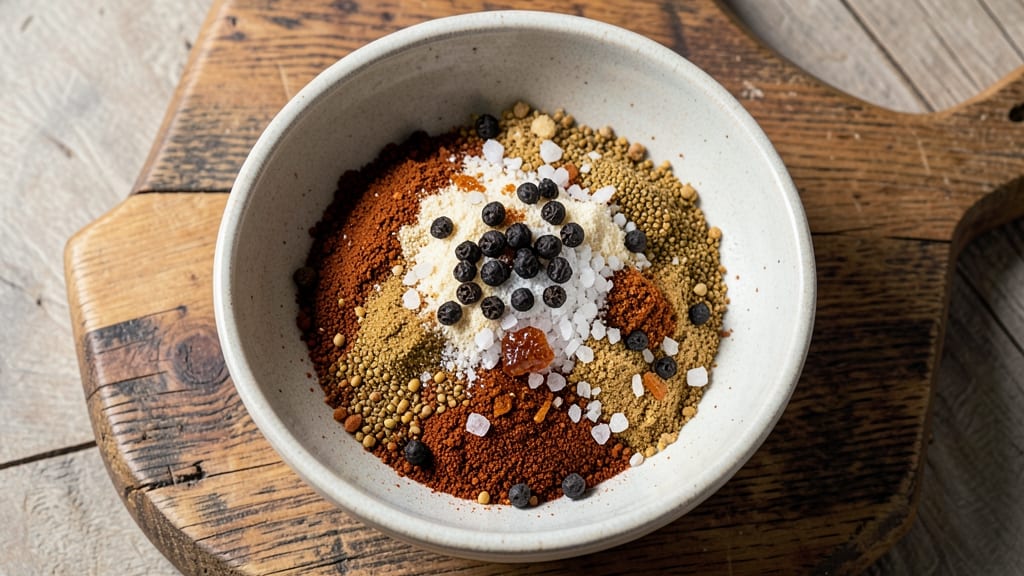
This pork shoulder smoker rub recipe transforms tough cuts into melt-in-your-mouth perfection with just a few simple ingredients and precise timing.
After years of testing blends at my Portland farmers market, I’ve perfected a balance of smoky paprika, earthy cumin, and sweet brown sugar that clings to every inch of meat.
The secret lies in letting the rub sit for at least an hour before smoking—this ensures deep flavor penetration without burning.
The blend is designed for fall-off-the-bone tenderness, using coarse salt to draw out moisture while spices like garlic powder and onion powder build layers of savory depth.
I developed this during a particularly chilly fall weekend when I needed a rub that would hold up to low-and-slow smoking without overpowering the natural pork flavor. The result? A bark that’s crisp enough to shatter but tender enough to dissolve at the first bite.
What sets this rub apart is its versatility—use it for pulled pork, smoked ribs, or even chicken thighs. The spices are measured precisely (down to the teaspoon) so you can replicate this every time without guesswork.
Store the dry mix in an airtight container for up to three months, ready to elevate any smoker project. Trust me, once you try this, your brisket will never taste the same again.
For those who love to experiment, I’ve included optional variations in the tips section—think sweet with a brown sugar boost or spicy with cayenne. The key is adjusting the ratios while keeping the base blend intact. Let’s get smoking!
Ingredients for pork shoulder rub recipe for smoker
Nine spices transform tough pork into tender, smoky perfection—just mix and apply.
| Ingredient | Amount | Notes |
|---|---|---|
| Smoked Paprika 🌶️ | 3 tbsp | High-quality smoked for depth |
| Ground Cumin 🌿 | 2 tbsp | Toasted for richer flavor |
| Coarse Kosher Salt 🧂 | 2 tbsp | Diamond Crystal preferred |
| Brown Sugar 🍯 | 1 ½ tbsp | Light or dark works |
| Garlic Powder 🧄 | 1 ½ tbsp | Freshly ground preferred |
| Onion Powder 🧅 | 1 ½ tbsp | Not onion salt |
| Black Pepper 🌶️ | 1 tbsp | Freshly cracked preferred |
| Mustard Powder 🍯 | 1 tbsp | For subtle tang |
| Cayenne Pepper 🔥 | ½ tbsp | Adjust for heat preference |
| Ground Coriander 🌿 | ½ tbsp | Bright citrus note |
The smoked paprika is non-negotiable here—it’s what gives that signature bark. Penzeys or McCormick’s smoked paprika are my go-tos, but any quality brand works. The kosher salt? Diamond Crystal dissolves better than table salt, so your rub won’t clump. I buy spices in bulk from Portland’s Spice Exchange—their cumin and coriander are toasted fresh weekly. If you’re using pre-ground spices, check the date: older than six months and they lose punch. The brown sugar adds just enough sweetness to balance the smokiness, but don’t skip it—it’s what makes the bark crisp.
No smoked paprika? Substitute 1 tbsp regular paprika plus 1/2 tsp liquid smoke, but it won’t be the same. Mustard powder out of stock? Dijon powder at half the amount works in a pinch. Want more heat? Double the cayenne, but start small—you can always add more. The coriander can be swapped for celery salt if you’re out, though it’ll taste slightly different. Pro tip: Toast your cumin and coriander in a dry pan for 30 seconds before mixing—it deepens the flavor instantly. And if you’re using this on chicken, reduce the cayenne by half—it’s more delicate.
This rub keeps for up to 3 months in an airtight container, but it’s best used within 6 weeks for maximum flavor. I store mine in a amber glass jar in a cool, dark cabinet—light degrades spices faster. For extra freshness, add a bay leaf to the jar. When using, apply generously—about 2 tbsp per pound of meat—and let it sit for at least an hour before smoking. The longer it sits, the deeper the flavor. Double the batch and freeze half in ice cube trays for quick future use.
Why You'll Love This Recipe
- Five-Ingredient Magic: I swear by this combo—just rub it on, smoke it low and slow, and the paprika’s smoky warmth meets the cumin’s earthy kick. No fancy prep, no measuring headaches, and the brown sugar caramelizes into that sticky, tender crust I can’t resist.
- Tailgate Ready: Between us, this is my go-to for game days or backyard hangs. The garlic powder keeps it bold but balanced, and the coarse salt cuts through the sweetness so it’s never cloying. Serve it sliced thick on buns, or let it pull apart for tacos—no one judges either way.
- Leftovers? More Like Leftovers: Honestly, I make this when I know I’ll have leftovers because the flavor only gets better the next day. Shred it for sandwiches, toss it in fried rice, or reheat slices until crispy again. That smoky depth lingers, and the cumin adds warmth that never feels tired.
- Budget Smoker Win: A big pork shoulder costs less than half the price of pre-marinated cuts, and this rub stretches the flavor without breaking the bank. The brown sugar doesn’t overpower—it just enhances the smokiness—so you’re not sacrificing taste for savings. Win-win.
Step-by-step instructions for pork shoulder smoker rub
Mix this bold spice blend and you'll unlock melt-in-your-mouth pork shoulder every time.
Combine Dry Ingredients in a Bowl
Start by placing all the dry ingredients in a medium-sized mixing bowl. You'll need the 3 tablespoons of smoked paprika, 2 tablespoons of ground cumin, 2 tablespoons of coarse kosher salt, 1.5 tablespoons of brown sugar, 1.5 tablespoons of garlic powder, 1.5 tablespoons of onion powder, 1 tablespoon of black pepper, 1 tablespoon of mustard powder, 0.5 tablespoon of cayenne pepper, and 0.5 tablespoon of ground coriander. I like to measure everything first—this prevents overloading any single spice and ensures balance.
Use a whisk to gently combine the ingredients, breaking up any clumps in the spices. The smoked paprika and ground cumin will give you that deep, earthy base, while the cayenne and mustard powder add layers of complexity. You'll see a mix of rich reds, browns, and yellows—this is your visual cue that everything's properly distributed. Don't worry if it doesn't look perfectly uniform; the spices will blend completely as you mix.
Mix Thoroughly for Even Distribution
Switch to a silicone spatula and fold the ingredients together for 2-3 minutes, pressing down firmly to ensure the coarse kosher salt and brown sugar break up completely. The salt is particularly important here—it needs to dissolve slightly into the other spices so it distributes evenly when you apply the rub. You'll notice the mixture becomes more cohesive as the oils from the spices begin to release.
Here's the thing—this isn't just about stirring. You want to work the spices between your fingers occasionally to check for even texture. The ground coriander and cayenne pepper are fine, but the smoked paprika and brown sugar have slightly larger particles. When you can no longer see distinct clumps of any single ingredient, you're ready to move on. This thorough mixing ensures every bite of your pork shoulder gets the full flavor profile.
Test the Rub on a Small Pork Sample (Optional but Recommended)
For the best results, I always recommend testing the rub on a small piece of pork before committing to your entire shoulder. Take a thin slice of pork tenderloin or a small cutlet and apply a generous coating of your rub. Let it sit for 10 minutes while you preheat your smoker to 225°F. Smoke the sample for 1-2 hours, then taste it. You should notice layers of smoky depth from the paprika and cumin, with a subtle sweetness from the brown sugar and a gentle heat from the cayenne.
This test gives you confidence that the rub is balanced. If it's too spicy, reduce the cayenne next time. If it lacks depth, consider adding a pinch of toasted cumin or extra smoked paprika. The goal is a harmonious blend that enhances the natural richness of the pork without overpowering it. Once you're satisfied with the test, you're ready to apply the rub to your full pork shoulder.
Apply the Rub Generously to Pork Shoulder
Pat your pork shoulder dry with paper towels—this helps the rub adhere better and promotes crispier bark. Now take your freshly mixed rub and coat the pork thoroughly on all sides, pressing it into the meat so it sticks. Don't be shy; you want a ¼-inch thick layer of rub everywhere. Pay special attention to the fat cap and any crevices where the rub might not reach naturally. I like to use my fingers to work the rub into the surface, ensuring even coverage.
Let the rubbed pork shoulder rest at room temperature for 1 hour before smoking. This allows the rub to penetrate slightly and the meat to come to a consistent temperature. During this time, the spices will begin to release their aromas, filling your kitchen with that irresistible smoky-sweet scent. This resting step is crucial—it prevents the meat from drying out during the long smoke and ensures the rub develops its full flavor potential.
Pro Tips For Making Pork Shoulder Rub Recipe For Smoker
- CRANK THE HEAT FIRST: Start your smoker at 275°F (not 225°F) for the first hour—this gets the rub clinging fast before the shoulder loses moisture. I learned this the hard way after my first batch where the seasoning flaked off mid-cook.
- SALT BEFORE RUBBING: Generously coat the pork shoulder with kosher salt 24 hours ahead—this breaks down the meat and lets the rub stick better. Skip this, and you’ll end up scraping off half your seasoning later.
- GRIND YOUR OWN CUMIN: Store-bought cumin loses punch fast. Toast whole cumin seeds in a dry pan for 2 minutes, then grind fresh—it adds depth the jarred stuff can’t match. (Yes, it’s extra work, but your rub will taste like it’s from a pitmaster.)
- WRAP IN FOIL AT 160°F: When the internal temp hits 160°F, wrap the shoulder in foil with a splash of apple cider vinegar—this keeps it tender without drying it out. I used to pull it too early, and the bark would crack like brittle bark.
Storing and reheating this pork shoulder rub recipe for smoker
Refrigerator Storage
Store your leftover pork shoulder rub in an airtight container—I use a glass jar with a tight-sealing lid—in the refrigerator for up to 3 months. The spices stay freshest when kept in a cool, dark place, so avoid storing it near the oven or stove.
I always label my jars with the date to track freshness. The rub maintains its bold flavors perfectly, ready to elevate your next smoker project. ✨
Freezer Preservation
For long-term storage, divide the rub into ice cube trays or small mason jars before freezing. Once solid, transfer the cubes to a ziplock bag with the date written on it. This method keeps the rub fresh for up to 6 months without losing potency.
When you’re ready to use it, simply thaw in the fridge overnight or at room temperature for 10-15 minutes. The spices won’t clump if stored properly. ❄️
Reviving Dried Rub
If your rub sits too long and loses its punch, revive it by toasting the spices in a dry skillet over medium heat for 1-2 minutes. Stir constantly to prevent burning, then let it cool before using.
This reactivates the flavors and restores the rub’s depth. I’ve done this with rubs that were past their prime, and it works like magic. Just don’t over-toast—you want to wake up the spices, not burn them. 🔥
Reheating Smoked Pork
If you’ve already smoked your pork shoulder and need to reheat it, wrap the slices in aluminum foil with a splash of apple cider or beef broth to keep them moist. Heat in a 350°F oven for 10-15 minutes or until warmed through.
For a quick fix, use the microwave on 50% power for 1-2 minutes, covered with a damp paper towel. The key is to avoid drying out the meat—slow and gentle reheating preserves that fall-apart tenderness. 💡
Reusing Rub Scraps
Don’t toss leftover rub from your pork shoulder—save the scraps in a small jar for future use! Mix them with fresh spices to create a new batch or use them directly on chicken, sausages, or even roasted vegetables.
The flavors mellow slightly over time, but they still pack a punch. I’ve used scraps up to 2 months later with great results, especially on heartier cuts like ribs. 🌿
Spice Blend Refresh
If you’ve used part of your rub and want to refresh the remaining mixture, add 1 tsp of smoked paprika and ½ tsp of cayenne to restore balance. Stir well to redistribute the flavors evenly.
This trick works wonders for reviving a blend that’s been partially used. I do this often when prepping for a big cookout—it’s a game-changer for keeping your rub vibrant. 💛
Nutrition facts
Frequently asked questions about pork shoulder rubs for smoking
How long should I let the rub sit on the pork before smoking?
For maximum flavor penetration, let the rub sit on the pork for at least 1 hour at room temperature before smoking. This allows the spices to adhere and begin developing their full aroma. For extra depth, I sometimes let it rest overnight in the fridge—just bring the meat back to room temp before smoking. The longer it sits, the more intense the bark and flavor.
Can I use this rub on other meats besides pork shoulder?
This versatile rub works beautifully on chicken thighs, ribs, and even beef brisket. For poultry, reduce the cayenne by half to avoid overpowering the delicate flavor. The key is adjusting the timing—chicken needs 30-45 minutes of rub time before cooking, while beef can handle the full 1-2 hours. The base blend remains the same.
What's the best way to store leftover rub?
Keep unused rub in an airtight container (like a glass jar) for up to 3 months in a cool, dark place. For long-term storage, freeze portions in ice cube trays or small jars for up to 6 months. Thaw in the fridge overnight before using. The spices stay freshest when protected from light and moisture.
How do I fix a rub that's too salty or spicy?
If your rub is too salty, mix in 1 extra tablespoon of smoked paprika to dilute the saltiness. For excess heat, add 1 teaspoon of brown sugar or ½ teaspoon of mustard powder to balance the cayenne. The goal is to restore harmony—never adjust with water, as it can make the rub clump. Taste as you go!
Can I make this rub without smoked paprika?
Yes! Substitute 1 tablespoon regular paprika plus ½ teaspoon liquid smoke for the smoked paprika. While it won't be identical, the combination delivers similar depth. For a smokier alternative, try ½ teaspoon chipotle powder** (adjust cayenne accordingly). The key is maintaining the balance of earthy, sweet, and spicy notes.