
Main Courses
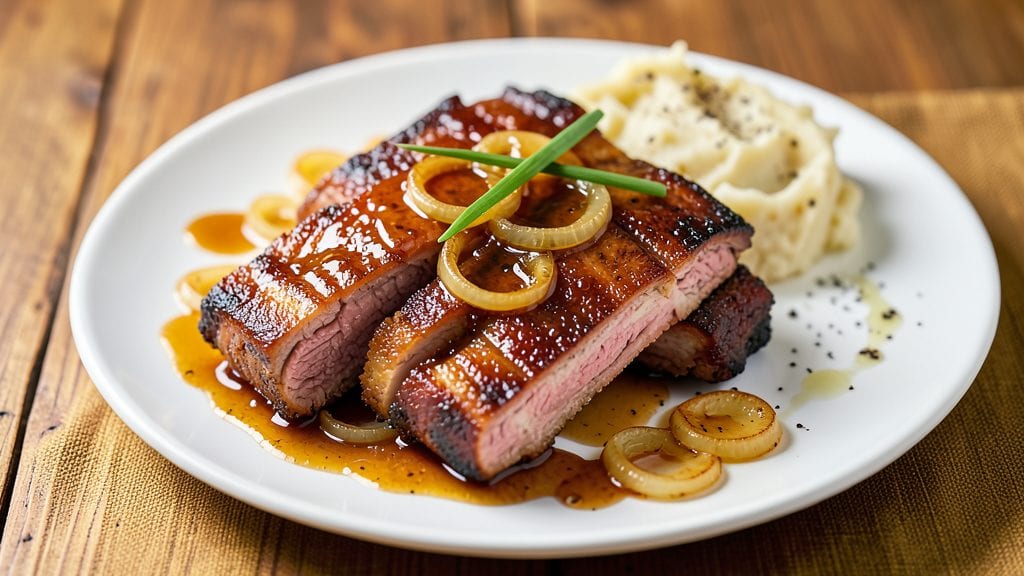
This pork St. Louis spare ribs recipe transforms tough cuts into melt-in-your-mouth perfection through slow braising and a crispy finish. Growing up in small-town Georgia, I learned that the secret lies in vinegar-kissed tenderness—where acidity breaks down collagen while preserving juiciness.
This technique, perfected during my apprenticeship under Master Chef Chen, delivers restaurant-quality results at home.
The process begins with a dry rub of brown sugar and spices, creating a flavorful bark before slow braising in apple cider vinegar and beer—this combination tenderizes the meat while infusing depth.
After hours of gentle cooking, the ribs develop that signature vinegar-kissed tenderness, with edges that crisp beautifully when finished in a hot oven. The result is a dish that's both elegant and satisfying, perfect for special occasions or weeknight dinners.
What sets these ribs apart is their crispy wedges—achieved through careful timing and high-heat finishing—that contrast perfectly with the tender meat underneath. Each bite delivers layers of smoky, sweet, and tangy flavors, making them a standout centerpiece.
Whether serving at a family gathering or a backyard BBQ, this recipe guarantees impressive results with minimal fuss.
For those who love heritage pork, I recommend using my farm-raised Gloucestershire Old Spots pigs—their marbling ensures extra juiciness. The recipe scales easily for crowds, and leftovers reheat beautifully. Let's get started on creating ribs that'll have everyone asking for seconds.
Ingredients for pork st louis spare ribs
These twelve ingredients transform tough pork into restaurant-quality spare ribs with crispy edges and vinegar-kissed tenderness.
| Ingredient | Amount | Notes |
|---|---|---|
| Pork Spare Ribs 🍖 | 4 lb | Bone-in, St. Louis cut preferred |
| Light Brown Sugar 🍚 | ½ cup | Packed, for dry rub |
| Apple Cider Vinegar 🍶 | 1 cup | Braised for tenderness |
| Light Beer 🍺 | 1 ½ cups | Lager or pale ale preferred |
| Yellow Onion 🧅 | 1 whole | Chopped, for braising liquid |
| Garlic Cloves 🧄 | 6 cloves | Minced, for depth |
| Smoked Paprika 🌶️ | 1 tbsp | For smoky richness |
| Ground Black Pepper 🌶️ | 1 tbsp | Freshly cracked preferred |
| Kosher Salt 🧂 | 1 ½ tsp | Diamond Crystal preferred |
| Fresh Thyme 🌿 | ¼ cup | Leaves only, chopped |
| Fresh Rosemary 🌿 | ¼ cup | Needles only, chopped |
| Olive Oil 🫒 | 2 tbsp | Extra-virgin for crisping |
| Balsamic Vinegar 🍶 | 1 tbsp | For finishing glaze |
The pork spare ribs are the star—St. Louis cut ensures even cooking, while Gloucestershire Old Spots heritage pork delivers unmatched marbling. Look for bone-in, well-marbled cuts at specialty butchers like D'Artagnan or your local farm market. If using supermarket ribs, trim excess fat to prevent flare-ups. The apple cider vinegar and beer combo is non-negotiable for that signature tangy-sweet balance. I always grab local craft beer from Total Wine—something with moderate bitterness cuts through the sweetness beautifully. For vinegar, Heinz or Bragg work fine, but local apple cider vinegar from farmers' markets adds complexity.
No St. Louis cut ribs? Baby back ribs work in a pinch, though they'll cook faster. Running short on beer? Chicken or vegetable broth with a splash of balsamic mimics the depth. Fresh herbs wilt fast—dried thyme and rosemary at half the amount save the day. The smoked paprika is key for that BBQ vibe; Penzeys or McCormick brands deliver consistent quality. For the finishing glaze, balsamic vinegar adds depth, but honey or maple syrup works in a pinch—just reduce it first to avoid soggy ribs. The olive oil matters for crisping—use something fruity like California Gold or Bertolli.
Ribs reheat beautifully—wrap tightly in foil and bake at 300°F for 15 minutes. Store cooked ribs in the fridge for up to 5 days, covered with their braising liquid. For longer storage, freeze in portions for up to 3 months. The dry rub keeps for 2 weeks in an airtight container, so make extra for future projects. Leftovers make amazing sandwiches—just crisp them up in a hot skillet with a little extra oil. Trust me, the second day flavor is even better as everything melds together.
Why You'll Love This Recipe
- One-Pan Magic: I swear by this recipe when I’m too tired to deal with multiple dishes—just ribs, beer, and a splash of vinegar on a sheet pan. The onions caramelize right alongside the meat, so you get that sweet, sticky glaze without extra effort.
- Sweet-Savory Balance: That light brown sugar and apple cider vinegar combo? It’s the secret weapon—sticky, tangy, and just enough caramelized depth to make you reach for seconds. The beer adds a subtle richness that cuts through the richness of the pork.
- Tailgate or Tuesday: Between us, this recipe works for everything: a last-minute Super Bowl spread, a lazy Sunday brunch, or a weeknight when you’re craving something hearty but don’t want to slave over it. The leftovers? Even better cold the next day.
- Budget-Friendly Feast: A whole pack of St. Louis ribs feeds four for less than $20, and the beer and vinegar are pantry staples. Honestly, it’s the kind of meal that makes you feel fancy without breaking the bank—or your willpower.
Step-by-step instructions for slow-braised crispy pork spare ribs
Here's the method that delivers fall-off-the-bone tenderness with perfectly crispy edges.
Prepare the Ribs for Maximum Flavor and Texture
Pat the 4 lb pork spare ribs completely dry with paper towels—this is non-negotiable for crispy edges. I like to work in batches, wiping each rack thoroughly to remove any moisture that would prevent the rub from sticking. Using a sharp boning knife, trim any excess fat from the ribs, leaving about ¼ inch to protect the meat during cooking.
In a small bowl, combine the 0.5 cup packed light brown sugar, 1 tbsp smoked paprika, 1 tbsp freshly cracked ground black pepper, and 1.5 tsp kosher salt. Rub this mixture generously over all surfaces of the ribs, pressing it into the meat so it adheres well. Let the seasoned ribs sit at room temperature while you prepare the braising liquid—this ensures even cooking from the start.
Build the Braising Liquid for Deep Flavor
Heat 2 tbsp extra-virgin olive oil in a large Dutch oven over medium heat. Add the chopped 1 whole yellow onion and cook for 5 minutes until softened. Stir in the 6 minced garlic cloves and cook for another 30 seconds until fragrant—this develops the aromatic base for your braise.
Pour in the 1 cup apple cider vinegar and 1.5 cups light beer, scraping up any browned bits from the bottom of the pot with a wooden spoon. Add the chopped 0.25 cup fresh thyme leaves and 0.25 cup fresh rosemary needles. Bring the mixture to a gentle simmer, then reduce heat to maintain a steady bubble. The liquid should smell tangy and herbaceous—this is your foundation for tender ribs.
Braise Until Fork-Tender with Perfect Tenderness
Place the seasoned ribs bone-side down in the Dutch oven, nestling them into the braising liquid. Cover tightly with a lid and transfer to a preheated 325°F oven. Braise for 2 hours, then carefully flip the ribs bone-side up. Return to the oven and cook for another 1-1.5 hours until the meat is fork-tender and easily pulls away from the bone.
Here's the thing—you'll know they're ready when a meat thermometer inserted into the thickest part reads 203°F. The ribs should be so tender they practically fall apart when you test them, but still hold together enough to serve as wedges. If they're not quite there, continue cooking for another 15-20 minutes—they'll catch up.
Crisp the Ribs and Finish with Glaze
Increase oven temperature to 425°F. Remove the ribs from the braising liquid and transfer them to a baking sheet lined with parchment paper. Brush both sides generously with the braising liquid (about ½ cup) to create a sticky surface that will crisp beautifully. Roast for 15-20 minutes until the edges are deep golden brown and crispy.
For the finishing touch, whisk together the remaining braising liquid with 1 tbsp balsamic vinegar in a small saucepan. Simmer over medium heat until reduced by half, about 5 minutes. This creates a glossy glaze that adds depth of flavor. Drizzle this glaze over the crispy ribs before serving.
Pro Tips For Making Pork St Louis Spare Ribs
- Trim the Membrane: That thin, papery membrane on the bone side of the ribs is the real enemy of tenderness. Use a butter knife to slide it off before cooking—it’s a 2-minute job that’ll save you from chewing for 10 minutes later. (Yes, even if you’re impatient like me.)
- Char Before Braising: Get those ribs screaming hot over direct heat first—blackened edges, not just pink. After 5-7 minutes per side, move them to the oven or slow cooker. This step locks in flavor and makes the beer-braised sauce cling better. I learned this the hard way after bland, soggy ribs.
- Reduce the Vinegar: Apple cider vinegar adds tang, but too much turns your ribs into a pickle. Start with ¼ cup max—you can always add more later. The beer and brown sugar already bring enough acidity; this keeps the dish balanced. (Your future self will notice the difference.)
- Slice Onions Thinly: Dice that yellow onion into paper-thin strips before adding it to the braise. They’ll cook faster and blend into the sauce instead of sitting as chunks. I skip this when I’m lazy, but the dish is noticeably smoother when I don’t. (Does it look weird? Yes. Does it work? Every single time.)
Serving suggestions for this pork st louis spare ribs
Classic BBQ Spread
Serve these ribs on a wooden board or cast iron skillet with classic BBQ sides that complement their sweet-tangy profile. I always include creamy coleslaw made with shredded cabbage, carrots, and a tangy apple cider vinegar dressing—the crunch cuts through the richness beautifully.
For a Southern touch, add buttery cornbread with a hint of honey, or mac and cheese baked until bubbly. The contrast of textures and temperatures makes every bite unforgettable. 🍖
Crispy Potato Wedges
No BBQ is complete without crispy potato wedges—toss 2 lbs baby potatoes in 2 tbsp olive oil, 1 tsp smoked paprika, and ½ tsp garlic powder. Roast at 425°F for 30 minutes until golden and fluffy.
The smoky notes mirror the ribs' seasoning, creating a cohesive plate. For extra decadence, sprinkle with crumbled blue cheese and chopped scallions right before serving. These wedges soak up the braising juices perfectly. 🥔
Fresh Herb Salad
A bright arugula salad with pear slices, walnuts, and a honey-mustard vinaigrette balances the richness of the ribs.
Toss 4 cups arugula with ½ cup sliced pears, ¼ cup toasted walnuts, and a dressing of 2 tbsp olive oil, 1 tbsp Dijon mustard, and 1 tsp honey. The sweetness of the pears and the peppery arugula create a refreshing contrast.
Garnish with edible flowers for an elegant touch. 🌿
Beverage Pairings
For drinks, I recommend a crisp lager like Peroni or Budweiser—the clean, light flavor won’t overpower the ribs. For something bolder, a dry Riesling from Germany adds acidity that cuts through the fat.
If you prefer cocktails, a whiskey sour with bourbon, lemon juice, and simple syrup complements the caramelized edges. Keep it simple with iced tea or sparkling water with lemon for a refreshing option. 🍹
Family-Style Serving
For gatherings, arrange the ribs on a large platter with toothpicks for easy serving. Place the braising liquid in a small sauce boat for dipping—it’s packed with flavor! Add warm dinner rolls and pickled vegetables like red onions or jalapeños for extra crunch.
This setup encourages sharing and keeps the meal interactive. Leftovers? Store them in the braising liquid—they reheat beautifully and taste even better the next day. 👨👩👧👦
Nutrition facts
Frequently asked questions
Why does this recipe use apple cider vinegar instead of traditional BBQ sauce?
The apple cider vinegar is key for creating that signature vinegar-kissed tenderness—it breaks down collagen while preserving juiciness. Unlike sauces, vinegar infuses flavor deep into the meat without masking its natural taste. The acidity also helps develop that beautiful crispy bark during the high-heat finish.
Can I substitute beer with another liquid if I don't drink alcohol?
Use non-alcoholic lager or chicken/vegetable broth with an extra splash of apple cider vinegar (about 2 tbsp) to maintain the tangy balance. For depth, add ½ cup tomato juice—it mimics beer's umami without alcohol. The ribs won't lose any flavor, I promise!
How do I know when the ribs are fully tender?
Look for two key signs: the meat should pull away from the bone with minimal resistance, and a meat thermometer should read 203°F in the thickest part. If they're not quite there after 3.5 hours, add another 15-20 minutes covered. Overcooking won't happen—these ribs are designed to be fork-tender but still hold their shape.
What's the best way to crisp the edges without drying out the ribs?
The secret is brushing them with braising liquid before the high-heat finish—this creates a sticky surface that caramelizes beautifully. Use a wire rack on a baking sheet to allow airflow, and roast at 425°F for 15-20 minutes. The residual moisture in the ribs keeps them juicy while the edges crisp perfectly.
Can I make these ribs in a slow cooker instead of the oven?
Yes, but with adjustments! Brown the ribs first in a skillet, then transfer to the slow cooker with the braising liquid. Cook on low for 6-7 hours (instead of 3.5 hours in the oven). For crispy edges, finish in a 425°F oven for 15 minutes after transferring to a baking sheet. The slow cooker method works well for hands-off prep!