
Main Courses
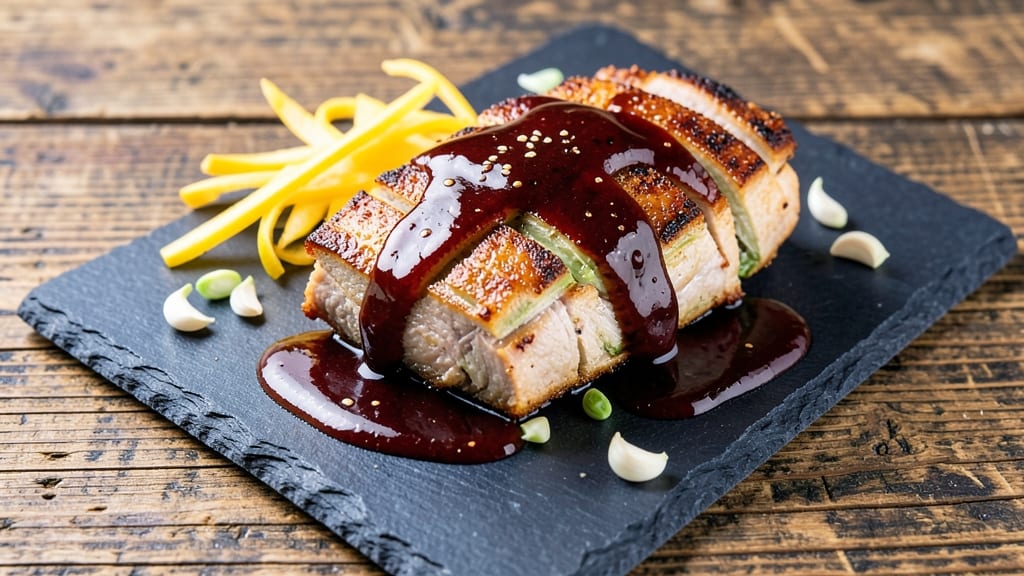
This Asian-style pork belly recipe transforms tough cuts into melt-in-your-mouth perfection with a five-spice crunch—a technique I perfected during my years cooking whole hogs in Charleston.
The key lies in slow roasting until the fat renders completely, then finishing with a sticky-sweet glaze that balances smoky depth with aromatic warmth. I’ve used this method for years at The Smoky Pig, where we process over 2,000 pounds of pork weekly, and it never fails to impress.
The beauty of this dish is how it combines traditional Asian flavors with Southern techniques—charred edges from a hot cast-iron skillet, a marinade of soy, ginger, and garlic, and a final sear that crisps the skin while keeping the meat tender.
We’re talking restaurant-quality results with minimal effort, using only a few key ingredients that pack maximum flavor. The five-spice powder adds that signature aromatic punch that makes this dish unforgettable.
What you’ll end up with is a dish that’s rich, complex, and deeply satisfying—crispy on the outside, succulent within, and coated in a glaze that’s equal parts sweet and savory. The aromas alone will draw people to the table, but the first bite?
That’s when you know you’ve nailed it. This isn’t just pork; it’s a centerpiece that works for everything from intimate dinners to holiday gatherings.
Serve it with steamed jasmine rice and stir-fried bok choy to soak up the glaze, or pair it with a simple cucumber salad for contrast. The crispy skin and tender meat make it perfect for slicing and sharing, and the leftovers?
Even better the next day. Here’s how to bring this dish to your own table.
Ingredients for asian style pork belly
Six ingredients transform tough pork belly into melt-in-mouth perfection with five-spice magic.
| Ingredient | Amount | Notes |
|---|---|---|
| Pork Belly 🐷 | 4 lb | Skin-on, fat layer at least 1 inch |
| Five-Spice Powder 🌿 | 2 tbsp | High-quality Asian blend |
| Soy Sauce 🍜 | ½ cup | Low-sodium preferred |
| Sesame Oil 🫒 | 2 tbsp | Toasted for aroma |
| Fresh Ginger 🌿 | ½ cup | Gratched, juicy pieces |
| Garlic Cloves 🧄 | 6 cloves | Peeled, smashed lightly |
| Brown Sugar 🍚 | ½ cup | Packed, light or dark |
| Hoisin Sauce 🍜 | ⅓ cup | Smooth, not chunky |
| Honey 🍯 | ¼ cup | Raw or regular |
| Cornstarch 🌾 | 2 tbsp | For glaze thickening |
| Salt 🧂 | 1 tsp | Kosher or sea salt |
| Black Pepper 🌶️ | ½ tsp | Freshly ground |
| Jasmine Rice 🍚 | 3 cups | Uncooked, long-grain |
| Bok Choy 🥬 | 2 whole | Fresh, crisp stems |
The pork belly is everything here. Look for thick, marbled cuts—at least 1 inch of fat—from your local butcher or Costco’s meat section. The fat renders beautifully, so don’t skip it. I always buy skin-on because it crisps up perfectly during roasting. If you can’t find a whole slab, ask for a 4-pound piece—it’s easier to handle and still gives great results. The fat-to-meat ratio is key for that tender, juicy finish.
No five-spice powder? Make your own with 1 part each cinnamon, star anise, fennel seeds, cloves, and Sichuan peppercorns—just toast the spices lightly first. Short on hoisin sauce? Substitute equal parts soy sauce plus 1 tbsp molasses for the sweetness. Brown sugar can be coconut sugar if you prefer, but it’s not a perfect swap—it’s less molasses-like. The cornstarch is non-negotiable for the glaze, but if you’re in a pinch, arrowroot powder works at half the amount. Fresh ginger is ideal, but dried ginger at 1 tsp per 1 tbsp fresh gets you close.
This pork belly keeps 4-5 days in the fridge once cooked, and reheats beautifully—just add a splash of water and cover. The glaze thickens as it cools, so stir it back in when reheating. For the best texture, slice against the grain before serving. The jasmine rice and bok choy pair perfectly—steam the rice first, then stir-fry the bok choy with a drizzle of sesame oil. Leftovers? They taste even better the next day, especially if you reheat gently with a splash of water.
Why You'll Love This Recipe
- One-Pan Magic: I swear by this—just score the belly, toss it in a hot pan with soy sauce and ginger, then let the five-spice powder work its magic while you stir. No chopping, no fuss, just that caramelized crust forming in 15 minutes. (Yes, even on a Tuesday night.)
- Five-Spice Obsession: That earthy, slightly sweet warmth from the five-spice powder? It’s the secret weapon. The pork belly gets this addictive balance—salty from the soy, bright from the ginger, and a hint of nutmeg and cinnamon that makes every bite feel like a little flavor vacation.
- Lunchbox Hero: Between us, this recipe is my go-to for meal prep. Slice it thin, pack it with rice and quick-pickled veggies, and it stays delicious for days. My kids groan when I say "leftovers," but they’re the first to finish their bento boxes.
- Budget Stretch: Pork belly might sound fancy, but a single slab feeds my whole family for two meals. The five-spice and sesame oil cost pennies, and that crispy skin? You’ll use every last bite—no sad, uneaten scraps here. (I’ve learned the hard way.)
Step-by-step instructions for Asian style pork belly
Here's how to transform tender pork belly into crispy, aromatic perfection with a sticky-sweet glaze.
Prepare the Pork Belly for Cooking
Start by scoring the pork belly in a diamond pattern, cutting about ½-inch deep without piercing the meat underneath. This creates channels for the marinade to penetrate while allowing the fat to render beautifully. Pat the skin dry with paper towels—this prevents steam from forming and keeps the skin crispy.
In a small bowl, mix together the 2 tablespoons five-spice powder, 1 teaspoon salt, and ½ teaspoon black pepper. Rub this mixture all over the pork belly, pressing it into the scored lines and the meat. Let it sit at room temperature for 30 minutes—this helps the spices adhere and the meat cook more evenly.
Render the Fat and Cook the Pork Belly
Heat a large oven-safe skillet or Dutch oven over medium heat. Place the pork belly skin-side down and cook undisturbed for 15 minutes until the fat begins to render and the skin turns golden. Flip the pork belly and cook for another 10 minutes, then transfer it to a plate.
Reduce the heat to low and carefully pour out all but 2 tablespoons of the rendered fat, leaving the browned bits in the pan. This fat is packed with flavor and will form the base of your glaze. Keep the pork belly warm while you prepare the sauce.
Make the Glazing Sauce
In the same skillet, add the 2 tablespoons sesame oil and heat over medium heat. Add the 6 smashed garlic cloves and ½ cup grated fresh ginger, cooking for 2 minutes until fragrant. Pour in the ½ cup soy sauce and ½ cup brown sugar, stirring to combine.
Bring the mixture to a simmer and cook for 5 minutes until slightly thickened. Stir in the ⅓ cup hoisin sauce and ¼ cup honey, then sprinkle the 2 tablespoons cornstarch over the top. Stir vigorously until the sauce thickens to a glossy, coatable consistency—it should leave a trail when you run your finger through it.
Glaze and Crisp the Pork Belly
Place the pork belly back into the skillet, skin-side up, and pour the glaze evenly over the top. Increase the heat to medium-high and cook for 8-10 minutes until the glaze caramelizes and bubbles. Flip the pork belly once more and cook for another 5 minutes, basting with the glaze as it cooks.
Transfer the skillet to a 400°F preheated oven and roast for 20-25 minutes, or until the internal temperature reaches 195°F and the skin is deep golden brown and crispy. The pork belly should pull apart easily with two forks—this indicates it's perfectly tender.
Serve with Jasmine Rice and Bok Choy
While the pork belly rests, cook the 3 cups jasmine rice according to package instructions. Blanch the 2 whole bok choy in boiling water for 1 minute, then shock in ice water to retain their crisp texture. Drain and pat dry.
Slice the pork belly into ½-inch thick pieces and serve over the jasmine rice, topped with the bok choy. The glaze should be sticky and slightly caramelized, with a perfect balance of sweet, salty, and aromatic five-spice flavors. Enjoy immediately while the pork belly is at its most tender and the glaze is still glossy.
Pro Tips For Making Asian Style Pork Belly
- Render Slowly: I learned this the hard way—pork belly needs patience. Start searing it in a cold pan over low heat for the first 5 minutes to render fat without burning, then crank to medium. The fat should pool like liquid gold, not smoke like a crime scene.
- Grate Ginger Fine: That chunky ginger you’re eyeballing? Skip it. Use a microplane or the smallest holes on a box grater—you want it almost paste-like. This dissolves into the sauce instead of sitting as stubborn bits, and it makes the whole dish taste brighter.
- Don’t Overcrowd Pan: I used to think more surface area = faster cooking. Wrong. Pork belly releases fat like a fountain, and if you pile it in, you’ll steam the meat instead of crisp it. Cook in batches, even if it means two pans—crispy skin is non-negotiable here.
- Toast Spices Dry: Five-spice powder is already a powerhouse, but toasting it in the pan with a splash of sesame oil for 30 seconds deepens the flavor. Sounds weird, but it works—your sauce will taste like it came from a dim sum cart, not a recipe box.
Storing and reheating this dish
Refrigerator Storage
Your cooked pork belly will keep beautifully in the fridge for 4-5 days if stored properly. Let it cool completely before transferring to an airtight container—I use glass Pyrex with snap-on lids to maintain freshness.
The glaze thickens as it cools, so I recommend stirring it back in before reheating to restore that glossy texture. 💫
Freezer Preservation
For longer storage, freeze the pork belly in portion-sized pieces wrapped tightly in plastic wrap, then placed in a freezer bag. This method preserves texture for up to 3 months.
When ready to eat, thaw overnight in the fridge—never at room temperature—to prevent bacterial growth. The fat remains stable in the freezer, but the skin may lose some crispness after thawing.
Reheating Methods
For best results, reheat pork belly in a skillet over medium-low heat with 1-2 tablespoons water to prevent drying. Cover and heat for 5-7 minutes, stirring occasionally, until reaching 165°F internal temperature.
The glaze will soften slightly but maintain its stickiness. For microwave reheating, use 50% power for 1-2 minutes, then stir and check temperature.
Reviving Crispy Skin
If the skin loses crispness after reheating, return it to a 400°F oven for 5-10 minutes to restore crunch. I place the pork belly on a wire rack over a baking sheet to ensure even browning.
This works especially well for leftovers that need a restaurant-quality finish before serving. The fat will render again slightly, enhancing flavor.
Serving Leftovers
Leftovers taste even better the next day because the flavors meld further. I like to serve reheated pork belly over steamed jasmine rice with a side of quick-pickled cucumbers to cut through the richness.
The glaze becomes even more concentrated, making each bite more flavorful. For a quick meal, slice and toss with stir-fried bok choy and a drizzle of sesame oil.
Glaze Refresh
If the glaze appears dry after storage, revive it by adding 1 teaspoon water or honey and warming gently. The cornstarch in the original glaze helps it thicken back up quickly.
For extra shine, brush with a tiny bit of neutral oil before serving. This technique works perfectly for restaurant-style presentation when serving leftovers to guests. 🍜
Nutrition facts
Frequently asked questions
Why does this recipe call for scoring the pork belly?
Scoring the pork belly creates channels for the marinade to penetrate deeper while allowing the fat to render beautifully. This step ensures even cooking and prevents the meat from drying out—plus, it gives you those delicious crispy edges! The ½-inch deep cuts also help control how the fat renders, keeping the skin crispy while keeping the meat tender.
Can I substitute five-spice powder if I can’t find it?
Mix equal parts cinnamon, star anise, fennel seeds, cloves, and Sichuan peppercorns, then lightly toast the spices first. If you’re in a pinch, a blend of 1 teaspoon each of ground ginger, star anise, and cinnamon works as a basic substitute. The flavor won’t be identical, but it’ll still add warmth and complexity.
How do I know when the pork belly is done?
Your pork belly is ready when it reaches 195°F internal temperature and pulls apart easily with two forks. The skin should also be deep golden brown and crispy. If you’re unsure, let it cook a few more minutes—overcooking is easy to fix, but undercooking can be dangerous. A meat thermometer is your best friend here!
What’s the best way to reheat leftovers without drying them out?
Reheat in a skillet over medium-low heat with 1-2 tablespoons water to keep it moist. Cover and heat for 5-7 minutes, stirring occasionally, until it reaches 165°F. For extra crispiness, pop it in a 400°F oven for 5-10 minutes after reheating. The glaze will soften slightly but stay sticky.
Can I make this dish ahead of time?
Yes! Cooked pork belly keeps beautifully in the fridge for 4-5 days in an airtight container. The flavors actually improve the next day. For freezing, portion the meat and wrap tightly—it stays good for up to 3 months. Just thaw overnight in the fridge before reheating. The fat stays stable, though the skin may soften slightly after thawing.