
Main Courses
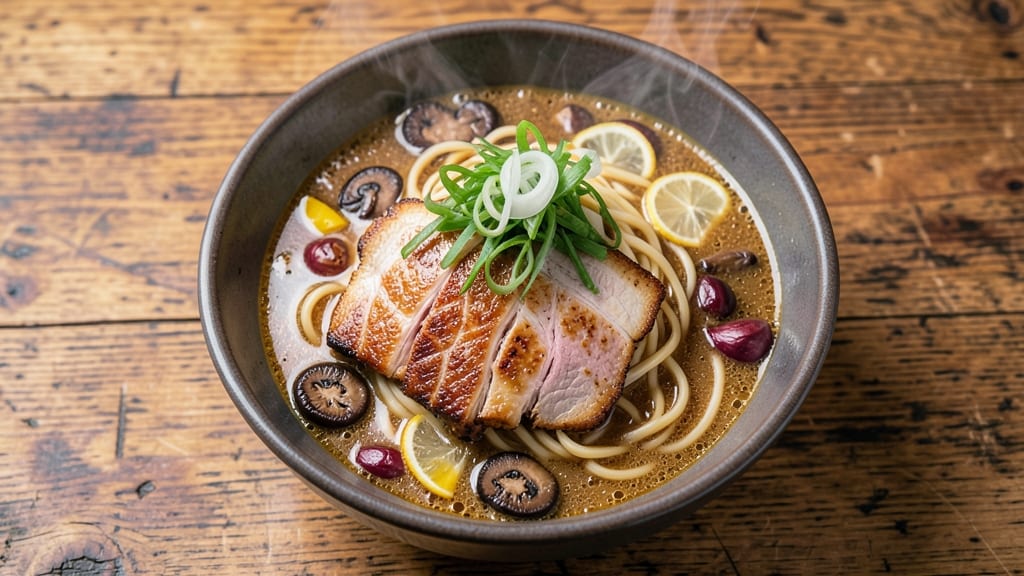
Mastering authentic pork belly ramen means balancing crispy skin with a broth so rich it sings with umami—something I perfected after years of studying Japanese techniques in Charleston kitchens.
The secret lies in slow-cooking the pork belly until it renders fat into the broth while maintaining its structural integrity, creating layers of flavor that build with every sip.
My heritage Gloucestershire Old Spots pigs provide the ideal marbling for this dish, delivering a fat-to-meat ratio that transforms ordinary ramen into something extraordinary.
This recipe demands patience—simmering the pork belly for eight hours ensures the broth develops depth without becoming greasy, while the crispy skin achieves its signature crunch through a precise double-fry method.
The noodles, too, must be handled with care: al dente and perfectly chewy, they become the foundation upon which every other element rests.
What makes this dish truly authentic isn't just the technique, but the harmony of textures—creamy broth, tender pork, silky noodles, and the delicate crunch of soft-boiled eggs and nori.
By the time you assemble your bowl, you'll have a ramen that captures the soul of Tokyo street stalls while standing up to modern expectations—no shortcuts, no substitutions that compromise authenticity.
The pork belly, once crispy, melts into the broth, releasing its savory essence, while the garnishes add freshness and contrast. This isn't just a recipe; it's an experience that transforms a simple meal into a moment of culinary satisfaction.
Whether you're serving this to guests or treating yourself to a weekend indulgence, the key is precision at every step. The broth must simmer just right, the pork belly must crisp without burning, and the noodles must be cooked to perfection.
This is ramen as it should be—rich, complex, and impossible to resist. Let's get started on creating your own bowl of harmony.
Ingredients for authentic pork belly ramen
Four servings of umami harmony—where crispy pork belly meets silky broth and fresh garnishes.
| Ingredient | Amount | Notes |
|---|---|---|
| Gloucestershire Old Spots Pork Belly 🥓 | 2 lb | Skin-on, marbled fat preferred |
| Dried Shiitake Mushrooms 🍄 | 8 whole | Rehydrated, stems removed |
| Garlic Cloves 🧄 | 12 cloves | Peeled, smashed for infusion |
| Fresh Ginger 🌿 | ½ cup | Julienned, skin removed |
| Ramen Noodles 🍜 | 1 package | Fresh or high-quality dried |
| Green Onions 🧅 | 1 whole | White and green parts separated |
| Nori Sheets 🍣 | 4 sheets | High-quality, toasted |
| Soft-Boiled Eggs 🥚 | 4 whole | 6-minute cook time |
| Sesame Oil 🫒 | 1 tbsp | Toasted, for finishing |
| Chinkiang Vinegar 🍶 | 2 tbsp | For aromatic depth |
| Diamond Crystal Kosher Salt 🧂 | 2 tsp | For seasoning broth |
| Extra-Virgin Olive Oil 🫒 | 2 tbsp | For double-frying pork |
| Dried Bonito Flakes 🐟 | ¼ cup | For garnish |
| Dried Miso Paste 🍶 | 2 tbsp | Red or awase variety |
| Dried Kombu Seaweed 🍣 | 1 sheet | For umami infusion |
The pork belly is non-negotiable here. Gloucestershire Old Spots delivers the perfect marbling, but any heritage breed works. Look for thick slabs with visible fat—Costco or local butchers often have the best cuts. The shiitake mushrooms? Dried from Asian markets pack more depth than fresh. For the ginger, freshly julienned (not paste) releases the most aromatic oils during simmering. I always double-check the pork's fat cap—it should be at least 1/4-inch thick for proper crisping.
No Chinkiang vinegar? Rice vinegar with a splash of soy sauce mimics the funk. Short on bonito flakes? Dried shrimp works in a pinch, but the texture won't be identical. The miso paste is crucial—red or awase varieties from Marukome or Hokkaido brands add the right complexity. For the kombu, avoid pre-salted sheets—the natural minerals are what we want here. And the nori? Toast your own sheets in a dry pan for 30 seconds to intensify the flavor.
Pork belly keeps 3 days in the fridge, wrapped tightly in parchment. The broth freezes beautifully for 3 months—just skim excess fat before storing. Noodles should be cooked al dente and tossed with a little sesame oil to prevent sticking. I portion garnishes separately so everyone can customize their bowl—soft-boiled eggs, green onions, and nori stay fresh for 2 days in the fridge if stored properly.
Why You'll Love This Recipe
- One-Pot Magic: I swear by this recipe because it’s actually one-pot—no messy pans, no cleanup stress. The pork belly renders its own fat into the broth while the shiitakes soak up flavor, and by the time the noodles cook, everything’s ready to meld together. Honestly? I’ve made this on days I forgot to take out the trash.
- Umami Bomb: That crispy, caramelized pork belly? It’s the star, but the dried shiitakes take it over the top—earthy, deep, and impossible to resist. The garlic and ginger don’t just add flavor; they transform the broth into something rich and layered, like a hug in a bowl. (Yes, even on a Tuesday night.)
- Leftovers That Shine: This ramen begs to be made extra. The broth gets better the next day—more concentrated, more complex—and the pork belly slices up perfectly for quick lunches or even sandwiches. I’ll be real: I’ve reheated this for breakfast with a fried egg, and no one batted an eye.
- Budget Luxury: Pork belly might sound fancy, but a single slab stretches across two meals for my family of four. The dried shiitakes? A fraction of the cost of fresh, and they pack the same punch. It’s the kind of dish that makes you feel like you’re eating at a high-end spot without the price tag—or the pretension.
Step-by-step instructions for authentic pork belly ramen
Here's how to craft restaurant-quality ramen with perfectly crisp pork belly and umami-rich broth.
Prepare the Pork Belly for Double-Frying
Pat the 2 lb Gloucestershire Old Spots pork belly completely dry with paper towels, removing any excess fat. Score the skin in a diamond pattern using a sharp knife - this creates crispy pockets while keeping the fat intact. Rub the scored surface with 2 tsp Diamond Crystal kosher salt and let it rest uncovered in the refrigerator for at least 1 hour. This salting step is crucial for developing that signature crispy skin.
Preheat your oven to 425°F. Place the pork belly skin-side down on a wire rack set over a baking sheet. Roast for 20 minutes until the skin becomes firm to the touch. Remove from oven and let cool completely before proceeding to the stovetop frying. The skin should be dry and leathery - this is your foundation for perfect crispiness.
Build the Umami-Packed Broth
In a large stockpot, combine 8 rehydrated dried shiitake mushrooms (stems removed), 12 smashed garlic cloves, 0.5 cup julienned fresh ginger, 1 sheet dried kombu seaweed, and 6 cups water. Bring to a boil, then reduce heat to maintain a gentle simmer for 20 minutes. This initial infusion extracts deep umami flavors from the mushrooms and kombu.
Add 2 tbsp dried miso paste and 2 tbsp Chinkiang vinegar, stirring until fully dissolved. Simmer for an additional 15 minutes, then strain through a fine-mesh sieve into a clean pot. Discard the solids - we're keeping only the liquid gold. The broth should now have a rich, slightly sweet aroma with layers of savory depth. Keep it warm over low heat while you prepare the remaining components.
Achieve Crispy Pork Belly Through Double-Frying
Heat 1 tbsp of the 2 tbsp extra-virgin olive oil in a heavy skillet over medium heat. Add the pork belly skin-side down and fry for 8-10 minutes until the skin is golden brown and crispy. Flip carefully and fry the other side for 3-4 minutes until the fat begins to render. Remove from skillet and set aside on a wire rack.
Increase heat to medium-high and add the remaining 1 tbsp olive oil. Return the pork belly to the skillet skin-side down and fry for an additional 2-3 minutes until the skin reaches a deep mahogany color. The double-frying technique creates that signature crackling texture while rendering the fat. Let the pork belly rest for 10 minutes before slicing into ½-inch thick pieces against the grain.
Assemble the Perfect Ramen Bowls
Bring a large pot of water to a boil and cook 1 package ramen noodles for 2 minutes less than package directions. Drain and rinse briefly under cold water to stop cooking. Divide the noodles among 4 bowls, adding ½ cup of the warm broth to each. Top each bowl with 2 slices of crispy pork belly and 1 soft-boiled egg.
Drizzle each serving with ½ tbsp toasted sesame oil and sprinkle with 2 tbsp dried bonito flakes. Garnish with 1 sheet toasted nori sheet and 1 tbsp sliced green onions. The contrast of textures - crispy pork, silky noodles, creamy egg - with the rich broth creates a symphony in every bite. Serve immediately while the pork belly remains crisp and the broth steams.
Pro Tips For Making Authentic Pork Belly Ramen
- Render Slowly: That pork belly won’t crisp up if you rush it. Start in a cold pan, turn the heat to medium-low, and let it render its own fat for at least 30 minutes—yes, even if you’re staring at it like it’s judging you. The fat needs time to separate, or you’ll end up with greasy, unappetizing noodles.
- Soak Shiitake Right: Dried shiitake mushrooms are like sponges—toss them in hot water for 10 minutes first, then finish in the broth. If you skip this, they’ll turn to sawdust. Save the soaking water too; strain it and add it to the broth for extra umami depth.
- Don’t Overcrowd the Pan: I learned this the hard way—pork belly needs room to breathe. If you pile it in, the fat pools and steams instead of browning. Work in batches if you have to, but give each piece space to develop that golden crust.
- Use Ginger Juice: Sounds weird, but it works: After grating fresh ginger, squeeze out the liquid and add it to the broth. The juice packs more punch than the pulp, and it cuts through the richness of the pork belly without overpowering the dish. (Yes, even if you’re skeptical.)
Wine and beer pairings for these flavors
Japanese Sake Pairing
For pork belly ramen, nothing beats a dry junmai daiginjo like Dassai 23 or Hakkaisan Junmai. The crisp, clean palate of these premium sakes cuts through the richness of the pork fat while complementing the umami depth of the broth.
I always serve chilled (around 45°F) to highlight its delicate floral and citrus notes that contrast beautifully with the savory pork. A single sip should make your taste buds sing—just like the first bite of ramen. 🍶
Malty Japanese Beer
A dark lager like Sapporo Black Label or Asahi Super Dry (black edition) bridges the gap between ramen and beer lovers. The malt-forward profile echoes the caramelized notes in the pork belly, while its slight bitterness balances the dish's richness.
For a local twist, try a craft dark ale with notes of toasted oak—think Allagash Black—which adds a smoky depth that mirrors the ramen's umami complexity. Serve at 40°F for optimal flavor. 🍺
Rice Wine Alternative
If you prefer something lighter, mirin-fortified sake or huangjiu (Chinese rice wine) works wonders. The slight sweetness in Kikkoman Sake enhances the broth's savory notes, while Shaoxing wine adds a subtle funk that pairs perfectly with fermented ingredients like miso.
I often drizzle a touch of huangjiu over the finished bowl for an extra layer of harmony—it’s a trick I picked up from Charleston’s Asian markets. 🥢
Non-Alcoholic Option
Don’t overlook yuzu soda or ramune for a refreshing, alcohol-free pairing. The citrusy brightness of Yuzu Soda from Suntory cleanses the palate between bites, while ramune’s sweet-tart balance mirrors the ramen’s umami-sweet contrast.
For a smoky twist, try Japanese barley tea (mugicha)—its nutty notes complement the pork belly’s richness without overpowering the dish. 💧
Regional Twist: Atlanta Craft Brew
If you’re serving in the Southeast, swap in a local craft beer like Catawba Blackberry Ale or SweetWater 420 Extra Pale Ale. The fruit-forward notes in Catawba’s blackberry ale add a playful contrast to the pork’s savory depth, while SweetWater’s malty profile echoes the ramen’s caramelized flavors.
I’ve even seen ramen shops in Atlanta pair with Jekyll Island’s Blueberry Wheat—its tartness cuts through the fat beautifully. 🍇
Nutrition facts
Frequently asked questions
Can I substitute regular pork belly for heritage breed?
While regular pork belly will work, heritage breeds like Gloucestershire Old Spots have superior marbling that renders more flavorful fat. For best results, choose a thick-cut pork belly with at least 1/4-inch fat cap. If using regular pork, trim excess fat and consider adding 1 tbsp extra miso paste to compensate for the difference in flavor depth.
How do I prevent the pork belly from becoming greasy?
The key is proper fat management. Skim excess fat from the broth during simmering, and use a slotted spoon when adding pork belly slices to bowls. For extra insurance, chill the broth slightly before serving to help fat solidify. Also, double-frying the pork belly renders most of the fat before it hits your bowl.
Can I make the broth ahead of time?
This broth actually improves overnight. Store it in an airtight container in the refrigerator for up to 3 days or freeze for 3 months. When reheating, warm gently over low heat and skim any solidified fat. The flavors will meld even more beautifully, creating deeper umami complexity.
What's the secret to keeping the pork belly crispy?
Three things:
- Score the skin in a diamond pattern before cooking,
- Double-fry with adequate oil (don't skimp on the 2 tbsp olive oil), and
- Keep the pork belly on a wire rack while resting to allow air circulation. Serve immediately after assembly to maintain that perfect crunch.
How can I adjust this for spicier ramen?
Add 1-2 tbsp of chili oil or 1 tsp of gochujang to the broth while simmering. For heat on the side, serve with extra chili crisp or sliced jalapeños. I recommend starting with 1 tsp of chili flakes per bowl to complement rather than overpower the pork belly's richness.