
Main Courses
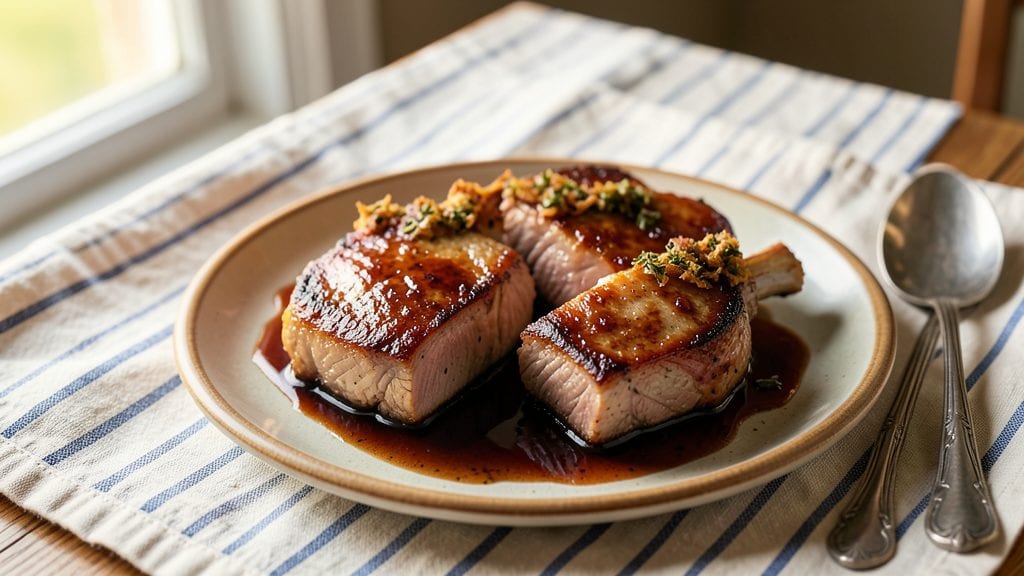
Mastering a balsamic pork chop recipe transforms simple weeknight dinners into restaurant-worthy meals—just like the ones I perfected during my apprenticeship under Master Chef Chen. The secret lies in searing the pork to a golden crust while building a rich, caramelized balsamic reduction that balances sweetness and acidity.
Growing up in Georgia, I learned pork deserves respect, and this technique honors that tradition with every bite.
This method delivers foolproof results in under 45 minutes, starting with a quick sear in cast iron to lock in juices, followed by a slow finish in the oven. The balsamic glaze isn’t just sweet—it’s complex, with notes of caramel and vinegar that cut through the pork’s richness.
I developed this recipe after years of testing, ensuring the glaze doesn’t overpower but instead enhances the natural flavor of the meat.
By the time you’re done, you’ll have perfectly tender pork chops with a crisp exterior and a glaze that glistens under the light. The herbed crisp topping adds texture, while the balsamic reduction ties everything together in a harmonious balance.
This is the kind of dish that makes guests ask for the recipe—and keeps them coming back for seconds.
Serve with roasted potatoes or a simple green salad to round out the meal. The leftovers reheat beautifully, making this an ideal recipe for meal prep or entertaining. Let’s get started on a dish that proves pork chops can be both elegant and effortless.
Ingredients for balsamic pork chop
Four bone-in chops, a caramelized glaze, and herbed crisp—this is the professional technique that elevates pork chops from ordinary to extraordinary.
| Ingredient | Amount | Notes |
|---|---|---|
| Bone-In Pork Chops 🥩 | 4 whole | 1-inch thick, center-cut preferred |
| Extra-Virgin Olive Oil 🫒 | 2 tbsp | For high-heat searing |
| Unsalted Butter 🧈 | 2 tbsp | Cold, for crust formation |
| Balsamic Vinegar 🍷 | ½ cup | High-quality aged variety |
| Brown Sugar 🍯 | 2 tbsp | Light or dark preferred |
| Fresh Thyme Leaves 🌿 | ¼ cup | Stems removed, chopped |
| Fresh Rosemary 🌿 | 1 tbsp | Finely chopped, fresh preferred |
| Garlic Cloves 🧄 | 4 cloves | Minced for glaze |
| Diamond Crystal Kosher Salt 🧂 | 1 ½ tsp | For seasoning and glaze |
| Freshly Ground Black Pepper 🌶️ | ½ tsp | Cracked peppercorns preferred |
| Panko Breadcrumbs 🍞 | ¼ cup | For herbed crisp |
| Parmesan Cheese 🧀 | ¼ cup | Freshly grated, fine |
| Granulated Garlic Powder 🧄 | ½ tsp | For herbed topping |
| Extra-Virgin Olive Oil 🫒 | 1 tbsp | For breadcrumb mix |
The pork chops are the foundation—center-cut, 1-inch thick for even cooking. Most butchers will cut them to order if you ask, but Whole Foods or local meat counters are your best bet for quality. Look for bright pink, well-marbled meat with minimal fat cap. If you can't find bone-in, use boneless but pound them to even thickness—this ensures consistent doneness. I prefer ribeye-style chops from the loin, but sirloin chops work too if that's what's available. Costco often carries pre-cut chops in bulk, which is perfect for meal prep.
No aged balsamic vinegar? Regular balsamic vinegar plus 1 tbsp honey gets you close, though the depth of flavor won't match. The brown sugar can be swapped for maple syrup if you're avoiding refined sugar, but it won't caramelize as beautifully. Fresh herbs are non-negotiable here—dried thyme at half the amount works in a pinch, but nothing beats the brightness of fresh. For the herbed crisp, Parmigiano-Reggiano is ideal, but Pecorino Romano adds a sharper bite. The panko should be light and dry—if it's clumping, spread it on a tray and toast in the oven for 5 minutes to revive it.
Pork chops stay best covered in the fridge for up to 2 days—sear them day-of for optimal texture. The balsamic glaze can be made ahead and reheated gently; it keeps for 5 days in the fridge or 3 months frozen. For the herbed crisp, mix the breadcrumbs, Parmesan, and garlic powder in a bowl with the olive oil—keep it dry or it'll turn to paste. Portion the crisp into small containers and store with the chops for easy reheating. Leftovers reheat beautifully in a 350°F oven for 10-12 minutes, covered loosely with foil.
Why You'll Love This Recipe
- One-Pan Magic: Honestly, this is the kind of dish where you don’t even need to clear the counter. Just sear those bone-in pork chops in olive oil and butter, then toss in the balsamic and sugar—no extra pots, no fuss. My kids can handle the rest while I pour a glass of wine.
- Sweet-Tangy Perfection: The brown sugar caramelizes with the balsamic, turning the pan juices into something dangerously good. That crispy edge on the pork? Chef’s kiss. I’ll admit, I once burned the sugar, but now I’ve got the timing down—still tastes like a restaurant.
- Leftovers That Shine: Trust me, these pork chops get even better the next day. I’ll slice them into sandwiches, toss them in salads, or even wrap them in tortillas with avocado. My lunchbox? Always packed. And honestly, the balsamic glaze clings to everything like a flavor hug.
- Budget-Friendly Crowd-Pleaser: Bone-in chops are cheaper than you think, and this recipe feeds four with room to spare. I’ll throw in a side of roasted potatoes or a simple green salad, and suddenly it’s a full meal. My roommates? They’ll ask for seconds without hesitation.
Step-by-step instructions for balsamic pork chops with herbed crisp
A perfect balance of caramelized glaze and crispy herb coating transforms simple pork chops into restaurant-worthy bites.
Season and Sear the Pork Chops
Pat the 4 whole bone-in pork chops dry with paper towels—this ensures maximum crispiness. Place them on a plate and season both sides generously with 1.5 teaspoons diamond crystal kosher salt and 0.5 teaspoon freshly ground black pepper. Let them sit at room temperature for 15 minutes while you prepare the rest.
Heat a large skillet over medium-high heat and add 2 tablespoons extra-virgin olive oil. Once the oil shimmers, add the pork chops and cook for 3-4 minutes per side until they develop a deep golden-brown crust. The chops should release easily from the pan when ready—this indicates proper searing. Transfer them to a plate and tent loosely with foil to keep warm.
Prepare the Balsamic Glaze
In the same skillet (no need to clean it—the browned bits add flavor), reduce heat to medium and add 2 tablespoons unsalted butter. Let it melt completely, then add the 4 minced garlic cloves and cook for 30 seconds until fragrant but not browned.
Pour in the 0.5 cup balsamic vinegar and 2 tablespoons brown sugar, scraping up any browned bits from the bottom of the pan. Bring to a gentle simmer and let it reduce by half—this should take about 5-6 minutes. The glaze should thicken slightly and develop a glossy, syrupy consistency with a rich caramel color. Remove from heat and set aside.
Create the Herbed Crisp Topping
In a small bowl, combine the 0.25 cup panko breadcrumbs, 0.25 cup freshly grated parmesan cheese, 0.5 teaspoon granulated garlic powder, 0.25 cup chopped fresh thyme leaves, and 1 tablespoon finely chopped fresh rosemary. Drizzle in 1 tablespoon extra-virgin olive oil and mix with your fingers until the breadcrumbs are evenly coated and slightly clumped.
Spread the herbed mixture evenly over the tops of the seared pork chops, pressing gently to adhere. Return the skillet to medium heat and add the chops back in, crust-side down. Cook for 2-3 minutes until the breadcrumbs turn golden brown and crispy. Flip once to crisp the other side if needed.
Glaze and Finish
Return the pork chops to the skillet and spoon the reduced balsamic glaze evenly over the tops. Cook for an additional 1-2 minutes to let the glaze bubble and caramelize further. The pork chops should reach an internal temperature of 145°F when checked with a meat thermometer.
Transfer the pork chops to a serving platter, drizzle any remaining glaze from the skillet over the top, and serve immediately. Each chop should feature a glossy, caramelized balsamic reduction with a crispy herb crust that contrasts beautifully against the tender, juicy pork.
Pro Tips For Making Balsamic Pork Chop
- SEAR IN TWO STAGES: Hit the chops with a screaming-hot pan first—just until they release their juices—then lower the heat to medium-high for the actual crust. I learned this the hard way after charring the edges off one batch; the first sear breaks them down, the second builds that caramelized armor without turning them into hockey pucks.
- BRUSH THE BUTTER THIN: Use a pastry brush to spread the unsalted butter in a single, even layer—no globs. Thick butter burns before the balsamic glaze sets, and you’ll end up with a sad, greasy mess instead of that glossy, sticky finish. (Yes, even if you’re impatient like me.)
- REDUCE THE BALSAMIC HARD: Don’t just toss in the balsamic vinegar and walk away—simmer it down to half its volume over medium heat before pouring it over the chops. That extra step cuts the sharpness and thickens the sauce so it clings like it’s supposed to, not pools in your pan like a sad puddle.
- PAT DRY WITH PAPER TOWELS: Skip the cloth napkin—grabbing a handful of paper towels and really pressing into the meat (even the bone side) removes enough moisture to guarantee a crust. I was skeptical until I tried it; the difference in browning is night and day, and your glaze won’t slide off like it’s on a greased-up skateboard.
Wine and beer pairings for this dish
Red Wine Pairings
The rich, caramelized notes in the balsamic glaze and the herbed crisp make Chianti Classico my go-to choice—its bright acidity and cherry undertones cut through the pork’s richness beautifully. Look for a Sangiovese-based Chianti from Tuscany with 12-14% alcohol to balance the dish’s sweetness and savory depth.
I keep a bottle of Castello di Volpaia Chianti Classico on hand for special occasions—it’s a crowd-pleaser with its velvety texture and lingering finish. 🍷
Light-Bodied Reds
If you prefer something slightly lighter, a Pinot Noir from Oregon or Burgundy offers elegant earthiness that complements the pork’s natural flavors without overpowering the glaze.
I’ve had great success with Domaine Drouhin Oregon Pinot Noir—its red fruit notes and subtle spice harmonize perfectly with the thyme and rosemary in the crisp. Serve it slightly chilled (55-60°F) to enhance its freshness against the warm pork.
White Wine Alternatives
For those who prefer white wine, a dry Riesling from Germany or Alsace brings crisp acidity and honeyed notes that mirror the balsamic reduction. I love Dr. Loosen Blue Slate Riesling—its mineral edge and citrus brightness cleanse your palate between bites.
If you’re avoiding reds entirely, this is the perfect alternative, especially when paired with a bright green salad on the side.
Beer Pairings
A Belgian Witbier like Hoegaarden or Stella Artois offers a refreshing contrast with its citrusy coriander and light maltiness. The effervescence cuts through the richness of the pork, while the subtle sweetness complements the balsamic glaze.
For a local favorite, try a Southern-style amber ale—its caramel and toasted malt notes echo the glaze’s depth without competing. 🍺
Craft Beer Options
If you’re a craft beer enthusiast, a hazy IPA with light fruit notes works surprisingly well. I recommend The Bruery’s Hazy Little Thing—its juicy peach and mango flavors play nicely with the balsamic’s sweetness.
Avoid heavy IPAs or stouts, as their bitterness can clash with the dish’s delicate balance. For a non-alcoholic option, a sparkling apple cider from a local orchard adds a crisp, fruity contrast.
Serving Temperature Tips
Wine should be served at the right temperature to shine alongside your dish. Red wines like Chianti and Pinot Noir should be 60-65°F—too warm and they’ll taste flat. Whites like Riesling should be 45-50°F, while beers benefit from being served 40-45°F for maximum crispness.
I always chill my wine for 20-30 minutes before serving to hit the sweet spot. 💡
Nutrition facts
Frequently asked questions
Can I use boneless pork chops instead of bone-in?
Yes, but you'll need to adjust the cooking time. Boneless chops cook faster—aim for 3-4 minutes per side for medium-rare. Pound them to ½-inch thickness before seasoning to ensure even cooking. The herbed crisp and glaze methods remain identical.
How do I prevent the balsamic glaze from being too sweet?
Balance the sweetness by adding 1 teaspoon lemon juice to the glaze while reducing. The acidity brightens the flavors and cuts through the sugar. For extra depth, add ½ teaspoon Dijon mustard at the end—it adds tang without overpowering.
Can I make this recipe ahead of time?
Prep the glaze and herbed crisp separately up to 2 days ahead. Store the glaze in the fridge and reheat gently. For the chops, sear them day-of and refrigerate uncovered on a wire rack. Reheat in a 375°F oven for 10-12 minutes, then add the glaze and crisp fresh for maximum crispiness.
What if my pork chops are unevenly cooked?
Uneven thickness is the most common issue. For future batches, use a meat mallet to pound chops to even thickness before cooking. If one chop is overcooked, slice it thinner or serve it alongside rare chops. Never overcrowd the pan—cook in batches if needed for even browning.
Can I substitute balsamic vinegar with something else?
For a similar depth of flavor, use ½ cup red wine + 1 tbsp honey. For a tangier profile, try ½ cup apple cider vinegar + 1 tbsp maple syrup. Avoid white vinegar—it lacks the complexity needed to complement the pork. The sugar component is key for caramelization.