
Main Courses
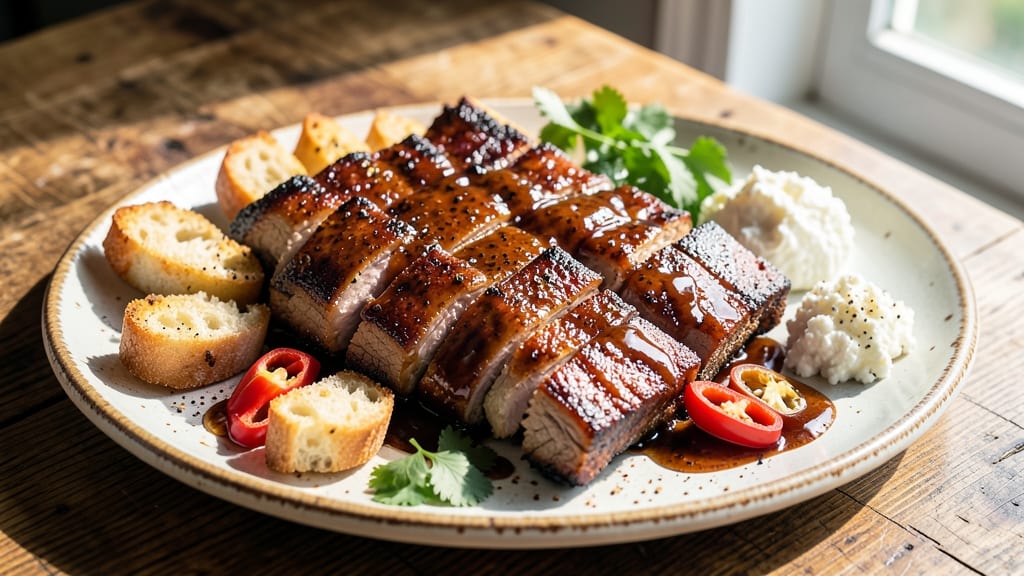
Mastering barbecue pork spare ribs transforms a simple meal into a showstopper that rivals any competition-winning spread. The secret lies in the 3-2-1 method—three hours of smoking, two hours of wrapping, and one hour of glaze—where tender meat meets smoky bark and sticky-sweet sauce.
I perfected this technique after years of experimenting with wild herbs from my motorcycle rides through coastal backroads, and it never fails to impress.
What sets this recipe apart is the balance of traditional techniques with modern convenience. You'll start with a dry rub that creates that coveted crust, then slow-cook until the meat falls off the bone.
The glaze, made from vinegar and brown sugar, adds depth without overpowering the natural pork flavor. This method delivers restaurant-quality results without requiring a commercial smoker—just patience and precision.
The final product is a plate of ribs with a deep mahogany bark, tender meat that practically melts in your mouth, and a glaze that clings perfectly. The aroma alone will have everyone gathering around your table, and each bite delivers layers of smoky, sweet, and tangy flavors.
This is the kind of dish that turns casual dinners into memorable experiences.
Whether you're cooking for a crowd or treating yourself to a special meal, these ribs are worth the effort. The process may take time, but the reward is unmatched satisfaction. Let's get started on creating your perfect rack of spare ribs.
Ingredients for barbecue pork spare ribs
Six ingredients transform raw ribs into competition-worthy showstoppers with smoky bark and sticky glaze.
| Ingredient | Amount | Notes |
|---|---|---|
| Pork Spare Ribs 🥓 | 4 lb | Bone-in, meaty ends preferred |
| Yellow Mustard 🍯 | ¼ cup | For initial coating |
| Brown Sugar 🍚 | ½ cup | Packed, light or dark |
| Smoked Paprika 🌶️ | 2 tbsp | For deep smoky flavor |
| Chili Powder 🌶️ | 1 tbsp | Medium heat preferred |
| Garlic Powder 🧄 | 1 tbsp | Freshly ground preferred |
| Onion Powder 🧅 | 1 tbsp | For sweet depth |
| Ground Black Pepper 🌶️ | 1 tbsp | Freshly cracked |
| Kosher Salt 🧂 | 1 tbsp | Diamond Crystal preferred |
| Apple Cider Vinegar 🍎 | ½ cup | For tangy glaze |
| Light Brown Sugar 🍚 | ½ cup | For sticky glaze |
| Honey 🍯 | ¼ cup | Wildflower preferred |
| Worcestershire Sauce 🍶 | 1 tbsp | For umami depth |
| Aluminum Foil 📄 | 1 sheet | Heavy-duty preferred |
| Wood Chips 🌳 | 1 cup | Hickory or cherry |
The ribs are the star—bone-in spare ribs with meaty ends from Costco or local butchers give the best texture. Look for vibrant color and good marbling. I always grab hickory wood chips from Penzeys for that authentic smoky flavor, but any quality hardwood works. The yellow mustard isn't just for coating; it helps the rub stick and adds a subtle tang. Store your ribs uncovered in the fridge for 24 hours before cooking to help dry the surface—this creates that perfect bark later.
No smoked paprika? Regular paprika plus a pinch of liquid smoke gets you close. Running short on apple cider vinegar? White vinegar or lemon juice works in a pinch, but the apple cider adds depth. The glaze ingredients can be pre-measured in a small jar—Trader Joe's sells pre-portioned brown sugar that makes this easier. For the rub, I always toast the spices in a dry pan for 30 seconds to wake up the flavors. If you're short on time, skip toasting—they'll still work, just slightly less aromatic.
The glaze keeps for 1 week in the fridge, so make extra for other uses. Store leftover ribs in airtight containers with some of their juices for 4 days. Freeze ribs for up to 3 months—just thaw overnight in the fridge before reheating. I like to wrap portions in foil with a splash of apple juice to keep them moist. The wood chips? Store them in a sealed container in the freezer to preserve freshness.
Why You'll Love This Recipe
- Five-Ingredient Magic: I swear by this combo—just ribs, mustard, brown sugar, smoked paprika, and chili powder. No fancy marinades or hours of prep; the mustard adds that tangy backbone while the sugar and spices caramelize right on the grill (or stovetop, no judgment).
- Sweet-Spicy Crunch: That crispy bark? Pure satisfaction. The brown sugar and smoked paprika create this perfect balance—sweet heat that sticks to your ribs like a hug, while the chili powder keeps it from being too cloying. Honestly, I’ll take these over store-bought any day.
- Tailgate or Tuesday: Serve them with baked beans and cornbread for a full spread, or pile them onto buns for a quick lunch. Between us, these ribs work just as well cold the next day—perfect for meal prep when you’ve got better things to do than cook.
- Leftovers That Don’t Suck: Most ribs turn dry or sad after Day 1, but not these. The mustard keeps them moist, and the sugar gives them that sticky, saucy edge that makes them taste fresh even reheated. I’ve fed a crowd with these and still had enough for leftovers—no waste, all win.
Step-by-step instructions for smoky bark and sticky glaze ribs
Here's how to transform tough pork ribs into fall-off-the-bone tender morsels with irresistible bark and glaze.
Prepare the Ribs with Dry Rub
Remove the pork spare ribs from the package and pat them completely dry with paper towels. This step is crucial for developing that coveted crispy bark. Place them meaty-side up on a wire rack set over a baking sheet to allow air circulation on all sides.
In a medium bowl, combine the 0.5 cup brown sugar, 2 tbsp smoked paprika, 1 tbsp chili powder, 1 tbsp garlic powder, 1 tbsp onion powder, 1 tbsp ground black pepper, and 1 tbsp kosher salt. Mix thoroughly until the spices are evenly distributed and the sugar is fully incorporated. The rub should look like coarse sandpaper texture.
Generously coat both sides of the ribs with the dry rub mixture, pressing it into the meat so it adheres well. This ensures maximum flavor penetration during the cooking process. Let the seasoned ribs sit at room temperature for 30 minutes before cooking. This allows the rub to develop its full aromatic potential and prevents temperature shock when they hit the smoker.
Smoke the Ribs Low and Slow
Set up your smoker to maintain a consistent temperature of 225°F. Use the 1 cup wood chips (hickory or cherry) for that authentic smoky flavor profile. Allow the smoker to preheat for at least 15 minutes before adding the ribs, ensuring clean blue smoke without thick white vapor.
Place the ribs on the smoker grates, meaty-side up. Close the lid and resist the urge to peek—every time you open it, you lose valuable heat and moisture. Smoke the ribs for 3 hours, maintaining that steady 225°F temperature. Here's the thing—you'll notice the ribs developing a thin layer of bark on the surface, but don't rush this process. The slow smoke is what breaks down the connective tissue and transforms tough meat into tender goodness.
After 3 hours, check the internal temperature using a meat thermometer. You're looking for 165°F in the thickest part of the meat. This is where the "stall" typically occurs—the temperature plateaus as moisture evaporates. Don't be alarmed; this is normal and part of the process. The ribs will continue cooking through the stall.
Wrap and Rest for Maximum Tenderness
Once the ribs reach 165°F, it's time for the foil wrap. Line a large sheet of aluminum foil with another sheet to create a double layer. Place the ribs on the foil, then pour 0.25 cup yellow mustard evenly over the top. The mustard acts as a binder and helps create that signature sticky texture.
Carefully wrap the ribs tightly in the foil, sealing all edges completely. Return them to the smoker and continue cooking at 225°F for an additional 1.5 to 2 hours. During this time, the ribs will finish cooking through the stall and become fork-tender. The internal temperature should reach 200-203°F when done—this is the magic window for perfect tenderness.
Remove the ribs from the smoker and let them rest on a cutting board for 15 minutes. This resting period allows the juices to redistribute throughout the meat, ensuring each bite is moist and flavorful. The ribs should pull apart easily with minimal resistance when tested with a fork or meat thermometer.
Apply the Sticky Glaze
While the ribs rest, prepare the glaze by combining 0.5 cup apple cider vinegar, 0.5 cup light brown sugar, 0.25 cup honey, and 1 tbsp Worcestershire sauce in a small saucepan. Bring to a simmer over medium heat, stirring constantly for 5-7 minutes until the mixture thickens slightly and reduces by about one-third. You'll notice the aroma becoming more intense as the sugars caramelize.
Unwrap the ribs and place them in a large oven-safe dish. Pour the glaze evenly over the top, making sure it coats all surfaces. The glaze should be sticky but not runny—if it's too thin, return it to the stove for another minute to reduce further. Transfer the dish to a 375°F oven and bake for 10-15 minutes, basting occasionally with the pan juices, until the glaze is deeply caramelized and glossy.
Remove the ribs from the oven and let them rest for an additional 5 minutes before serving. The glaze should be thick enough to drip slightly when the ribs are lifted, creating that signature sticky texture that makes these ribs irresistible. Serve immediately with extra glaze spooned over the top and a side of coleslaw or cornbread.
Pro Tips For Making Barbecue Pork Spare Ribs
- TRIM THE FAT CAP: The membrane on the bone side of spare ribs is tough and chewy—peel it off before cooking, or you’ll spend the whole time fighting it. Use a butter knife to slide it off the bone, then rinse the ribs. (Yes, it’s fiddly, but your teeth will thank you.)
- SAUCE IN LAYERS: Don’t just dump the mustard-brown sugar mix on the ribs at the end. Start with a dry rub of smoked paprika and chili powder, then apply the wet sauce in stages—first during the cook, then again in the last 15 minutes. This builds flavor without turning the ribs into a sticky mess.
- WATCH THE SUGAR BURN: Brown sugar caramelizes fast, and once it burns, it’s game over. Keep your ribs moving on the grill or in the oven, and resist the urge to crank the heat past 275°F (135°C). A slow cook is better than a crispy disaster.
- REST THE RIBS: Cutting into ribs right after cooking releases all that juicy goodness onto the cutting board. Wrap them in foil and let them sit for 10 minutes—this keeps the meat tender and the sauce clinging. (I know, I know, but trust the process.)
Flavor customization for these flavors
Sweet Heat Fusion
For those who love a little kick, add 1 tbsp cayenne pepper to the dry rub and 1 tbsp hot sauce (like Cholula) to the glaze. I often forage wild cayenne pods from my coastal rides to add a unique, smoky heat.
Balance the heat with extra honey—about 1 extra tablespoon—to keep the sweetness in check. 🌶️
Smoky Maple Glaze
Swap the apple cider vinegar for ½ cup pure maple syrup and add 1 tbsp liquid smoke (like Traeger’s) to the glaze. This creates a deeper, woodsier flavor that pairs perfectly with the smoky bark.
I like to finish with a sprinkle of crushed pecans for added crunch and texture. This variation works especially well with cherry wood chips for a fruity-smoky combo.
Asian-Inspired Fusion
Infuse the ribs with ginger and garlic by adding 1 tbsp freshly grated ginger and 2 minced garlic cloves to the dry rub. For the glaze, replace the Worcestershire sauce with 2 tbsp soy sauce and 1 tbsp rice vinegar.
Finish with a drizzle of sriracha for heat and a sprinkle of sesame seeds for a nutty crunch. This fusion is inspired by my motorcycle trips through Asian markets, where I picked up unique spices.
Spicy Coffee Rub
Add 1 tbsp instant coffee granules and ½ tsp ground cinnamon to the dry rub for a deep, earthy flavor. The coffee enhances the smokiness, while the cinnamon adds warmth. For the glaze, replace the honey with ¼ cup molasses to complement the coffee notes.
This variation is a crowd-pleaser and reminds me of the coffee shops I stop at during my coastal rides.
Herb-Forward Glaze
Fresh herbs elevate the glaze—try adding 2 tbsp chopped fresh rosemary and 1 tbsp chopped fresh thyme to the glaze mixture. Simmer the herbs in the glaze for 3-4 minutes before straining.
The herbs add a bright, aromatic note that cuts through the richness of the pork. I often forage these herbs from wild coastal patches during my rides, adding a unique local touch.
Nutrition facts
Frequently asked questions
Can I use a grill instead of a smoker for these ribs?
If you don't have a dedicated smoker, you can achieve similar results with a charcoal grill. Use indirect heat by piling coals on one side and placing the ribs on the opposite side. Maintain a temperature of 225-250°F by adding coals as needed. For smoke flavor, soak wood chips in water for 30 minutes before adding them to the coals. This method works well but may require more attention to temperature control.
How do I know when the ribs are done without a meat thermometer?
When you don't have a thermometer, use the bend test—gently press the ribs at the bone with tongs. If the meat bends and cracks slightly, they're ready. Another method is the poke test: Insert a fork or skewer into the meat near the bone. If it slides in easily and the meat pulls apart, they're done. For wrapped ribs, look for a shiny, glossy surface and slightly caramelized edges.
What's the best way to reheat leftover ribs?
To maintain tenderness, reheat ribs in a 325°F oven for 10-15 minutes with a splash of apple juice or broth in a covered dish. For a smoky boost, place them on a grill over medium heat for 5-7 minutes165°F.
Why did my ribs turn out dry?
Overcooking is the most common cause. Ribs are done when they reach 200-203°F internally—don't let them exceed 205°F. The stall (when temperature plateaus) is normal, but wrapping in foil helps retain moisture. Also, avoid peeking at the ribs too often during smoking, as this causes moisture loss. For extra juiciness, add a splash of apple juice or broth when wrapping.
Can I make these ribs in an oven instead of smoking?
Yes! Use the 3-2-1 method adapted for oven: Preheat oven to 225°F and cook ribs on a wire rack for 3 hours, then wrap with foil and 2 tbsp mustard for 2 hours at the same temperature. Finish with glaze in the oven at 375°F for 10-15 minutes. For smoke flavor, add smoked paprika to the rub and use a smoker box with wood chips on the rack.