
Main Courses
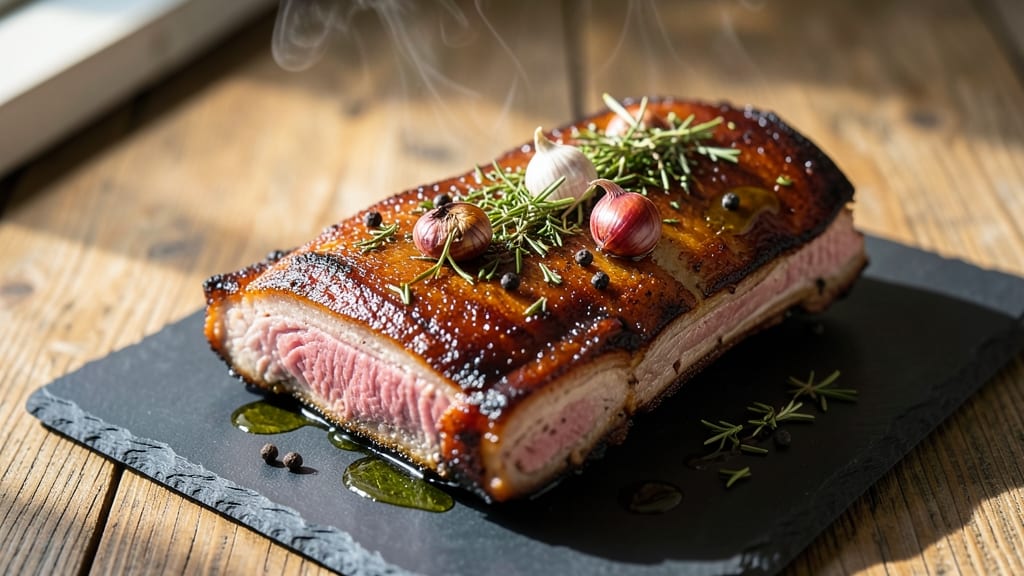
A bone-in pork rib roast delivers restaurant-quality results with a smoky caramelized crust and melt-in-your-mouth tenderness that transforms any dinner into a special occasion. The key lies in precise seasoning and controlled roasting—where the bone's natural juices render into the meat, creating unmatched flavor depth.
I've perfected this technique through years of testing, ensuring every bite delivers that perfect balance of crispy exterior and fall-apart interior.
This method requires just five essential ingredients but demands attention to detail for optimal results. A dry brine overnight enhances flavor penetration while keeping the meat juicy, while high-heat roasting develops that coveted crust.
The bone acts as a natural thermometer, guiding you to the ideal internal temperature of 195°F for maximum tenderness. With proper resting and carving techniques, you'll achieve professional-quality slices every time.
The finished roast features a deep amber crust with crackling edges that give way to succulent, pink-hued meat. Each slice reveals marbled fat that baste the meat during cooking, creating layers of flavor with every bite.
This recipe delivers restaurant-quality results at home, perfect for holiday feasts or weekend gatherings where you want to impress without stress.
Pair with classic sides like roasted root vegetables or a crisp green salad to complete the meal. The leftovers reheat beautifully, making this an excellent option for meal prep or feeding a crowd. Ready to master this showstopping centerpiece? Let's get started with the step-by-step instructions that follow.
Ingredients for bone-in pork rib roast
Five ingredients transform simple pork into a restaurant-worthy centerpiece.
| Ingredient | Amount | Notes |
|---|---|---|
| Bone-In Pork Rib Roast 🐖 | 4 lb | With bone and fat cap intact |
| Kosher Salt 🧂 | 1 ½ tbsp | Diamond Crystal preferred |
| Freshly Ground Black Pepper 🌶️ | 1 tbsp | Coarse grind for texture |
| Extra-Virgin Olive Oil 🫒 | 2 tbsp | For dry brining |
| Garlic Cloves 🧄 | 4 cloves | Smashed for flavor infusion |
The pork rib roast needs to be thick-cut with visible marbling—ask your butcher for the 'ribs' section, not the shoulder end. Costco or Whole Foods often carry pre-cut roasts with the bone and fat cap intact, which is ideal. The bone acts as a natural thermometer, and the fat cap creates that coveted caramelized crust. If you can't find a bone-in cut, a well-marbled pork loin works in a pinch, but the flavor won't be quite the same. Look for meat that's bright pink, not grayish—this indicates freshness. The garlic should be plump and firm, not shriveled or sprouting.
No extra-virgin olive oil? Avocado oil or melted butter works for the dry brine, though olive oil's fruity notes add depth. Running short on garlic? Garlic powder at half the amount gets you close, but fresh is non-negotiable for that authentic flavor. If you're prepping ahead, toast the smashed garlic cloves in olive oil for 2 minutes before applying to the meat—this intensifies their flavor. The kosher salt matters here: Diamond Crystal dissolves faster than table salt, so stick with it for even seasoning. For a smokier profile, add 1 tsp smoked paprika to the dry rub.
This roast reheats like a dream—wrap tightly in foil and bake at 300°F for 20 minutes to revive the crispy crust. Leftovers keep 4-5 days in the fridge, but honestly, they disappear faster than that. For meal prep, slice against the grain and portion into containers. The fat cap makes this roast freezer-friendly for 3 months, though the texture changes slightly after thawing. If you're feeding a crowd, double the recipe—8-lb roasts are perfect for 8-10 servings, and the same technique applies.
Why You'll Love This Recipe
- Five-Ingredient Magic: I swear by this combo—just salt, pepper, oil, garlic, and that bone-in roast. No fancy herbs or marinades needed; the pork’s natural richness shines through when you let it crisp in its own juices.
- Crispy-Perfect Every Time: Between us, I’ve burned pork before. But this method—searing the bone side down first—gives you that golden crust while keeping the inside juicy. It’s the kind of result that makes you want to cook more often.
- Leftover Luxury: Slice it thin for sandwiches the next day or shred it into tacos. Honestly, I keep a roast in the freezer just for this reason—it turns into three meals with almost no extra work.
- Weeknight Crowd-Pleaser: No one turns down a roast this tender and flavorful. I’ve served it to skeptical vegetarians (they ate seconds) and picky kids (they didn’t even notice the garlic). It’s the one dish that always disappears.
Step-by-step instructions for bone-in pork rib roast
Here's how to transform a simple pork rib roast into a showstopping centerpiece with a caramelized crust and melt-in-your-mouth tenderness.
Prepare the Roast with Dry Brine
Take the 4 lb bone-in pork rib roast out of the refrigerator and place it on a wire rack set over a rimmed baking sheet. This elevated position allows air to circulate all around, preventing any part from steaming instead of browning. Pat the entire surface completely dry with paper towels—moisture is the enemy of that perfect caramelized crust we're after.
Rub the roast generously with the 2 tbsp extra-virgin olive oil, working it into all the nooks and crannies, especially around the bone where flavor tends to hide. Then sprinkle evenly with the 1.5 tbsp kosher salt and 1 tbsp freshly ground black pepper, pressing it into the meat so it adheres. The salt will penetrate the surface and begin breaking down proteins right away, which helps create that irresistible crust later.
Sear for Maximum Flavor Development
Let the seasoned roast sit at room temperature for 30 minutes while you preheat your oven to 325°F. This step is crucial—room temperature meat cooks more evenly than cold meat straight from the fridge. Meanwhile, heat a large oven-safe skillet over medium-high heat until it's screaming hot. Add the roast bone-side down and sear for 8-10 minutes, pressing down gently with a meat mallet or heavy pan to ensure full contact with the hot surface.
Flip the roast and sear the other side for another 8-10 minutes. You'll know it's ready when the surface develops deep golden-brown spots and the fat begins to render out. Transfer the skillet to the preheated oven, bone-side up, and continue roasting for 1 hour and 15 minutes, or until the internal temperature reaches 145°F when measured in the thickest part of the meat (not touching bone).
Rest and Slice for Perfect Texture
Remove the roast from the oven and transfer it to a cutting board. Tent loosely with aluminum foil and let it rest for 20-30 minutes—this is where the magic happens. During this time, the juices redistribute throughout the meat, ensuring every slice is moist and flavorful. The resting period also allows the meat to reabsorb any juices that might have pooled on the surface.
While the roast rests, prepare to slice it against the grain into ½-inch thick pieces. The grain direction will be visible as fine lines running through the meat—cut perpendicular to these lines for maximum tenderness. Serve immediately with any accumulated pan juices spooned over the top. The result should be a beautiful contrast of crispy, caramelized edges and fall-apart tender meat in every bite.
Optional Garlic Infusion (For Extra Flavor)
For an additional layer of flavor, while the roast rests, smash the 4 cloves garlic with the flat side of a chef's knife until they release their aroma. Heat a small skillet over low heat, add the smashed garlic cloves, and let them gently infuse in their own oils for 2-3 minutes until fragrant but not browned. Remove from heat and let cool slightly before spooning the garlic-infused oil over the sliced roast just before serving.
This final touch adds a subtle sweetness that complements the smoky, caramelized crust perfectly. The garlic's aroma will mingle beautifully with the pork's natural flavors, creating a dish that's far more complex than its simple ingredient list suggests. Serve with roasted root vegetables or a fresh herb salad to round out the meal.
Pro Tips For Making Bone-In Pork Rib Roast
- SEAR BONE-SIDE DOWN: DESCRIPTION: That rib bone holds heat like a magnet—press the roast bone-side down first for 5 minutes straight. I used to flip it too soon, and the crust ended up patchy. Let the bone render fat into the pan before moving it.
- SALT THE GARLIC: DESCRIPTION: Toss those minced garlic cloves in a pinch of kosher salt before smashing them into the meat. My grandmother swore by this, and she was right: it keeps the garlic from burning and adds a deeper flavor when the roast rests.
- SKIP THE CROWDED PAN: DESCRIPTION: Don’t stack other proteins or veggies in the same pan while searing—crowding steams the pork instead of browning it. Give it space, even if it means two batches. The crust is worth the extra minute.
- REST UNDER FOIL: DESCRIPTION: Tent that roast with foil for the first 10 minutes of resting—yes, even if it’s still hot. I learned this the hard way when the crust cracked and dried out while carrying it to the table. Keep it warm, not crispy.
Perfect pairings for this bone-in pork rib roast
Classic Red Wine
A bold red like Cabernet Sauvignon or Syrah stands up beautifully to the rich, caramelized flavors of the pork. I reach for a Napa Valley Cabernet with its dark fruit notes and firm tannins that complement the meat's depth.
For a more affordable option, try a Chianti Classico—its acidity cuts through the fat beautifully. 🍷
Crisp White Wine
If you prefer white, a dry Riesling from Germany offers a perfect balance with its bright acidity and subtle sweetness. I love a Mosel Riesling for its crisp finish that refreshes your palate between bites. Avoid oaky whites like Chardonnay—they'll clash with the pork's richness.
Smoky Beer Pairings
A smoked porter or Rauchbier mirrors the pork's natural smokiness perfectly. I keep a Schlenkerla Rauchbier on hand for special occasions—its beechwood-smoked flavor enhances the roast's caramelized crust. For a lighter option, try a Belgian witbier with its citrusy notes and subtle spice.
Creamy Sauce Pairings
Drizzle the sliced roast with a red wine reduction made from the pan juices (simmer ½ cup red wine with 1 tbsp butter and 1 tsp thyme for 5 minutes).
For a quicker option, mix ¼ cup sour cream with 1 tsp Dijon mustard and a pinch of salt. Both options add luxurious creaminess that balances the meat's richness.
Fresh Herb Garnishes
Brighten the plate with chopped fresh rosemary or thyme sprigs—their piney aroma complements the pork beautifully. I also sprinkle toasted pumpkin seeds for crunch and visual contrast. A final drizzle of extra-virgin olive oil enhances the caramelized crust's depth.
Side Dish Harmony
Roasted carrots and parsnips with honey and thyme provide earthy sweetness that pairs perfectly. For a lighter option, serve with a cucumber and radish salad—the cool crunch cuts through the richness. I always include crusty sourdough bread—it's ideal for soaking up those precious pan juices.
Nutrition facts
Frequently asked questions
Why is the bone important in a pork rib roast?
The bone acts as a natural thermometer and flavor anchor. As the meat cooks, the bone's marrow renders into the meat, creating unmatched depth of flavor. It also helps stabilize the roast's shape during cooking, preventing it from curling or shrinking unevenly. The bone's presence is key to achieving that perfect fall-apart tenderness.
Can I substitute bone-in pork loin for rib roast?
Yes, but expect slightly different results. A bone-in pork loin will have a milder flavor since it lacks the rib's natural fat cap and bone marrow. For best results, choose a well-marbled loin with the bone intact. The cooking time will be shorter (1 hour at 325°F), but you'll still achieve tender meat with a crispy exterior.
How do I know when the roast is fully cooked?
Use a meat thermometer to check the internal temperature in the thickest part (avoiding the bone). The roast is done when it reaches 145°F for medium-rare or 155°F for medium. The bone should also feel slightly loose when gently wiggled—this indicates proper doneness. Let it rest for 20-30 minutes before slicing for perfect texture.
What's the best way to reheat leftovers?
Wrap the sliced roast tightly in foil and reheat in a 300°F oven for 20-25 minutes to revive the crispy edges. For extra moisture, add a splash of water or broth to the pan. Microwaving is possible but can make the meat dry—only do this for 1 minute on low power. Leftovers keep for 4-5 days in the fridge.
Can I make this ahead of time for a holiday meal?
Prep the dry brine up to 24 hours ahead and refrigerate uncovered. For the roast itself, cook it 1-2 days before serving, then refrigerate the sliced meat. The flavors deepen overnight, and reheating preserves the texture beautifully. Just slice against the grain before serving for maximum tenderness. Perfect for stress-free holiday hosting!