
Main Courses
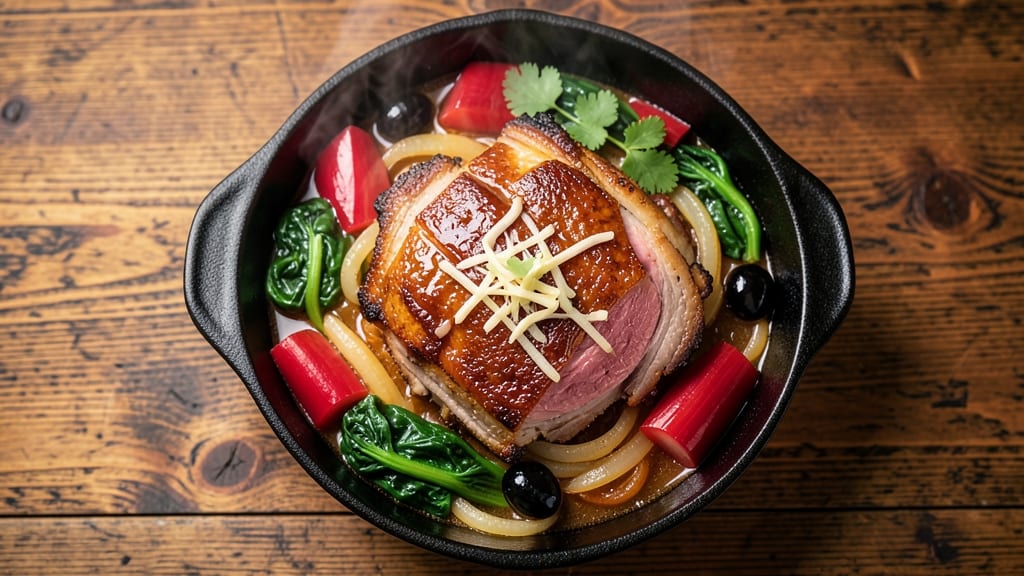
Mastering braised pork belly with preserved vegetables transforms tough cuts into melt-in-your-mouth perfection—crisp skin crackling over tender meat paired with tangy pickles that cut through the richness. This dish draws from my years perfecting whole-hog techniques, where slow-cooked pork belly becomes the star of any table.
The preserved vegetables add a bright contrast that balances the deep umami flavors, a technique I first learned from Master Chef Chen in Charleston.
The secret to this recipe lies in the braising process: searing the pork belly first creates a flavorful crust, while slow cooking at 300°F for 3 hours renders fat and tenderizes the meat without drying it out.
Meanwhile, the preserved vegetables—pickled radishes or cabbage—develop their signature tang when simmered in vinegar and spices for at least 24 hours. This method ensures every bite delivers a harmonious blend of textures and flavors.
By the time you plate this dish, you’ll have perfectly crisp skin that shatters with each bite, succulent pork belly that falls apart easily, and preserved vegetables that add a refreshing crunch and bright acidity.
The aromas alone—smoky, savory, and slightly sweet—will draw everyone to the table. This is the kind of recipe that feels both comforting and impressive, perfect for special occasions or a cozy weeknight dinner.
Whether you’re serving it at a holiday gathering or enjoying it with family, this braised pork belly with preserved vegetables is a showstopper that requires minimal effort but delivers maximum flavor.
The preserved vegetables can be made ahead, and the braising process is hands-off, making it ideal for busy cooks who still want restaurant-quality results. Let’s get started on creating this timeless dish.
Ingredients for braised pork belly with preserved vegetables
Pork belly, preserved vegetables, and aromatic spices—this lineup delivers restaurant-quality harmony.
| Ingredient | Amount | Notes |
|---|---|---|
| Pork Belly 🥓 | 2 lb | Skin-on, cut into 1-inch thick slices |
| Preserved Vegetables 🥬 | 2 cups | Pickled radishes or cabbage, store-bought or homemade |
| Yellow Onion 🧅 | 1 whole | Sliced into 1/4-inch rounds |
| Carrots 🥕 | 4 whole | Cut into 2-inch chunks |
| Garlic Cloves 🧄 | 6 cloves | Smashed, not minced |
| Fresh Ginger 🌿 | 1 ½ tbsp | Finely grated, fresh |
| Star Anise 🌟 | 2 whole | Whole pods, removed before serving |
| Cinnamon Sticks 🌿 | 2 whole | 2-inch pieces |
| Bay Leaves 🍃 | 2 whole | Dried, standard size |
| White Wine 🍷 | 1 cup | Dry, like Sauvignon Blanc |
| Chicken Broth 💧 | 2 cups | Low-sodium preferred |
| White Vinegar 🍋 | ½ cup | For preserved vegetables |
| Sugar 🍚 | ¼ cup | Granulated, for pickling |
| Salt 🧂 | 2 tbsp | Kosher, for curing |
| Black Peppercorns 🌶️ | 1 tsp | Crushed, for preserved vegetables |
The pork belly is the star, so look for thick-cut pieces with good marbling—the fat renders beautifully. Whole Foods or your local butcher usually have the best quality, but any grocery store with a meat counter works. If you're buying a whole pork belly, ask for it cut into 1-inch slices yourself (the butcher can do this). The preserved vegetables can be store-bought, but homemade is worth it—they develop deeper flavor. For those, pickled radishes or cabbage are ideal, but anything tangy works. If you're making your own, start the pickling process 24 hours ahead—it's non-negotiable for that bright crunch.
No white wine? Substitute chicken broth with a splash of apple cider vinegar—it mimics the acidity. Star anise and cinnamon sticks can be tricky to find, but most Asian markets carry them in bulk. Short on fresh ginger? Ground ginger at half the amount works, but fresh is better. The preserved vegetables need that vinegar-sugar balance—white vinegar and granulated sugar are standard, but rice vinegar adds a subtle sweetness. For the pork belly, if you can't find thick-cut slices, ask for pork shoulder with skin—it's a good backup. Just remember: the thicker the cut, the more tender it gets when braised.
The preserved vegetables keep for up to 2 weeks in the fridge, sealed in their liquid. The braised pork belly reheats beautifully—350°F for 20 minutes restores that crisp skin. For leftovers, store both components separately: pork belly in its braising liquid, veggies in their pickle juice. Freeze the pork belly for up to 3 months—thaw overnight in the fridge before reheating. The preserved vegetables? They actually improve over time, so make extra if you can. I always double the batch—they disappear fast as a side dish or appetizer.
Why You'll Love This Recipe
- One-Pot Magic: I swear by this for lazy nights—just sear the pork belly, toss in the preserved veggies (no chopping, really), and let the slow simmer do the work. That’s it. The onions and garlic caramelize right in the pot, so you’re left with zero dishes to scrub.
- Umami Bomb: The preserved vegetables? They’re the secret weapon—salty, tangy, and packed with funk that cuts through the pork’s richness. Add the crispy garlic cloves at the end, and suddenly you’ve got layers of flavor that taste like a restaurant dish, not a weeknight meal.
- Leftovers That Shine: This braise actually improves the next day. The pork gets tenderer, the flavors meld deeper, and it reheats like a dream. I make a double batch on Sundays because it’s the only dish I’ll actually eat for lunch the following week—no sad desk salads here.
- Budget-Friendly Luxury: Pork belly can feel fancy, but this recipe stretches it. A single slab feeds four, and the preserved veggies (often cheap in jars) add depth without breaking the bank. Plus, the onions and carrots bulk it up—honestly, it’s the kind of dish that makes you feel like you’re treating yourself, even when you’re not.
Step-by-step instructions for braised pork belly with preserved vegetables
Here's how to transform tender pork belly into melt-in-your-mouth perfection with a symphony of preserved vegetables.
Cure and Sear the Pork Belly for Maximum Flavor
In a large bowl, combine the 2 lb pork belly with 2 tbsp salt, 1 tsp crushed black peppercorns, 1.5 tbsp finely grated fresh ginger, and 6 smashed garlic cloves. Massage the mixture into the meat, working it into all the crevices and the thickest parts of the belly. This curing process helps tenderize the meat and develop that signature crispy skin.
Cover and refrigerate for at least 4 hours or up to 24 hours - this step is crucial for breaking down collagen and creating that irresistible texture. After curing, pat the pork belly completely dry with paper towels, removing any excess moisture that could prevent crisping. Heat a large oven-safe skillet over medium-high heat and add the pork belly skin-side down. Let it sear undisturbed for 8-10 minutes until the skin is deep golden brown and crispy in spots. Flip carefully and sear the other side for another 4-5 minutes. The meat should register 140-145°F internally at this point - if it's higher, it's overcooked and will dry out during braising.
Build the Aromatic Braising Base
Remove the pork belly from the skillet and set it aside. In the same skillet, add 1 whole yellow onion sliced into ¼-inch rounds and 4 whole carrots cut into 2-inch chunks. Cook for 5 minutes until the vegetables begin to soften and release their natural juices. Add 2 whole star anise, 2 whole cinnamon sticks, and 2 whole bay leaves to the skillet, stirring to combine.
Pour in 1 cup white wine and scrape up all the browned bits from the bottom of the pan - these flavorful fond bits are packed with umami. Let the wine simmer for 3-4 minutes until reduced by half. Add 2 cups chicken broth and bring to a gentle simmer. Here's where the magic happens: add 2 cups preserved vegetables (including their pickling liquid) and 0.5 cup white vinegar to balance the flavors. The vinegar will mellow as the braising proceeds, adding brightness without overpowering.
Braise Until Fork-Tender with Crispy Skin
Return the seared pork belly to the skillet, skin-side up. The braising liquid should come about halfway up the sides of the pork belly. Cover tightly with a lid and transfer to a preheated 300°F oven. Braise for 2.5 to 3 hours until the pork is fork-tender and pulls apart easily. The internal temperature should reach 200-205°F - this is when the collagen fully breaks down into gelatin, creating that signature silky texture.
About 30 minutes before the pork is done, remove the lid and increase the oven temperature to 375°F. This final crisping step transforms the skin from tender to crispy. Watch carefully - you want it to be deep golden brown and crackling when you press it gently with tongs. The pork belly should have a beautiful mahogany color on the outside with a pink, jelly-like interior.
Finish with Sugar and Rest for Perfect Texture
Remove the pork belly from the oven and transfer it to a cutting board. Let it rest for 15 minutes before serving - this resting period allows the juices to redistribute throughout the meat. While it rests, return the braising liquid to the stovetop and simmer uncovered for 5-7 minutes until slightly thickened. Add 0.25 cup sugar and stir until dissolved - this step caramelizes the braising liquid, adding depth of flavor.
Slice the pork belly against the grain into ½-inch thick slices. The meat should be so tender it practically falls apart with a gentle touch, while the skin remains crispy enough to stand up to a fork. Ladle the reduced braising sauce over the top and serve immediately with the preserved vegetables and any remaining braising liquid spooned around the plate. The contrast between the crispy skin, tender meat, and tangy preserved vegetables creates a perfect harmony of textures and flavors.
Pro Tips For Making Braised Pork Belly With Preserved Vegetables
- Brown the Belly First: Don’t skip the sear—get that pork belly golden before adding liquids. I learned this the hard way: skipping it means bland, greasy pork instead of rich, caramelized flavor. Use a heavy pot and medium-high heat until crispy in spots (about 8-10 minutes).
- Rinse the Preserved Veggies: Drain and rinse the preserved vegetables in cold water for 30 seconds to cut the saltiness. The jarred brine is strong, and you don’t want it overpowering the dish—especially if your pork belly is already well-seasoned.
- Don’t Overcrowd the Pot: Slice the pork belly into even ½-inch thick pieces and work in batches if needed. Crowding steams the meat instead of browning it, and you’ll end up with soggy, unevenly cooked slices. Trust me, your future self will notice.
- Deglaze with Soy Sauce: After browning the pork and onions, deglaze with 2 tablespoons of soy sauce before adding broth. It cuts through the fat, adds depth, and balances the sweetness of the preserved vegetables—no extra seasoning needed. (Yes, even if you’re impatient like me.)
Creative variations of these flavors
Asian-Inspired Braise
Swap the white wine for 2 tbsp soy sauce and 1 tbsp mirin in the braising liquid, then add 1 tbsp grated fresh galangal (or ginger if unavailable) and 1 tsp sesame oil at the end. Use daikon radish instead of carrots and serve with steamed jasmine rice.
The preserved vegetables can be quick-pickled with rice vinegar and a touch of sugar for 24 hours. This version feels like a cross between Chinese red-cooked pork and Japanese yuzu braising. 🌶️
Smoky BBQ Twist
Add 2 tbsp smoked paprika and 1 tbsp liquid smoke to the braising liquid, then finish with 1 cup BBQ sauce (I love Sticky Fingers brand) mixed with 1 tbsp apple cider vinegar.
Serve over mashed sweet potatoes with crispy bacon on top. The preserved vegetables can be spicy pickled onions or jalapeños for extra heat contrast. This version screams Southern BBQ meets Asian braising. 🔥
Herb-Infused European Style
Replace the star anise and cinnamon with 1 tbsp fresh thyme, 1 tbsp fresh rosemary, and 4 whole cloves (studded into the pork belly before curing). Use red wine instead of white and add 1 tbsp Dijon mustard to the braising liquid.
The preserved vegetables can be pickled green beans with mustard seeds for a French bistro touch. Serve with crusty baguette for dipping. This version feels like a Parisian bistro meets Southern comfort. 🥖
Sweet and Sour Fusion
Add ½ cup pineapple juice to the braising liquid and finish with 2 tbsp hoisin sauce mixed with 1 tsp sriracha. Use pickled ginger (not fresh) in the preserved vegetable mix for that signature sweet-sour balance.
Serve over steamed white rice with sliced scallions. This version feels like a cross between Chinese sweet and sour pork and Korean braised pork belly. 🍍
Spicy Cajun Version
Add 1 tbsp Cajun seasoning (like Tony Chachere's) and ½ tsp cayenne pepper to the curing mix. Use hot sauce (like Crystal or Tabasco) in place of white wine in the braising liquid.
The preserved vegetables can be spicy pickled okra or jalapeños. Serve with cornbread and a side of collard greens. This version brings the bold flavors of Louisiana to your braised pork belly. 🌶️
Nutrition facts
Frequently asked questions
Can I use regular pork chops instead of pork belly?
Pork belly is ideal because its fat content creates that signature crispy skin and tender texture. For a similar effect, use bone-in pork shoulder (cut into thick slices) or pork loin with extra skin. Thin pork chops won't render enough fat for crisping, and they'll dry out during the long braising time. If you must use chops, increase the braising liquid and reduce the cooking time to 1.5 hours.
How do I make the preserved vegetables if I don't have time for 24 hours?
For a quick version, use store-bought pickled vegetables (like kimchi, sauerkraut, or pickled radishes) straight from the jar. If making your own, combine 2 cups sliced vegetables (radishes, carrots, or cabbage) with 1 cup vinegar, 2 tbsp sugar, and 1 tsp salt. Let it sit for at least 4 hours (or overnight for best flavor). The acidity will still balance the richness of the pork belly.
Why did my pork belly skin turn rubbery instead of crispy?
This usually happens if the pork wasn't completely dry before searing or if the oven temperature fluctuated. First, always pat the pork belly thoroughly dry with paper towels after curing. Second, use an oven thermometer to confirm the 300°F setting is accurate. Finally, during the last 30 minutes, increase the heat to 375°F to crisp the skin—this is non-negotiable for that perfect texture.
Can I make this dish in a slow cooker instead of the oven?
Sear the pork belly as directed, then transfer it to a slow cooker with all the braising ingredients. Cook on low for 6-8 hours (or high for 4-5 hours). For crispy skin, finish under a broiler for 3-5 minutes or transfer to a 400°F oven for 10 minutes before serving. The slow cooker method is great for hands-off prep, but you'll lose some of the caramelization from oven braising.
What’s the best way to reheat leftovers?
Reheat the pork belly in its braising liquid over medium-low heat until warmed through (10-15 minutes). For crispy skin, transfer to a 400°F oven for 10-12 minutes on a wire rack. The preserved vegetables can be reheated directly in their pickle juice in a saucepan for 3-5 minutes. Never microwave pork belly—it’ll turn soggy! Store leftovers in the fridge for up to 4 days or freeze for 3 months.