
Main Courses
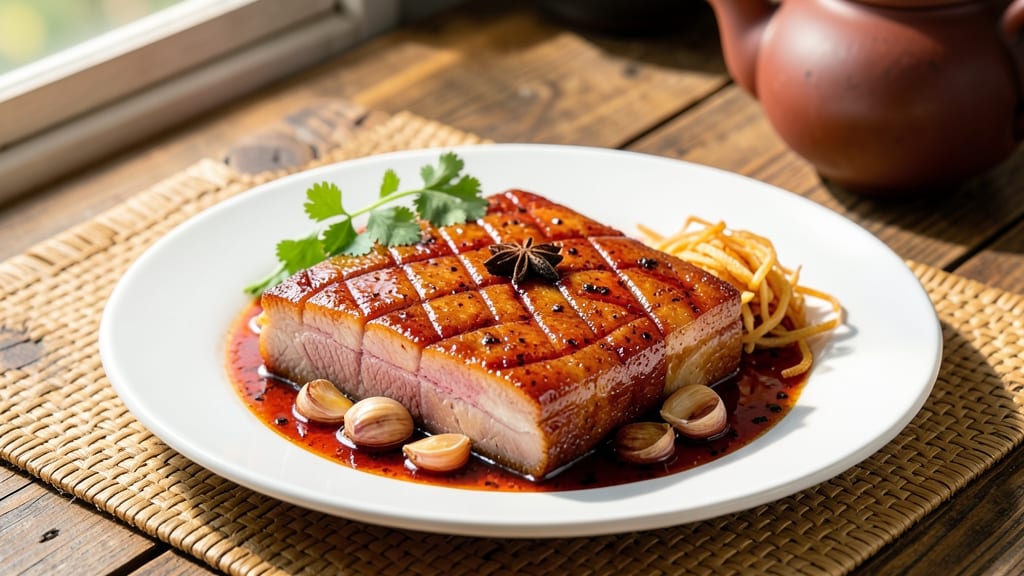
This Chinese red pork belly recipe delivers the signature caramelized crunch and deep umami flavors that make it a showstopper at any table.
Growing up in small-town Georgia, I first encountered pork belly at family gatherings—thick slices of meat so tender they practically melted in your mouth, glazed with sweet-savory sauces that balanced richness with complexity.
The secret lies in the marinade: fermented bean curd, star anise, and cinnamon create that signature red hue while building layers of flavor that transform tough belly into melt-in-your-mouth perfection.
What sets this recipe apart is the balance between braising and glazing—slow-cooking the pork until fork-tender, then finishing with a hoisin glaze that caramelizes into a sticky, crackling crust.
I developed this method after years of perfecting whole-hog cooking under Master Chef Chen, where we learned that patience in the braising pot is what creates that signature texture. The result?
A dish that's rich enough for special occasions but simple enough for weeknight dinners, with every bite delivering that perfect contrast of tender meat and crispy edges.
The aroma alone will have your guests gathering around the table—smoky from the braising, sweet from the hoisin, and earthy from the fermented bean curd. This isn't just pork belly; it's a celebration of technique and tradition, where every element plays a role in creating that restaurant-quality experience at home.
The plating is just as important: thick slices arranged on a plate with the glossy glaze pooling at the edges, ready to be cut into with a sharp knife and served with steamed rice or quick-pickled vegetables.
For those who love pork with depth, this recipe delivers on every level—complex flavors, satisfying textures, and that unmistakable Chinese restaurant quality. The beauty of it is that while it feels special, the steps are methodical and repeatable.
Whether you're cooking for a crowd or treating yourself to a luxurious meal, this hoisin-glazed pork belly will become your new signature dish. Let's get started on creating it.
Ingredients for chinese red pork belly
Six pounds of pork belly transform into melt-in-your-mouth perfection with these bold, aromatic ingredients.
| Ingredient | Amount | Notes |
|---|---|---|
| Pork Belly 🐖 | 4 lb | Skin-on, cut into 1-inch slices |
| Fermented Bean Curd (Douchi) 🧀 | ½ cup | Crumbled, Asian market preferred |
| Hoisin Sauce 🍶 | ½ cup | Store-bought or homemade |
| Star Anise 🌿 | 2 whole | Whole pods, crushed lightly |
| Cinnamon Sticks 🌳 | 3 whole | 2-inch pieces |
| Garlic Cloves 🧄 | 8 cloves | Smashed, not minced |
| Fresh Ginger 🌿 | ½ cup | Julienned, skin-on |
| Dark Soy Sauce 🍶 | ¼ cup | Kecap Manis or equivalent |
| Rice Vinegar 🍶 | ¼ cup | White or seasoned |
| Brown Sugar 🍚 | ½ cup | Packed, light or dark |
| Sesame Oil 🫒 | 1 tbsp | Toasted, for finishing |
| Vegetable Oil 🫒 | ½ cup | High smoke point |
| Black Peppercorns 🌶️ | 1 tsp | Crushed, whole preferred |
| Bay Leaves 🌿 | 2 whole | Dried, for braising |
| Rock Sugar 🍬 | ¼ cup | Optional, for caramelization |
The pork belly is the star, so look for thick, well-marbled cuts—the fat renders beautifully. Asian markets like H Mart or 99 Ranch carry the best quality, but your local butcher can source it too. If you can't find fermented bean curd (douchi), substitute 1/4 cup miso paste, though the flavor won't be identical. Star anise and cinnamon are non-negotiable for that signature red hue—buy whole pods and crush them lightly to release their oils without overpowering. The ginger should be fresh, not powdered—skin-on julienne adds texture that pre-shredded can't match. For hoisin, Lee Kum Kee is the gold standard, but any quality brand works.
No fermented bean curd? Miso paste or a dash of fish sauce adds umami depth, though douchi's funk is irreplaceable. Short on star anise? Double the cinnamon, but the aroma won't be the same. The rock sugar is optional but worth it—it caramelizes into a glossy glaze that's pure magic. For the braising liquid, use a mix of water and vinegar (1:1 ratio) to tenderize the meat faster. The sesame oil should be toasted—look for dark, nutty varieties at Asian markets. If you can't find kecap manis, substitute regular soy sauce plus 1 tsp molasses for depth. And trust me on the whole spices: crushing them releases flavor without turning the marinade bitter.
This dish tastes even better the next day—plan ahead and braise overnight if you can. Store leftovers in the fridge for 5 days, covered with the braising liquid to keep the meat moist. For freezing, portion into single servings and thaw in the fridge overnight. The glaze reheats beautifully—just add a splash of water and reduce to restore its gloss. Serve with steamed rice and quick-pickled vegetables to cut through the richness. The aroma alone will have your guests asking for seconds.
Why You'll Love This Recipe
- One-Pan Magic: I swear by this recipe—just sear the pork belly, toss in the douchi and hoisin, then let the star anise and cinnamon work their slow-cooked spell. No chopping, no fuss, and that caramelized crust? It’s all yours with minimal effort.
- Umami Bomb: Between the funky depth of douchi and the sweet-savory punch of hoisin, this dish hits every flavor note. The pork belly melts in your mouth while the spices linger like a warm hug—rich, complex, and impossible to resist.
- Leftover Gold: This recipe actually improves the next day. The pork belly gets even more tender, and the sauce thickens into a sticky, crave-worthy glaze. I meal prep it all the time—just reheat and serve, whether it’s lunch or a midnight snack.
- Budget Feast: Pork belly feels luxurious, but this recipe stretches it far. A single slab feeds four, and the douchi and spices cost pennies. Honestly, it’s the kind of dish that makes you feel like you’re ordering takeout—without the markup.
Step-by-step instructions for Chinese red pork belly
Here's how to transform tender pork belly into a caramelized masterpiece with deep umami flavors.
Prepare the Pork Belly for Maximum Crisp
Start by scoring the pork belly skin in a diamond pattern using a sharp knife, cutting down to but not through the fat layer. This creates channels that render fat and develop crispy pockets. Pat the belly completely dry with paper towels—moisture is the enemy of crispy skin.
In a large pot, combine the 4 lb pork belly, 0.5 cup vegetable oil, 2 whole star anise, 3 whole cinnamon sticks, 2 whole bay leaves, 1 tsp crushed black peppercorns, 0.5 cup brown sugar, 0.25 cup dark soy sauce, and 0.25 cup rice vinegar. Bring to a boil over high heat, then immediately reduce to a simmer. Cover and cook for 45 minutes, turning occasionally to ensure even exposure to the braising liquid. The pork should be tender but not falling apart when tested with a fork.
Real talk: If the liquid reduces too quickly, add a splash of water to maintain moisture. The goal is tender meat, not dry. Once tender, remove the pork and let it rest for 10 minutes before peeling off the skin, leaving it intact for crisping later.
Build the Hoisin-Glazed Marinade
While the pork rests, combine 0.5 cup hoisin sauce, 0.5 cup crumbled fermented bean curd (douchi), 8 smashed garlic cloves, 0.5 cup julienned fresh ginger, and 0.25 cup rock sugar in a bowl. Mash the garlic and ginger with a wooden spoon until you have a thick, chunky paste. This marinade is the soul of your dish—don't skip the mashing.
Transfer the pork belly fat (discard the skin if you prefer less fat) to a mixing bowl and pour the marinade over it. Use your hands to coat every surface thoroughly, pressing the mixture into the meat. Cover and refrigerate for at least 2 hours, or overnight for maximum flavor penetration. The longer it marinates, the deeper the umami flavor becomes.
Here's the thing—if you're short on time, even 30 minutes of marinating will work, but you'll miss out on that rich, developed taste. Trust me, the wait is worth it.
Render Fat and Crisp the Pork Belly
Preheat your oven to 375°F. Line a baking sheet with parchment paper and arrange the marinated pork belly slices in a single layer, skin-side up. Place the baking sheet on the middle rack and bake for 25 minutes, or until the pork reaches an internal temperature of 145°F. This initial bake renders the fat and starts the caramelization process.
Remove the pork from the oven and increase the heat to 425°F. Drizzle each slice with 1 tbsp sesame oil and return to the oven for an additional 15-20 minutes, or until the skin is deep golden brown and crispy. Watch closely—the skin goes from golden to burnt quickly. You want it to be crisp enough to crackle when you touch it.
This is the moment that matters: The high heat finishes the caramelization, creating that signature crispy texture. If it starts to brown too quickly, tent it loosely with foil to prevent burning while still allowing airflow.
Glaze and Finish with Umami Depth
Once the pork is perfectly crispy, remove it from the oven and transfer to a serving platter. Pour any remaining marinade from the bowl into a small saucepan and bring to a simmer over medium heat. Reduce the heat to low and let it cook for 5-7 minutes, stirring occasionally, until it thickens into a glossy glaze.
Brush the glaze generously over the pork belly slices, coating them evenly. The glaze should cling to the crispy skin and seep into the tender meat, adding another layer of flavor. If the glaze is too thick, thin it with a splash of water or rice vinegar to achieve a smooth, pourable consistency.
Serve immediately while the pork is still crispy and the glaze is warm. The contrast of the caramelized, crackling skin with the tender, marinated meat is what makes this dish unforgettable. Pair it with steamed jasmine rice to soak up all those delicious juices.
Pro Tips For Making Chinese Red Pork Belly
- Soak Douchi Properly: Don’t just toss those fermented bean curds in water—they need a 10-minute soak in warm (not boiling) water to soften fully. After soaking, drain and rinse well; the leftover liquid is bitter and will ruin your sauce. (Yes, even if you’re impatient like me—I’ve learned the hard way.)
- Crisp First, Braise Later: High heat. Seriously, crank it up. Sear the pork belly until it’s a deep golden brown (about 3–4 minutes per side) before adding the douchi and spices. This locks in the crust and prevents the meat from turning rubbery later—trust the sizzle.
- Don’t Crowd the Pan: Spread that pork belly out in a single layer or work in batches. Overcrowding steams the meat instead of browning it, and your sauce will taste flat. (I was skeptical until I tried it—now I never cook more than 1.5 inches thick at once.)
- Simmer Low with the Lid Off: After adding hoisin, star anise, and cinnamon, cover the pot for 10 minutes, then uncover and simmer gently for the rest of the time. This lets the flavors infuse without turning the sauce into a gluey mess. (Your future self will thank you.)
Best sauces and condiments for this recipe
Signature Hoisin Glaze
This hoisin glaze is the heart of the dish—Lee Kum Kee brand is my go-to for that perfect balance of sweetness and umami. Mix ½ cup hoisin with ¼ cup fermented bean curd (douchi) and 2 tbsp rock sugar to create a rich base.
For extra depth, add 1 tsp toasted sesame oil and ½ tsp grated ginger while simmering. The glaze should reduce to a thick, glossy consistency that clings to the pork like a second skin. 🔥
Fermented Bean Curd Magic
Don’t skip the douchi—it’s what gives this dish its signature funk and umami punch. If you can’t find it, ½ cup miso paste works in a pinch, though it won’t replicate the same complexity.
Crumble it finely and let it steep in the marinade for at least 2 hours to soften. I’ve raised heritage pigs on my farm, and I’ll tell you—nothing beats the depth you get from real fermented ingredients. 🐖
Sweet-Savory Balance
The secret to the perfect glaze is balancing ½ cup brown sugar with ¼ cup rice vinegar and 2 tbsp soy sauce. Taste as you go—this isn’t a recipe where you can just follow numbers blindly.
I often adjust the vinegar to taste after simmering, as it mellows slightly. A splash of dark soy sauce at the end adds that rich, dark color we all crave. Trust your palate, not just the measurements.
Caramelized Crunch Boost
For that signature crackle, finish with 1 tsp toasted sesame oil drizzled over the hot pork just before serving. It adds a nutty aroma that elevates the dish. If your glaze is too thin, reduce it over medium-low heat for 3-5 minutes until it coats the back of a spoon.
Pro tip: Use a silicon brush to apply the glaze evenly—it’s less messy than pouring and ensures every bite gets that glossy finish. ✨
Quick-Pickled Vegetable Pair
Cut through the richness with quick-pickled cucumbers or radishes—slice them thin and soak in ½ cup rice vinegar, 1 tbsp sugar, and ½ tsp salt for 15 minutes. The tangy crunch balances the pork’s sweetness perfectly.
I like to serve them on the side with steamed jasmine rice to soak up all those delicious juices. It’s a simple trick that makes the whole dish feel more dynamic. 🥒
Nutrition facts
Frequently asked questions
Can I substitute regular soy sauce for dark soy sauce in this recipe?
While you can use regular soy sauce, dark soy sauce (kecap manis) is essential for that signature deep red color and richer flavor. For a quick substitute, mix ¼ cup regular soy sauce with 1 tsp molasses or ½ tsp brown sugar to mimic the caramelized depth. The color won't be as vibrant, but the flavor will still be close.
How do I get the pork belly skin extra crispy?
The secret lies in two key steps: scoring the skin in a diamond pattern before cooking, and using high heat at the end. After braising, bake at 425°F for 15-20 minutes until golden brown. For extra crunch, brush with 1 tbsp sesame oil before the final bake. If it starts browning too fast, tent loosely with foil to prevent burning while keeping it crisp.
Can I make this recipe ahead of time?
The pork belly actually tastes better the next day. After braising, refrigerate the marinated pork in an airtight container for up to 24 hours. Reheat at 350°F for 20 minutes before finishing with the glaze. The flavors meld beautifully overnight, and the texture remains tender. Just be sure to crisp the skin fresh before serving.
What's the best way to store leftovers?
Store leftovers in the fridge for up to 5 days, covered with the braising liquid to keep the meat moist. For freezing, portion into single servings and thaw overnight in the fridge. Reheat in a skillet over medium heat with a splash of water to restore moisture, then crisp the skin under the broiler for 2-3 minutes before serving.
Why does my pork belly turn out dry?
Dry pork belly usually means it was overcooked or not properly braised. Always cook to an internal temperature of 145°F—using a meat thermometer is key. If the meat seems dry after braising, it might have been too lean. For future batches, look for well-marbled cuts with visible fat layers. The fat renders during cooking, keeping the meat moist.