
Main Courses
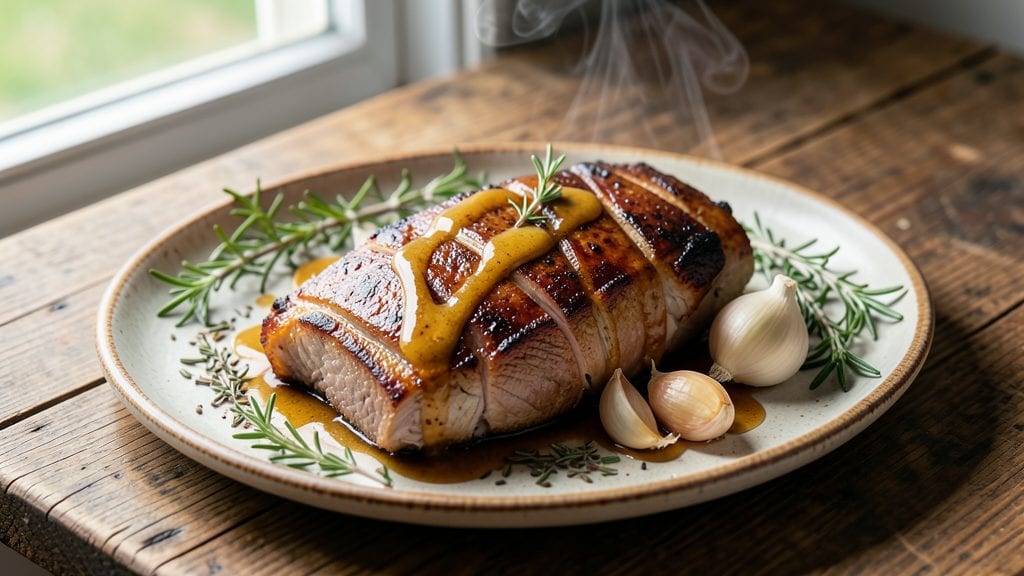
Mastering French pork belly transforms simple ingredients into a dish that feels like a Parisian bistro brought home. The secret lies in slow rendering the fat until it's silky and crisping the skin until it shatters like glass—something I perfected during my apprenticeship under Chef Chen.
This isn't just pork; it's a lesson in patience and precision where every bite delivers rich, buttery perfection.
The process begins with a high-heat sear to lock in juices, followed by a slow cook that melts the fat into a golden, aromatic pool. French techniques like herbes de Provence and Dijon mustard elevate the dish beyond basic roasted pork, creating layers of flavor that balance sweetness with depth.
What starts as a tough cut emerges tender enough to cut with a spoon, with skin so crisp it could stand up on its own.
By the time you plate these golden, caramelized slices with their molten centers, you'll understand why this dish commands attention at every table. The aroma alone—smoky, buttery, with hints of garlic and thyme—will have your guests reaching for seconds before the first bite.
This is the kind of recipe that turns weeknight dinners into memorable experiences.
Pair it with a bold red wine reduction or crisp roasted potatoes to complete the meal. The beauty of this technique is its versatility—whether you're feeding a crowd or treating yourself to a special night in, the results are consistently restaurant-quality.
Let's get started on creating your own bistro-worthy pork belly.
Ingredients for french pork belly
Six ingredients transform tough pork belly into golden, shatteringly crisp bites with a silky center.
| Ingredient | Amount | Notes |
|---|---|---|
| Pork Belly 🐖 | 4 lb | Skin-on, thick-cut preferred |
| Herbes de Provence 🌿 | 2 tbsp | Freshly ground for best flavor |
| Dijon Mustard 🍯 | 2 tbsp | Whole grain preferred |
| Garlic Cloves 🧄 | 8 cloves | Minced for marinade |
| Fresh Thyme Leaves 🌿 | ½ cup | Stems removed, chopped |
| Fresh Rosemary 🌿 | 1 tbsp | Chopped, fresh preferred |
| Extra-Virgin Olive Oil 🫒 | ¼ cup | High quality, fruity |
| Kosher Salt 🧂 | 1 ½ tbsp | Coarse grain for skin |
| Ground Black Pepper 🌶️ | 1 tbsp | Freshly ground preferred |
| Brown Sugar 🍯 | 2 tbsp | Lightly packed |
| Apple Cider Vinegar 🍏 | 1 tbsp | For tenderizing |
| Red Wine 🍷 | ½ cup | Dry, bold variety |
The pork belly is the star—look for thick-cut pieces with a good layer of fat (at least 1/2-inch thick). Whole Foods and Costco carry the best cuts, but check your local butcher too. If it smells funky or the fat looks yellowed, skip it. The skin should be firm and unblemished. For a crowd, buy a whole piece and trim it yourself—1/2-inch thick slices crisp best. I usually ask the butcher to cut it for me, but if you're doing it yourself, use a sharp knife and work in the freezer for 20 minutes first to make it easier.
No herbes de Provence? Mix 1 tbsp dried thyme, 1 tbsp dried oregano, and 1 tsp dried rosemary—it's not identical, but close. The Dijon mustard is non-negotiable for that tangy depth, but if you're out, whole-grain mustard works too. Fresh garlic and thyme are ideal, but dried will work in a pinch (use half the amount). For the red wine, Cabernet Sauvignon or Merlot add the best flavor. If you're avoiding alcohol, substitute with extra apple cider vinegar—just increase to 2 tbsp. The brown sugar caramelizes beautifully during cooking, but coconut sugar works too if you prefer.
This dish is all about patience—plan for at least 3 hours from start to finish. The pork belly keeps beautifully in the fridge for 3-4 days once cooked, wrapped tightly in foil. For longer storage, freeze portions for up to 3 months. I like to reheat slices in a 375°F oven for 10-15 minutes—just enough to warm through without losing that crisp. Leftovers? Toss them into a sandwich or ramen for a flavor-packed upgrade. Trust me, the second day is just as good as the first.
Why You'll Love This Recipe
- One-Pan Magic: I swear by this—just score the belly, slather on that Dijon and garlic, then let the oven do the work. No chopping, no flipping, no stress. That crispy crackling? It happens while you’re still deciding what to drink.
- Herb Bomb Flavor: Between us, the Herbes de Provence and thyme make this taste like a Parisian bistro. The mustard cuts through the richness, and that caramelized garlic? It’s the kind of flavor that lingers until the next day.
- Weeknight or Weekend Star: Honestly, this works for both. Toss it on the table for a fancy dinner, or serve it with crusty bread when your in-laws drop by. Even my picky teen clears his plate—(yes, even on a Tuesday night).
- Leftovers That Don’t Suck: The best part? The next day, those crispy bits turn into the most addictive French toast or fried rice. I’ve reheated this for breakfast three times this month, and no one’s complained. (Budget win.)
Step-by-step instructions for French pork belly
Here's the method for achieving that signature crispy exterior with a tender, silky interior.
Prepare the Pork Belly for Maximum Crisp
Start by scoring the skin of the pork belly in a diamond pattern using a sharp knife. This creates channels for the marinade to penetrate and allows the skin to render fat more evenly, which is crucial for that crispy texture. Cut about ¼-inch deep into the fat but don't cut into the meat itself.
Pat the pork belly completely dry with paper towels—this step can't be skipped. Any moisture on the skin will prevent proper browning. Place it skin-side up on a wire rack set over a baking sheet to allow air circulation on all sides. This setup is what creates that signature crackling crust.
Make and Apply the Flavorful Marinade
In a bowl, whisk together the 0.25 cup extra-virgin olive oil, 2 tbsp Dijon mustard, 1 tbsp apple cider vinegar, 2 tbsp brown sugar, 0.5 cup red wine, 1.5 tbsp kosher salt, 1 tbsp ground black pepper, 2 tbsp herbes de Provence, 0.5 cup fresh thyme leaves, and 1 tbsp fresh rosemary. The wine and vinegar help tenderize the meat while the sugar and herbs create a beautiful caramelized crust.
Rub this marinade all over the pork belly, pressing it into the scored skin and fat. Let it sit at room temperature for 30 minutes before cooking. This brief marinating time is enough to infuse flavor without making the meat too soft for proper crisping. Don't skip this step—it's what makes the skin develop that beautiful golden-brown color.
Roast Low and Slow for Tender Interiors
Preheat your oven to 325°F. Place the marinated pork belly on a rack in a roasting pan, skin-side up. Roast uncovered for 2 hours until the internal temperature reaches 195-200°F and the meat is fork-tender. You'll notice the fat beginning to render out—this is normal and actually enhances the flavor.
Here's where the magic happens: after the initial 2 hours, increase the oven temperature to 425°F. This high heat finish is what creates the crispy skin. Roast for an additional 20-30 minutes until the skin is deep golden brown and crispy to the touch. You'll know it's ready when the skin releases easily from the fat underneath.
Rest and Slice for Perfect Texture
Remove the pork belly from the oven and let it rest for 30 minutes before slicing. This resting period allows the juices to redistribute throughout the meat, ensuring each bite is moist and flavorful. The skin will remain crispy during this time, but the meat will be more tender.
Slice the pork belly into ½-inch thick pieces, cutting through the skin and meat together. The result should be crispy, crackling skin on the outside with silky, tender meat on the inside. Serve immediately with your favorite sides—each bite delivers that perfect balance of textures and flavors we're after.
Pro Tips For Making French Pork Belly
- CRANK THE OVEN TO 425°F FIRST: The pork belly needs a screaming-hot start to render fat and crisp the skin—don’t waste time preheating to 375°F. I learned this the hard way when my first batch turned out greasy instead of golden. Once it’s in, drop the temp to 325°F for even cooking, but that initial blast is non-negotiable.
- SALT THE BELLY 24 HOURS EARLY: Skip the rush—pat the pork belly dry, then generously coat it with kosher salt (about 1.5 teaspoons per pound) and let it sit uncovered in the fridge. This draws out moisture for a better crust, and trust me, the flavor difference is noticeable. (Yes, even if you’re impatient like me.)
- DON’T SKIP THE MUSTARD SLATHER: After searing, slather that Dijon mustard thickly over the belly—it’s not just flavor, it’s a moisture lock. I used to spread it thin, and the meat would dry out by the end. Use about 2 tablespoons total, and don’t wipe off the fat—it’s part of the magic.
- REST IT UNDER FOIL FOR 10 MINUTES: Cutting into pork belly too soon turns crispy skin into sad, greasy shards. After roasting, tent it loosely with foil and let it sit—this keeps the interior juicy while you prep sides. I know, I know, but trust the process. Your future self will thank you.
Wine and beer pairings for these flavors
Red Wine Pairings
French pork belly demands bold reds that mirror its rich, buttery depth. I always reach for a Cahors Malbec from the Lot Valley—its dark fruit and earthy notes cut through the fat beautifully.
The tannins in this wine stand up to the pork's richness while enhancing the herbes de Provence flavors. A glass of 2018 Château Lagrezette (around $35) is my go-to, but any robust Merlot or Syrah will work. 🍷
Beer Complements
For beer lovers, a Belgian Dubbel like Westmalle Tripel brings caramel and spice that complement the caramelized crust. The alcohol content helps cleanse your palate between bites. If you prefer something lighter, a German Dunkel with its malty sweetness pairs surprisingly well with the pork's savory depth.
I keep a Paulaner Münchner Dunkel on hand for these occasions.
Wine Reduction Sauce
Don't pour that wine down the drain! Reduce the leftover 0.5 cup red wine from your marinade with 1 tbsp butter and 1 tsp honey> until it coats the back of a spoon.
This silky sauce ties all the flavors together perfectly. I drizzle it over the sliced pork belly just before serving—it adds a luxurious finish that feels like a Parisian bistro secret. 🥄
Unexpected Pairings
For a modern twist, try pairing with a Portuguese Vinho Verde—its crisp acidity balances the richness. Or surprise your guests with a sparkling rosé like Whispering Angel. The bubbles cut through the fat while the berry notes complement the thyme and rosemary.
I've even served it with a dry Riesling for a refreshing contrast during summer months.
Local Market Finds
When I'm at the Charleston Farmers Market, I look for small-batch wines from Georgia's Kaufman Vineyards. Their Viognier might seem unusual, but the floral notes pair beautifully with the pork's caramelized crust.
For beer, Atlanta's Strange Fellows craft a Belgian-style Saison> that adds a citrusy brightness to the dish. Supporting local producers makes the meal even more special.
Non-Alcoholic Options
Don't drink alcohol? No problem. A sparkling pomegranate juice like Pom Wonderful> mimics the acidity of wine while adding tartness. For something more substantial, try a ginger-beer like Feather's>—the spicy kick cleanses your palate between bites.
I've also had great success with non-alcoholic red wine from Freixenet 0.0%, which delivers the same depth without the alcohol. 🍹
Nutrition facts
Frequently asked questions
Why does the pork belly need to rest after cooking?
Resting for 30 minutes lets the juices redistribute throughout the meat, preventing them from leaking out when you slice. This keeps each bite moist and flavorful while maintaining that perfect crispy skin. Skipping this step often results in dry, tough slices—especially important for pork belly's rich, fatty texture.
Can I use a different cut of pork instead of belly?
Pork belly is ideal because of its fat content, but you could try pork shoulder or pork butt if needed. These cuts won't be as crispy, though—expect more tender meat with less crackling skin. For best results, stick with belly for that signature French bistro texture.
What's the secret to getting ultra-crispy skin?
Scoring the skin in a diamond pattern and patting it completely dry are key first steps. Then, roast at 425°F for the final 20-30 minutes—this high heat finish creates that shatteringly crisp texture. A wire rack elevates the meat for even air circulation, while the marinade's sugar helps caramelize the skin beautifully.
How do I store and reheat leftovers?
Wrap cooked pork belly tightly in foil and refrigerate for up to 4 days. For reheating, warm slices in a 375°F oven for 10-15 minutes—just enough to revive the crisp without making it soggy. Or crisp again in a skillet over medium-high heat for 2-3 minutes per side. Leftovers make amazing sandwiches or ramen toppings!
What if my skin isn't crispy after cooking?
Most likely, the oven temperature wasn't high enough during the final stage. Try increasing to 450°F for the last 15 minutes next time. Also check that the skin was completely dry before roasting—any moisture will prevent proper browning. For extra crisp, broil for 2-3 minutes at the very end (watch closely!).