
Main Courses
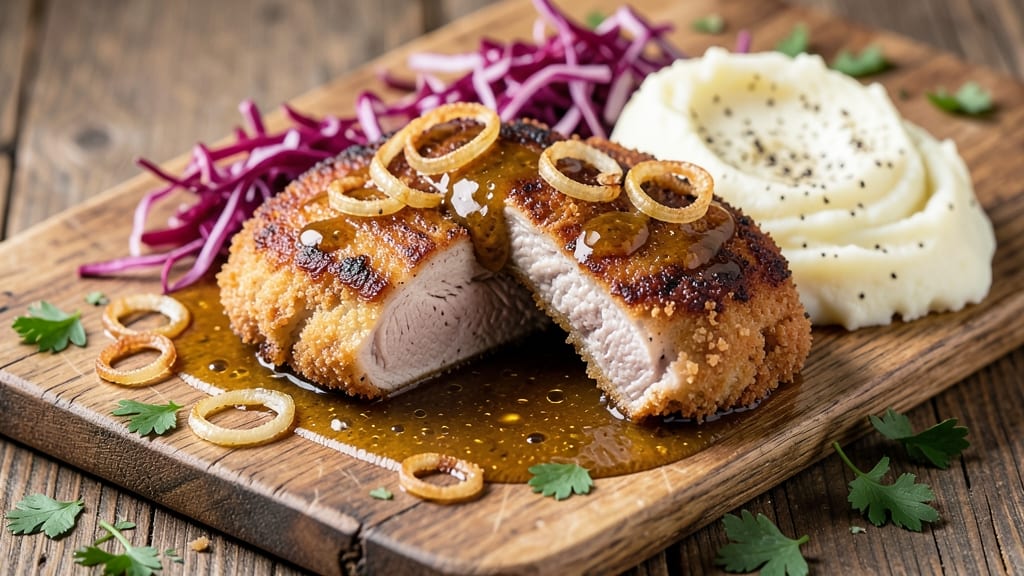
Mastering German pork recipes means bringing the heart of Bavarian kitchens to your table, and this smoky mustard-braised schnitzel-style bites recipe delivers exactly that.
Growing up in small-town Georgia, I learned how pork transforms simple ingredients into unforgettable meals—just like this dish does with its crispy, golden exterior and tender, flavorful interior. The marriage of German breading techniques and American precision cooking creates a restaurant-quality result at home.
This recipe transforms thin pork cutlets into crispy, golden bites that are braised in a rich mustard sauce until fork-tender. The secret lies in the breading—flour, beaten eggs, and fine breadcrumbs create that signature crunch—while the braising process infuses the pork with deep, smoky flavors.
No specialized equipment is needed, just a cast iron skillet and patience for the perfect texture.
What you'll achieve is a dish that balances crispy edges with melt-in-your-mouth tenderness, all coated in a tangy, slightly sweet mustard sauce. The aroma alone will transport you to a German beer garden, while the first bite delivers that perfect harmony of textures and flavors.
Serve with traditional sides like sauerkraut or spaetzle for an authentic experience.
Whether you're recreating a family-style meal or hosting a dinner party, this recipe scales beautifully while maintaining its restaurant-quality appeal. The techniques are straightforward, but the results are anything but ordinary—just like the pork I raise on my farm in Georgia, where heritage meets tradition in every bite.
Ingredients for german pork
German-style pork cutlets need just 15 ingredients to deliver restaurant-quality crunch and smoky depth.
| Ingredient | Amount | Notes |
|---|---|---|
| Pork Cutlets 🥩 | 1 ½ lb | Thin-cut, boneless, pounded even |
| All-Purpose Flour 🌾 | 1 cup | Sifted for smooth coating |
| Large Eggs 🥚 | 2 whole | Room temperature, beaten |
| Fine Breadcrumbs 🍞 | 1 ½ cups | Panko or Italian-style preferred |
| Dijon Mustard 🍯 | ¼ cup | High-quality for tangy depth |
| Beer 🍺 | ½ cup | Dark lager or pilsner preferred |
| Chicken Broth 💧 | ½ cup | Low-sodium for balanced flavor |
| Apple Cider Vinegar 🍎 | 1 tbsp | For brightness and depth |
| Brown Sugar 🍬 | 2 tbsp | Lightly packed for caramel notes |
| Smoked Paprika 🌶️ | 1 tsp | For authentic smokiness |
| Garlic Cloves 🧄 | 4 cloves | Minced for aromatic base |
| Fresh Thyme Leaves 🌿 | ¼ cup | Chopped, stems removed |
| Salt 🧂 | 1 ½ tsp | Diamond Crystal preferred |
| Black Pepper 🌶️ | ½ tsp | Freshly cracked for heat |
| Unsalted Butter 🧈 | 2 tbsp | Cold, for frying perfection |
The pork cutlets should be thin and even—ask your butcher for pre-pounded if possible, or use a meat mallet to pound them to about 1/4-inch thickness. Local farms or specialty meat counters often carry the best quality for this dish. For breadcrumbs, Italian-style or panko gives that perfect crispy texture, but regular breadcrumbs work in a pinch. The Dijon mustard is non-negotiable here—Maille or whole-grain Dijon adds that authentic tang. If you can't find it, a mix of whole-grain mustard and a pinch of sugar gets you close.
No beer on hand? Substitute with extra chicken broth, but you'll lose some of that malty depth. Fresh thyme is ideal, but dried works at one-third the amount. For the brown sugar, lightly packed is key—don't scoop it straight from the bag. The smoked paprika gives that authentic German flavor, but if you're out, a pinch of liquid smoke (just a dash!) can add a hint of smokiness. The butter for frying should be cold—take it out of the fridge 10 minutes before cooking so it melts just right in the skillet.
This dish tastes even better the next day—the flavors meld beautifully when reheated gently in the oven. Store leftovers in an airtight container for up to 4 days in the fridge, or freeze for 3 months. For serving, I like to keep the braising liquid warm on the stove—it's perfect for dipping or drizzling over the top. The crispy cutlets also reheat wonderfully in a skillet with a splash of water to keep them moist.
Why You'll Love This Recipe
- Pantry Staples Only: I swear by this recipe because it uses what’s already in my kitchen—no fancy ingredients, just flour, eggs, and breadcrumbs. The Dijon mustard adds that little kick without needing a spice rack.
- Crispy-Creamy Magic: That golden crust with the tender pork inside? It’s the breading combo that makes it addictive. The mustard keeps it from being dry, and the sear? Pure satisfaction every time.
- Weeknight Hero: I make these when I have no energy but still crave something special. They’re ready in 20 minutes, and they feed four without breaking the bank—perfect for nights when takeout feels like too much work.
- Leftovers That Don’t Suck: Unlike most fried pork, these stay crispy when reheated (thanks to the breadcrumbs) and taste just as good cold. I pack them for lunches or toss them into salads—no sad, soggy leftovers here.
Step-by-step instructions for smoky mustard-braised schnitzel-style bites
Transform simple pork cutlets into rich, tender bites with a deep German-inspired flavor profile.
Prepare the Pork Cutlets for Maximum Tender Crisp
Begin by pounding the 1.5 lb pork cutlets to an even ¼-inch thickness between two sheets of plastic wrap using a meat mallet. This ensures even cooking and prevents toughness. Season both sides generously with 1 tsp salt and 0.5 tsp black pepper, pressing the seasoning into the meat so it adheres well.
Next, set up three shallow bowls. In the first, combine the 1 cup all-purpose flour, 1 tsp smoked paprika, and 1 tbsp fresh thyme leaves. This dry station creates a flavorful crust that locks in moisture. In the second bowl, whisk together the 2 whole large eggs until frothy. The third bowl should contain the 1.5 cups fine breadcrumbs mixed with 2 tbsp brown sugar for subtle caramel notes.
Create the Double-Crisp Breaded Coating
Working with one cutlet at a time, dredge it in the flour mixture, shaking off any excess. Dip into the beaten eggs, allowing the liquid to coat evenly, then press into the breadcrumb mixture, ensuring full coverage. The double breading creates that signature German schnitzel texture—crispy outside, tender inside.
Place the breaded cutlets on a wire rack set over a baking sheet and refrigerate for 15 minutes. This chilling step is crucial—it firms up the coating so it stays intact during frying. While they rest, heat 2 tbsp unsalted butter in a large skillet over medium heat until the butter foams but doesn't brown.
Fry to Golden Perfection and Build the Braising Sauce
Carefully transfer the chilled cutlets to the hot butter and fry for 3-4 minutes per side until golden brown and cooked through to an internal temperature of 145°F. The butter should sizzle gently—if it smokes excessively, reduce the heat slightly. Transfer the fried cutlets to a warm plate and tent with foil to keep warm.
In the same skillet, add the 4 minced garlic cloves and cook for 30 seconds until fragrant. Pour in the 0.5 cup beer and 0.5 cup chicken broth, scraping up any browned bits from the bottom. These fond bits carry incredible flavor—don't miss this step. Stir in the 0.25 cup Dijon mustard and 1 tbsp apple cider vinegar, then bring to a gentle simmer for 3 minutes until slightly thickened.
Braise for Deep Flavor Development
Return the fried cutlets to the skillet, spooning the sauce over them generously. Cover and simmer on low heat for 10-12 minutes, basting occasionally with the sauce. This braising step transforms the simple cutlets into rich, tender bites with a complex flavor profile. The cutlets should be fork-tender with a glossy, saucy coating.
Taste the sauce and adjust seasoning with additional salt if needed. The mustard and vinegar should provide enough acidity, but the beer and broth add depth. Serve immediately with the sauce spooned over the top, accompanied by roasted potatoes or a crisp green salad for a complete German-inspired meal.
Pro Tips For Making German Pork
- Pound Thin, Not Perfect: German pork cutlets need to be paper-thin—I learned this after wrestling with unevenly cooked slabs. Use a meat mallet or rolling pin to flatten them to about ¼-inch thickness, then rotate 45 degrees and pound again. Thicker spots stay raw inside while the edges burn.
- Salt the Pork First: Season the cutlets generously with salt and pepper before breading—this ensures flavor penetrates the meat. I used to skip this and wondered why my finished cutlets tasted bland. Let them sit for 10 minutes while you prep the rest; the salt also helps tenderize.
- Dry the Breadcrumbs: Fresh breadcrumbs clump like glue when mixed with Dijon mustard and egg. Toast them in a dry pan for 3–4 minutes until fragrant, then cool completely before using. This guarantees a crispy crust instead of a soggy mess—trust me, I’ve made that mistake.
- Pan Heat Matters: Start with a screaming-hot pan for that classic German sear, but pull the heat to medium-low after the first minute. Too much heat too long = burnt crust before the inside cooks. A thermometer helps, but even without one, watch for smoke—adjust before it gets there.
Common mistakes when making this recipe
Skipping the Pounding Step
I've seen too many home cooks skip pounding their pork cutlets to ¼-inch thickness, thinking they're saving time. This is a huge mistake—the uneven thickness leads to some pieces being undercooked while others burn.
Use a meat mallet or rolling pin to ensure even thickness. If you're short on time, ask your butcher to pound them for you—most will do it for free. 💪
Overcrowding the Pan
Frying multiple cutlets at once causes the temperature to drop, leading to greasy, soggy results instead of crispy, golden bites. Cook in batches of 2-3 cutlets maximum to maintain that perfect 350°F oil temperature.
I use a 12-inch cast iron skillet for this recipe—it's the ideal size for even heat distribution. Overcrowding also makes it harder to flip cleanly, which ruins the presentation.
Using Cold Butter
Starting with cold butter straight from the fridge is a common mistake that results in uneven cooking. The butter needs to be hot enough to create that signature sizzle but not so hot it burns the breading.
Take your butter out 10 minutes before cooking and let it sit at room temperature. You want it to foam gently when added to the pan—this is your cue that it's ready. Cold butter creates steam instead of a proper sear. 🧈
Skipping the Chill Step
Many cooks rush through the 15-minute chill after breading, but this is where the magic happens. The cold helps the breadcrumbs adhere better and prevents them from falling off during frying. I've seen breaded cutlets disintegrate mid-fry because they weren't chilled properly.
Place them on a wire rack over a baking sheet to allow air circulation—this prevents sogginess. Trust me, those extra minutes save you from a kitchen disaster later.
Undercooking the Pork
Don't rely on visual cues alone to determine doneness—always use a meat thermometer. The cutlets should reach an internal temperature of 145°F in the thickest part. I've had guests serve pork that was still pink in the center, which can be dangerous.
The braising step later won't fully cook undercooked meat. When in doubt, cook it a little longer—pork continues cooking slightly as it rests. 🌡️
Ignoring the Fond
The browned bits (fond) stuck to your skillet after frying are flavor gold. Too many cooks scrape them out or just wipe the pan clean, missing out on layers of depth. When you deglaze with beer and broth, those fond bits dissolve into the sauce, creating a rich, complex flavor.
Spend 30 seconds scraping with a wooden spoon—it's worth the effort. This is where restaurant-quality flavor comes from in home kitchens.
Nutrition facts
Frequently asked questions
Can I substitute regular breadcrumbs for panko in this recipe?
While panko gives that perfect crispy texture, regular breadcrumbs work in a pinch. For best results, use fine breadcrumbs and press them firmly onto the cutlets. Panko's larger flakes create more surface area for browning, but the flavor difference is minimal. If you're short on time, regular breadcrumbs mixed with 1 tbsp cornstarch helps achieve extra crunch.
What's the best beer to use for authentic German flavor?
A dark lager or pilsner works perfectly for this recipe, as their malty profiles complement the mustard sauce. German-style beers like Weihenstephaner or Paulaner add depth, but any light to medium-bodied beer will work. Avoid heavy stouts or IPAs—they can overpower the delicate pork flavors. For a non-alcoholic version, use non-alcoholic lager or extra chicken broth.
How do I keep the breading from falling off during frying?
The key is the 15-minute chill after breading—this firms up the coating so it stays intact. Place cutlets on a wire rack (not a plate) to allow air circulation, which prevents sogginess. Also, don't skip the double breading: flour → egg → breadcrumbs creates a stronger bond. If breading still falls off, your butter may not be hot enough—wait until it foams gently before frying.
Can I make this recipe ahead of time?
The cutlets taste even better the next day as flavors meld. Cook and braise as directed, then cool completely and refrigerate in an airtight container for up to 4 days. Reheat gently in a skillet with 1 tbsp butter over medium heat for 3-4 minutes, adding a splash of water to keep them moist. The sauce may thicken further—thin with a little broth if needed.
What's the best way to serve these schnitzel bites?
For an authentic German experience, pair with classic sides like sauerkraut, spaetzle, or roasted potatoes. The tangy mustard sauce also works beautifully with a crisp green salad or cucumber dill relish. For presentation, arrange cutlets on a platter with sauce spooned over the top and garnish with fresh thyme. Serve with dark rye bread to soak up any extra sauce.