
Main Courses
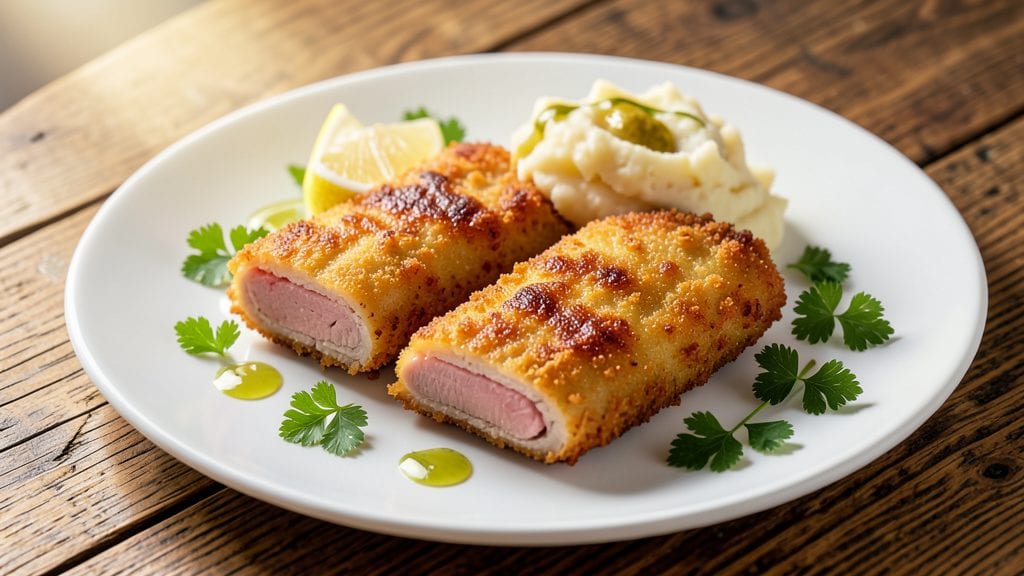
This German pork schnitzel recipe delivers that perfect balance of crispy, golden perfection in just 15 minutes—a technique I perfected during my early days competing in BBQ contests, where precision matters most.
The secret lies in pounding the pork loin thin enough to cook evenly while maintaining that coveted crispy exterior. I’ve always believed anyone can master fire, and this dish proves it.
What makes this recipe stand out is the traditional breading method: flour, beaten egg, and fine breadcrumbs create a coating that turns golden and crunchy when fried. The result is tender meat inside with that irresistible crispy crust outside—no soggy surprises here.
This is the kind of dish that feels restaurant-quality but is foolproof at home.
By the time you serve it with lemon wedges and a side of potato salad, you’ll have a meal that feels like a trip to a Bavarian tavern.
The bright acidity of the lemon cuts through the richness of the schnitzel, while the potato salad adds a satisfying contrast. This is comfort food at its finest.
Perfect for weeknight dinners or weekend gatherings, this schnitzel is a crowd-pleaser that never disappoints. The key is patience—pounding the meat thin and frying it at the right temperature ensures that crispy texture every time. Let’s get cooking.
Ingredients for German pork schnitzel
Here’s how to achieve that restaurant-quality crispy schnitzel in under 15 minutes.
| Ingredient | Amount | Notes |
|---|---|---|
| Pork Loin Cutlets 🐷 | 1 ½ lb | Pounded to 1/4-inch thickness |
| All-Purpose Flour 🌾 | 2 cups | For breading, sifted |
| Large Eggs 🥚 | 2 whole | Beaten for egg wash |
| Fine Breadcrumbs 🍞 | 1 ½ cups | Panko preferred |
| Extra-Virgin Olive Oil 🫒 | 1 cup | For frying, high smoke point |
| Vegetable Oil 🫒 | 2 cups | For frying, neutral flavor |
| Diamond Crystal Kosher Salt 🧂 | 1 ½ tbsp | For seasoning meat |
| Freshly Ground Black Pepper 🌶️ | 1 tsp | Freshly ground for flavor |
| Lemon Wedges 🍋 | 4 whole | For serving, juicy |
| Butter 🧈 | 2 tbsp | For finishing, unsalted |
The pork loin is your star player—look for well-marbled cuts from the butcher counter. Costco or local meat markets often have pre-cut pork loin, but if you’re buying whole, ask for boneless pork loin and trim any excess fat. The secret to perfect texture? Pounding it to 1/4-inch thickness ensures even cooking without drying out. I always use a meat mallet or rolling pin—no shortcuts here. Season generously with Diamond Crystal kosher salt (it dissolves better than table salt) and freshly ground black pepper before breading. This isn’t the time to skimp on quality—trust me, the difference is night and day.
No panko? Fine breadcrumbs from a quality loaf work in a pinch, but they won’t crisp as nicely. Want to stretch this further? Substitute chicken cutlets—they cook faster and hold up well. The olive oil and vegetable oil combo is key: extra-virgin olive oil adds richness, while vegetable oil keeps the temperature stable for frying. For the egg wash, beaten eggs with a splash of water create a lighter coating. And if you’re worried about soggy breading, double-dredge the cutlets—flour, egg, breadcrumbs, then flour again. It’s an extra step, but worth the crispy payoff.
Frying is all about temperature control—keep the oil at 350°F for golden perfection. Use a thermometer; guessing gets you greasy or undercooked schnitzel. Drain on a wire rack (not paper towels) to maintain that crispy exterior. Serve immediately with lemon wedges and a pat of unsalted butter for that authentic Bavarian touch. Leftovers? Reheat in a skillet for 2 minutes per side to restore the crunch. This keeps beautifully for 3 days in the fridge, but honestly, it’s best fresh—no contest. Store breadcrumbs in an airtight container for up to 2 weeks to keep them fresh.
Why You'll Love This Recipe
- Same recipe, different vibes: toss it together for a lazy Tuesday or dress up the plate with lemon wedges for guests. My daughter’s friends asked for the recipe after their first bite—proof it works anywhere.
- No-Fuss Setup: I swear by this method—just pound the pork thin, dip in flour, egg, then breadcrumbs. No fancy prep, no special tools beyond a rolling pin and skillet. Honestly, my first attempt was lopsided, but now I can make four perfect cutlets while chatting with someone.
- Crispy-Creamy Magic: That golden crust from the olive oil and breadcrumbs? It shatters at the slightest touch, revealing tender pork underneath. Between us, I’ve tried other schnitzels with butter—they burn too fast. This version stays perfect every time.
- Weeknight to Dinner Party: Same recipe, different vibes: toss it together for a lazy Tuesday or dress up the plate with lemon wedges for guests. My daughter’s friends asked for the recipe after their first bite—proof it works anywhere.
Step-by-step instructions for German pork schnitzel
Here's how to craft restaurant-quality schnitzel with that signature crunch and golden hue.
Prepare the Pork Cutlets for Perfect Crispiness
Start by pounding the 1.5 lb pork loin cutlets to an even ¼-inch thickness between two sheets of plastic wrap using a meat mallet. This ensures even cooking and that signature crispy texture. I like to work with one cutlet at a time—pressing firmly but evenly to avoid tearing the meat. The goal is uniform thickness so every bite cooks at the same rate.
Once pounded, season both sides generously with 1.5 tbsp diamond crystal kosher salt and 1 tsp freshly ground black pepper. Let them rest for 10 minutes at room temperature while you set up your breading station. This resting period helps the meat cook more evenly and prevents curling during frying. The seasoning should cling to the surface, creating a flavorful crust that pairs perfectly with the crunchy breading.
Create the Breading Station for Maximum Crunch
Set up three shallow dishes for your breading process. In the first dish, place the 2 cups all-purpose flour and mix in 1 tsp freshly ground black pepper—this adds subtle heat to complement the crispy exterior. In the second dish, crack the 2 whole large eggs and whisk them vigorously until fully combined. For the final layer, use the 1.5 cups fine breadcrumbs—I prefer panko for its light, airy texture that creates extra crunch.
Here's the key to perfect schnitzel: dredge each cutlet in flour first, shaking off any excess, then dip into the beaten eggs, allowing any excess to drip off, and finally press into the breadcrumbs, coating both sides completely. Press firmly to ensure the breading sticks—this is what creates that satisfying crunch. Work quickly to keep the breading from getting soggy, and don't skip this step if you want that authentic schnitzel texture.
Heat the Oil and Fry to Golden Perfection
In a large skillet, combine 1 cup extra-virgin olive oil and 2 cups vegetable oil—this blend gives you a high smoke point while adding subtle flavor. Heat the oil over medium-high heat until it reaches 350°F on a deep-fry thermometer. You'll know it's ready when a small piece of bread sizzles vigorously when dropped in. The oil should be hot enough to create that golden crust but not so hot it burns the breading immediately.
Carefully add the breaded cutlets to the hot oil, working in batches if needed to avoid crowding. Fry for 3-4 minutes per side until they achieve a deep golden brown color—this is your visual cue that they're perfectly crispy. Don't flip too early; you'll know they're ready when the breading releases easily from the meat. The internal temperature should reach 145°F when checked with a meat thermometer. If the oil cools too much, add more oil to maintain the proper temperature.
Finish with Butter and Lemon for Restaurant-Quality Flavor
Once golden brown, transfer the schnitzel to a wire rack set over a paper towel-lined plate. This allows excess oil to drain away, preventing a greasy final product. Immediately add 2 tbsp butter to the skillet and let it melt, scraping up any browned bits from the bottom—this adds incredible depth of flavor to your finished dish. The butter should foam and turn a light golden color, indicating it's ready to baste the schnitzel.
Return the schnitzel to the skillet and spoon the buttery oil over the top, basting for 30 seconds to coat evenly. This step elevates the schnitzel from good to extraordinary, adding richness and shine. Serve immediately with the 4 whole lemon wedges on the side—squeeze fresh juice over each piece just before eating to cut through the richness and add a bright, tangy contrast. The combination of crispy, buttery schnitzel with zesty lemon is what makes this dish truly special.
Pro Tips For Making German Pork Schnitzel
- Pound Thin, Not Perfect: German schnitzel thrives on even thickness—aim for about ¼-inch (6mm) after pounding. I used to rush this, but thin spots burn before the edges crisp. A rolling pin works, but a meat mallet gives you more control (and saves your knuckles).
- Egg Wash, Not Dip: Beat the eggs with a fork until frothy, then dip the cutlets quickly—don’t let them soak. Over-soggy breading turns to mush. My grandmother’s trick: hold the cutlet at a 45-degree angle so excess egg drips off naturally.
- Heat Oil to Smoke Point: Fill your pan with enough olive oil to coat the bottom—about ¼-inch—and crank the heat until it shimmers like a mirror. Too cool? The breading steams instead of crisps. I learned this the hard way after frying three batches that looked like soggy pancakes.
- Double-Crust the First Side: After frying the first side, flip only when the edges lift easily. Press the breadcrumbs down firmly with a spatula—this seals the crust so it doesn’t pop off when you flip. Works every time, even if your hands shake from impatience.
Dietary considerations for this German pork schnitzel
Gluten-Free Adaptation
For a gluten-free version, swap the all-purpose flour and breadcrumbs for a 1:1 gluten-free flour blend like Bob’s Red Mill or King Arthur. Use ½ cup gluten-free flour for dredging and 1 cup gluten-free breadcrumbs for coating.
Press the cutlets firmly into the breadcrumbs to ensure adhesion—gluten-free breading can be trickier but still delivers that satisfying crunch. 🌾
Dairy-Free Options
Skip the butter basting and use 2 tbsp dairy-free butter alternative like Miyoko’s or Earth Balance, or simply omit it entirely. For the egg wash, use a flax egg substitute—mix 2 tbsp ground flaxseed with 6 tbsp water and let it thicken for 5 minutes.
This keeps the breading intact while accommodating dairy restrictions. The schnitzel will still be crispy and flavorful!
Lower-Carb Approach
Cut carbs by replacing breadcrumbs with almond flour or crushed pork rinds. For the flour dredge, use 1 cup almond flour mixed with 1 tsp xanthan gum (to bind).
The almond flour adds a nutty depth while keeping the dish lower in carbs. Fry as usual—this version is keto-friendly and still packed with flavor. 🥜
Allergen-Friendly Tips
If nut allergies are a concern, stick with pork rinds for the breading layer—they’re crispy, gluten-free, and nut-free. For egg-free versions, use a chickpea flour slurry (mix 2 tbsp chickpea flour with 3 tbsp water) as a binder instead of eggs.
The texture stays crispy, and everyone at the table can enjoy it safely.
Protein Swaps
Vegetarians can use chicken breast or firm tofu (pressed and pounded thin). For a seafood twist, try swordfish or halibut—these fish hold up beautifully to the breading technique.
The key is to pound the protein to ¼-inch thickness and cook it just until the breading is golden and crispy. 🐟
Nutrition facts
Frequently asked questions
Why does my schnitzel turn out greasy instead of crispy?
Greasy schnitzel usually means the oil wasn't hot enough or the meat wasn't dry before breading. Keep your oil at 350°F and pat the pounded cutlets completely dry with paper towels before breading. Also, work in small batches to maintain oil temperature—overcrowding drops the heat. A wire rack helps drain excess oil after frying.
Can I use chicken instead of pork for schnitzel?
Chicken breast works beautifully—it cooks faster and holds up well to the breading. Pound it to ¼-inch thickness and reduce frying time to 2-3 minutes per side. The texture will be slightly lighter but still crispy and delicious. Just be sure to use boneless, skinless cuts for even cooking.
How do I keep the breading from falling off?
Press the breaded cutlets firmly into the crumbs to ensure adhesion. The secret is a double-dredge: flour → egg → breadcrumbs → flour again. Also, let the meat rest for 10 minutes after pounding so it doesn't curl up in the oil. Chilling the breaded cutlets for 15 minutes before frying helps too—this keeps the coating intact.
What's the best way to reheat leftover schnitzel?
To restore that crispy texture, reheat in a skillet over medium heat for 2 minutes per side with a little fresh oil or butter. Avoid microwaving—it makes the breading soggy. For extra crunch, broil for 1-2 minutes at the end, watching closely to avoid burning. Serve immediately with lemon to cut through any reheated richness.
What sides pair best with schnitzel?
Classic German pairings include potato salad (creamy or mustard-based), cucumber salad with vinegar and dill, or roasted potatoes. For a lighter option, try steamed green beans with almonds. The acidity of lemon wedges or a tangy apple sauce balances the richness perfectly. Don't forget a crisp green salad with a vinaigrette.