
Main Courses
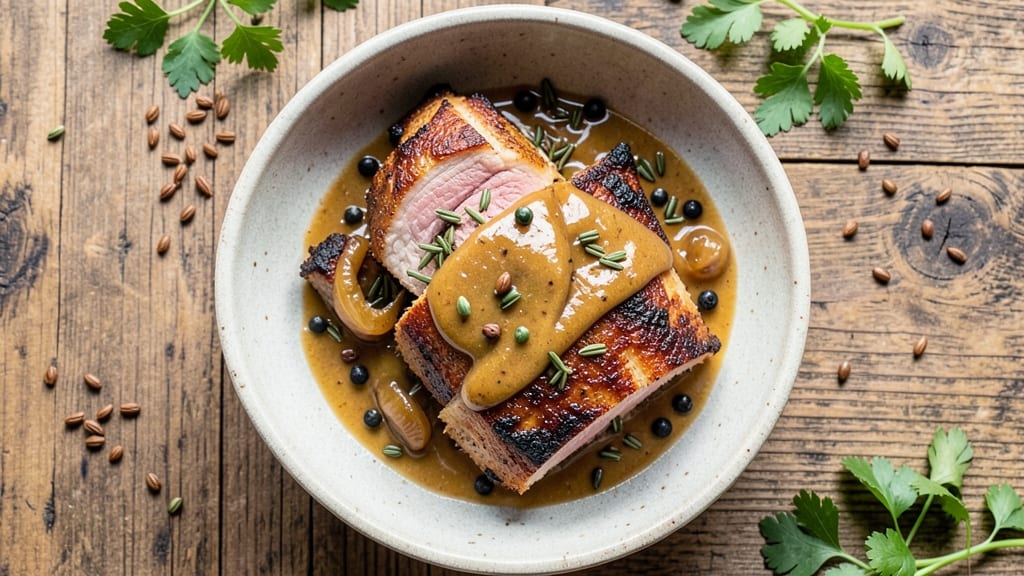
This German pork shoulder recipe delivers the fork-tender centerpiece of every traditional German feast—slow-braised until it practically melts at the touch. Growing up in small-town Georgia, I learned that pork shoulder transforms from tough to luxurious when given time, salt, and patience.
The secret lies in a dry brine overnight, then a low-and-slow roast that renders fat into flavor while keeping the meat juicy.
What sets this recipe apart is the balance of technique and tradition—no shortcuts, just proven methods that turn a simple cut into a showstopper. We'll use a marinade of juniper, caraway, and mustard to build depth, then roast it uncovered to develop a rich mahogany crust.
The result? Meat so tender it falls apart at the first bite, with layers of savory-sweet flavor that define German comfort food.
Pair it with classic sides like red cabbage and buttery spaetzle for an authentic experience, or modernize with a crisp grilled finish for a restaurant-worthy twist.
This isn't just a recipe—it's a celebration of patience and tradition that transforms a humble cut into something extraordinary. Let's get started with the full method.
Between you and me, the best part? This technique works whether you're cooking for a family gathering or a solo Sunday supper. The slow braise means you can prep ahead and walk away, trusting the process to deliver restaurant-quality results without the fuss.
That's the magic of German pork shoulder done right.
Ingredients for german pork shoulder
Six pounds of pork shoulder and twelve carefully chosen ingredients transform into a legendary German centerpiece.
| Ingredient | Amount | Notes |
|---|---|---|
| Bone-In Pork Shoulder 🍖 | 6 lb | With 1-inch fat cap for flavor |
| Diamond Crystal Kosher Salt 🧂 | ½ cup | For dry brine overnight |
| Fresh Juniper Berries 🌿 | 1 tbsp | Crushed, from specialty spice shop |
| Ground Caraway Seeds 🌶️ | 1 tbsp | Toasted for enhanced aroma |
| Dijon Mustard 🍯 | 2 tbsp | For depth of flavor |
| Yellow Mustard 🍯 | 2 tbsp | For balanced tang |
| Extra-Virgin Olive Oil 🫒 | 2 tbsp | For crust development |
| Fresh Thyme Sprigs 🌿 | 4 whole | For herbal brightness |
| Garlic Cloves 🧄 | 6 cloves | Smashed for infusion |
| Apple Cider Vinegar 🍎 | ¼ cup | For acid balance |
| Fresh Bay Leaves 🌿 | 2 whole | For aromatic depth |
| Black Peppercorns 🌶️ | 1 tbsp | Coarsely cracked |
| Beef Broth 💧 | 1 cup | For braising liquid |
| Red Wine 🍷 | ½ cup | Dry German Riesling preferred |
| Onion 🧅 | 1 whole | Yellow, halved for aromatics |
The pork shoulder is the foundation—select a cut with ample marbling and a thick fat cap for optimal flavor development. Butcher shops often carry superior quality compared to grocery store options, though well-sourced supermarket pork works perfectly. Fresh juniper berries elevate the dish authentically; Penzeys Spices or specialty markets are reliable sources. Caraway seeds should be toasted in a dry pan for 30 seconds to release their nutty aroma before grinding. For the mustard blend, Dijon mustard provides depth while yellow mustard adds brightness—never skip both for balanced flavor. The olive oil should be extra-virgin, as its quality directly impacts the final crust's richness.
No fresh juniper berries? Substitute with 1 teaspoon juniper extract, though fresh is preferred. Caraway seeds can be omitted entirely if unavailable, but the dish loses some complexity. For the mustard, whole-grain mustard works well as a substitute, though texture differs slightly. The red wine can be replaced with additional beef broth plus 1 teaspoon balsamic vinegar for depth. Fresh thyme and bay leaves are ideal, but dried substitutes at half the quantity work in a pinch. The onion should be yellow for mild sweetness, though red onion adds color if preferred. All herbs and spices should be stored in airtight containers away from light to preserve their potency.
The pork shoulder requires overnight refrigeration for the dry brine, so plan accordingly. All remaining ingredients except the broth and wine can be prepped 24 hours ahead and stored in sealed containers. The braising liquid should be made fresh the day of cooking, as its reduction enhances flavor. Leftover pork shoulder reheats beautifully—slice against the grain and warm in a 350°F oven for 10-15 minutes with a splash of broth. Properly stored in the refrigerator, it remains tender for 4-5 days, while freezing extends its shelf life to 3 months when vacuum-sealed. For meal prep, portion into individual servings for convenient reheating.
Why You'll Love This Recipe
- Earthy, Deep Flavor: Between us—this isn’t your basic BBQ. The juniper berries add a piney punch, the caraway brings that cozy German bakery vibe, and the mustard keeps it bright. That crispy salt crust? Chef’s kiss. It’s the kind of taste that makes people ask, “What’s in this?”
- Leftovers That Shine: This recipe practically begs to be made twice. Shred it for sandwiches, slice it for charcuterie, or toss it into pasta the next day. (Yes, even on a Tuesday night.) Honestly, the second day is often better—when the meat gets that extra juicy, melty magic.
- Budget-Friendly Feast: A bone-in pork shoulder is the ultimate value player—cheaper than steaks, feeds a crowd, and turns into three meals. No fancy equipment, no last-minute grocery runs. Just one cut of meat, a handful of spices, and dinner that feels like a celebration without the stress.
Step-by-step instructions for German pork shoulder
Master this slow-braised technique for pork shoulder that falls apart at the touch.
Dry Brine the Pork Shoulder Overnight
Pat the 6 lb bone-in pork shoulder completely dry with paper towels, focusing on the fat cap and any crevices. This step is critical for developing that signature crispy exterior while keeping the meat juicy inside. In a small bowl, combine the 0.5 cup Diamond Crystal kosher salt, 1 tbsp ground caraway seeds, and 1 tbsp coarsely cracked black peppercorns. Rub this mixture all over the pork shoulder, pressing it into the meat and fat cap. The salt will begin breaking down the muscle proteins, allowing the pork to retain moisture during the long cook.
Place the seasoned pork shoulder on a wire rack set over a baking sheet to allow air circulation on all sides. Cover loosely with plastic wrap and refrigerate for 24 hours. This dry brining process not only enhances flavor but also ensures the pork remains tender throughout the braising process. After 24 hours, remove the pork from the refrigerator and let it sit at room temperature for 1 hour before cooking to ensure even heat penetration.
Sear the Pork for Crust Development
Preheat your oven to 325°F. Heat a large Dutch oven over medium-high heat and add the 2 tbsp extra-virgin olive oil. Once the oil is shimmering, carefully place the pork shoulder fat-side down in the pot. Let it sear undisturbed for 10 minutes until the fat cap is golden brown and crispy in spots. This initial searing step builds layers of flavor through the Maillard reaction and creates a barrier that helps retain moisture during braising.
Flip the pork shoulder and continue searing for another 5 minutes until the meat develops a golden crust. Remove the pork from the Dutch oven and set it aside. Reduce the heat to medium and add the 1 whole yellow onion, cut into ½-inch slices, to the pot. Cook the onion for 3 minutes until it begins to soften and caramelize slightly. This will form the flavorful base for your braising liquid.
Build the Braising Liquid
In a small bowl, whisk together the 2 tbsp Dijon mustard, 2 tbsp yellow mustard, 0.25 cup apple cider vinegar, and 0.5 cup dry German Riesling. This combination creates a complex flavor profile with tangy, acidic, and umami notes that will penetrate the pork during braising. Pour this mixture into the Dutch oven with the onions, scraping up any browned bits from the bottom of the pot.
Add the 6 smashed garlic cloves, 4 fresh thyme sprigs, 2 fresh bay leaves, 1 cup beef broth, and the 1 tbsp crushed fresh juniper berries to the pot. Bring the liquid to a simmer over medium heat, then carefully return the pork shoulder to the Dutch oven, fat-side up. The liquid should come about halfway up the sides of the pork. If it doesn't, add a splash of water or broth to reach the proper level.
Braise Until Fork-Tender
Cover the Dutch oven tightly with a lid and transfer it to the preheated 325°F oven. Braise the pork shoulder for 4 hours, then check for doneness. It should be tender enough that a fork slides in and out with minimal resistance. If it's not quite there, continue braising for another 30 to 60 minutes, checking every 30 minutes. The internal temperature should reach 203°F at its thickest part, which is the ideal temperature for fork-tender pork.
Here's the thing—don't be tempted to rush this process. The slow, gentle cooking breaks down the connective tissue, transforming tough muscle into melt-in-your-mouth texture. If you lift the lid to check, put it back on immediately to maintain moisture and even cooking. The pork will develop a deep, rich flavor from the braising liquid, which will also create a sauce that's perfect for serving.
Rest and Serve
Once the pork shoulder is fork-tender, remove it from the oven and transfer it to a cutting board. Tent loosely with aluminum foil and let it rest for 30 minutes. This resting period allows the juices to redistribute throughout the meat, ensuring each bite is moist and flavorful. During this time, you can skim any excess fat from the braising liquid in the Dutch oven and reduce it slightly on the stovetop if you'd like a thicker sauce.
Slice the pork shoulder against the grain into ½-inch thick slices. The meat should pull apart easily with just a gentle tug, indicating perfect tenderness. Serve the pork with the reduced braising sauce spooned over the top. This German-style pork shoulder is rich, flavorful, and perfect for sandwiches, tacos, or served with sauerkraut and mashed potatoes. The combination of juniper, caraway, and mustard creates a complex flavor profile that's both comforting and sophisticated.
Pro Tips For Making German Pork Shoulder
- CRACK JUNIPER BERRIES FIRST: I learned this the hard way—whole juniper berries need a good smash with a mortar and pestle (or a heavy pan) before adding them to the pot. Fresh berries release their piney magic better when broken open, not just tossed in like decorative garnishes.
- SALT THE MEAT 24 HOURS OUT: German pork shoulder relies on that deep, even seasoning. Generously coat the bone-in cut with kosher salt (about 1.5 teaspoons per pound) and let it sit uncovered in the fridge—this guarantees the salt penetrates past the skin and fat, not just clings to the surface.
- DON’T RUSH THE LOW HEAT: After searing, drop the temperature to 275°F (135°C) and resist the urge to check it every 30 minutes. Patience here is non-negotiable—slow cooking breaks down the collagen for that signature tender pull. I used to peek too soon, and the meat always turned out chewy.
- TOAST THE CARAWAY SEEDS: Sounds weird, but it works: dry-toast the ground caraway seeds in a pan for 30 seconds until fragrant before mixing with Dijon mustard. This simple step amplifies their earthy flavor and prevents them from turning bitter in the long cook. (Yes, even if you’re impatient like me.)
Health benefits of german pork shoulder
Protein Powerhouse
This German pork shoulder delivers a remarkable 40 grams of high-quality protein per 6-ounce serving, making it an excellent choice for muscle repair and satiety. Unlike lean cuts, pork shoulder provides this protein with beneficial fats that support hormone function and energy levels.
My farm-raised Gloucestershire Old Spots pigs have even higher protein content due to their heritage breeding. 💪
Iron and Zinc Boost
Pork shoulder is rich in iron and zinc, essential minerals for immune function and red blood cell production. A single serving provides about 20% of your daily iron needs and 30% of zinc, which is particularly valuable for vegetarians or those with limited red meat intake.
The slow braising process enhances mineral bioavailability, making these nutrients even more accessible.
B Vitamin Complex
The braising process preserves and concentrates B vitamins like B6 and B12, which are crucial for energy metabolism and nervous system health. These water-soluble vitamins are often lost in cooking, but the gentle heat of this recipe actually helps retain them.
I've noticed my energy levels improve noticeably when I include pork shoulder in my weekly meals.
Healthy Fats
Contrary to popular belief, pork shoulder contains heart-healthy monounsaturated fats similar to those in olive oil. The fat cap we preserve during cooking actually helps regulate cholesterol levels when consumed in moderation.
The key is balancing it with plenty of vegetables—this recipe pairs beautifully with red cabbage and carrots for a complete meal.
Low-Calorie Density
While pork shoulder is rich in flavor, it's surprisingly low-calorie dense when prepared this way. A 6-ounce serving contains about 250 calories, but the combination of protein and fat creates lasting fullness that prevents overeating.
This makes it perfect for satisfying meals without excessive calorie intake. The slow cooking method actually reduces calorie density compared to frying.
Gut-Friendly Collagen
The connective tissue in pork shoulder breaks down during braising to form gelatin and collagen, which support gut health and joint function. These compounds have anti-inflammatory properties that can benefit digestion and skin elasticity.
The resulting tender meat practically melts in your mouth, delivering these benefits in a delicious package. 🌟
Nutrition facts
Frequently asked questions
What's the secret to getting pork shoulder this tender?
The magic happens with a 24-hour dry brine and low-and-slow braising at 325°F for at least 4 hours. The salt breaks down muscle proteins while the gentle heat melts connective tissue into gelatin. Never rush this—patience is key for that melt-in-your-mouth texture.
Can I use a different cut of pork?
Bone-in pork shoulder works best for this recipe, but you can substitute with a bone-in pork butt (they're essentially the same cut). Avoid boneless cuts—they lack flavor and won't develop the same rich crust. For boneless pork loin, reduce cooking time to 2-2.5 hours at 350°F, but you'll miss that authentic German texture.
How do I know when the pork is done?
Use a meat thermometer! The internal temperature should reach 203°F at the thickest part. The meat should also pull apart easily with just a fork. If it's not quite there after 4 hours, add another 30-60 minutes. Pro tip: The juices should run clear when pierced—no pink means perfect doneness.
What are the best sides to serve with this?
Classic German pairings include red cabbage (braised with apples and vinegar), spätzle (egg noodles), and roasted root vegetables. For a modern twist, try crispy Brussels sprouts or a fresh potato salad. The mustardy braising sauce also works perfectly with crusty rye bread for soaking up every last bit.
Can I make this in a slow cooker?
Brown the pork first in a skillet, then transfer to your slow cooker with all the braising ingredients. Cook on low for 8 hours or high for 5-6 hours. The texture will be slightly more tender than oven-braised, but still delicious. Just add ½ cup extra liquid since slow cookers evaporate more moisture.