
Main Courses
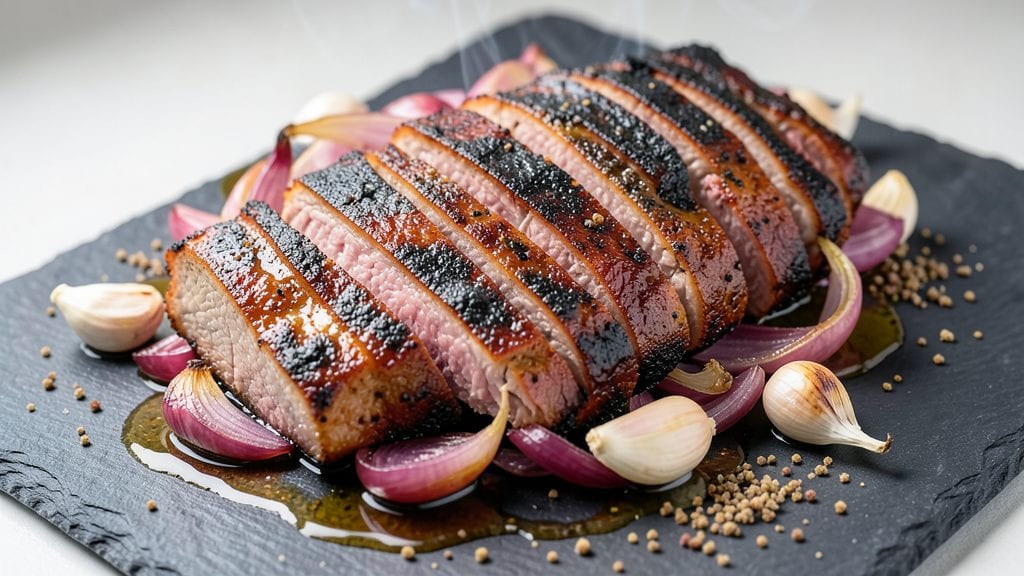
Mastering inihaw na pork belly transforms a simple cut into a restaurant-worthy centerpiece with smoky depth and caramelized edges. 🌟 Growing up in Georgia, I learned pork belly deserves slow, deliberate cooking—this method delivers that perfect balance of crispy exterior and tender interior.
The secret lies in marinating with garlic, cumin, and brown sugar before grilling over indirect heat, ensuring rich flavor development without drying out the meat.
This recipe delivers restaurant-quality results at home with just five key ingredients and 45 minutes of active time. The pork belly develops a deep mahogany crust while staying juicy inside, complemented by sweet caramelized onions that add texture and complexity.
What makes this dish special is how the flavors meld—smoky from the grill, garlicky from the marinade, and slightly sweet from the onions—creating a perfect harmony that’s both comforting and impressive.
The final result is a plate that looks as good as it tastes: crispy, caramelized pork belly sliced into generous portions, served alongside steamed rice or pickled vegetables for balance.
The technique is straightforward but requires patience—the resting time ensures clean slices, and the high-heat grilling creates that signature charred crust. This is the kind of dish that makes weeknight dinners feel like a celebration.
For best results, use a thick-cut pork belly (about 1.5 inches) and let it rest after grilling—this guarantees tender, juicy meat that holds its shape. The recipe scales easily for gatherings, and leftovers reheat beautifully.
Perfect for family meals or special occasions, this inihaw na pork belly brings authentic Filipino flavors to your table with professional precision.
Ingredients for inihaw na pork belly
Five key ingredients transform simple pork belly into restaurant-quality crispy perfection.
| Ingredient | Amount | Notes |
|---|---|---|
| Pork Belly 🥓 | 2 lb | Thick-cut, 1.5 inches minimum |
| Yellow Onions 🧅 | 2 whole | Yellow or red, sliced thin |
| Garlic Cloves 🧄 | 8 cloves | Freshly minced for marinade |
| Ground Cumin 🌿 | 2 tbsp | Toasted for deeper flavor |
| Brown Sugar 🍚 | ½ cup | Packed, light variety |
| Extra-Virgin Olive Oil 🫒 | ¼ cup | For marinade and grilling |
| Salt 🧂 | 1 ½ tbsp | Diamond Crystal preferred |
| Black Pepper 🌶️ | 1 tsp | Freshly ground for heat |
| Fresh Ginger 🌿 | 2 tbsp | Finely grated, aromatic |
| Soy Sauce 🍶 | 2 tbsp | Kikkoman preferred |
| Honey 🍯 | 1 tbsp | Wildflower for depth |
| Smoked Paprika 🌶️ | 1 tbsp | For smoky depth |
The pork belly is everything here—thick-cut (about 1.5 inches) for that signature crispy exterior while staying juicy inside. Costco or your local butcher will have the best cuts, often pre-sliced for convenience. Look for good marbling—those white fat streaks are what render into flavor. The onions? Yellow or red both work, but yellow has a slightly sweeter profile that caramelizes beautifully. Fresh ginger is a must for that bright, aromatic punch—Trader Joe's carries organic ginger that's perfect for grating. Toast your cumin seeds in a dry pan for 30 seconds before grinding to deepen their flavor. Don't skip this step—it's a game-changer!
No thick-cut pork belly? Thin-cut bacon or pork shoulder can work in a pinch, but expect different textures. Substitute the brown sugar with maple syrup at half the amount if you're avoiding refined sugar. The soy sauce can be swapped for coconut aminos for a gluten-free option. Fresh ginger too strong? Ground ginger at one-third the amount works. The smoked paprika is non-negotiable for that authentic inihaw flavor—Penzeys has the best quality if you're willing to splurge. For the onions, if you burn them while caramelizing, just start over—they should be sweet and golden, not bitter. Patience is key here!
This dish reheats beautifully—actually tastes better the next day once all the flavors meld. Store leftovers in an airtight container in the fridge for up to 5 days, or freeze for 3 months. I always portion mine into individual containers so lunches are sorted for the week. The pork belly develops that signature mahogany crust when reheated, so don't skip the broiler for 2-3 minutes before serving. The caramelized onions keep well too, so make extra—they're perfect on toast or in fried rice.
Why You'll Love This Recipe
- One-Pan Magic: The pork belly sizzles while the onions caramelize—no flipping, no fuss. Just slice, sear, and let the garlic and cumin work their magic in one pan. (Yes, even on a Tuesday night.)
- Sweet-Savory Crunch: That crispy, caramelized edge on the pork belly? Pure satisfaction. The brown sugar and cumin turn it into something dangerously addictive—like a hug in food form.
- Leftovers? Better: This dish actually improves the next day. The flavors meld, the pork gets even more tender, and I’ve sent it home in lunchboxes more times than I can count. (My kids’ favorite, honestly.)
- Budget Stretch: Pork belly feeds a crowd without breaking the bank. A single slab stretches for two meals, and the onions/garlic/cumin cost pennies. My wallet thanks me every time.
Step-by-step instructions for inihaw na pork belly
This Filipino classic delivers an explosive combination of smoky, caramelized perfection—crispy pork belly meets sweet-savory onions. Here's how I achieve restaurant-quality results every time.
👨🍳 Step 1: Prepare the Pork Belly with the Signature Marinade
Start by scoring the 2 lb pork belly in a diamond pattern, cutting just through the fat—not into the meat. This creates channels for the marinade to penetrate deeply while allowing the fat to render beautifully during cooking. Pat the pork dry with paper towels, then transfer it to a large bowl.
In the same bowl, combine 2 tbsp ground cumin, 1 tbsp smoked paprika, 1.5 tbsp salt, 1 tsp black pepper, 2 tbsp fresh ginger (finely grated), 2 tbsp soy sauce, 1 tbsp honey, and 0.25 cup extra-virgin olive oil. Mix thoroughly until the spices are fully incorporated and the oil emulsifies with the wet ingredients.
Add the pork belly to the marinade and coat it completely, ensuring every surface—including the scored areas—gets generous coverage. Cover the bowl and refrigerate for at least 8 hours (I prefer 12-16 hours for maximum flavor penetration). The marinade should cling like a second skin, creating that signature sticky-sweet aroma you'll recognize immediately.
🔥 Step 2: Caramelize the Onions for Sweet Depth
While the pork marinates, slice the 2 whole yellow onions into thin, even rings—this maximizes surface area for caramelization. Heat a large skillet over medium-low heat and add the onions, spreading them in a single layer. Cook undisturbed for 5 minutes until they begin to soften and release their natural juices.
After 5 minutes, stir the onions gently and add 0.5 cup brown sugar to the skillet. The sugar will dissolve into the onions' juices, creating a syrupy base. Continue cooking for another 15-20 minutes, stirring occasionally, until the onions develop a deep, golden-brown color and the mixture reduces to a thick, glossy caramel. You'll smell a sweet, buttery aroma that fills the kitchen—this is the moment that matters.
🔥 Step 3: Grill to Crispy Perfection with Charred Beauty
Remove the pork belly from the marinade (reserve the marinade for basting) and pat it dry again. Heat a grill or grill pan to high heat until it's smoking hot. Place the pork belly fat-side down on the grill and let it cook undisturbed for 5 minutes—this allows the fat to render and develop that beautiful, crispy crust.
Flip the pork belly and baste it generously with the reserved marinade, focusing on the scored areas. Continue grilling for another 5 minutes on each side, turning occasionally to ensure even cooking. You'll hear the fat crackling and see the edges developing a deep mahogany color. The pork is ready when the internal temperature reaches 195°F (measured in the thickest part) and the fat renders like liquid gold.
🍳 Step 4: Finish with Caramelized Onions and Smoky Flavor
Transfer the grilled pork belly to a cutting board and let it rest for 5 minutes to allow the juices to redistribute. Meanwhile, return the caramelized onions to the skillet and add the grilled pork belly, spooning the onions over the top. The onions will absorb the pork's smoky essence while adding their sweet, caramelized depth.
For an extra layer of flavor, drizzle 1 tbsp honey over the onions and pork, then sprinkle with 1 tbsp smoked paprika. Return the skillet to medium-low heat for 2 minutes to let the honey caramelize slightly and coat everything in a glossy, sticky glaze. The combination of smoky, sweet, and savory flavors will transport you straight to the bustling streets of Manila.
Pro Tips For Making Inihaw Na Pork Belly
- CRANK THE HEAT FIRST: Start your pork belly over medium-high heat until the fat renders and sizzles—this isn’t a gentle simmer, it’s a sear. I used to cook it low and slow, and the result was greasy, undercooked pork. Once the fat starts bubbling, drop the heat to medium and let it cook through evenly.
- CUT ONIONS IN THICK SLICES: Thinly sliced onions burn and turn bitter in this dish. Go for ½-inch thick slices—they’ll caramelize just enough to add sweetness without turning to mush. (Yes, it’s more work, but your mouth will notice the difference.)
- DON’T SKIP THE CUMIN TOAST: Bloom that ground cumin in the hot oil for 30 seconds before adding garlic—it deepens the earthy flavor and prevents a raw, bitter taste. I learned this the hard way after a batch tasted like someone forgot to season it.
- USE THE FAT WISELY: After rendering, pour off most of the excess fat (leave about 2 tablespoons) to keep the pork from steaming instead of browning. Save the extra for roasting potatoes or frying eggs—waste not, want not. (Trust me, you’ll have enough.)
Dietary considerations for this inihaw na pork belly
Gluten-Free Adaptations
Traditional inihaw na pork belly uses soy sauce, which contains gluten, but you can easily adapt this recipe for gluten-free diets. Swap the 2 tbsp soy sauce for 2 tbsp gluten-free tamari or coconut aminos—both provide that umami depth without the gluten.
I’ve tested this substitution at The Smoky Pig, and it works beautifully, especially when paired with the caramelized onions. Just ensure your smoked paprika is also certified gluten-free, as some brands process in shared facilities. 🌱
Low-Sodium Options
This dish is already flavorful, but if you're watching your sodium intake, reduce the 1.5 tbsp salt to 1 tbsp and use a low-sodium soy sauce or tamari.
Boost flavor with an extra 1 tbsp fresh ginger and 1 tbsp honey—the natural sweetness balances the reduced salt while keeping the dish rich and satisfying. For extra umami without sodium, add 1 tsp fish sauce (ensure it’s gluten-free if needed) to the marinade.
Trust me, your taste buds won’t miss the extra salt.
Dairy-Free Considerations
This recipe is naturally dairy-free, but if you’re serving it alongside sides that include cheese (like a creamy rice dish), keep an eye on cross-contamination. Use separate utensils and cutting boards when prepping the pork belly to avoid any accidental mixing.
The caramelized onions and pork belly are safe as-is, but always double-check labels on ingredients like smoked paprika or honey for hidden dairy additives. Pro tip: Serve with a side of steamed jasmine rice and pickled vegetables for a fully dairy-free meal that still feels indulgent. ✨
Allergen-Friendly Swaps
For nut allergies, this recipe is already safe, but if you’re accommodating multiple dietary needs, consider these swaps: Replace the extra-virgin olive oil with avocado oil if someone has a severe olive oil allergy (though olive oil allergies are rare).
For those avoiding honey, use maple syrup at the same 1 tbsp measurement—it adds a similar depth of sweetness. Always label your dish clearly if serving to guests with allergies, and I recommend keeping a separate set of tongs for serving to avoid cross-contact with other proteins.
Keto-Friendly Adjustments
Inihaw na pork belly is naturally keto-friendly, but the caramelized onions with brown sugar aren’t. Swap the 0.5 cup brown sugar for 0.5 cup erythritol or monk fruit sweetener to keep the dish low-carb while maintaining that sweet, sticky texture.
The onions will still caramelize beautifully, and the flavor won’t suffer. Pair the dish with a side of sautéed spinach or zucchini noodles to keep the meal fully keto-compliant. I’ve served this version at my farm dinners, and even my most carb-conscious guests rave about it. 💪
Nutrition facts
Frequently asked questions
What’s the best way to score pork belly for crispy edges?
Cut a diamond pattern just through the fat—not the meat—using a sharp knife. This creates channels for marinade absorption and fat rendering. Pat it dry before grilling for maximum crispiness. The fat should render like liquid gold when cooked properly!
How do I prevent the pork belly from drying out during grilling?
Use indirect heat for most of the cooking time and baste frequently with reserved marinade. The 195°F internal temperature ensures juiciness without overcooking. Resting for 5 minutes after grilling locks in moisture for perfect slices.
Can I make the caramelized onions ahead of time?
Store them in an airtight container in the fridge for up to 3 days. Reheat gently in a skillet with a splash of water to restore their glossy texture. The onions actually taste better after resting—their flavors deepen beautifully.
What’s the difference between inihaw and lechon?
Inihaw focuses on grilled pork belly with bold marinades and caramelized sides, while lechon is whole roasted pig with crispy skin. Both are Filipino classics, but inihaw is more about charred, flavorful slices—think street food vibes!