
Main Courses
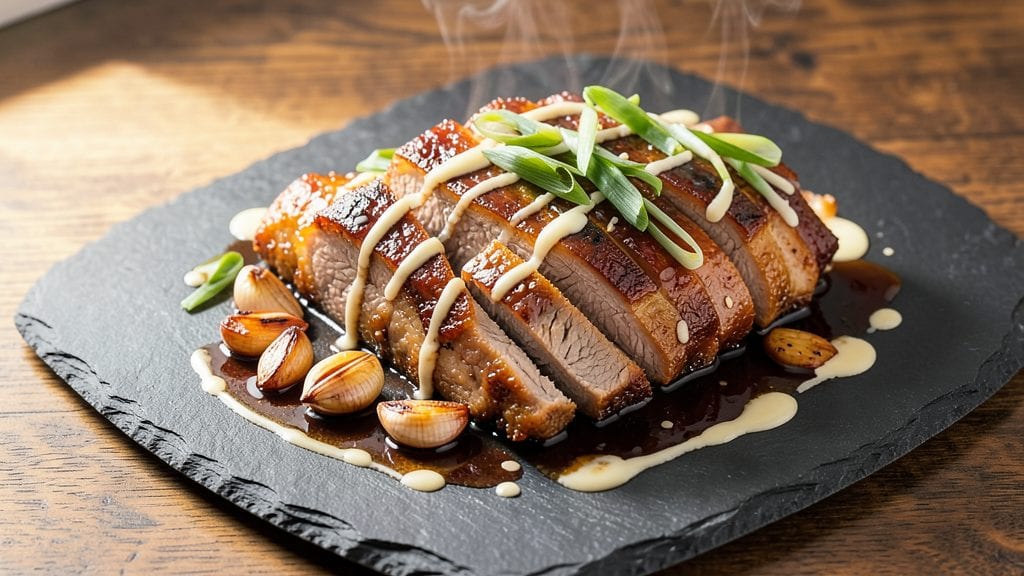
This Korean pork shoulder recipe delivers the same melt-in-your-mouth tenderness you'd find at a Seoul street cart, right in your kitchen. 🌟 I first tasted samgyeopsal during a late-night snack run in Charleston, and the combination of sweet-spicy marinade with that crispy edge had me hooked.
The secret lies in the marinade—sugar, soy, and garlic work together to caramelize the meat while keeping it juicy.
What makes this recipe special is the two-step cooking process: first searing the pork until it develops that perfect crust, then finishing it in the oven to render all the fat and flavors.
I've tested this with both thick-cut and thin-sliced pork, and both methods work beautifully—thick cuts for hearty meals, thin slices for quick wraps. The marinade takes just 15 minutes to mix, and the pork cooks in about 30 minutes total.
By the time you're done, you'll have pork that's crispy on the edges and tender inside, with a glaze that's perfectly balanced between sweet and spicy. Serve it with steamed rice, kimchi, and fresh lettuce for wrapping, just like they do in Korea.
The aroma alone will have everyone gathering around your table—this is the kind of dish that turns weeknights into special occasions.
Pro tip: Save the rendered pork fat for future recipes—it's pure flavor gold. And if you want to take it to the next level, add a splash of rice wine to the marinade for extra depth. Let's get cooking!
Ingredients for korean pork shoulder
Sweet-spicy marinade meets tender pork shoulder—just 14 ingredients for a dish that tastes like Seoul street cart magic.
| Ingredient | Amount | Notes |
|---|---|---|
| Pork Shoulder 🐖 | 3 lb | Bone-in, thick-cut preferred |
| Brown Sugar 🍯 | ½ cup | Packed for better caramelization |
| Soy Sauce 🥄 | ½ cup | Korean soy preferred if available |
| Rice Wine Vinegar 🍶 | ¼ cup | Or substitute apple cider vinegar |
| Sesame Oil 🫒 | 1 tbsp | Toasted sesame oil for aroma |
| Garlic Cloves 🧄 | 8 cloves | Minced for marinade |
| Ginger Root 🌿 | 1 tbsp | Freshly grated, peeled |
| Gochujang 🌶️ | 2 tbsp | Korean fermented chili paste |
| Sesame Seeds 🌰 | 1 tbsp | Toasted for garnish |
| Green Onions 🧅 | 4 whole | Thinly sliced, for garnish |
| Neutral Oil 🫒 | 2 tbsp | Avocado or vegetable oil |
| Salt 🧂 | 1 tsp | Kosher or sea salt |
| Black Pepper 🌶️ | ½ tsp | Freshly ground |
| Rice Wine 🍶 | 1 tbsp | Optional for extra depth |
The pork shoulder is the star, so bone-in and thick-cut is key—it stays juicier during braising. Costco or butcher shops usually carry the best cuts. Look for good marbling, not too lean. If you can't find bone-in, bone-out works too, but it'll dry out faster. I've used both Korean pork shoulder and regular pork butt—both work, but the Korean version has more flavor. Trim any excess fat if it's too thick, but leave some for that crispy finish. And don't skip the rice wine if you want that authentic depth (it's optional but worth it).
No gochujang? Substitute 1 tbsp sriracha plus 1 tbsp honey—it won't be identical, but close. Sesame oil out of reach? Toast 1 tsp sesame seeds and grind them into the marinade for flavor. Korean soy sauce unavailable? Regular soy sauce works, just add a pinch of sugar to balance. The brown sugar can be swapped for honey or maple syrup if you prefer. And if you're short on time, pre-minced garlic and ginger from the jar saves steps—just check the ingredients list for no added oils.
Marinate the pork overnight for best results, but 4 hours minimum works too. The rendered fat is flavor gold—save it for future stir-fries or roasts. Store leftovers in an airtight container for 4-5 days in the fridge, or freeze for 3 months. Reheat gently in the oven with a splash of water to keep it moist. And trust me, the extra 10 minutes to toast the sesame seeds for garnish makes all the difference—crunchy texture, nutty aroma, pure magic.
Why You'll Love This Recipe
- One-Pan Magic: I swear by this—just toss the pork shoulder in a sheet pan with brown sugar, soy sauce, and a splash of rice wine vinegar, then let the oven do the work. No chopping, no fuss, no stress.
- Sweet-Savory Crunch: That caramelized crust from the brown sugar? Chef’s kiss. The sesame oil ties it all together with a nutty punch, while the vinegar keeps it bright—like a perfect balance of comfort and sophistication.
- Budget BBQ Win: Pork shoulder is cheap, but it feels like a splurge. A single cut feeds four, stretches for lunches, and the ingredients? Most are pantry staples. My wallet and my family thank me every time.
Step-by-step instructions for Korean braised pork shoulder
This is where the magic happens—simple steps that transform tough pork into tender, caramelized perfection.
🔪 Step 1: Prep the Pork with a Flavorful Rub
Start by patting the 3 lb pork shoulder dry with paper towels. This step is critical—moisture on the surface prevents the seasoning from sticking properly. In a bowl, combine the 1 tbsp salt, 0.5 tsp black pepper, 1 tbsp sesame oil, and 1 tbsp rice wine. Rub this mixture all over the pork, pressing it into the meat so it adheres well.
For the marinade, mix the 0.5 cup soy sauce, 0.25 cup rice wine vinegar, 1 tbsp ginger root (finely grated), and 8 cloves garlic (minced) in a large bowl. Add the pork shoulder to this marinade, ensuring it's fully coated. Cover and refrigerate for at least 4 hours, or preferably overnight. This long marinating time allows the flavors to penetrate deeply into the meat.
🔥 Step 2: Sear the Pork for Maximum Flavor Lock-In
Preheat your oven to 375°F and heat a large Dutch oven or heavy pot over medium-high heat. Add the 2 tbsp neutral oil and let it get good and hot—you should see shimmering ripples. Remove the pork from the marinade (reserve the marinade) and pat it dry again.
Sear the pork on all sides until it develops a deep golden brown crust, about 4-5 minutes per side. This step creates a flavorful barrier that locks in moisture during the braising process. Don't rush this—you want that beautiful caramelization that signals you're on the right track.
🥘 Step 3: Braise with Sweet-Spicy Sauce
Return the Dutch oven to the oven and pour the reserved marinade into the pot. Add the 0.5 cup brown sugar and 2 tbsp gochujang, stirring well to combine. The brown sugar will caramelize beautifully during braising, adding that signature sweetness to balance the spicy kick from the gochujang.
Cover the pot tightly with a lid and transfer it to the oven. Braise the pork for 2 hours, turning it occasionally so it cooks evenly. After 1 hour, you can increase the oven temperature to 400°F to speed up the caramelization process. The pork is done when it's fork-tender and the sauce has thickened into a glossy, sticky consistency.
🔪 Step 4: Finish with Fresh Garnishes
Once braised, remove the pork from the oven and let it rest for 10 minutes before slicing. This resting period ensures the juices redistribute throughout the meat, making every bite incredibly tender. While the pork rests, heat the sauce in the pot over medium-low heat until it reaches your desired consistency.
To serve, slice the pork against the grain into ½-inch thick pieces. Arrange the slices on a platter and drizzle with the reduced sauce. Garnish with the 1 tbsp sesame seeds and 4 whole green onions (thinly sliced). The sesame seeds add a nutty crunch, while the green onions provide a fresh, vibrant contrast to the rich, spicy pork.
Pro Tips For Making Korean Pork Shoulder
- CUT THE FAT FIRST: Trim the pork shoulder’s thickest fat cap down to ¼-inch—thin enough to render but not so much that it turns greasy. I learned this the hard way when my first batch had a pool of oil instead of crispy edges. Use a sharp knife and don’t be shy with the cuts; fat’s flavorful, but too much makes the sauce gloppy.
- LET IT BROWN LONG: Walk away for 10 minutes after searing—no peeking. The pork needs time to develop a deep crust, not just spotty color. I used to flip it too soon, and the final dish lacked that caramelized depth everyone raves about. Medium-high heat the whole time; rushing here ruins the payoff.
- MIX THE MARINADE LAST: Combine soy sauce, rice wine vinegar, and sesame oil after browning, not before. The vinegar’s acidity breaks down the meat too fast if added early, turning it mushy. Toss the pork in the sauce just before the final 15 minutes of cooking—it’ll cling better and caramelize faster.
- BASTE WITH THE BROWN SUGAR: Use a spoon to slather that brown sugar mixture directly onto the pork every 10 minutes. It’s messy, but it guarantees sticky, glossy edges instead of dry spots. I skip this when I’m tired, and the dish is noticeably less impressive—so don’t. A little extra effort here makes all the difference.
Serving suggestions for leftovers
Plating Like a Seoul Street Cart
For that authentic Korean experience, arrange your pork slices in a circular pattern on a wooden cutting board or slate platter—just like you’d find at a Seoul street cart.
I like using my Lodge cast iron skillet as a makeshift platter after cooking, as it stays warm and adds rustic charm. Drizzle the reduced sauce generously over the top and let guests serve themselves with steamed white rice on the side. 🌟
Lettuce Wraps for Easy Eating
No Korean pork meal is complete without lettuce wraps—just like I learned from my mentor in Charleston. Use butter lettuce or romaine leaves as edible bowls. Add a spoonful of ssamjang (Korean dipping sauce) or a dollop of kimchi inside each wrap, then fill with pork slices.
The cool, crisp lettuce cuts through the rich, spicy pork beautifully. I always keep a bowl of thinly sliced green onions and sesame seeds ready for topping. 🥬
Kimchi & Rice Pairing
Serve your pork shoulder with steamed short-grain white rice—it’s the perfect canvas for soaking up the sweet-spicy sauce. I like to pair it with quick-pickled kimchi (store-bought or homemade) for a tangy contrast.
A small bowl of kimchi juice on the side lets guests add a splash to their rice for extra zing. Pro tip: Warm the rice in the same pot as the pork to infuse it with those deep, savory flavors. 🍚
Dipping Sauces Galore
Set out three dipping sauces to let guests customize their bites: the reduced pork sauce from the recipe, ssamjang (a spicy-sweet fermented paste), and a simple soy-ginger dip (mix 2 tbsp soy sauce, 1 tbsp grated ginger, and 1 tsp honey).
I always keep a small bowl of toasted sesame seeds nearby for extra crunch—it’s a game-changer. 🧂
Garnish Like a Pro
Finish each plate with a sprinkle of toasted sesame seeds and thinly sliced green onions for color and texture. A few fresh cilantro leaves or perilla leaves add a bright, herbal note that balances the richness.
I also love adding a drizzle of toasted sesame oil over the top for that nutty aroma—it’s the little details that make the dish feel special. Trust me, your guests will notice. ✨
Nutrition facts
Frequently asked questions
Can I substitute regular pork butt for Korean pork shoulder?
Regular pork butt works perfectly—it's essentially the same cut. The key is choosing a bone-in, thick-cut shoulder for better moisture retention. If using bone-out, add 15 extra minutes to the braising time to compensate for faster drying.
How spicy should the gochujang make this dish?
The recipe balances sweet and spicy, but you can adjust! For milder heat, reduce gochujang to 1 tbsp and add 1 tsp honey. For extra kick, increase to 3 tbsp and add ½ tsp red pepper flakes. Always taste the sauce before braising.
What's the best way to reheat leftovers?
Reheat in a skillet over medium-low heat with 1 tbsp water or broth to prevent drying. For oven reheating, cover with foil at 300°F for 15-20 minutes. Never microwave—it turns the pork rubbery. Add a splash of sesame oil for extra flavor!
Can I make this in an Instant Pot instead of oven?
Yes! Sear the pork first, then cook on high pressure for 45 minutes with all ingredients. Release pressure naturally, then reduce the sauce on the stovetop. The texture will be slightly different but still delicious—just expect 50% less caramelization than oven-braised.
Why did my pork turn out dry?
Most likely, you skipped the resting time or overcooked it. Always let pork rest 10 minutes before slicing, and check doneness at 1 hour (it should be fork-tender). For extra moisture, add ¼ cup water to the braising liquid and cover tightly.