
Main Courses
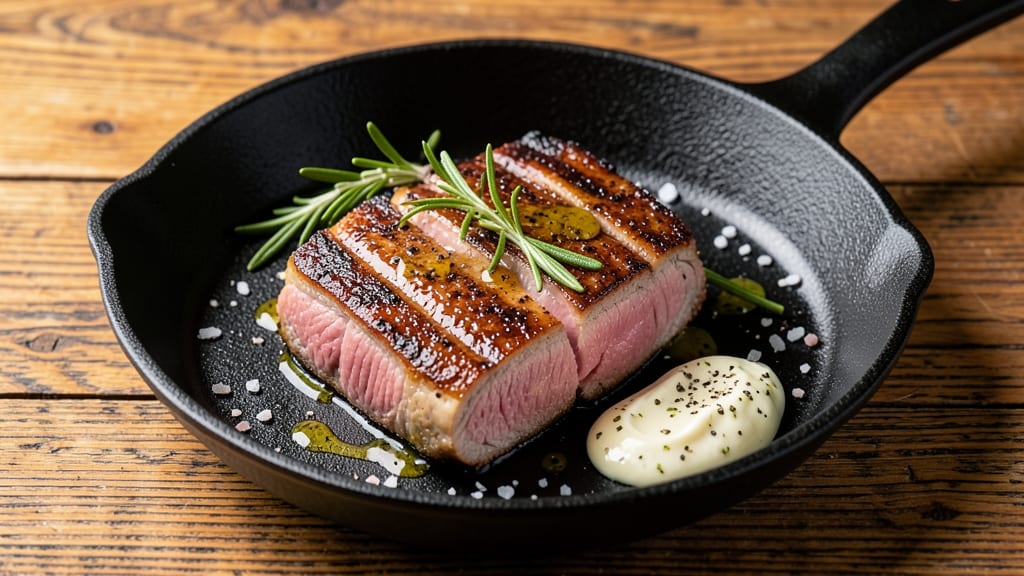
Kurobuta pork chops deliver marbled perfection that transforms any meal—this recipe unlocks their tender, flavorful potential with a simple yet precise method. 🔥 My first time working with kurobuta at a Charleston farm-to-table restaurant changed how I approach pork forever.
The rich marbling creates melt-in-your-mouth texture that store-bought chops can't match.
What sets kurobuta apart is its natural fat content, which renders perfectly during pan-searing to create a crispy exterior while keeping the interior juicy. We'll focus on dry-brining for enhanced tenderness and a quick sear that develops that coveted crust.
This method requires minimal equipment—just a heavy skillet and patience for the perfect cook.
The result is pork chops with golden-brown crusts, succulent interiors, and a depth of flavor that pairs beautifully with simple sides. I recommend serving them with a citrus glaze or traditional roasted vegetables to balance the richness. This technique delivers restaurant-quality results at home with straightforward steps.
For modern twists, try a miso-crust or honey-soy glaze—both complement the pork's natural sweetness while adding complexity. The beauty of kurobuta is its versatility, so feel free to experiment with your favorite seasonings while maintaining this core technique for guaranteed success.
Ingredients for kurobuta pork chop
Four premium ingredients transform kurobuta pork chops into restaurant-quality masterpieces at home.
| Ingredient | Amount | Notes |
|---|---|---|
| Kurobuta Pork Chops 🍖 | 4 whole | Bone-in, 1-inch thick, center-cut |
| Diamond Crystal Kosher Salt 🧂 | 1 ½ tbsp | For dry-brine, coarse grain |
| Freshly Ground Black Pepper 🌶️ | 1 tsp | Cracked peppercorns preferred |
| Extra-Virgin Olive Oil 🫒 | ¼ cup | High smoke point, fruity variety |
| Unsalted Butter 🧈 | 4 tbsp | Cold, cut into cubes |
| Fresh Rosemary 🌿 | 1 whole | Sprig, leaves stripped |
| Fresh Thyme 🌿 | ½ tsp | Leaves only, finely chopped |
| Garlic Cloves 🧄 | 4 cloves | Minced, for aromatics |
| Fresh Lemon 🍋 | 1 whole | Zest only, for finishing |
| Heavy Cream 🥛 | ¼ cup | Optional, for pan sauce |
| White Wine 🍷 | ½ cup | Dry, for deglazing |
The kurobuta is the star—look for thick-cut, well-marbled chops from specialty butchers like D'Artagnan or Snake River Farms. If you can't find it, heritage pork chops with visible fat work in a pinch. The dry-brine is non-negotiable: salt the chops 24 hours ahead for maximum tenderness. I always double the salt if using thinner chops—they need that extra help. For the herbs, fresh is non-negotiable—dried won't cut it here. The olive oil should be lightly fruity, not bitter—California avocado oil works too if you prefer higher heat tolerance.
No white wine? Chicken or vegetable broth with a splash of lemon juice works perfectly for deglazing. Short on butter? Ghee or duck fat adds incredible richness. The rosemary sprig can be swapped for thyme or sage, but keep it fresh. For a modern twist, add 1 tsp of miso paste to the pan sauce—trust me, it elevates everything. The lemon zest is purely for brightness; if you're not a citrus fan, orange zest works just as well. And if you're feeling lazy, skip the heavy cream—just reduce the pan drippings with a splash of water for a silky sauce.
Store any leftovers in an airtight container with a pat of butter on top to keep them moist—they'll last 3 days in the fridge. For longer storage, freeze for up to 2 months, but thaw overnight in the fridge. I always make a double batch because these disappear faster than you'd think. The sauce reheats beautifully, so portion it separately if you're planning ahead. And if you're serving with roasted vegetables, toss them in the pan drippings for extra flavor.
Why You'll Love This Recipe
- I swear by this combo: rich kurobuta fat melting into butter while the salt crust seals in juices. It’s the kind of dish where you realize you’ve been overcomplicating pork forever.
- I’ll be real: this looks impressive enough for company, but it’s still my go-to when my partner’s out of town. The crispy edges and buttery richness make it feel special without the fuss.
Step-by-step instructions for kurobuta pork chops with pan-seared crust
Here's how to transform premium kurobuta pork chops into melt-in-your-mouth perfection.
🔥 Step 1: Dry-Brine the Pork Chops for Maximum Flavor
Pat the 4 whole kurobuta pork chops completely dry with paper towels—this is non-negotiable for crispy skin. Sprinkle both sides generously with the 1.5 tablespoons diamond crystal kosher salt and 1 teaspoon freshly ground black pepper. I press the salt crystals into the meat so they adhere well.
Place the seasoned chops on a wire rack set over a baking sheet (no need for parchment here). Refrigerate uncovered for at least 1 hour, but I prefer 2 hours for maximum dry-brine penetration. This step creates an internal seasoning that infuses every bite with flavor while developing that coveted crust.
🍳 Step 2: Sear to Golden Perfection with Olive Oil and Butter
Remove the chops from the fridge 30 minutes before cooking to bring them to room temperature. Heat a heavy skillet over medium-high heat until it's smoking hot. Add the ¼ cup extra-virgin olive oil and swirl to coat the pan thoroughly. Let it heat for 1 minute until shimmering.
Carefully place the chops in the pan, leaving space between each. I press down gently on the fillets during the first minute to prevent curling. Cook undisturbed for 3-4 minutes per side until the crust is deep golden brown and the internal temperature reaches 130°F. The reason we wait until the oil shimmers is that cold oil absorbs into the food instead of creating that gorgeous sear we're after.
👨🍳 Step 3: Build the Herb-Infused Pan Sauce
Remove the chops to a warm plate and reduce heat to medium. Add the 4 tablespoons cold unsalted butter cut into cubes and let it melt completely, about 1 minute. Add the 4 minced garlic cloves and cook for 30 seconds until fragrant—don't let them brown or they'll turn bitter.
Stir in the leaves from 1 whole fresh rosemary sprig and ½ teaspoon finely chopped fresh thyme. Pour in the ½ cup dry white wine and scrape up all those delicious browned bits from the bottom of the pan. This deglazing captures all the flavor that would otherwise go down the drain. Simmer for 2-3 minutes until reduced by half.
🥘 Step 4: Finish with Lemon Zest and Creamy Emulsion
Return the chops to the pan, spooning the sauce over them. Add the ¼ cup heavy cream and let it warm through for 1 minute. The cream should gently coat the chops without curdling. Finish with the zest from 1 whole fresh lemon—this bright citrus note cuts through the richness beautifully.
Let the chops rest for 5 minutes before serving. This resting period allows the juices to redistribute, ensuring each bite is impossibly tender. The sauce should be luxuriously thick, clinging to every strand of marbled fat in the pork.
Pro Tips For Making Kurobuta Pork Chop
- Use High Heat Fast: Kurobuta pork chops need a screaming-hot pan from the start—no preheating game here. I learned this the hard way when my first batch turned out chewy; the moment the oil shimmers and butter foams, add the chops and resist the urge to poke them (yes, even if you're impatient like me).
- Salt the Butter Generously: Diamond Crystal’s kosher salt is lighter than table salt, so don’t skimp when mixing it into the butter. I now use about ½ teaspoon per tablespoon of butter—this guarantees seasoning that clings to the crust instead of disappearing into the pan.
- Skip the Overcrowding: Cook one chop at a time, no matter how tempting it is to batch them. My first attempt with two chops in the pan resulted in steaming instead of searing—now I wait the extra 30 seconds for that perfect golden crust every time.
- Rest Under Foil: After searing, transfer the chops to a warm plate and tent loosely with foil for 5 minutes. I used to skip this, and the juices would pool instead of redistributing—now the meat stays juicy and the crust stays intact. (Your future self will thank you.)
Common mistakes when making this dish
Overcooking Risk
Kurobuta's marbling makes it forgiving, but I've seen even pros overcook these chops by relying on time instead of temperature. The moment the internal temp hits 145°F, pull them immediately—any higher and that beautiful fat starts rendering too aggressively, leaving you with dry meat.
I use a ThermoWorks Smoke thermometer with a thin probe to check the thickest part without piercing through. 🌡️
Skipping Dry-Brine
This is my biggest pet peeve—people who skip the dry-brine because it "takes too long." The salt needs at least 1 hour (preferably 2 hours) to penetrate those thick chops.
Without it, you'll get a salt crust that doesn't dissolve into the meat, leaving you with salty exteriors and bland interiors. Trust me, the extra time pays off with melt-in-your-mouth texture.
Using Wrong Equipment
Thin, flimsy pans won't give you that perfect crust. You need a heavy skillet like a Lodge cast iron or All-Clad stainless steel to distribute heat evenly. I've tried nonstick pans with kurobuta, and they just can't handle the high heat needed for that caramelized crust.
The pan should be so hot it shimmers when you add the oil—that's your signal it's ready.
Moving the Chops Too Soon
I see this all the time—people flipping their chops every 30 seconds to check for doneness. Resist the urge! Let them cook undisturbed for 3-4 minutes per side to develop that golden crust.
Moving them too soon breaks the crust and steams the meat instead of searing it. Patience here is key to that restaurant-quality crust we're after.
Ignoring Rest Time
This is where even experienced cooks mess up. The moment those chops hit 145°F, they're done—but they need 5-10 minutes of resting time. Skipping this lets all the juices rush out when you cut into them, leaving you with dry meat.
I like to tent them loosely with foil and let them rest on a warm plate. The sauce will thicken during this time, becoming even more luxurious. 💫
Nutrition facts
Frequently asked questions
What makes kurobuta pork chops different from regular pork chops?
Kurobuta pork chops come from a special breed of black Japanese pigs raised on a diet of beer and rice, creating exceptional marbling throughout the meat. This results in a richer, more tender texture with higher fat content that renders beautifully during cooking. Regular pork chops typically have less marbling and can be drier when cooked improperly.
Can I substitute kurobuta with regular pork chops?
Yes, but you'll need to adjust your approach. Use heritage pork chops with visible fat and increase cooking time slightly. The key is to monitor internal temperature closely—regular pork chops should reach 145°F at the thickest part, just like kurobuta. For extra tenderness, consider a 1-hour dry-brine instead of 2 hours. The flavor will be good, but the marbling difference is noticeable.
How do I know when the pork chops are fully cooked?
Use a meat thermometer for accuracy—the chops are done when the internal temperature reaches 145°F in the thickest part. For kurobuta, the marbling makes them forgiving, but don't exceed 150°F or the fat will render too much, making them dry. The crust should be deep golden brown, not pale. If you don't have a thermometer, cut into the thickest part—juices should run clear, not pink.
What are the best sides to serve with these pork chops?
Kurobuta's rich flavor pairs beautifully with bright, acidic, or earthy sides. Try roasted seasonal vegetables (asparagus, Brussels sprouts, or carrots), a citrus glaze (like orange or lemon), or creamy mashed potatoes. For a modern twist, serve with wild rice pilaf or a crisp apple and fennel salad. Traditional choices include roasted potatoes or sautéed green beans.
How far ahead can I prepare the dry-brine?
You can dry-brine the kurobuta pork chops up to 24 hours ahead of cooking. Store them uncovered in the refrigerator on a wire rack to allow air circulation. The longer they brine, the more flavorful they'll be, but 2 hours minimum is ideal for best results. If brining overnight, cover them loosely with plastic wrap to prevent drying out completely.