
Main Courses
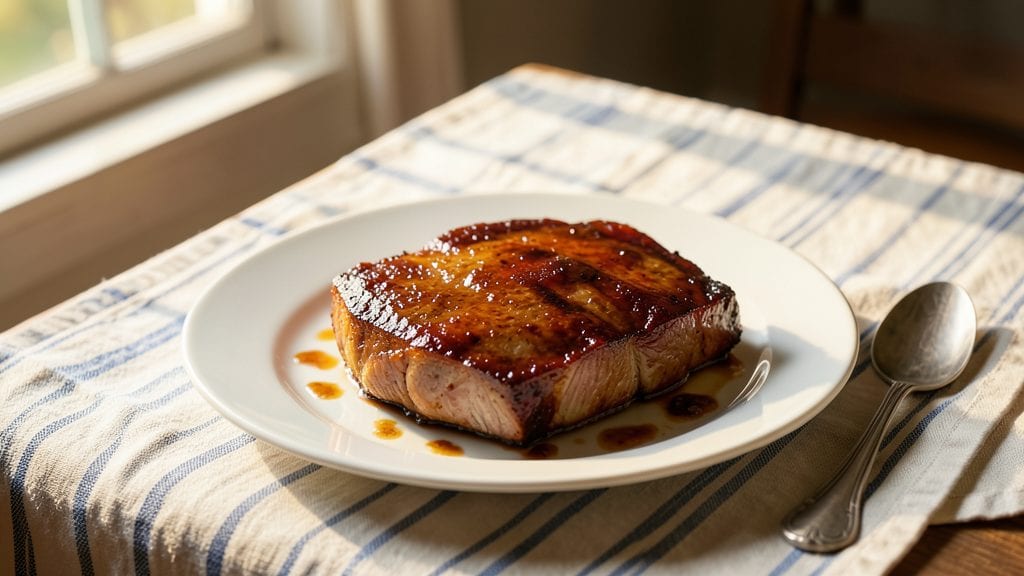
This maple glazed pork belly recipe delivers the perfect balance of crispy edges and caramelized sweetness that makes every bite unforgettable. Growing up in Nana Mae's Atlanta diner, I learned how transformative a simple glaze could be—turning rich, fatty pork into something restaurant-worthy with just a few ingredients and patience.
The secret lies in rendering the fat slowly while basting with maple syrup until it develops that signature deep caramel color and sticky-sweet crust.
What sets this recipe apart is the two-stage cooking process that ensures both texture and flavor perfection. First, we render the fat at low heat to create a crispy exterior that shatters with each bite, then finish with high heat to caramelize the maple glaze into a glossy, sticky finish.
This method transforms tough cuts into melt-in-your-mouth tenderness while maintaining that irresistible crunch. David's first taste-test always results in the same reaction: "This is worth the wait."
The result is a dish that looks as impressive as it tastes—golden-brown pork belly with a glossy caramelized crust that clings to every forkful. The maple glaze adds a perfect balance of sweetness that complements the savory richness of the pork, creating a harmony that's hard to resist.
Serve with roasted vegetables or steamed greens to round out the meal while letting the pork belly remain the star.
Once you master this technique, you'll find yourself reaching for pork belly whenever you crave something special. The key is letting the meat rest after cooking—this crucial step ensures clean slices and maximum flavor in every bite.
Let's get started on creating your own showstopping centerpiece that'll have everyone asking for seconds.
Ingredients for maple glazed pork belly
Rich pork belly and sweet maple syrup transform into restaurant-worthy bites with just twelve ingredients.
| Ingredient | Amount | Notes |
|---|---|---|
| Pork Belly 🥓 | 2 lb | Skin-on, thick-cut preferred |
| Pure Maple Syrup 🍯 | ½ cup | Grade B for deeper flavor |
| Brown Sugar 🍚 | ¼ cup | Light or dark, packed |
| Soy Sauce 🥢 | 2 tbsp | Low-sodium preferred |
| Dijon Mustard 🥬 | 1 tbsp | Whole grain for texture |
| Garlic Cloves 🧄 | 4 cloves | Minced, peeled |
| Fresh Ginger 🌿 | 1 tbsp | Finely grated, peeled |
| Apple Cider Vinegar 🍎 | 1 tbsp | For tangy balance |
| Kosher Salt 🧂 | 1 ½ tsp | For meat and seasoning |
| Black Pepper 🌶️ | ½ tsp | Freshly cracked |
| Cornstarch 🌾 | 1 tbsp | For glaze thickening |
| Vegetable Oil 🫒 | 2 tbsp | For crisping |
| Sesame Seeds 🌰 | 1 tbsp | Toasted, optional garnish |
The pork belly is everything here. Look for thick-cut pieces with good marbling—the fat is what makes it crispy and delicious. I always grab mine from the butcher counter at Whole Foods or Costco because they cut it fresh. If you're buying pre-sliced, check for even thickness so it cooks uniformly. The skin should be smooth and unbroken, not dried out. For the maple syrup, Grade B has that deeper, caramel-like flavor that's perfect for glazing—don't skimp on quality here. The brown sugar adds depth, but if you're in a pinch, white sugar plus a splash of molasses works too.
No pure maple syrup? Substitute honey or agave, but reduce the amount by about 10%—they're sweeter. The soy sauce and Dijon mustard give that umami kick, so don't skip them. If you're avoiding gluten, tamari or coconut aminos work in a pinch. Fresh ginger is ideal, but if you've only got dried, use one-third the amount and toast it first for better flavor. The cornstarch is key for that glossy finish—mix it with a little cold water first to avoid clumping. And trust me on the sesame seeds—even if they're just for garnish, they add that little something special.
This dish tastes even better the next day, so make extra if you can. Store leftovers in the fridge for up to 5 days, covered tightly to keep that crispy crust. For longer storage, freeze slices on a tray first, then transfer to a bag—they'll keep for 3 months. Reheat in a skillet over medium heat until crispy again. The pork belly reheats beautifully, but go slow to avoid drying it out. And if you're serving it at room temperature, let it sit for 20-30 minutes first—it's worth the wait.
Why You'll Love This Recipe
- One-Pan Magic: I swear by this for lazy nights—just score the belly, toss it in a pan, and let the maple and soy sauce work their magic. No chopping, no fuss, just crispy perfection with zero cleanup.
- Sweet-Savory Crunch: That caramelized crust? Chef’s kiss. The maple syrup and brown sugar turn sticky-sweet, while the Dijon mustard adds a tangy bite that cuts through the richness. Honestly, it’s the kind of flavor that makes you close your eyes mid-bite.
- Weekend Feast or Meal Prep: Between us, this is my go-to for brunch with friends or a packed lunch the next day. Slice it thin, and those crispy edges stay intact—no soggy leftovers here.
- Budget Luxury: Pork belly feels fancy, but this recipe stretches it into two meals without breaking the bank. A little goes a long way, and the maple glaze makes it taste like you spent hours (when really, you just set it and forgot it).
Step-by-step instructions for maple glazed pork belly
This method delivers that perfect balance of crispy, caramelized pork belly with a sticky-sweet glaze.
Prep the Pork Belly for Maximum Crisp
Start by scoring the pork belly skin in a diamond pattern using a sharp knife. Cut through the fat layer but don't go into the meat—this creates channels for the fat to render out and the skin to crisp beautifully. Place the pork belly skin-side down on a cutting board and press down firmly with your palm to flatten it as much as possible. This helps create an even surface for crisping.
Rub the pork belly with the 2 tablespoons vegetable oil to help the skin crisp up. Season the meat generously with 1.5 teaspoons kosher salt and 0.5 teaspoon black pepper, making sure to get it into all the crevices. Let the seasoned pork belly sit uncovered in the refrigerator for at least 1 hour (or up to 4 hours) to dry out slightly—this is crucial for achieving that perfect crispy texture. The colder air helps the skin firm up, which leads to better browning later.
Slow-Render the Fat to Golden Perfection
Preheat your oven to 275°F. Place the pork belly fat-side down on a wire rack set inside a rimmed baking sheet. This elevated position allows hot air to circulate underneath, rendering the fat while keeping the meat moist. Bake uncovered for 2 hours, flipping the pork belly halfway through so both sides render evenly.
After 2 hours, the internal temperature should reach 160°F and the fat should have rendered out significantly, leaving you with about 1 cup of golden pork fat in the pan. If the skin isn't golden brown yet, increase the oven temperature to 325°F and continue cooking for another 30-45 minutes until the skin is crispy and the fat is fully rendered. The pork belly should be tender but not falling apart—it will continue cooking as it rests.
Make the Sweet-Savory Glaze
While the pork belly is cooking, make the glaze by combining 0.5 cup pure maple syrup, 0.25 cup brown sugar, 2 tablespoons soy sauce, 1 tablespoon Dijon mustard, 4 cloves minced garlic, 1 tablespoon finely grated fresh ginger, and 1 tablespoon apple cider vinegar in a small saucepan. Bring the mixture to a simmer over medium heat and cook for 5 minutes until slightly thickened.
In a separate small bowl, whisk together 1 tablespoon cornstarch with 2 tablespoons water to make a slurry. Slowly stir the slurry into the simmering glaze and cook for another 2-3 minutes until it thickens to a syrupy consistency. The glaze should coat the back of a spoon and have a glossy sheen. Taste and adjust seasoning—you might want to add a pinch more salt or a splash of vinegar to balance the sweetness. Remove from heat and set aside.
Glaze and Crisp the Pork Belly
Transfer the pork belly to a broiler-safe baking sheet or a cast-iron skillet. Brush the glaze generously over the top of the pork belly, making sure to get it into all the crevices. Place the pork belly under the broiler on high heat and broil for 3-5 minutes until the glaze is bubbling and the edges are caramelized. Watch closely—you want the glaze to darken slightly but not burn.
For extra crispiness, flip the pork belly and broil for another 2-3 minutes on the other side. The pork belly should have a deep golden-brown color with a glossy, caramelized glaze. If the glaze starts to thicken too much, brush on a little more glaze to keep it sticky and sweet. The internal temperature should now reach 195-203°F—this is the ideal range for tender, juicy pork belly.
Rest and Serve with Crispy Perfection
Transfer the pork belly to a cutting board and let it rest for 10-15 minutes before slicing. This resting period allows the juices to redistribute, ensuring every slice is moist and flavorful. While it rests, you can reheat the remaining glaze in a small saucepan over low heat and drizzle it over the sliced pork belly before serving.
Slice the pork belly against the grain into ¼-inch thick slices. Garnish with 1 tablespoon toasted sesame seeds for added texture and visual appeal. Serve immediately with steamed rice or roasted vegetables to soak up that delicious caramelized glaze. Each bite should deliver a perfect balance of crispy skin, tender meat, and sweet-savory glaze—exactly what you're after!
Pro Tips For Making Maple Glazed Pork Belly
- Render First, Then Roast: I learned this the hard way—skipping the initial render step means your pork belly stays greasy and undercooked inside. Sear the skin-side down in a cold pan, then turn the heat to medium-low and let the fat render out for 15-20 minutes before flipping. That crispy skin and tender meat? Worth the wait.
- Use Real Maple Syrup: Pancake syrup won’t cut it here—its thin consistency burns fast and lacks depth. Pure maple syrup caramelizes better and balances the saltiness of soy sauce. If you’re pinching pennies, at least go for Grade B; it’s darker and richer for glazes.
- Deglaze with Cold Water: After searing the pork belly, scrape up those browned bits with a spoon—then splash in ¼ cup cold water. The sudden temperature drop stops the sugar from burning instantly and creates a glossier, more flavorful glaze. (Yes, even if you’re impatient like me.)
- Baste in Stages: Don’t dump all the glaze at once—brush on half during the last 10 minutes of roasting, then finish with a quick glaze hit in the last 2 minutes. This prevents a sticky mess and lets the sugar melt into a sticky, caramelized crust instead of a gloopy pool.
Perfect pairings for maple glazed pork belly
Asian-Inspired Sides
Pair your maple glazed pork belly with steamed jasmine rice and quick-pickled cucumbers for a perfect balance of textures. I love using short-grain rice from Central Market because it stays fluffy and absorbs the caramelized glaze beautifully.
For the pickles, thinly slice Kirby cucumbers, toss with 1 tbsp rice vinegar, 1 tsp sugar, and ½ tsp red pepper flakes—let them sit for at least 20 minutes before serving. 🥢
Southern Comfort Classics
For a Southern twist, serve alongside collard greens slow-cooked with smoked bacon and apple cider vinegar. The tangy greens cut through the richness of the pork belly while keeping the meal cohesive.
I always make a big batch—I use 1 bunch collards, 4 slices bacon, and 1 cup chicken broth simmered for 1 hour. Add a sprinkle of hot sauce at the table for extra kick. 🌶️
Creamy Potato Pairings
Creamy garlic mashed potatoes elevate this dish to new heights. Use Yukon Gold potatoes boiled until tender, then mashed with ½ cup butter, ¼ cup sour cream, and 3 minced garlic cloves.
For extra richness, fold in ¼ cup of that rendered pork fat from your roasted belly—trust me, it’s worth the effort. Serve warm to soak up every last bit of glaze. 🥔
Crunchy Vegetable Contrasts
Roasted sweet potato wedges add a sweet, earthy contrast that complements the maple glaze. Toss 2 cups cubed sweet potatoes with 1 tbsp olive oil, ½ tsp smoked paprika, and ½ tsp salt, then roast at 425°F for 25 minutes until caramelized.
A side of quick-fried Brussels sprouts with crispy bacon bits adds another layer of texture and flavor. 🌱
Beverage Pairings
An ice-cold amber ale like Fat Tire from New Belgium cleanses the palate between bites of rich pork belly. The malty sweetness and slight bitterness balance the maple glaze perfectly. For a non-alcoholic option, sparkling apple cider with a splash of ginger ale adds a refreshing contrast.
I always keep a pitcher chilled in the fridge when serving this dish. 🍺
Garnish Game-Changers
Finish your plate with toasted sesame seeds and thinly sliced scallions for a pop of color and texture. The seeds add crunch, while the scallions bring a fresh, oniony brightness that cuts through the sweetness.
For an extra touch, drizzle with a few drops of chili crisp—just ½ tsp adds heat without overpowering. 💫
Nutrition facts
Frequently asked questions
Can I substitute regular syrup for maple syrup in this recipe?
While you can use pancake syrup as a substitute, it won't give you that authentic rich depth of flavor. For the best results, opt for Grade B maple syrup which has a deeper caramel-like taste. If you're in a pinch, use honey or agave nectar, but reduce the amount by about 10% since they're sweeter than pure maple. The glaze will still be delicious, but the flavor profile will be slightly different.
How do I know when the pork belly is fully cooked?
Use a meat thermometer to check the internal temperature. The pork belly is fully cooked when it reaches 195-203°F. The skin should be golden brown and crispy, and the meat should be tender but not falling apart. Remember, the pork belly will continue cooking slightly as it rests, so don't overcook it in the oven.
Can I make this recipe in a slow cooker?
While you can use a slow cooker for the initial rendering process, it won't give you the same crispy skin as oven-roasting. For best results, use the oven method to render the fat and crisp the skin, then transfer to a slow cooker to keep it warm while you prepare the glaze. The slow cooker can be useful for reheating leftovers, but it won't replicate the texture achieved through proper roasting.
Why is my pork belly not crispy?
There are a few common reasons: not scoring the skin properly, not drying the meat before cooking, or cooking at too high of a temperature. Make sure to score the skin in a diamond pattern, dry the pork belly thoroughly in the fridge for at least 1 hour, and render the fat slowly at 275°F before increasing the heat for crisping. Also, ensure you're cooking it fat-side down on a wire rack for even heat circulation.
How should I store and reheat leftovers?
Store leftovers in an airtight container in the fridge for up to 5 days or freeze for 3 months. To reheat, place slices in a skillet over medium heat until crispy again. For extra crispiness, broil for 2-3 minutes after reheating. The pork belly reheats beautifully, but go slow to avoid drying it out. For best results, let it sit at room temperature for 20-30 minutes before serving.