
Main Courses
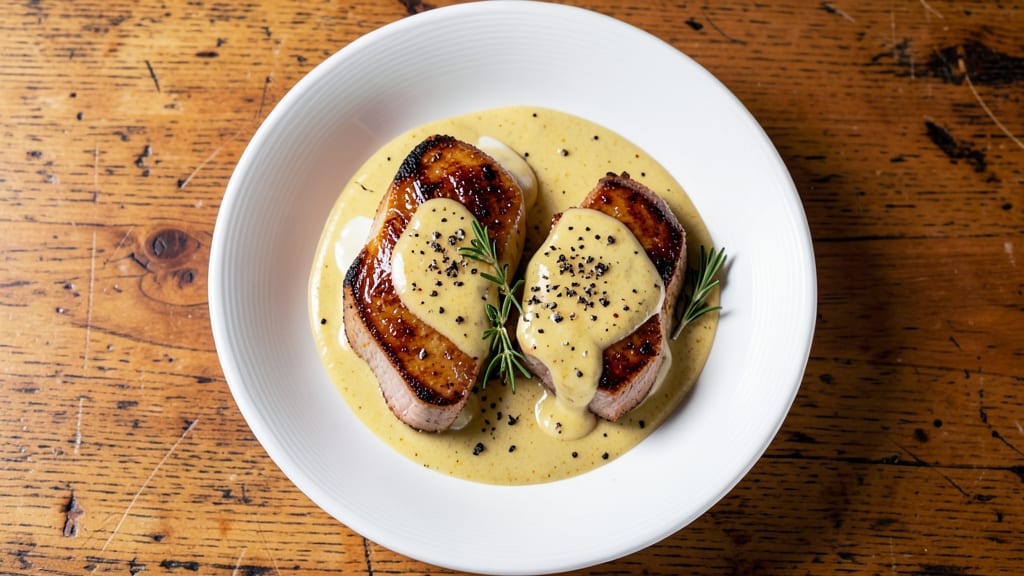
This mustard pork chops recipe delivers a perfect balance of crispy crust and juicy pink centers—the kind of restaurant-quality result that comes from precise seasoning and gentle cooking.
Standing on a step stool in my grandmother’s kitchen in Sicily, I learned how to transform simple ingredients into something extraordinary, and this technique is the result of those early lessons.
The tangy Dijon crust adds depth while keeping the meat tender, making it foolproof for weeknight dinners or special occasions alike.
The secret lies in the pan-searing method, which creates a golden crust while keeping the interior perfectly cooked. You’ll need just five key ingredients—pork chops, Dijon mustard, olive oil, salt, and pepper—plus a few pantry staples to elevate the flavor.
The recipe takes about 20 minutes from start to finish, making it ideal for busy evenings when you still want a meal that feels like a celebration.
What you’ll end up with is a plate of tender, flavorful pork chops with a glossy mustard crust that’s both tangy and slightly sweet. The crust clings perfectly to the meat, while the inside remains juicy and pink, just as it should be.
This dish pairs beautifully with roasted potatoes, a simple green salad, or crusty bread to soak up every last bit of that delicious sauce.
Whether you’re cooking for family or just treating yourself, this recipe is designed to impress without fuss. The technique is straightforward, but the results are anything but ordinary—just like Nonna always said, the best meals come from patience and attention to detail. Let’s get started!
Ingredients for mustard pork chops
Five essential ingredients transform simple pork chops into a restaurant-worthy dish.
| Ingredient | Amount | Notes |
|---|---|---|
| Center-Cut Pork Chops 🥩 | 4 whole | 1-inch thick, bone-in preferred |
| Dijon Mustard 🍯 | ¼ cup | High-quality, smooth variety |
| Extra-Virgin Olive Oil 🫒 | 2 tbsp | Lightly fruity, not bitter |
| Diamond Crystal Kosher Salt 🧂 | 1 tsp | Fine grain for even distribution |
| Freshly Ground Black Pepper 🌶️ | ½ tsp | Coarse grind for texture |
| Unsalted Butter 🧈 | 2 tbsp | Cold, cubed for basting |
| Fresh Thyme Leaves 🌿 | ¼ tsp | Finely chopped, aromatic |
| Garlic Cloves 🧄 | 2 cloves | Minced, fresh for potency |
| All-Purpose Flour 🌾 | 1 tbsp | For light dredging |
The center-cut pork chops are non-negotiable for this recipe—they stay juicy while developing that perfect crust. Look for chops with visible marbling and uniform thickness; Whole Foods or your local butcher often carry the best cuts. If using bone-in, trim excess fat to prevent flare-ups. The Dijon mustard should be smooth and high-quality—avoid the grainy varieties that can disrupt the crust's texture. For the olive oil, California Extra Virgin brands like Corto or Otto provide the ideal balance of fruity notes without overpowering the dish. Fresh thyme and garlic are best sourced from the produce section, ideally within one week of harvest to ensure maximum aroma.
No Dijon mustard? Whole-grain mustard thinned with a splash of water works in a pinch, though the texture won't be as refined. Substituting yellow mustard for the Dijon will alter the depth of flavor—expect a sharper, less complex profile. The olive oil can be swapped for avocado oil if preferred, though it lacks the fruity undertones that complement the pork. For the flour, gluten-free all-purpose blends function similarly if dietary restrictions apply. The butter is critical for basting—European-style butter like Plugrá melts more cleanly, but any unsalted variety will suffice. If you're short on time, pre-minced garlic from a jar works, though fresh is always superior for flavor.
Pork chops should be refrigerated in an airtight container for up to 2 days before cooking, though they're best used immediately for peak tenderness. The Dijon mustard and olive oil can be stored in the pantry for up to 6 months, while fresh thyme and garlic should be kept in the refrigerator, wrapped in damp paper towels for up to 1 week. The butter should remain cold until ready to use—never microwave it, as this alters its texture. Leftover pork chops reheat beautifully in a skillet over medium heat for 2-3 minutes per side, adding a splash of water to prevent drying. For meal prep, portion the cooked chops into airtight containers with a thin layer of olive oil to maintain moisture.
Why You'll Love This Recipe
- Foolproof Timing: This recipe takes less than 20 minutes—no waiting for marinades or fancy prep. Just sear those center-cut chops in olive oil, slather on that tangy Dijon, and let the salt and pepper work their magic while you toss a salad or boil some potatoes. Honestly, it’s the kind of dish that makes me feel like I’ve actually cooked when I’m just pretending.
- Tangy Crisp Perfection: That Dijon mustard isn’t just for flavor—it creates this insanely crisp crust while keeping the inside juicy. The olive oil keeps it from drying out, and the kosher salt? It’s the secret to that just-right seasoning that makes every bite taste like a restaurant-worthy meal. (Yes, even on a Tuesday night.)
- Weeknight Hero: Between us, this is my go-to when I need something fast but impressive for dinner guests or lazy nights. Double the batch—those leftovers reheat beautifully in a skillet or even the microwave (shhh, don’t tell anyone). Plus, the flavors only get better the next day, so it’s basically free insurance against takeout.
- Pantry Staple Power: You’re already using stuff you have: mustard, olive oil, salt, pepper. No weird ingredients or last-minute grocery runs. Between us, that’s half the battle won. It’s budget-friendly, too—center-cut chops are affordable, and one recipe feeds four without breaking the bank. My daughter picks out the chops at the store now because she knows it means dinner’s sorted.
Step-by-step instructions for mustard pork chops
A perfect balance of tangy Dijon crust and tender pink centers awaits with these precise techniques.
Prepare the Mustard Marinade and Season the Pork Chops
In a small bowl, combine the 0.25 cup Dijon Mustard, 2 tbsp extra-virgin olive oil, 1 tsp diamond crystal kosher salt, 0.5 tsp freshly ground black pepper, and 0.25 tsp finely chopped fresh thyme leaves. Mix until smooth and well-emulsified. This marinade will create both flavor and a protective crust during cooking.
Pat each of the 4 whole center-cut pork chops dry with paper towels—this ensures maximum crispiness. Place them on a clean work surface and spread an even layer of the mustard mixture on both sides, pressing gently to adhere. Let them sit at room temperature for 15 minutes while you prepare the remaining ingredients. This brief resting period allows the marinade to penetrate slightly, ensuring deeper flavor infusion.
Sear the Pork Chops for Maximum Flavor
Heat a large skillet over medium-high heat until it's hot enough to sizzle when you sprinkle in a pinch of salt. Add 1 tbsp of the extra-virgin olive oil (reserving the other tablespoon for later) and swirl to coat the pan evenly. Place the pork chops in the skillet, working in batches if needed to avoid overcrowding.
Sear for 3-4 minutes per side until the mustard crust develops a deep golden-brown color and the edges begin to crisp. The pork chops should release easily from the pan when ready to flip—this indicates proper doneness at the surface. Remove the chops to a warm plate and tent loosely with foil to maintain heat while you complete the cooking process.
Create the Garlic-Butter Pan Sauce
Reduce the heat to medium and add the remaining 1 tbsp extra-virgin olive oil to the skillet. Toss in the 2 minced garlic cloves and sauté for 30 seconds until fragrant but not browned. Immediately add the 2 tbsp cold unsalted butter, cubed, and let it melt slowly while stirring occasionally.
As the butter melts, it will create a frothy, golden sauce. Add 1 tbsp all-purpose flour and whisk vigorously for 1 minute until the mixture thickens slightly. This step creates a velvety sauce that will complement the mustard crust perfectly. Keep the heat at medium-low to prevent burning while you prepare to finish the pork chops.
Finish Cooking and Baste with Sauce
Return the pork chops to the skillet, mustard-side up, and spoon the garlic-butter sauce evenly over the top. Cover the skillet and let the chops cook for 2-3 minutes to finish at an internal temperature of 145°F (measured with an instant-read thermometer in the thickest part of the chop).
The residual heat will gently cook the pork while basting it with the rich sauce, ensuring both a crisp exterior and a juicy interior. If the sauce begins to thicken too much, add 1-2 tablespoons of water to loosen it slightly. Remove the chops from the skillet and let them rest for 5 minutes before serving—this crucial step allows the juices to redistribute, guaranteeing each bite remains succulent.
Serve with Garlic-Butter Sauce
Slice the pork chops diagonally against the grain for maximum tenderness. Spoon the remaining garlic-butter sauce over the top and serve immediately. The contrast of the tangy mustard crust with the creamy garlic butter creates a harmonious balance of flavors, while the juicy pink centers deliver on the promise of perfect doneness.
Pair these pork chops with roasted vegetables or a fresh salad to complete the meal. The dish maintains its juiciness even when served at room temperature, making it ideal for gatherings where timing might be less precise. Enjoy the satisfying combination of textures and flavors that this classic preparation delivers.
Pro Tips For Making Mustard Pork Chops
- Sear First, Baste Later: Get that pan screaming hot before adding the pork chops—center-cut chops need a proper crust to hold up under the mustard. After flipping once, pull the pan off heat for 30 seconds, then spoon that mustard-oil mix over them while they rest. I used to skip this, and the sauce just pooled instead of sticking.
- Pat Dry, Then Salt: Wet pork chops steam instead of brown, and that’s a fast track to soggy results. Grab paper towels and really dry those chops before seasoning—especially the thickest part. My grandmother swore by this, and she was right: the crust forms faster and stays crisp.
- Skip the Overcrowding: Resist the urge to stack chops in the pan—even if you’re impatient. Cook them in batches if needed, but give each chop space to develop that golden crust. I learned this the hard way when my first batch came out gray and greasy.
- Use Room-Temp Mustard: Cold Dijon mustard clumps and doesn’t blend smoothly with the olive oil. Let your mustard sit out for 10 minutes before mixing—it makes a real difference in how evenly it coats the chops. (Yes, even if you’re in a hurry.)
Serving suggestions for this mustard pork chops
Classic Side Pairings
Roasted garlic mashed potatoes elevate these pork chops beautifully—their creamy texture soaks up the mustard sauce while the garlic complements the skillet flavors. I like using Yukon Gold potatoes boiled in their skins, then mashed with roasted garlic, butter, and sour cream for richness.
For a lighter option, try sautéed green beans with slivered almonds and lemon zest—their crisp bite cuts through the richness. 🥔
Fresh Salad Balance
A bright arugula salad with pear slices, walnuts, and a honey-Dijon vinaigrette provides the perfect contrast to the tangy pork. The sweetness of the pears balances the mustard, while the walnuts add crunch.
For a heartier salad, toss mixed greens with shaved fennel, cherry tomatoes, and a balsamic glaze. I always make a double batch—leftover salad keeps for 3 days in the fridge, sealed in an airtight container.
Bread for Soaking Sauce
Crusty sourdough bread or brioche rolls are essential for sopping up the garlic-butter sauce. Warm the bread in the oven for 5 minutes at 350°F to enhance its texture.
For a Sicilian touch, serve with focaccia drizzled with extra-virgin olive oil—its airy pockets make it ideal for mopping up every last drop of sauce. 🍞
Wine and Beer Pairings
A crisp Sauvignon Blanc from New Zealand—like Cloudy Bay—cuts through the mustard's tang with its citrus notes, while a Pinot Noir from Oregon provides a subtle earthiness that complements the pork. For beer lovers, a Belgian witbier (such as Hoegaarden) adds a refreshing effervescence that cleanses the palate.
I always keep a bottle of Pinot Grigio on hand for these dishes—it’s my go-to for Italian-inspired meals.
Seasonal Vegetable Additions
In summer, grilled zucchini with balsamic glaze adds a smoky depth, while roasted asparagus with lemon zest brings freshness. For fall, swap in caramelized Brussels sprouts with pecans and a touch of maple syrup—the sweetness pairs surprisingly well with the mustard.
I roast my Brussels sprouts at 400°F for 20 minutes until crispy, then toss with the other ingredients.
Make-Ahead Serving Tips
If prepping ahead, cook the pork chops completely (up to 2 days in advance) and reheat in a skillet with a splash of water for 2-3 minutes per side. Store the garlic-butter sauce separately and reheat gently to maintain its velvety texture.
For a restaurant-style presentation, arrange the chops on a platter with the sauce drizzled artistically over the top, garnished with fresh thyme sprigs and flaky sea salt. The dish reheats beautifully, making it perfect for meal prep. ✨
Nutrition facts
Frequently asked questions
Can I use bone-in pork chops for this recipe?
Bone-in cuts actually work better because they stay juicier during cooking. Just trim any excess fat to prevent flare-ups in the pan. The bone also adds natural flavor, enhancing the mustard crust. For even cooking, choose chops with uniform thickness—about 1 inch—so they finish at the same time.
What if I don't have Dijon mustard?
Use whole-grain mustard thinned with 1 teaspoon water per 1 tablespoon of mustard. For a sharper flavor, mix equal parts yellow mustard and a pinch of honey. The texture won't be as refined, but it'll still deliver that tangy punch. If you're out of mustard entirely, try a 1:1 ratio of honey mustard for a sweeter alternative.
How do I know when the pork chops are fully cooked?
Use an instant-read thermometer to check the thickest part of the chop—it should reach 145°F for perfect doneness (juicy pink centers). If you don't have a thermometer, cut into the thickest part: the juices should run clear, not pink or red. Overcooking dries out the meat, so remove them from heat just before they reach 140°F and let them rest.
Can I make this recipe ahead of time?
Yes! Cook the pork chops completely and let them cool. Store in an airtight container in the fridge for up to 2 days. Reheat in a skillet over medium heat for 2-3 minutes per side, adding a splash of water to keep them moist. The garlic-butter sauce can be reheated separately—just warm it gently to avoid curdling. For best results, serve immediately after reheating.
Why did my mustard crust turn out too runny?
This usually happens if the pan isn't hot enough or the chops are overcrowded. Heat your skillet over medium-high heat until it's smoking hot before adding oil. Cook in batches if needed, and resist the urge to flip too soon—the crust needs 3-4 minutes per side to set properly. A splash of cold butter at the end can also help thicken any loose sauce.