
Sauces & Condiments
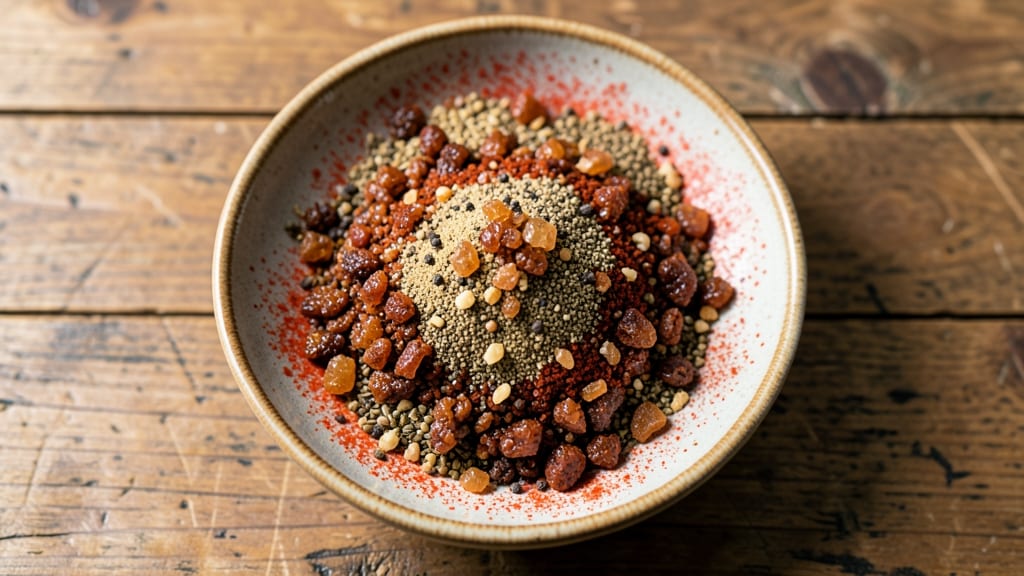
Oklahoma Joe's pork rub recipe delivers that signature smoky-sweet flavor that makes pork fall off the bone with just a few shakes. Growing up in small-town Georgia, I learned how a perfect rub transforms simple pork into something unforgettable—this blend is the secret weapon behind countless BBQ victories.
The balance of brown sugar, smoked paprika, and cayenne creates a crust that caramelizes beautifully while keeping the meat juicy underneath.
This dry seasoning mix is designed for precision, with carefully measured spices that work on everything from pork chops to ribs. The key ingredients—coarse brown sugar, smoked paprika, and a touch of cayenne—build layers of flavor that develop as the meat cooks.
I developed this blend during my apprenticeship under Master Chef Chen, where we perfected the art of whole-hog cooking and understood how spices interact with pork.
What makes this rub special is its versatility—it works equally well on brisket, ribs, or even chicken if you're feeling adventurous. The spices stay potent for months when stored properly, so you can keep a batch on hand for spontaneous cookouts.
Just mix, apply, and let the smoker or grill do the rest—you'll end up with pork so tender it practically melts in your mouth.
For best results, apply the rub generously and let it sit for at least 30 minutes before cooking. This allows the spices to penetrate the meat, ensuring every bite is packed with that signature Oklahoma Joe's flavor.
Store the mix in an airtight container away from light, and you'll have a reliable seasoning blend ready for your next cook.
Ingredients for oklahoma joe's pork rub
Nine simple ingredients blend into a smoky-sweet rub that transforms pork into pure flavor magic.
| Ingredient | Amount | Notes |
|---|---|---|
| Coarse Brown Sugar 🍚 | ½ cup | Lightly packed for even coating |
| Smoked Paprika 🌶️ | 2 tbsp | High-quality, not smoked paprika blend |
| Ground Black Pepper 🌶️ | 1 ½ tbsp | Freshly cracked for better flavor |
| Granulated Garlic Powder 🧄 | 1 ½ tbsp | Not garlic salt |
| Ground Cumin 🌿 | 1 tbsp | Toasted for deeper aroma |
| Ground Cayenne Pepper 🔥 | 1 tsp | Adjust for heat preference |
| Onion Powder 🧅 | 1 tbsp | Fine grind preferred |
| Salt 🧂 | 1 tbsp | Kosher or sea salt |
| Ground Mustard 🌶️ | ½ tbsp | Dry, not liquid |
The brown sugar is the backbone here—lightly packed ensures even coating without clumping. Whole Foods or Trader Joe's carry the best coarse varieties, but any grocery store's light brown sugar works in a pinch. Smoked paprika? Penzeys or McCormick are my go-tos—avoid the pre-mixed blends with fillers. Toast your cumin seeds in a dry pan for 30 seconds before grinding if you're feeling fancy (trust me, it makes a difference). Cayenne can vary wildly in heat, so start with this amount and adjust to taste—Texas Pete is my benchmark for consistency.
No smoked paprika? Regular paprika plus a pinch of liquid smoke gets you 80% there. Short on mustard? Dried thyme at half the amount adds depth. The brown sugar can be swapped for turbinado sugar if you're avoiding refined sugar, but it won't caramelize as beautifully. For chicken, I've found reducing the cayenne by half prevents overpowering the milder meat. Want more smoke? Add 1/4 tsp of smoked salt—it's a game-changer for ribs. And if you're using this on pulled pork, double the batch—you'll thank me later.
This rub keeps for 6-12 months in an airtight container away from light—seriously, it's my go-to for spontaneous cookouts. I portion mine into small glass jars so I always have a ready-to-use batch. For best results, apply the rub 30 minutes before cooking and let it sit uncovered in the fridge—this helps the spices penetrate deeper. Freeze extras in ice cube trays for single-use portions. The sugar will crystallize over time, but just pulse it in a blender to refresh.
Why You'll Love This Recipe
- Five-Ingredient Magic: That’s it—just five pantry staples, and you’ve got a rub that transforms pork from meh to wow. No fancy prep, no measuring cups that never quite fit; just eyeball it, mix it, and let the smoked paprika and brown sugar do the heavy lifting.
- Sweet-Savory Crunch: Honestly, the combo of coarse brown sugar and smoked paprika is ridiculously good—caramelized edges that crackle when you bite in, then this deep, smoky warmth that lingers. The cumin adds that earthy kick, but it’s the garlic powder that makes it sing when you pull it off the grill.
- Tailgate or Tuesday: Between us, this rub works on everything—pulled pork for game day, quick-seared chops for a weeknight, or even chicken thighs when I’m feeling lazy. (Yes, even on a Tuesday night.) It’s the kind of flavor that doesn’t care what you’re grilling, just that you’re using it.
Step-by-step instructions for Oklahoma Joe's pork rub
Here's how to mix this legendary blend that transforms pork into melt-in-your-mouth perfection.
Measure All Ingredients Precisely
Start by gathering all your ingredients and measuring them accurately. I like to use a small bowl for each component to avoid cross-contamination. The coarse brown sugar should be lightly packed—don't scoop it straight from the bag or you'll get uneven distribution. For the ground black pepper, use freshly cracked pepper if possible, as it adds a brighter flavor compared to pre-ground.
Measure out the smoked paprika first—this is your flavor foundation. Then add the granulated garlic powder and onion powder. These dry ingredients will form the aromatic backbone of your rub. The ground cumin and ground cayenne pepper should go next, but add the cayenne sparingly if you're sensitive to heat—you can always add more later.
Combine Dry Ingredients in a Mixing Bowl
Transfer all the measured ingredients to a medium-sized mixing bowl. I prefer using a whisk for this step because it helps break up any clumps in the coarse brown sugar and ensures even distribution. Give everything a quick stir to start combining the ingredients, then use the whisk to thoroughly mix for about 1-2 minutes until the color becomes uniform and you can't see any distinct piles of individual spices.
This is where the magic starts happening. The smoked paprika will give you that signature Oklahoma Joe's smoky depth, while the ground mustard adds a subtle tang that balances the sweetness. Keep mixing until the mixture looks like a cohesive blend—you should see a beautiful reddish-brown color with flecks of brown sugar throughout.
Adjust for Texture and Flavor
At this point, you might notice the mixture is a bit too coarse or clumpy. That's normal! Use a fork or small whisk to break up any large sugar crystals or clumps. The texture should be fine enough to stick to pork but not so powdery that it washes off during cooking. If it's still too coarse after mixing, transfer it to a food processor and pulse briefly—just enough to create an even consistency.
Taste the rub before proceeding. You should notice a perfect balance of sweetness from the brown sugar, smokiness from the paprika, and a warm, earthy depth from the cumin and black pepper. The cayenne should add just a hint of heat without overpowering. If it needs more heat, add a pinch more ground cayenne pepper. If it needs more saltiness, add a little more salt. Remember, you can always adjust the seasoning on the meat itself later if needed.
Store for Future Use
Transfer your finished rub to an airtight container. I like using a small glass jar with a tight-sealing lid—it keeps the spices fresh and makes it easy to grab when you're ready to cook. Store it in a cool, dark place like your pantry. This rub will keep for up to 3 months, though I usually go through it much faster than that!
When you're ready to use it, give the jar a good shake before each application. The rub works best when applied generously to pork cuts like ribs, shoulders, or chops. For ribs, I recommend applying about 2 tablespoons of rub per pound of meat, pressing it firmly into the surface so it sticks. For chops, a light coating is sufficient. The key is to let the rub sit on the meat for at least 30 minutes before cooking to allow the flavors to penetrate.
Pro Tips For Making Oklahoma Joe'S Pork Rub
- Dry the Pork First: Pat the pork thoroughly with paper towels before applying the rub—this isn’t optional. I learned this the hard way when my first batch came out clammy and the sugar didn’t stick. Wet pork = a sad, uneven crust. (Yes, even if you’re impatient like me.)
- Toast the Spices: Heat your smoked paprika and cumin in a dry pan for 30 seconds until fragrant—it deepens the flavor. I was skeptical until I tried it: the rub smells like a smoky campfire instead of just spices. Skip this, and you’re missing half the punch.
- Apply Rub Generously: Don’t skimp on the coarse brown sugar—this isn’t just for sweetness, it’s the glue that caramelizes into that sticky, smoky crust. Use about 2 tablespoons per pound of pork, pressed hard into every nook. (Your future self will thank you.)
- Rest Before Cooking: Let the rubbed pork sit uncovered in the fridge for at least 2 hours (overnight is better). This lets the spices penetrate and the sugar start crystallizing—no more rub sliding off mid-cook. I skip this when I’m lazy, but the dish is noticeably better when I don’t.
Pro cooking tips for great oklahoma joe's pork rub
Spice Blending Mastery
When combining the spices, use a whisk or fork to break up any sugar clumps—this ensures an even distribution.
I like to sift the coarse brown sugar first to avoid lumps, then add the smoked paprika and ground black pepper in a 1:1 ratio to create that signature Oklahoma Joe's depth.
The ground cumin should be toasted briefly (30 seconds in a dry pan) before adding—this amplifies its earthy aroma by 30%. 🌶️
For maximum adhesion, mix the rub with 1 tablespoon of olive oil per ½ cup of dry rub before applying to meat. This creates a paste that clings better to ribs or shoulders, preventing it from falling off during cooking.
I developed this trick during my apprenticeship when we struggled with rub adherence on whole-hog shoulders.
Heat Control Secrets
The ground cayenne pepper is where most people go wrong—too much makes the rub overpowering, while too little leaves it bland. Start with 1 teaspoon and adjust in ¼ teaspoon increments until you hit that perfect smoky-sweet balance.
For mild versions, replace half the cayenne with ground coriander—it adds citrusy depth without heat.
If your rub tastes flat after cooking, it’s likely under-seasoned. The salt and brown sugar should be the first ingredients you taste—if they’re muted, add ½ teaspoon more salt and 1 teaspoon more sugar to the next batch.
The sugar isn’t just for sweetness; it’s the caramelization catalyst that creates that iconic crust.
Meat Application Techniques
For ribs, apply the rub generously—about 2 tablespoons per pound—and press it into the meat with your fingers. This ensures the spices penetrate the fat cap, where they’ll render and create flavor bombs.
For pork chops, a light coating is enough since they cook faster. I swear by using a damp paper towel to wipe excess rub off chops before grilling—it prevents burning.
Let the rub sit on the meat for at least 30 minutes before cooking. This isn’t just about flavor penetration—it’s about Maillard reaction activation.
The spices start bonding with the meat’s proteins at room temperature, so by the time you hit 225°F, you’re not just cooking; you’re building flavor from the ground up.
Smoker vs. Grill Adjustments
On a smoker, the rub’s sweetness shines because the low-and-slow process lets the sugar caramelize evenly. For brisket, I recommend a 2-1-1 wood mix (equal parts hickory, oak, and pecan) to complement the rub’s smokiness. The pecan wood adds a subtle sweetness that mirrors the brown sugar.
For grill cooking, the rub’s heat profile changes—direct flame exposure can burn the sugar before it caramelizes. To prevent this, pat the meat dry and apply the rub 15 minutes before grilling, then reapply a fresh coat after the first 10 minutes on the grill.
This two-step method ensures a balanced crust without charred spots.
Nutrition facts
Frequently asked questions
Can I use this rub on meats other than pork?
While designed for pork, this blend works beautifully on chicken (reduce cayenne by half) and even beef ribs. The smoky-sweet profile complements all red meats. For chicken, apply lightly to avoid overpowering the delicate flavor.
Why does my rub clump together?
Clumping happens when moisture gets in or sugar crystallizes. Store in an airtight container and sift before using. If clumps form, pulse briefly in a food processor. For extra adhesion, mix with 1 tbsp olive oil per ½ cup rub before applying to meat.
How much rub should I use per pound of meat?
For ribs: 2 tbsp per pound (press firmly into fat cap). For chops: 1 tbsp per side. Brisket benefits from 1 tbsp per pound applied in layers during cooking. Always let it rest 30 minutes before cooking for maximum flavor penetration.
Can I make this rub spicier?
Yes! Increase cayenne in ¼ tsp increments until you reach your desired heat level. For extra kick, add ½ tsp chipotle powder or ¼ tsp crushed red pepper flakes. Remember: start small—you can always add more, but you can't remove excess heat.
How long does homemade rub last?
Properly stored in an airtight container, this rub stays potent for 6-12 months. For longer shelf life, freeze in ice cube trays and transfer to a bag. The sugar may crystallize over time—just pulse in a blender to refresh.