
Main Courses
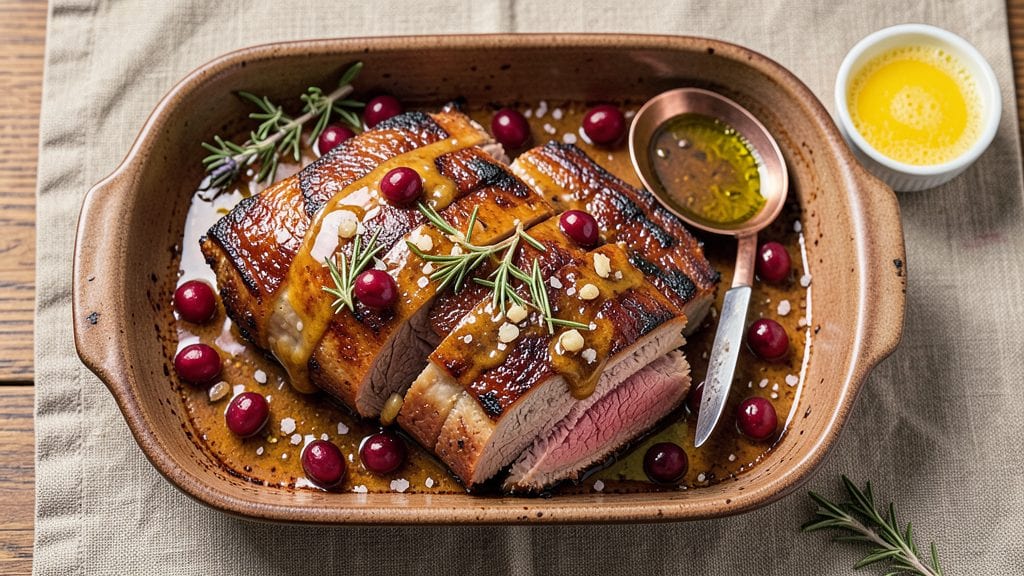
Mastering a orange cranberry Dijon pork loin roast transforms holiday dinners from ordinary to extraordinary—where the glaze caramelizes into a sticky, citrus-kissed crust that keeps guests reaching for seconds.
Growing up in small-town Georgia, I learned pork deserves this kind of attention, and this recipe delivers restaurant-quality results with a technique I perfected during my apprenticeship under Master Chef Chen.
The secret lies in balancing sweet and tangy flavors: fresh orange juice brightens the glaze while cranberries add depth, and Dijon mustard ties everything together with just the right tang.
You'll marinate the pork overnight for maximum flavor penetration, then roast it until the internal temperature hits 145°F—juicy, tender, and ready for that final glaze application that caramelizes to perfection in the oven.
What you'll end up with is a showstopping centerpiece: golden-brown pork loin with a glossy, caramelized crust that cracks slightly when sliced, revealing moist meat underneath. The aroma alone will have everyone gathering at the table, and the first bite delivers that perfect harmony of sweet, tart, and savory.
This is the kind of dish that elevates any meal from good to unforgettable.
Pair it with roasted sweet potatoes and a crisp green salad for a complete, crowd-pleasing feast. The glaze recipe makes enough to coat the pork and serve as a sauce on the side—because some things are simply too good to keep to yourself. Let's get cooking.
Ingredients for orange cranberry dijon pork loin roast
Six ingredients transform simple pork into a showstopping holiday centerpiece with citrus brightness and caramelized perfection.
| Ingredient | Amount | Notes |
|---|---|---|
| Center-Cut Pork Loin 🥩 | 3 lb | Bone-in, 1.5-inch thick slices |
| Fresh Orange Juice 🍊 | 1 cup | Not from concentrate, freshly squeezed |
| Fresh Cranberries 🍇 | 1 cup | Dried won't work for texture |
| Dijon Mustard 🥫 | 2 tbsp | High-quality, not imitation |
| Granulated Sugar 🍚 | ¼ cup | Light brown sugar for depth |
| Extra-Virgin Olive Oil 🫒 | ¼ cup | For glaze richness |
| Fresh Garlic Cloves 🧄 | 4 cloves | Minced for marinade |
| Fresh Rosemary 🌿 | ¼ cup | Chopped, stems removed |
| Fresh Thyme 🌿 | ¼ cup | Leaves only, no stems |
| Diamond Crystal Kosher Salt 🧂 | 1 ½ tsp | For seasoning and glaze |
| Freshly Ground Black Pepper 🌶️ | ½ tsp | Cracked peppercorns preferred |
| Balsamic Vinegar 🍷 | 1 tbsp | For glaze complexity |
| Unsalted Butter 🧈 | 2 tbsp | Cold, for basting |
The pork loin is non-negotiable—center-cut with visible fat cap ensures juicy results. Most butchers will cut it for you if you ask, but if you're buying whole, look for a 3-pound roast with even thickness. I always grab mine from Whole Foods or Costco where they're trimmed perfectly. The cranberries? Fresh is mandatory—dried will turn mushy and ruin the glaze texture. For the orange juice, avoid concentrate; the flavor difference is night and day. The Dijon mustard should be 100% mustard seed—none of that watered-down stuff.
No fresh cranberries? Cranberry sauce concentrate works in a pinch (reduce it first), but you'll lose that burst of tartness. Subbing orange juice? Grapefruit juice at half the amount adds complexity, but it's more polarizing. Running low on rosemary? Thyme alone works, but add a pinch of orange zest for brightness. The balsamic vinegar can be swapped for red wine vinegar, but balsamic gives that signature depth. For the sugar, light brown sugar adds subtle molasses notes that complement the cranberries beautifully—don't skip the swap if you're feeling adventurous.
Marinate the pork overnight for maximum flavor, but no longer than 24 hours—citrus can start breaking down the meat. The glaze keeps 3 days in the fridge once made, but reheat it gently to avoid curdling. For make-ahead roasts, cook the pork 2 days ahead, let it rest, then reheat with fresh glaze before serving. The leftovers? Slice thin, reheat with extra glaze, and serve on sandwiches—trust me, it's even better the second time around.
Why You'll Love This Recipe
- I swear by this rule: the fewer ingredients you mix, the more they have to shine—and this roast proves it. Just five staples (plus salt and pepper) transform a simple pork loin into something that tastes like a holiday centerpiece, not a weeknight shortcut. Honestly, the cranberries and orange juice do all the work while I stand there pretending to be busy.
- Fewer Ingredients, Bigger Impact: I swear by this rule: the fewer ingredients you mix, the more they have to shine—and this roast proves it. Just five staples (plus salt and pepper) transform a simple pork loin into something that tastes like a holiday centerpiece, not a weeknight shortcut. Honestly, the cranberries and orange juice do all the work while I stand there pretending to be busy.
- Tangy-Sweet Magic: That glaze? It’s the kind of flavor combo that makes you pause mid-bite. The Dijon adds depth, the sugar caramelizes into a sticky-sweet crust, and the cranberries burst with tartness—like a fancy cocktail in roast form. I’ll be real: I’ve made this for Thanksgiving, but my family devours it just as fast on a random Sunday.
- Leftovers That Don’t Suck: Most pork roasts turn into sad, dry mystery meat after day two. Not this one. The glaze keeps it juicy, and the sweet-tangy notes actually improve overnight. I pack it for lunches all week—sliced thin on crusty bread with a sprinkle of extra cranberries. Zero regret, 100% lunchbox hero.
Step-by-step instructions for orange cranberry Dijon pork loin roast
Here's the method that delivers a perfectly caramelized crust and tender interior every time.
Prepare the Herb Marinade and Season the Pork
In a small bowl, combine the 1 cup fresh orange juice, 2 tablespoons Dijon mustard, 0.25 cup minced fresh garlic cloves, 0.25 cup chopped fresh rosemary, 0.25 cup fresh thyme, and 1.5 teaspoons diamond crystal kosher salt. Whisk until the sugar dissolves completely and the herbs are evenly distributed. This marinade will infuse the pork with bright citrus notes and aromatic herbs.
Pat the 3 lb center-cut pork loin dry with paper towels—this step is crucial for achieving that perfect caramelized crust later. Place the pork in a shallow dish and pour the marinade over it, turning to coat all sides evenly. Cover and refrigerate for at least 4 hours, or preferably overnight. The longer it marinates, the more flavorful your roast will be.
Create the Cranberry Glaze
In a small saucepan, combine the 1 cup fresh cranberries, 0.25 cup granulated sugar, 1 tablespoon balsamic vinegar, and 0.25 cup extra-virgin olive oil. Bring to a gentle simmer over medium heat and cook for 10-12 minutes, stirring occasionally, until the cranberries soften and the mixture thickens into a glossy glaze. You'll know it's ready when the cranberries burst slightly and the sauce coats the back of a spoon.
Remove from heat and let cool slightly. The glaze should be thick enough to cling to the pork but still pourable. If it's too thick, whisk in 1-2 teaspoons of water to reach the right consistency. This glaze will add a perfect balance of tartness and sweetness to complement the pork's richness.
Roast the Pork to Perfect Doneness
Preheat your oven to 375°F. Remove the pork from the marinade (reserve the marinade for basting) and place it on a rack set inside a roasting pan. This allows air to circulate evenly for perfect browning. Roast for 45-50 minutes, or until the internal temperature reaches 140°F on a meat thermometer inserted into the thickest part of the pork.
Here's the thing—this is where the magic happens. About 15 minutes before the pork is done, brush it generously with the reserved marinade and the cranberry glaze. The glaze will bubble and caramelize beautifully, creating that stunning glossy crust you're after. Watch closely as it transforms from translucent to deep amber—this is your signal that it's developing that perfect caramelized layer.
Rest and Baste for Maximum Juiciness
Transfer the pork to a cutting board and tent loosely with aluminum foil. Let it rest for 15-20 minutes—this resting period is absolutely critical. It allows the juices to redistribute throughout the meat, ensuring each slice is moist and tender. Don't skip this step, no matter how tempting it is to slice immediately.
While the pork rests, place the reserved marinade and any accumulated juices from the roasting pan in a small saucepan. Simmer over medium-low heat for 3-4 minutes until slightly thickened. This creates a delicious pan sauce that will elevate your dish. Just before serving, brush the pork with this reduced sauce for extra flavor and shine.
Slice and Serve with Confidence
Slice the pork loin into 1-inch thick medallions against the grain for maximum tenderness. Arrange the slices on a warm serving platter and drizzle with any remaining glaze and pan sauce. The contrast of the caramelized crust with the tender interior will be spectacular—each bite should be juicy with a perfect balance of sweet, tangy, and herby flavors.
Serve immediately with your favorite sides like roasted vegetables or a fresh green salad. The pork's rich flavor pairs beautifully with the bright acidity of the cranberry glaze, making this dish perfect for special occasions or family gatherings. You've just created a restaurant-quality roast in your own kitchen!
Pro Tips For Making Orange Cranberry Dijon Pork Loin Roast
- USE A MEAT THERMOMETER: I learned this the hard way—pork loin can look done on the outside but still be gray on the inside. Aim for 145°F internal temp (150°F if you prefer it extra-safe), and pull it out before it hits that number if you’re worried about drying out. The residual heat will carry it the rest.
- PULSE THE CRANBERRIES: Skip the pre-chopping and just toss whole cranberries into the sauce. After simmering 10-15 minutes, hit them with a potato masher or wooden spoon until they burst—this releases their juices and sweetness without turning them into mush. (Yes, even if you’re impatient like me.)
- SEAR THE PORK LOIN FIRST: A quick 3-4 minute sear in a screaming-hot pan before roasting locks in flavor and prevents the crust from turning soggy when the citrus glaze hits. Use the same pan for the glaze later—no extra cleanup, just more depth of flavor.
- STRAIN THE ORANGE JUICE: Bitter albedo (the white pith) sneaks into fresh juice and ruins the balance of the sauce. Strain it through a fine-mesh sieve or cheesecloth before mixing it with the Dijon and sugar. Trust me, your glaze will thank you—no weird aftertaste.
Troubleshooting this dish
Undercooked Pork Problem
If your pork loin comes out dry or rubbery, it’s likely due to overcooking or improper resting. The internal temperature should reach 140°F (not 165°F for pork)—that’s the safe zone for juiciness.
I’ve seen home cooks panic and overcook, but trust your thermometer. If it’s undercooked, return it to the oven for 10-15 minutes at 300°F to finish gently. 🔥
Glaze Won’t Caramelize
When the cranberry glaze looks dull instead of glossy and caramelized, it’s usually from too much water or low heat. Simmer it on medium-low until it thickens enough to coat the back of a spoon—about 10-12 minutes.
If it’s too thin, reduce it further on the stovetop. Pro tip: Add 1 teaspoon of cornstarch mixed with water to help it thicken if needed.
Pork Sticks to the Pan
This happens when pork isn’t thoroughly dried before roasting. Pat it dry with paper towels—I can’t stress this enough. For extra browning, use a Lodge cast iron skillet or a ceramic roasting pan to prevent sticking.
If it does stick, use a flexible silicone spatula to loosen it gently while hot.
Glaze Separates or Curdles
If your glaze turns grainy or separates, it’s likely from over-simmering or adding too much water. Reduce heat to low and stir constantly. For a quick fix, strain the glaze through a fine-mesh sieve to remove any cranberry skins or seeds.
If it curdles, whisk in 1 teaspoon of cold water and reheat gently.
Uneven Browning
For patchy browning, ensure your pork is on a rack inside the roasting pan, not directly on the bottom. Rotate the pan halfway through cooking if your oven has hot spots.
If you’re using a convection oven, reduce the temperature by 25°F to prevent over-browning. A quick broil for 2-3 minutes at the end can help if needed.
Make-Ahead Mistakes
If your roast tastes flat or dry after reheating, it’s likely from over-reheating. Cook the pork 2 days ahead, let it cool, then refrigerate. When ready to serve, reheat it in the oven at 300°F for 20-25 minutes—no microwave!
Add fresh glaze just before serving to revive the flavors. 💡
Nutrition facts
Frequently asked questions
Can I use dried cranberries instead of fresh in the glaze?
Fresh cranberries are ideal for texture and flavor, but you can use dried in a pinch. Soak ½ cup dried cranberries in ½ cup warm water for 15 minutes to rehydrate, then drain and use in place of fresh. The glaze will be slightly less tart, so add 1 extra teaspoon of balsamic vinegar to compensate. For best results, reduce the sugar to ¼ cup since dried cranberries are sweeter.
How far ahead can I make the cranberry glaze?
The glaze keeps well for 3 days in an airtight container in the fridge. Reheat gently in a saucepan over low heat until warm, stirring occasionally to prevent separation. If it thickens too much, whisk in 1 teaspoon of water at a time until smooth. For make-ahead roasts, prepare the glaze 1 day ahead and store separately from the marinade.
What's the best way to reheat leftovers without drying out the pork?
Reheat sliced pork in a 350°F oven for 10-12 minutes on a wire rack over a baking sheet. Brush with fresh glaze during the last 2 minutes to revive moisture and shine. For sandwiches, warm slices in a skillet over medium-low heat for 1-2 minutes per side with a splash of apple cider vinegar to keep them tender. Microwaving leftovers is a no-go—it always turns out dry.
Can I substitute grapefruit juice for orange juice in the marinade?
Yes, but adjust the amounts for balance. Use ½ cup grapefruit juice plus ½ cup orange juice to maintain sweetness and acidity. Grapefruit's bitterness works beautifully with Dijon and cranberries, but reduce the sugar in the glaze to ¼ cup since grapefruit is naturally sweeter. Taste the marinade first—if it's too sharp, add 1 teaspoon of honey to round out the flavors.
What sides pair best with this citrus-pork dish?
For a complete holiday meal, try these pairings: Brown butter mashed sweet potatoes complement the pork's richness, while roasted Brussels sprouts with pecans add crunch. A simple arugula salad with blood orange segments cuts through the richness, and cornbread with honey butter balances the tartness. For a lighter option, serve with wild rice pilaf and steamed green beans—both highlight the pork's vibrant flavors.