
Main Courses
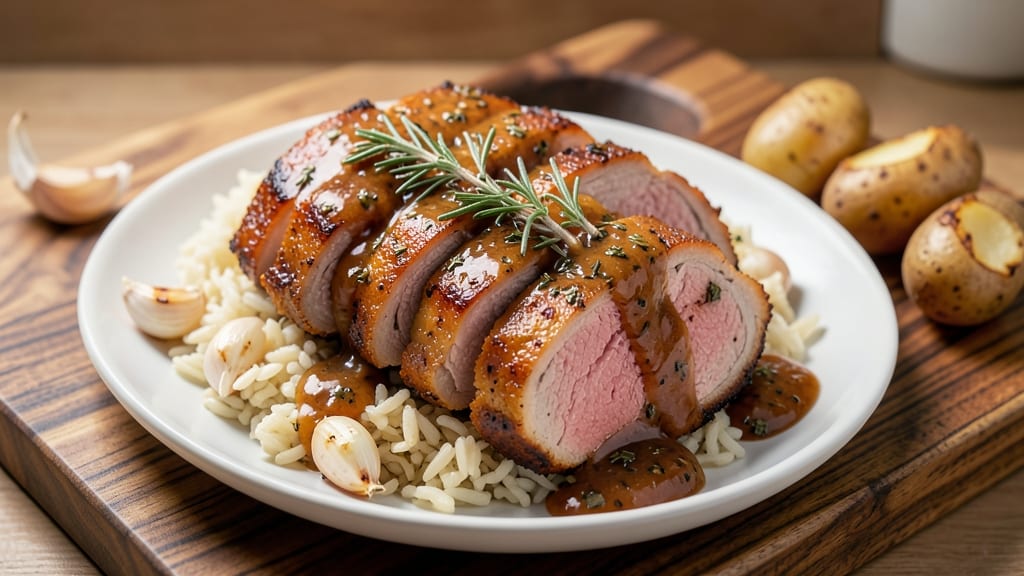
This oven baked pork loin recipe solves the age-old problem of dry, overcooked pork with a foolproof method that delivers juicy, herb-crusted perfection every time.
Growing up in small-town Georgia, I learned that the secret to tender pork lies in proper preparation—not just slapping seasoning on and hoping for the best.
The key is a simple brine that keeps the meat moist, paired with a herb crust that locks in flavor while creating a beautiful golden-brown exterior.
What makes this recipe stand out is the balance between simplicity and professional results. You'll need just five key ingredients—pork loin, herbs, garlic, olive oil, and a basic brine solution—and about 45 minutes of active time, including prep.
The herb crust transforms ordinary pork into something restaurant-worthy, with layers of savory, aromatic flavor that stay intact even after slicing. This method works for any occasion, from weeknight dinners to holiday feasts.
By the time you pull this pork loin from the oven, you'll have a perfectly cooked center—tender and juicy—with a crisp, flavorful crust that holds together beautifully when sliced. The aroma alone will have everyone gathering at the table, and the presentation is elegant enough for company.
No more dry, stringy pork—just melt-in-your-mouth perfection that tastes like it came from a high-end restaurant.
Serve with roasted vegetables, a fresh salad, or classic apple sauce to round out the meal. The leftovers reheat beautifully, making this an ideal recipe for meal prep or feeding a crowd. Let’s get started on creating pork loin that will impress even the most skeptical eaters.
Ingredients for oven baked pork loin
Five essential ingredients transform ordinary pork loin into restaurant-quality perfection.
| Ingredient | Amount | Notes |
|---|---|---|
| Center-Cut Pork Loin 🍖 | 1 ½ lb | Bone-in preferred for even cooking |
| Diamond Crystal Kosher Salt 🧂 | 2 tbsp | For brine solution |
| Granulated Sugar 🍬 | 1 tbsp | Balances brine sweetness |
| Fresh Rosemary 🌿 | ¼ cup | Finely chopped, stems removed |
| Fresh Thyme 🌿 | ¼ cup | Leaves only, finely chopped |
| Garlic Cloves 🧄 | 6 cloves | Minced for herb crust |
| Extra-Virgin Olive Oil 🫒 | ½ cup | For herb crust mixture |
| All-Purpose Flour 🌾 | ¼ cup | For herb crust adhesion |
| Ground Black Pepper 🌶️ | 1 tsp | Freshly cracked for intensity |
| Unsalted Butter 🧈 | ¼ cup | Melted for basting |
| Fresh Parsley 🌿 | ⅛ cup | Chopped for final garnish |
The center-cut pork loin is non-negotiable for this recipe—look for a 1.5 lb bone-in roast at your local butcher or grocery store's meat department. Whole Foods or Costco often carry premium cuts with superior marbling. If purchasing pre-cut, ensure the roast has a 1-inch thickness for even cooking. Fresh herbs are critical here: Trader Joe's or local farmers markets offer the most vibrant rosemary and thyme. For the brine, Diamond Crystal kosher salt is preferred due to its coarse texture, which dissolves more effectively than table salt. The sugar in the brine isn't just for sweetness—it helps retain moisture during the long cooking process, ensuring that juicy, melt-in-your-mouth result you're after.
No fresh rosemary? Substitute with 1 tbsp dried rosemary, but reduce the amount by one-third since dried herbs are more concentrated. Short on thyme? Fresh oregano works in a pinch, though the flavor profile will differ slightly. For the olive oil, avoid heavily flavored varieties—stick to a mild, fruity extra-virgin like Bertolli or California Olive Ranch. The butter used for basting should be unsalted to control the seasoning precisely. If you're prepping ahead, make the herb crust mixture 24 hours in advance—the flavors meld beautifully when refrigerated overnight. For the garlic, roast it whole at 400°F for 10 minutes before mincing to mellow its intensity and enhance sweetness.
This pork loin reheats exceptionally well—gentle warming in a 300°F oven with a splash of water or broth prevents drying out. Store leftovers in an airtight container for up to 4 days in the refrigerator or 3 months in the freezer. To serve, slice against the grain for maximum tenderness. The herb crust holds up beautifully when reheated, making this an ideal meal prep option. For presentation, garnish with fresh parsley just before serving to maintain vibrant color and fresh aroma. The roasted garlic can be used in other dishes—toss into mashed potatoes or stir into pasta sauce for added depth.
Why You'll Love This Recipe
- Hands-Off Roast: I swear by this method—just season the pork with salt, sugar, and herbs, then walk away. No basting, no flipping, no stress. The oven does all the work while you sip coffee or scroll through your phone.
- Crispy-Creamy Magic: That sugar-salt crust? It’s the secret weapon here. The outside gets tenderly crisp while the inside stays juicy—like a hug for your taste buds. Rosemary and thyme tie it all together with an earthy, aromatic punch.
- Weeknight or Holiday: Between us, this recipe works for everything. Serve it sliced thin for a quick weeknight dinner, or double the batch for a crowd. The leftovers? Even better cold in sandwiches or salads.
- Budget Meal Maker: Pork loin stretches far, and the ingredients cost pennies. A single roast feeds four, and the sugar-salt crust makes it feel special without breaking the bank. Honestly, it’s my go-to for stretching groceries without sacrificing flavor.
Step-by-step instructions for herb-crusted pork loin
This method delivers perfectly juicy, herb-encrusted pork loin with a crisp exterior and tender interior.
Prepare the Herb Crust Mixture
In a food processor, combine the 0.25 cup fresh rosemary, 0.25 cup fresh thyme, 6 cloves garlic cloves, 0.5 cup extra-virgin olive oil, 0.25 cup all-purpose flour, and 1 tsp ground black pepper. Pulse until the herbs are finely minced and the mixture forms a coarse paste. The texture should resemble wet sand—this ensures even adhesion to the pork loin while allowing the crust to crisp properly.
Transfer the herb mixture to a bowl and set aside. For optimal flavor development, let it sit at room temperature for 15 minutes while you prepare the pork. This allows the aromatics to meld together, creating a more cohesive crust flavor profile. The olive oil in the mixture will help bind everything while adding richness that complements the pork's natural fat content.
Create the Brine Solution
In a large bowl, dissolve the 2 tbsp diamond crystal kosher salt and 1 tbsp granulated sugar in 4 cups cold water. The sugar helps balance the saltiness while promoting a slightly caramelized exterior during roasting. Submerge the 1.5 lb center-cut pork loin in the brine solution, ensuring it's fully covered. Refrigerate for at least 4 hours, or preferably overnight.
This brining step serves two critical purposes: it seasons the meat deeply and evenly, and it helps retain moisture during the high-heat roasting process. After brining, pat the pork dry with paper towels—this essential step creates a better surface for the herb crust to adhere to and promotes crispiness. The pork should be completely dry before proceeding, with no visible moisture on the surface.
Prepare the Pork for Roasting
Preheat your oven to 425°F. Place the dried pork loin on a wire rack set inside a rimmed baking sheet. This elevated position allows hot air to circulate around all sides, promoting even browning. Rub the herb mixture generously over the entire surface of the pork, pressing firmly to ensure good adhesion. The crust should coat the meat evenly, with no bare spots.
Drizzle 0.25 cup melted unsalted butter over the herb crust and spread it evenly with your fingers. The butter adds moisture and helps create a golden, glossy finish. Place the baking sheet on the middle rack of your oven and roast for 45 minutes. After 30 minutes, tent the pork loosely with aluminum foil to prevent over-browning while it continues to cook through.
Finish and Rest the Pork
Remove the pork from the oven when the internal temperature reaches 145°F on a meat thermometer inserted into the thickest part of the loin. The crust should be deep golden brown with some charred spots, indicating proper caramelization. Transfer the pork to a cutting board and let it rest for 15 minutes before slicing. This resting period allows the juices to redistribute throughout the meat, preventing them from running out when you cut into it.
While the pork rests, prepare the garnish by chopping the 0.125 cup fresh parsley into fine pieces. Spoon any accumulated juices from the baking sheet over the sliced pork and garnish each serving with the parsley. The finished pork should have a beautifully crisp herb crust, tender pink interior, and rich flavor from the caramelized exterior and herb-infused butter.
Pro Tips For Making Oven Baked Pork Loin
- USE A MEAT THERMOMETER: Your pork loin’s internal temp should hit 145°F—any lower, it’s dry; any higher, you’re risking overcooking. I used to eyeball it and ended up with rubbery meat. The moment that thermometer dips to 145°F, pull it out immediately—even if it looks undercooked. Trust the numbers, not the visual.
- SALT THE PORK 24 HOURS EARLY: Diamond Crystal kosher salt needs time to work its magic. Sprinkle it all over the loin, let it sit uncovered in the fridge overnight. This draws out moisture, which caramelizes into crust during baking—no dry, bland pork here. (Yes, even if you’re impatient like me.)
- SKIP THE CROWDED PAN: If your roasting pan is packed with other dishes, your pork will steam instead of brown. Give it space—at least an inch around the edges—and preheat that pan for 10 minutes before adding the meat. That extra heat jumpstarts the crust, which is where all the flavor hides.
- STIR THE SUGAR-SALT RUB GENTLY: The sugar in your rub isn’t just for flavor—it’s for color and caramelization. But if you slather it on too thick, it’ll burn before the pork’s done. Lightly pat it in, then use your fingers to press it into the surface, not rub like you’re polishing silver. Uneven spots = uneven browning.
Common mistakes when making perfect results
Skipping the Brine
One of my biggest pet peeves is when home cooks skip the brine entirely, thinking they can save time. That’s a big mistake—this 4-hour brine (or overnight for best results) is what prevents dry pork.
The salt and sugar penetrate deeply, keeping the meat juicy while the herbs infuse flavor throughout. Without it, you’ll end up with a bland, dry center no matter how crispy the crust gets. I’ve seen too many people regret this shortcut! 💧
Overcrowding the Oven
If you’re baking multiple pork loins or other dishes simultaneously, your oven won’t reach the proper 425°F temperature. This leads to uneven cooking and a soggy crust instead of that perfect golden-brown finish.
Always dedicate the entire oven to this pork loin—it needs that consistent heat to develop the Maillard reaction for that irresistible flavor. I’ve learned this the hard way after pulling out rubbery, undercooked loins when sharing space with other dishes.
Not Pat-Drying Thoroughly
After brining, you must pat the pork loin completely dry with paper towels. Any moisture left on the surface will prevent the herb crust from sticking properly and keep it from browning beautifully.
I’ve seen cooks rush this step, leaving damp spots that turn into steamed, sticky areas instead of crispy crust. Use a clean kitchen towel to wipe down the pork again if needed—this extra effort makes all the difference. 🧻
Checking Temperature Too Soon
Resist the urge to probe the pork before it reaches 145°F internal temperature. Pulling it out early means you’ll end up with a tough, chewy center that needs to cook longer.
I’ve made this mistake myself, only to have to return the pork to the oven and risk drying it out. Use a reliable meat thermometer—nothing fancy, just something accurate like the Thermoworks Smoke—and trust the process. The crust will keep cooking slightly after you remove it from the oven.
Skipping the Resting Period
This is where many cooks fail to deliver restaurant-quality results. After removing the pork from the oven, you must let it rest for at least 15 minutes before slicing. Skipping this step causes all those delicious juices to spill out onto your cutting board, leaving you with dry slices.
I’ve seen people slice immediately and then wonder why their pork is tough—it’s a simple fix that makes a world of difference. Cover the pork loosely with foil while it rests to keep it warm.
Nutrition facts
Frequently asked questions
Why does this recipe use a brine instead of just seasoning the pork?
The 4-hour brine does more than season—it deeply hydrates the meat, preventing dryness even with high-heat baking. The salt and sugar combination creates a flavor lock while the herbs infuse throughout, not just on the surface. This is especially important for lean cuts like pork loin that can easily dry out.
Can I substitute bone-in pork loin for boneless in this recipe?
Yes, but adjust your cooking time by 10-15 minutes longer for bone-in. The bone conducts heat differently, requiring extra time to reach 145°F internally. For boneless, stick to the original 45-minute time. The herb crust will still adhere perfectly to either cut.
How do I know when the pork is fully cooked without a meat thermometer?
Press the thickest part with your finger—if it feels firm but still slightly springy, it's likely done. The internal color should change from pink to light gray. For visual cues, look for a deep golden-brown crust with some charred spots. The juices should run clear when you pierce it.
What's the best way to reheat leftover herb-crusted pork?
Slice the pork first, then reheat gently in a 300°F oven for 10-15 minutes with a splash of water or broth in the pan. This prevents drying out. For quick reheating, use the microwave on low power for 20-second intervals, stirring between each. The crust stays crispy when reheated properly.
Can I make this recipe in a slow cooker instead of the oven?
Not recommended for this method—the high heat of the oven creates that essential crispy herb crust. However, you could use a slow cooker for a different approach: wrap the brined pork in foil with the herb mixture, cook on low for 4-5 hours, then finish with a quick broil to crisp the herbs. The texture will differ but still be delicious.