
Main Courses
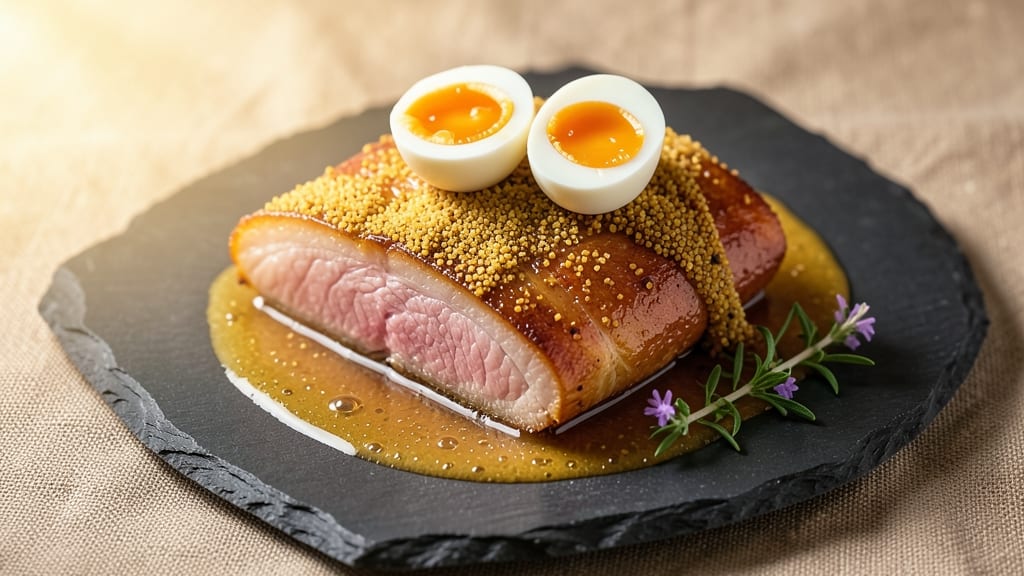
Mastering poached pork belly transforms a simple cut into a showstopper with silky pink meat and crispy cornmeal crowns—a technique I perfected after years of working with heritage pigs on my farm.
The secret lies in precise temperature control and a two-step cooking process that ensures tender interior and crispy exterior without drying out the meat.
This recipe begins with a slow poach in aromatic broth or wine, where the pork belly gently cooks until fork-tender, absorbing flavors like star anise and bay leaves.
After resting, the magic happens when you coat the chilled slices in cornmeal and pan-fry them until golden—creating that coveted crunch that contrasts perfectly with the melt-in-your-mouth interior.
What you’ll end up with is a dish that’s elegant enough for dinner parties but simple enough for weeknight meals. The poaching liquid can be repurposed into a rich sauce, and the crispy cornmeal crowns add a satisfying texture that keeps everyone reaching for seconds.
This is pork belly at its finest—restaurant-quality without the fuss.
Whether you’re serving it as a centerpiece for a holiday feast or a special occasion, this method ensures every bite delivers that perfect balance of crispy, tender, and flavorful. Let’s get started on creating your own crowd-pleasing masterpiece.
Ingredients for poached pork belly
Six ingredients transform pork belly into restaurant-quality crispy crowns over tender pink meat.
| Ingredient | Amount | Notes |
|---|---|---|
| Pork Belly 🐖 | 3 lb | Thick-cut, skin-on preferred |
| Yellow Cornmeal 🌽 | 1 cup | Fine grind for best texture |
| Large Eggs 🥚 | 2 whole | Separated for coating |
| Dry White Wine 🍷 | 2 cups | Bold, dry variety like Chardonnay |
| Chicken Broth 🍲 | 2 cups | Low-sodium preferred |
| Bay Leaves 🌿 | 2 whole | Fresh for best flavor |
| Star Anise Pods 🌶️ | 3 whole | Whole, not ground |
| Black Peppercorns 🌶️ | 1 tbsp | Freshly cracked |
| Sea Salt 🧂 | 2 tbsp | Kosher or coarse |
| Olive Oil 🫒 | ½ cup | For pan-frying |
| Fresh Thyme 🌿 | ¼ cup | Leaves only, chopped |
| Garlic Cloves 🧄 | 6 cloves | Smashed, not minced |
| Cornstarch 🌾 | 2 tbsp | For extra crispiness |
| Apple Cider Vinegar 🍎 | 1 tbsp | For brightness |
The pork belly makes or breaks this dish. Look for thick-cut, skin-on from a trusted butcher—Whole Foods or local farms have the best quality. Heritage pigs like Berkshire or Duroc yield the most flavorful meat, but any well-marbled belly will work. If buying pre-cut, check for even thickness—aim for about 1-inch slices. The cornmeal should be fine grind (not coarse)—it coats better and creates that perfect crunch. I always grab mine from Bob's Red Mill or the bulk section at Trader Joe's.
No white wine? Dry vermouth or apple cider works in a pinch—just add a splash of vinegar to cut the sweetness. Fresh thyme is ideal, but dried at one-third the amount gets you close. The star anise is non-negotiable—it adds that deep, aromatic note that makes this dish special. If you can't find it, a pinch of cinnamon plus a dash of cloves mimics it okay. For the pan-frying, avocado oil has a higher smoke point than olive oil, so use that if you're worried about burning. The cornstarch is worth adding—it gives that extra crunch without overpowering the cornmeal.
Poached pork belly keeps beautifully in the fridge for 4-5 days, wrapped tightly in parchment and foil. The cornmeal crowns? Best eaten fresh, but you can reheat them in a 350°F oven for 5-7 minutes if needed. I always make extra crowns—they disappear fast! Store the poaching liquid in a jar in the fridge for up to 1 week. It makes an amazing gravy—just reduce it with a little cornstarch slurry. Freeze portions of the poached belly for up to 3 months—it reheats like a dream.
Why You'll Love This Recipe
- One-Pot Magic: I swear by this—just the pork belly, wine, and broth simmering together while you crack eggs into cornmeal. No flipping pans, no second oven, no stress. That golden crust? Forms itself while you stir.
- Crispy-Creamy Obsession: The wine cuts through the richness, the cornmeal adds that addictive crunch, and the eggs? They turn into silky custard that clings to every bite. Honestly, it’s the kind of dish that makes you pause mid-chew just to savor it.
- Leftovers? Lunch Saved: Between us, this recipe begs for seconds. The pork stays tender for days, and the custardy eggs reheat like a dream—perfect for quick breakfasts or lazy dinners. I’ve fed a crowd with the leftovers, and no one complained.
- Budget Luxury: Pork belly feels fancy, but this method stretches it into multiple meals without breaking the bank. The wine and broth elevate it, but you’re not using gourmet amounts—just enough to make it feel special. My secret weapon for pretending I’m a chef.
Step-by-step instructions for crispy cornmeal-crusted pork belly
Here's how to transform tender pork belly into irresistible crispy crowns with a silky interior.
Prepare the Poaching Liquid for Maximum Flavor
In a large pot, combine the 2 cups dry white wine, 2 cups chicken broth, 2 whole bay leaves, 3 whole star anise pods, 1 tablespoon freshly cracked black peppercorns, and 1 tablespoon apple cider vinegar. Bring to a gentle simmer over medium heat, then reduce to a bare bubble—just enough to maintain warmth without boiling vigorously. This low-and-slow approach extracts deep flavor without clouding the liquid.
Let the poaching liquid infuse for 10 minutes while you prepare the pork belly. The star anise and thyme will release their aromatic oils, creating a fragrant base that will penetrate the meat during poaching. Keep the heat at the lowest setting possible to maintain these delicate flavors without bitterness.
Poach the Pork Belly Until Fork-Tender
While the liquid simmers gently, score the pork belly in a diamond pattern with a sharp knife, cutting about ½ inch deep without piercing the fat. This creates channels for the poaching liquid to penetrate while keeping the fat intact for maximum flavor. Submerge the pork belly fat-side down in the poaching liquid, ensuring it's completely covered.
Return the liquid to a gentle simmer and cover partially with a lid. Poach for 2 to 2½ hours until the meat is fork-tender but still holds its shape when pierced. You'll know it's ready when the internal temperature reaches 195°F and the meat pulls apart easily with gentle pressure. Maintain the liquid at a bare simmer throughout—boiling will toughen the meat and create a cloudy poaching liquid.
Create the Crispy Cornmeal Coating
In a shallow dish, whisk together the 1 cup yellow cornmeal, 2 tablespoons sea salt, 2 tablespoons cornstarch, and ¼ cup chopped fresh thyme. Separate the 2 large eggs, placing the yolks in one bowl and whites in another. In a separate bowl, beat the egg whites to stiff peaks—they'll form the crispy outer layer of your crowns.
Transfer the poached pork belly to a cutting board and let it rest for 15 minutes. Pat it dry thoroughly with paper towels—this is crucial for maximum crispiness. Then, dip the pork belly into the egg yolks, coating it evenly, and immediately roll it in the cornmeal mixture, pressing gently to adhere. Finally, dip into the beaten egg whites and roll again in the cornmeal for an extra-crispy exterior.
Pan-Fry to Crispy Perfection
Heat ½ cup olive oil in a large skillet over medium-high heat until shimmering but not smoking. Working in batches if needed, carefully place the cornmeal-coated pork belly in the skillet. Fry for 3 to 4 minutes per side until deep golden brown and crispy—you'll see the cornmeal crust develop a beautiful caramelized color and hear a satisfying sizzle.
Transfer the crispy pork belly to a wire rack set over a baking sheet to drain excess oil. Let it rest for 5 minutes before slicing into ½-inch thick slices. The cornmeal crowns should be shatteringly crisp while the interior remains silky pink and tender. Serve immediately with the reserved poaching liquid reduced by half for a flavorful sauce.
Pro Tips For Making Poached Pork Belly
- SCORE THE BELLY FIRST: Use a sharp knife to cut shallow crosshatch marks (about ¼-inch deep) on the pork belly before poaching—this keeps it from curling up like a stubborn toddler. I learned this the hard way when my first batch turned into a lumpy mess.
- SALT THE BROTH LIBERALLY: The chicken broth needs at least 1½ teaspoons of salt per quart, or the pork will taste bland no matter how much you season later. Dry white wine already has acidity, so don’t overcompensate—just let the salt do its job.
- SKIP THE BOILING MADNESS: Start with cold broth and wine in the pot, then bring it to a gentle simmer (tiny bubbles, not rolling). Boiling makes the pork belly tough and greasy—like overcooking a steak, but worse because you can’t fix it.
- CRUST THE CORNMEAL DRY: Toss the pork belly in yellow cornmeal after patting it bone-dry with paper towels—wet cornmeal just turns into glue. A quick shake in a paper bag works better than a bowl, and you’ll get that perfect crunch every time.
Troubleshooting perfect results
Poaching Liquid Too Cloudy
If your poaching liquid turns cloudy during cooking, it’s usually from boiling or overcrowding. I’ve seen this happen when the pot gets too hot or the pork belly isn’t fully submerged. Solution: Keep the liquid at a gentle simmer—just a few bubbles breaking the surface—never a rolling boil.
If it starts clouding, reduce heat immediately and add a splash of cold water to calm it down. The star anise and thyme will release their oils more gently this way, keeping the liquid clear and flavorful. 🌡️
Pork Belly Not Cooking Evenly
Uneven cooking often happens when the pork belly isn’t scored properly or the fat isn’t evenly distributed. Fix this by scoring in a diamond pattern (about ½-inch deep) before poaching—this ensures the liquid penetrates evenly. If one side cooks faster, flip the belly halfway through poaching.
Also, trim excess fat if it’s uneven, as thick fat layers can insulate the meat and slow cooking. I’ve learned this the hard way—always check your cuts before submerging! ⚡
Cornmeal Coating Not Crispy
Damp pork belly is the #1 enemy of crispy cornmeal crowns. Pat it bone-dry with paper towels after poaching—this step is non-negotiable. If the coating still feels soggy, chill the pork belly for 15 minutes before dipping it in egg and cornmeal.
Another trick? Use cornstarch in your coating—it adds extra crunch. I also recommend frying in small batches to avoid overcrowding the pan, which steams the coating instead of crisping it. 💫
Poaching Liquid Too Weak
A bland poaching liquid usually means the aromatics weren’t infused long enough. Simmer the liquid for at least 10 minutes before adding the pork belly—this lets the star anise, thyme, and bay leaves release their flavors.
If it still tastes flat, strain and reduce the liquid by half after poaching, then add a splash of apple cider vinegar or a pinch of salt to brighten it. For extra depth, I sometimes add a smashed garlic clove or two while reducing. 🌿
Pork Belly Overcooked or Dry
Overcooking happens when the internal temperature exceeds 200°F—the meat turns dry and loses its silky texture. Pull it out at 195°F and let it rest before slicing.
If it’s still tough, it might have been poached too long. Solution: Adjust your cook time based on thickness—1-inch slices usually take 2-2½ hours. For thicker cuts, check the temp early and adjust heat as needed. I always use a meat thermometer to avoid guesswork. 💡
Nutrition facts
Frequently asked questions
What's the best cut of pork belly for this recipe?
Look for thick-cut, skin-on pork belly with even fat distribution—about 1-inch thick slices. Heritage breeds like Berkshire or Duroc yield the most flavor, but any well-marbled belly works. Avoid thin cuts or those with uneven fat layers, as they won't poach evenly.
Can I use chicken broth instead of white wine?
For a richer flavor, use a mix of 1 cup white wine + 1 cup broth. If you prefer all broth, add 1 tablespoon apple cider vinegar to brighten the liquid. The key is maintaining a gentle simmer to avoid cloudiness.
How do I make the cornmeal crowns extra crispy?
Pat the poached pork belly bone-dry after resting, then chill it for 15 minutes before coating. Use fine-ground cornmeal + cornstarch (50/50 ratio) and fry in small batches over medium-high heat until golden. Avoid overcrowding the pan!
What's the ideal internal temperature for perfect pork belly?
Remove the pork belly when it reaches 195°F—this ensures tender meat without drying it out. Use a meat thermometer for accuracy. If it exceeds 200°F, the texture becomes tough and dry. Let it rest 15 minutes before slicing.
Can I prepare this ahead of time?
Yes! Poach the pork belly up to 2 days ahead and store it wrapped in parchment and foil. The cornmeal crowns are best made fresh, but you can reheat them in a 350°F oven for 5-7 minutes. The poaching liquid keeps for 1 week in the fridge—reduce it for a quick gravy.