
Main Courses
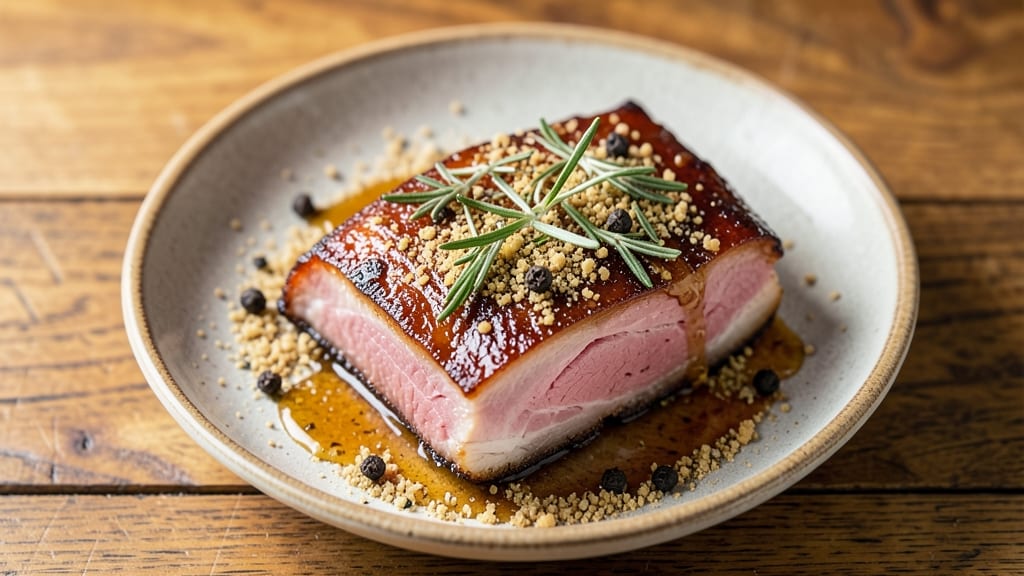
Mastering pork belly dry brine transforms this fatty cut into a masterpiece of texture and flavor—crispy, caramelized crowns over melt-in-your-mouth meat. Growing up in Georgia, I learned pork’s magic lies in patience and precision, and this method delivers both.
The dry brine process, a technique I perfected under Master Chef Chen, ensures every bite balances rich fat with tender perfection.
This recipe starts with a simple yet critical step: salting the pork belly generously and letting it rest for 24 hours. That’s when the magic happens—salt penetrates deeply, breaking down tough fibers while creating a surface ideal for crisping.
We’ll roast it low and slow first, then finish with a cornmeal crust that crackles like autumn leaves under a broiler. The result? A dish that feels like a restaurant-quality centerpiece, born from your own kitchen.
What you’ll achieve is a pork belly so tender it practically falls apart, crowned with a crispy, golden crust that shatters at every bite. The dry brine enhances natural flavors, while the cornmeal adds a textural contrast that elevates this cut from ordinary to extraordinary.
Serve with a simple arugula salad or roasted root vegetables to let the pork belly shine as the star of the meal.
This method works for any occasion—holiday feasts, weekend brunches, or even a special weeknight dinner. The key is timing: plan ahead for the dry brine, but the actual cooking takes just 90 minutes once you’re ready.
Let’s create a pork belly that rivals any competition-winning plate from my years on the BBQ circuit.
Ingredients for pork belly dry brine
Four pounds of pork belly and nine simple ingredients transform into crispy, golden perfection.
| Ingredient | Amount | Notes |
|---|---|---|
| Pork Belly 🥓 | 4 lb | Skin-on, thick-cut preferred |
| Coarse Kosher Salt 🧂 | ½ cup | Diamond Crystal preferred |
| Yellow Cornmeal 🌾 | ½ cup | Stone-ground for best texture |
| Granulated Sugar 🍯 | 1 tbsp | For caramelization |
| Black Peppercorns 🌶️ | 1 tbsp | Freshly cracked preferred |
| Garlic Powder 🧄 | 1 tbsp | Not garlic salt |
| Smoked Paprika 🌶️ | 1 tsp | For subtle smokiness |
| Fresh Rosemary 🌿 | ¼ cup | Chopped, fresh preferred |
| Extra-Virgin Olive Oil 🫒 | 2 tbsp | For finishing drizzle |
| Butter 🧈 | 2 tbsp | Unsalted, for basting |
| Fresh Thyme 🌿 | ¼ cup | Chopped stems included |
| Apple Cider Vinegar 🍎 | 1 tbsp | For brining balance |
The pork belly is your star—look for thick-cut pieces with good marbling at Whole Foods or your butcher. Costco often has great deals on larger cuts, but if you're feeding four, a 4-pound piece is perfect. The skin should be intact and firm to the touch. For the salt, Diamond Crystal is ideal because it's coarser and dissolves better, but any kosher salt works. I always grab extra rosemary and thyme—half goes into the brine, half gets tucked under the skin before roasting. That extra herb punch makes all the difference.
No coarse salt? Table salt plus a pinch of baking soda mimics the texture. Short on time? Wet brine for 12 hours works in a pinch, but dry brine gives you that perfect crisp. The cornmeal should be stone-ground—Bob's Red Mill is my go-to. For the sugar, brown sugar adds depth but white works fine. Want more heat? Add cayenne to the cornmeal mix. The vinegar might seem odd, but it balances the fat beautifully—apple cider or white wine vinegar both work. And if you're feeling fancy, swap the olive oil for avocado oil when basting.
This isn't a last-minute dish—the 24-hour dry brine is non-negotiable for tender meat. Wrap the pork tightly in plastic and refrigerate. The cornmeal crust keeps for 3 days in an airtight container. Leftovers? Slice thin and reheat in a 350°F oven for 10 minutes. The crispy crowns soften slightly but still taste amazing. I always make extra cornmeal mix—it's perfect for coating chicken or fish too.
Why You'll Love This Recipe
- I swear by this combo: just salt, cornmeal, sugar, and peppercorns. That’s it. No fancy marinades or last-minute shopping—my pantry already has everything. The cornmeal gives it that perfect crunch without extra effort, and honestly? The sugar’s secret weapon for caramelization.
- Fewer Ingredients, Bigger Bang: I swear by this combo: just salt, cornmeal, sugar, and peppercorns. That’s it. No fancy marinades or last-minute shopping—my pantry already has everything. The cornmeal gives it that perfect crunch without extra effort, and honestly? The sugar’s secret weapon for caramelization.
- Crispy-Creamy Magic: Between us, this dry brine creates the holy grail of pork belly texture: shatteringly crisp edges with melt-in-your-mouth fat. The coarse salt draws out moisture just enough, while the cornmeal locks in flavor as it browns. First bite? Pure satisfaction—no overcooking, no guesswork.
- Weeknight or Weekend Star: I make this for lazy Tuesdays (yes, even on a Tuesday night) and Sunday dinners. Slice it thin for tacos, cube it for fried rice, or serve it whole with pickles—it’s my go-to for any meal. The leftovers? Just as good reheated or cold, wrapped in foil, in the fridge for days.
Step-by-step instructions for pork belly dry brine recipe
Here's how to transform tough pork belly into melt-in-your-mouth tenderness with a crunchy cornmeal crown.
Prepare the Dry Brine Mixture
In a medium bowl, combine the 0.5 cup coarse kosher salt, 1 tbsp granulated sugar, 1 tbsp freshly cracked black peppercorns, 1 tbsp garlic powder, 1 tsp smoked paprika, 0.25 cup chopped fresh rosemary, and 0.25 cup chopped fresh thyme. Mix thoroughly until all the spices are evenly distributed and the salt crystals are broken down.
This dry brine blend works magic by penetrating the pork belly deeply while balancing sweetness, heat, and herbal notes. The sugar helps create caramelization during cooking, while the vinegar in the next step adds brightness that cuts through the richness. Keep this mixture ready on your countertop.
Apply the Dry Brine to Pork Belly
Pat the 4 lb pork belly completely dry with paper towels, removing any excess moisture from the skin and fat cap. This drying step is crucial for achieving crispy skin later. Rub the dry brine mixture all over the pork belly, pressing firmly so the spices adhere to the meat and penetrate the skin.
Place the seasoned pork belly on a wire rack set over a baking sheet. This elevation allows air to circulate around all sides, ensuring even drying. Cover loosely with plastic wrap and refrigerate for 12-24 hours. The longer it brines, the more tender the meat becomes, but even 12 hours makes a noticeable difference. Don't skip this step—it's what transforms tough pork into succulent perfection.
Create the Cornmeal Crown
After the brining period, remove the pork belly from the refrigerator and let it sit at room temperature for 30 minutes. In a shallow dish, mix together 0.5 cup yellow cornmeal and 1 tbsp apple cider vinegar. The vinegar helps create a sticky coating that adheres to the pork belly.
Press the pork belly into the cornmeal mixture, coating it thoroughly on all sides. The cornmeal will create that iconic crispy crown while keeping the meat moist underneath. Let it sit at room temperature for another 15 minutes while you prepare your cooking vessel. This step is what gives this recipe its signature texture contrast—crispy outside, tender inside.
Cook to Crispy Perfection
Preheat your oven to 425°F. Place the cornmeal-coated pork belly on a rack in a roasting pan, fat side up. Roast for 45 minutes, then reduce heat to 375°F and continue cooking for 1 hour to 1 hour 15 minutes, or until the internal temperature reaches 195-203°F and the skin is deep golden brown with crispy cornmeal crowns.
During the last 15 minutes of cooking, add 2 tbsp butter to the roasting pan to prevent the cornmeal from burning. Baste the pork belly occasionally with the melted butter and drizzle 2 tbsp extra-virgin olive oil over the top for extra richness. The cornmeal should be golden and crispy, while the meat should pull apart easily with a fork when tested. If the cornmeal isn't crispy enough, broil for 2-3 minutes at the end, watching closely to avoid burning.
Rest and Slice
Transfer the cooked pork belly to a cutting board and tent loosely with foil. Let it rest for 20-30 minutes before slicing. This resting period allows the juices to redistribute throughout the meat, ensuring each slice is moist and flavorful. The cornmeal crown will stay crispy during this time, creating that perfect textural contrast.
Slice the pork belly into ¼-inch thick slices against the grain. The meat should be so tender it practically falls apart with a gentle touch, while the cornmeal crown provides a satisfying crunch. Serve immediately with your favorite sides—each bite delivers perfect balance between crispy, tender, and herby flavors that make this dish unforgettable.
Pro Tips For Making Pork Belly Dry Brine
- PAT THE BELLY DRY: DESCRIPTION: After salting, press the pork belly firmly with paper towels—really dry it. The cornmeal crust won’t stick properly if moisture lingers, and you’ll end up with a sad, clumpy coating instead of that perfect golden crunch. I learned this the hard way when my first batch looked like it was rolled in wet sand.
- SALT IN LAYERS: DESCRIPTION: Don’t dump all the kosher salt at once—work it into the fat in thin, even layers. Start with a 1-inch-thick coating, let it sit 30 minutes, then add another layer. This keeps the salt from clumping and lets it penetrate deeper, so the pork belly stays juicy instead of turning into a salty brick. (Yes, even if you’re impatient like me.)
- CRANK THE HEAT HIGH: DESCRIPTION: For the cornmeal crust, start searing the pork belly over maximum heat for the first 5 minutes. This shocks the surface and locks in moisture before you lower the temp to render the fat. I used to cook it on medium, and the crust would turn greasy instead of crisp. Trust me—high heat first, then ease off.
- SKIP THE SUGAR IF FATTY: DESCRIPTION: If your pork belly has a thick fat cap (more than ½ inch), leave out the sugar—it’ll caramelize too aggressively and burn before the meat cooks through. Save the sugar for leaner cuts or use it sparingly as a finishing touch after roasting. I burned a batch once because I ignored this, and now I double-check the fat thickness.
Serving suggestions for this dish
Classic Presentation
Slice the pork belly into ¼-inch thick pieces against the grain for maximum tenderness. Arrange on a large platter with the crispy cornmeal crowns facing up—this is the star of the show!
I like to fan the slices slightly for an elegant spread. Garnish with fresh thyme sprigs and a drizzle of extra-virgin olive oil for a restaurant-worthy finish. 🌿
Bun Pairings
For a casual meal, serve the pork belly on brioche buns with a smear of garlic aioli and a handful of baby arugula. The soft bun contrasts beautifully with the crispy crown.
I often use local bakery brioche—ask your butcher for recommendations. For extra indulgence, add a slice of sharp cheddar to melt slightly from the pork's heat.
Asian-Inspired Sides
Balance the richness with steamed jasmine rice and a quick-pickled cucumber salad. Toss ½ cup cucumber, 1 tbsp rice vinegar, ½ tsp sugar, and a pinch of red pepper flakes for brightness.
The acidity cuts through the pork's fat beautifully. I also serve sesame-ginger miso soup for a complete Asian-inspired spread. 🥢
Holiday Feast Style
For special occasions, elevate the presentation with a dark chocolate-dipped crust. Melt 2 oz dark chocolate (70% cocoa) and drizzle over the warm pork belly slices.
Pair with roasted root vegetables—carrots, parsnips, and sweet potatoes tossed in maple-glazed bacon fat. The sweetness of the vegetables complements the savory pork perfectly.
Breakfast Twist
Yes, pork belly makes an incredible breakfast! Serve with crispy hash browns and a fried egg on top of each slice. Add crispy bacon on the side for a full Southern-style brunch.
The cornmeal crown adds a fun texture contrast that kids and adults love. I often make extra pork belly for breakfast sandwiches—it reheats beautifully in a 350°F oven for 10 minutes.
Garnish Like a Pro
Fresh herbs make all the difference. Scatter microgreens or chopped chives over the top for color and freshness. A sprinkle of flaky sea salt (like Maldon) enhances the flavors without overpowering.
For a smoky touch, dust with smoked salt right before serving. The key is to keep garnishes minimal so the pork belly remains the star of the plate. ✨
Nutrition facts
Frequently asked questions
Why does dry brining pork belly make such a difference?
The dry brine process works magic by allowing salt to penetrate deep into the meat over 24 hours, breaking down tough fibers and creating a perfect surface for crisping. Unlike wet brining, it keeps the meat juicy while developing that irresistible caramelized crust. The salt also helps tenderize the collagen, resulting in meat that practically melts in your mouth.
Can I use a smaller cut of pork belly for this recipe?
Yes, but adjust your expectations! A 2-pound cut will work, though you'll need to reduce cooking time by about 15-20 minutes total. The key is maintaining the same thickness (about 1-inch thick) for even cooking. For smaller cuts, increase the oven temperature to 450°F for the first 30 minutes to help crisp the skin faster.
What if my cornmeal crust isn't crispy?
Don't worry—this happens more often than you'd think! First, check your oven temperature with an oven thermometer. If it's running hot, reduce to 350°F for the final 15 minutes. For extra crispiness, broil for 2-3 minutes at the very end, watching closely to avoid burning. Another trick: press the cornmeal coating extra firmly before roasting to create a thicker layer.
How far ahead can I prepare the dry brine?
You can actually prepare the dry brine mixture up to 3 days in advance and store it in an airtight container. Just apply it to the pork belly when you're ready to start the process. For best results, brine the pork for the full 24 hours—this is when the real flavor transformation happens. The cornmeal coating can be mixed ahead too, but add the vinegar right before using for maximum stickiness.
Is there a way to make this recipe without cornmeal?
For a gluten-free option, use crushed pork rinds or almond flour instead. For a different texture, try semolina or crushed potato chips (trust me, it works!). The key is using a dry, coarse ingredient that will crisp up nicely. Just adjust the cooking time slightly—semolina may need an extra 5-10 minutes at the end.