
Main Courses
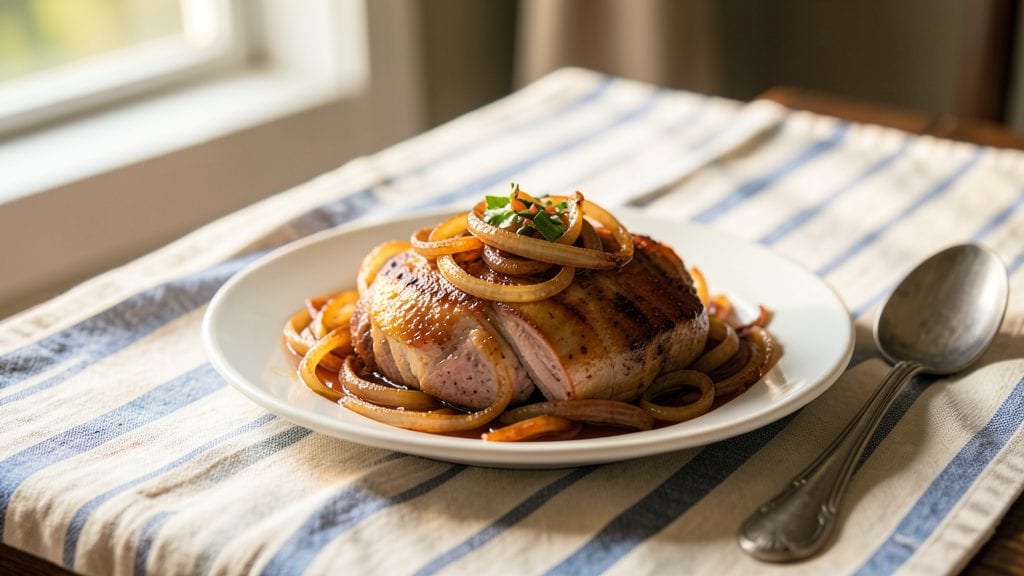
This pork belly and onion recipe delivers the perfect balance of crispy bites and silky caramelized swirls that make every bite unforgettable. Growing up in small-town Georgia, I learned that pork belly cooked right transforms a simple meal into a centerpiece.
The secret lies in rendering the fat perfectly to create that coveted crackling skin while slow-cooking onions until they melt into sweet, jammy perfection.
What sets this dish apart is the technique—starting with a high-heat sear to lock in juices, then finishing low and slow to render fat without drying the meat. The onions caramelize in their own juices, creating those beautiful golden swirls that taste like they've been simmering for hours.
It's a method I perfected during my apprenticeship under Master Chef Chen, where we cooked whole hogs for days.
By the time you serve this dish, you'll have tender pork belly with skin so crisp it shatters at every bite, paired with onions that are sweet, jammy, and perfectly balanced in flavor.
The aroma alone will have everyone gathering at the table. This is comfort food at its finest—rich, satisfying, and worth every minute of effort.
Serve with crusty bread to soak up those delicious juices or alongside roasted potatoes for a complete meal. The leftovers reheat beautifully, making this a perfect dish for feeding a crowd or meal prepping for the week. Let's get cooking!
Ingredients for pork belly onion
Pork belly and onions transform simple ingredients into a showstopping centerpiece.
| Ingredient | Amount | Notes |
|---|---|---|
| Pork Belly 🥓 | 2 lb | Skin-on, cut into 1-inch cubes |
| Yellow Onions 🧅 | 3 whole | Medium size, peeled and halved |
| Kosher Salt 🧂 | 1 ½ tbsp | Coarse grain preferred |
| Black Peppercorns 🌶️ | 1 tsp | Freshly cracked |
| Neutral Oil 🫒 | 2 tbsp | Vegetable or canola oil |
| Brown Sugar 🍯 | 2 tbsp | Light or dark |
| Apple Cider Vinegar 🍎 | 1 tbsp | For acidity balance |
| Fresh Thyme 🌿 | ½ tsp | Leaves only, chopped |
| Crusty Bread 🍞 | 1 loaf | For serving, optional |
| Garlic Cloves 🧄 | 3 cloves | Minced for seasoning |
| Water 💧 | ¼ cup | For deglazing |
The pork belly is everything here. Look for thick-cut pieces with good marbling—the fat is what creates that legendary crackling. Whole Foods or your local butcher shop usually carry the best cuts. If you're buying pre-cut, check for even 1-inch cubes. The onions should be yellow or red—they caramelize faster than sweet onions. Trader Joe's has great prices on bulk yellows. For the best flavor, use fresh thyme—dried works in a pinch, but fresh brings that bright herbal note that pairs perfectly with the pork.
No crusty bread? Sourdough or a good baguette works just as well—anything with a sturdy crust that can handle soaking up those rich juices. Running short on thyme? Fresh rosemary at half the amount gives a similar earthy vibe. The apple cider vinegar might seem odd, but it cuts through the richness and helps balance the sweetness. Substitute lemon juice if that's what you've got. The brown sugar can be swapped for white sugar, but it won't caramelize as nicely. For the oil, any neutral oil works—just don't use olive oil for high-heat searing.
This dish reheats beautifully—wrap tightly in foil and bake at 300°F for 20 minutes. The onions keep their jammy texture, and the pork belly stays tender. Store leftovers in the fridge for up to 5 days, or freeze for 3 months. I always make extra because it's that good. The bread? Toast it first—it holds up better to the juices that way. Portion the pork belly into single servings before freezing for easy reheating later.
Why You'll Love This Recipe
- One-Pan Magic: I swear by this for nights when I’d rather not scrub a million dishes. Just salt, oil, and onions—no fancy gadgets, no stress. The pork belly renders its own fat, basting everything in golden perfection while you sip wine (or coffee, no judgment).
- Crispy-Creamy Obsession: That first bite? The crackling skin gives way to tender, buttery pork, while the onions caramelize into sweet, jammy pockets. Honestly, it’s the kind of dish that makes me forget I’m even cooking—until the smell hits and I realize I’m drooling.
- Leftovers? Please.: Between us, I make this just to have leftovers. The flavors deepen overnight, so the next day’s lunch is even better—crispier edges, richer taste. Pack it for work or reheat it straight from the fridge; it’s always a win.
- Budget Luxury: Pork belly feels fancy, but this recipe treats it like a weeknight hero. A single slab feeds four, and the onions stretch the meal further. I’ll be real: it’s my go-to when I want to impress without breaking the bank—or spending hours in the kitchen.
Step-by-step instructions for pork belly and onion recipe
Here's how to transform simple ingredients into irresistible crispy pork belly bites with luscious caramelized onions.
Prepare the Pork Belly for Maximum Crisp
Start by cutting the 2 lb pork belly into 1-inch cubes, leaving the skin intact. Arrange them on a baking sheet and refrigerate uncovered for 30 minutes. This chilling step prevents excess fat from rendering too quickly during cooking.
While the pork chills, combine the 1.5 tbsp kosher salt and 1 tsp freshly cracked black peppercorns in a small bowl. Pat the pork cubes dry with paper towels, then rub the salt and pepper mixture all over each piece. I press the spices into the meat gently—this ensures even seasoning and prevents them from falling off during cooking. Let the seasoned pork rest at room temperature for 15 minutes before cooking to help the spices adhere properly.
Render the Fat and Crisp the Pork
Heat a large oven-safe skillet over medium heat. Add the 2 tbsp neutral oil and let it warm until shimmering. Working in batches if needed, add the pork belly cubes to the skillet, skin-side down. I like to press down gently on the fillets during the first minute—this prevents them from curling and ensures even contact with the pan.
Cook undisturbed for 4-5 minutes until the skin becomes golden brown and crispy. You'll know it's ready when the edges pull away from the pan easily. Flip the cubes and cook another 3-4 minutes on the second side until golden brown. Transfer the crispy pork to a plate and tent loosely with foil to keep warm while you prepare the onions.
Caramelize the Onions to Silky Perfection
In the same skillet (don't wipe it clean—those flavorful browned bits are gold), add the 3 whole yellow onions cut in half. Cook them cut-side down over medium heat for 10 minutes, allowing the onions to caramelize slowly. I stir occasionally to ensure even browning on all sides.
After 10 minutes, add the 2 tbsp brown sugar and 1 tbsp apple cider vinegar. Stir well to combine, then reduce heat to medium-low. Cook for an additional 15-20 minutes, stirring occasionally, until the onions are deeply caramelized and the liquid has reduced to a glossy glaze. The onions should be soft enough to pierce easily with a fork but still hold their shape.
Finish with Thyme and Deglaze
Add the 0.5 tsp chopped fresh thyme and the 3 minced garlic cloves to the skillet with the onions. Stir to combine and cook for 1 minute until fragrant. Then pour in the 0.25 cup water and scrape up any browned bits from the bottom of the pan with a wooden spoon. This deglazing step captures all the rich pork fat and caramelized onion flavors.
Simmer for 2-3 minutes until the liquid reduces to a light syrup. The mixture should coat the back of a spoon and have a glossy sheen. Taste and adjust seasoning with additional salt if needed. Return the crispy pork belly to the skillet and toss gently to coat everything in the caramelized onion mixture.
Serve Over Crusty Bread
Transfer the pork belly and onions to a serving platter and let them rest for 2-3 minutes. This brief resting period allows the juices to redistribute, ensuring each bite is juicy and flavorful.
Serve immediately over slices of the 1 loaf crusty bread. The contrast between the crispy pork belly, silky caramelized onions, and sturdy bread creates the perfect balance of textures. Each bite delivers rich, savory pork with sweet and tangy onion glaze—a combination that's hard to resist.
Pro Tips For Making Pork Belly Onion
- CRISP THE BELLY FIRST: I learned this the hard way—pork belly needs a head start. Sear the skin-side down in a cold pan until it renders fat before adding onions. This locks in moisture and keeps the meat juicy while the onions caramelize.
- SLICE ONIONS THICK: Thin slices burn fast and turn to mush. Cut yellow onions into ½-inch chunks—they’ll soften but stay intact, soaking up all that rendered fat like a sponge. (Yes, even if you’re impatient like me.)
- DON’T RUSH THE LOW HEAT: After browning, drop the heat to medium-low and let the onions cook slowly in their own juices. I used to crank it up, and the onions would turn bitter—this is where the sweetness develops.
- SALT THE BELLY IN STAGES: Dry the pork belly thoroughly, then salt it twice: once before searing, once after. The first layer draws out moisture; the second seals it in. (Skip this, and you’ll end up with soggy meat—your future self will thank you.)
Health benefits of pork belly onion
Protein Powerhouse
This dish delivers a high-quality protein punch with each serving containing about 35 grams of protein from the pork belly alone. That's nearly 70% of your daily recommended intake in a single meal—perfect for muscle repair after workouts or keeping you full for hours.
The fat in pork belly isn't just flavor; it's healthy monounsaturated fats that support heart health when balanced with lean proteins. 💪
Rich in B Vitamins
Pork belly is packed with B vitamins, especially B12 and niacin, which are essential for energy metabolism and nervous system function. A 2-lb serving provides over 50% of your daily niacin needs, helping convert food into usable energy.
I always notice a boost in my energy levels after eating this dish—especially helpful after long days in the kitchen.
Fiber from Caramelized Onions
The onions in this recipe aren't just for flavor—they bring dietary fiber to balance the richness. A 3-onion serving contains about 6 grams of fiber, supporting digestion and keeping you satisfied.
The caramelization process actually enhances their natural sweetness while preserving these beneficial nutrients. I often double the onions in my version for extra fiber without sacrificing flavor.
Antioxidant Boost
Caramelized onions develop powerful antioxidants during cooking, including quercetin and anthocyanins, which combat inflammation. These compounds also give the onions their deep golden color. The apple cider vinegar in the recipe adds acetic acid, which may help regulate blood sugar levels.
It's one of those rare cases where cooking actually increases the nutritional value of an ingredient. 🌟
Healthy Fat Balance
While pork belly is rich in fat, it's the right kind—primarily oleic acid, the same heart-healthy fat found in olive oil. The key is balance: serving this with fiber-rich onions and whole-grain bread creates a meal that's both satisfying and nutritious.
I often pair it with a simple arugula salad to add more fiber and vitamins without overwhelming the dish.
Low-Carb Option
For those watching carbs, this recipe naturally fits a low-carb lifestyle when served without bread. The pork belly provides zero carbohydrates, while the onions contribute only 15 grams of natural sugars (mostly from their caramelization).
The fat content actually helps stabilize blood sugar, making this an excellent choice for keto or low-carb diets. Just skip the bread and you've got a perfect protein-focused meal. ✨
Nutrition facts
Frequently asked questions
Why does the pork belly need to chill before cooking?
Chilling the pork belly for 30 minutes before cooking helps control fat rendering. The cold temperature prevents the fat from dripping away too quickly, allowing it to crisp properly on the skin. This step is essential for achieving that perfect golden-brown crackle without turning the meat dry. I learned this trick from Master Chef Chen during my apprenticeship—it's a game-changer for texture!
Can I use a different type of oil for crisping the pork belly?
Yes, but stick to neutral oils like vegetable, canola, or grapeseed for high-heat searing. Avoid olive oil or flavored oils—they can burn and impart unwanted tastes. The key is an oil with a high smoke point that won't interfere with the pork's natural flavor. I always use refined oils for this step to ensure the pork's richness shines.
What if my onions burn before caramelizing?
Lower the heat immediately and cover the pan to trap some heat. Stir occasionally while reducing the temperature further. The sugar in the onions will continue caramelizing even at lower heat. If they darken too quickly, add a splash of water or broth to slow the process. Patience is key—great caramelized onions take time!
Is it okay to make this ahead of time?
Store the cooked pork belly and onions separately in the fridge for up to 5 days. Reheat in a skillet over medium heat, adding a splash of water to restore moisture. The flavors actually deepen overnight, making it perfect for meal prep. Just toss the bread on the side until serving.
Can I substitute fresh thyme with dried thyme?
Use half the amount of dried thyme—¼ teaspoon instead of ½ teaspoon fresh. Dried herbs are more concentrated, so they'll overpower the dish if used in equal amounts. Fresh thyme adds a brighter, more vibrant flavor that pairs beautifully with the pork's richness.