
Main Courses
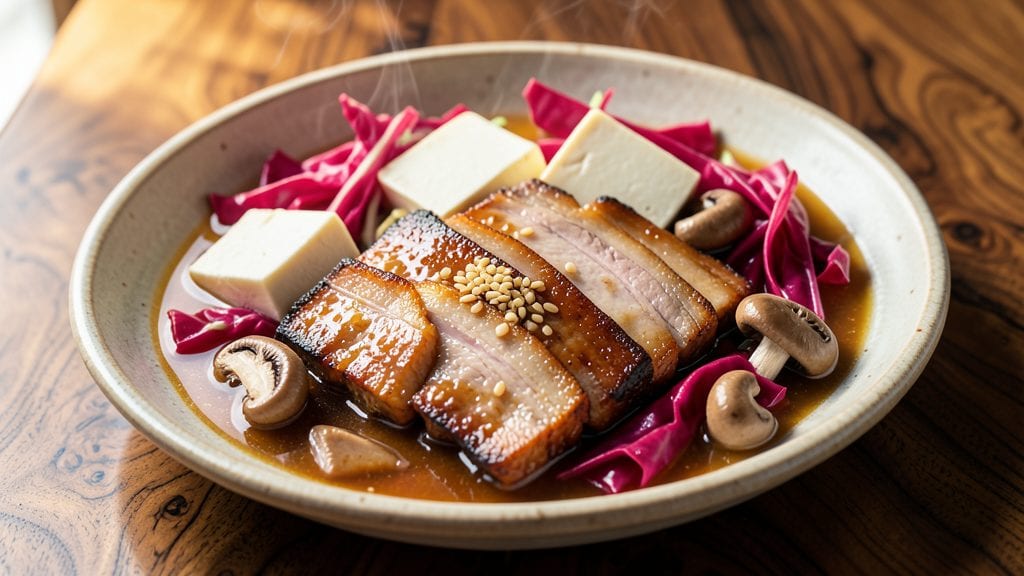
Mastering pork belly sukiyaki transforms a simple hot pot into a restaurant-worthy experience where tender meat meets silky broth. 🔥 Growing up in Georgia, I learned pork's versatility—now I'm bringing that tradition to Japanese cuisine, proving how rich, fatty cuts shine when sliced thin and cooked low and slow.
The key lies in balancing sweet, salty, and umami flavors while keeping the broth clear enough to showcase caramelized pork bits.
This recipe delivers restaurant-quality results with just 10 ingredients and 30 minutes of active prep—perfect for weeknight dinners that feel special. We'll start with thinly sliced pork belly that develops crispy edges while staying tender inside, then build a silky dashi broth enhanced with soy, mirin, and sugar.
The vegetables—napa cabbage, shiitake mushrooms, and tofu—add texture contrast while absorbing the flavorful liquid.
What makes this sukiyaki exceptional is the final touch: beaten egg poured into the hot pot, creating delicate ribbons that coat every bite. The result is a dish where each component—crispy pork, silky broth, creamy egg—works in perfect harmony.
Serve with steamed rice and a side of green tea to complete the experience, or add modern twists like cheese or chili oil for personalized flair.
Whether you're recreating a traditional Japanese meal or putting your own spin on it, this pork belly sukiyaki brings comfort and sophistication to your table. The technique is simple but the results feel luxurious—exactly what home cooking should deliver.
Let's get started with the ingredients that will make this dish unforgettable.
Ingredients for pork belly sukiyaki
Pantry staples meet Japanese tradition in this pork belly sukiyaki. Simple ingredients create restaurant-quality magic.
| Ingredient | Amount | Notes |
|---|---|---|
| Pork Belly 🥓 | 1 ½ lb | Thinly sliced, skin removed |
| Napa Cabbage 🥬 | 1 whole | Thinly sliced, core removed |
| Shiitake Mushrooms 🍄 | 8 whole | Stems removed, sliced |
| Firm Tofu 🧀 | 1 lb | Pressed, cubed |
| Dashi Stock 🍜 | 4 cups | Homemade or quality jarred |
| Soy Sauce 🧂 | ½ cup | Low sodium preferred |
| Mirin 🍶 | ¼ cup | Sweet rice wine |
| Granulated Sugar 🍯 | ¼ cup | White or brown sugar |
| Large Eggs 🥚 | 2 whole | Beaten for sukiyaki |
| Neutral Oil 🫒 | ¼ cup | For cooking pork |
The pork belly is everything here—look for well-marbled cuts from the butcher counter. I always ask for thinly sliced, skinless pieces to save time. Costco has great pre-sliced options, but your local butcher can customize the thickness. For the tofu, firm or extra-firm works best—press it for at least 30 minutes to remove excess water, or use a tofu press. The shiitake mushrooms? Fresh are ideal, but dried ones work too if you soak them for 20 minutes.
No dashi stock? Substitute 4 cups kombu broth + 2 cups bonito flakes for authentic flavor. Want to skip the mirin? Use 0.1 cup extra sugar + 0.15 cup white wine for sweetness. The soy sauce can be low-sodium, but regular works fine if you adjust your salt. For the napa cabbage, any cabbage works in a pinch—just slice it thinner. The eggs are non-negotiable though—beaten just before cooking for perfect ribbons.
Keep the pork belly slices in airtight containers with paper towels for up to 3 days. The tofu absorbs flavors fast, so marinate it in soy sauce and water for 1 hour before cooking. Store the broth ingredients separately until ready to cook—dashi keeps for 1 week in the fridge. This reheats beautifully, so double the batch for leftovers. The crispy pork bits are even better the next day!
Why You'll Love This Recipe
- One-Pot Magic: I swear by this—just sear the pork belly until golden, toss in the shiitakes and cabbage, then let the dashi stock do its thing. No extra pans, no stress, and honestly, the smell alone makes my kitchen feel like a Japanese izakaya.
- Rich Umami Bomb: That first bite of crispy pork belly melting into tender slices? Chef’s kiss. The dashi stock and shiitakes pack a savory punch, while the tofu soaks up all the goodness—no bland bites here.
- Weeknight to Dinner Party: Between us, this feeds six without breaking a sweat. Double the recipe for leftovers, or serve it family-style at your next get-together. (Yes, even on a Tuesday night.)
- Budget Luxury: Pork belly feels fancy, but it stretches farther than you’d think. The tofu and cabbage bulk it up, and dashi stock? A dollar-store secret for restaurant-level flavor. My wallet thanks me.
Step-by-step instructions for pork belly sukiyaki
Here's how to create a rich, caramelized pork belly sukiyaki with tender vegetables and silky broth.
🔥 Step 1: Sear the Pork Belly for Deep Flavor
Heat a large, heavy-bottomed pot over medium-high heat and add the 0.25 cup neutral oil. Once the oil shimmers, add the 1.5 lb thinly sliced pork belly in batches to avoid crowding. Let each batch cook undisturbed for 2-3 minutes until the edges turn golden brown and crispy.
Here's the thing—don't rush this step. The pork needs time to develop that beautiful caramelized crust that'll melt in your mouth. If it sticks, gently press down with a spatula and let it crisp up. Transfer the seared pork to a plate and set aside for now.
🍳 Step 2: Build the Sweet-Savory Broth Base
In the same pot, reduce the heat to medium and add the 0.5 cup soy sauce, 0.25 cup mirin, and 0.25 cup granulated sugar. Stir to deglaze the pot, scraping up all those delicious browned bits from the bottom—this is where all the flavor lives. Let it simmer for 2-3 minutes until the mixture thickens slightly and becomes syrupy.
Next, add the 4 cups dashi stock and bring to a gentle simmer. You'll notice the mixture will bubble gently—this is perfect. The broth should smell sweet, savory, and slightly umami. If it's too thin at this point, don't worry—the vegetables and pork will thicken it as they cook.
🥘 Step 3: Cook the Vegetables and Tofu
Add the 1 whole sliced napa cabbage and 8 sliced shiitake mushrooms to the simmering broth. Cook for 3-4 minutes until the cabbage softens slightly but still holds its shape. Then add the 1 lb cubed firm tofu and let everything simmer together for another 2 minutes—just enough to warm through without falling apart.
Here's where it gets fun: the vegetables should be vibrant and slightly crisp, not mushy. If they're cooking too fast, reduce the heat slightly. The tofu will absorb the flavors beautifully while maintaining its texture. Keep everything moving gently in the pot so nothing sticks to the bottom.
🍳 Step 4: Finish with Eggs and Serve
In a small bowl, beat the 2 whole large eggs until frothy. Just before serving, pour the beaten eggs directly into the simmering pot. Stir gently but quickly for 10-15 seconds until the eggs just begin to set—you want soft, silky curds, not scrambled eggs. The residual heat from the broth will cook them perfectly.
Return the seared pork belly to the pot and give everything one final stir. The pork should be heated through and the broth should coat the back of a spoon with a beautiful sheen. Real talk: this is the moment that matters—serve immediately while the pork is hot and the broth is silky.
🍽️ Step 5: Assemble for Serving
Ladle the sukiyaki into individual bowls, dividing the pork, vegetables, tofu, and broth evenly among 4 servings. Each bowl should have a generous portion of the caramelized pork belly and plenty of that rich, flavorful broth. The vegetables should be bright and the tofu should be warm throughout.
Here's the best part: everyone can customize their bowl by adding more vegetables, tofu, or even a splash of extra broth. The combination of tender pork, crisp vegetables, and silky egg curds in that sweet-savory broth is what makes this dish truly special. Enjoy it hot with steamed rice to soak up every last drop!
Pro Tips For Making Pork Belly Sukiyaki
- CUT BELLY IN SLICES: Cut the pork belly against the grain at a 45-degree angle—about ½-inch thick. Thinner slices cook faster and stay tender, while the angle makes them easier to eat with chopsticks (no one wants to wrestle with chewy, uneven pieces).
- BLANCH TOFU FIRST: Drop firm tofu into simmering water for 3 minutes before adding it to the pot. This removes excess starch and keeps it from turning mushy later—especially important when you’re drowning it in dashi stock.
- DON’T OVERCROWD THE POT: Cook the pork belly in batches if needed, even if it means two rounds. A packed pot steams the meat instead of searing it, and you’ll end up with greasy, soggy slices instead of crisp-edged, flavorful ones.
- USE COLD DASHI: Pour cold dashi stock over the hot pot just before serving. The shock stops the cooking instantly and keeps the broth from turning cloudy—plus, it’s how you get that clean, restaurant-style presentation.
Regional styles of this dish
Japanese Home-Style
This is how I learned to make sukiyaki during my time in Japan—simple yet deeply flavorful. The key is using dashi stock made with kombu and bonito flakes for that authentic umami depth.
I like to add a splash of sake (about 1 tbsp) to the broth for extra complexity. The vegetables are cooked just until tender-crisp, and the pork slices are kept thin so they cook quickly in the hot broth.
Serve with steamed rice and green tea for the full experience. 🍶
Okinawan Fusion Twist
In Okinawa, they love adding local flavors to sukiyaki. Try swapping the napa cabbage for bitter melon (goya) and adding 1 tbsp grated ginger to the broth. I also like to include 1 cup thinly sliced sweet potato for natural sweetness.
The result is a heartier, slightly tropical version that still keeps the sukiyaki spirit. The ginger adds a nice warmth that pairs beautifully with the pork's richness.
Korean-Inspired Tangsu
For a Korean-inspired version, we're making tangsu—a close cousin to sukiyaki. Replace the mirin with 0.1 cup gochujang (Korean chili paste) and add 1 tbsp honey to balance the heat. Use thinly sliced radish instead of napa cabbage and add 1 cup kimchi to the broth for tangy depth.
The result is a spicier, funkier take that still maintains the hot pot experience. 🌶️
Modern American Adaptation
Want to make this dish work for American tastes? Swap the dashi for chicken or vegetable broth and add 1 tbsp Worcestershire sauce for depth.
I also like to include 1 cup shredded sharp cheddar cheese that melts into the broth, creating a creamy, cheesy sukiyaki that kids (and picky eaters) love. Add a drizzle of chili oil at the table for heat lovers.
It's a fun way to introduce sukiyaki to those who might be hesitant about traditional flavors.
Texas BBQ Meets Sukiyaki
Here's where my Southern roots meet Japanese technique. Start with thick-cut pork belly slices (about ¼ inch thick) and sear them with Texas-style smoked paprika and 1 tsp cayenne pepper. Build the broth with chipotle powder instead of mirin, and add 1 cup diced tomatoes to the pot.
Top with crumbled blue cheese and serve with cornbread instead of rice. The smoky, spicy twist keeps the dish exciting while staying true to the hot pot concept.
Vegetarian-Friendly Version
For a vegetarian take, replace the pork belly with extra-firm tofu marinated in soy sauce and rice vinegar. Use shitake mushrooms as the primary protein source, adding 1 cup enoki mushrooms for extra texture.
Boost the umami with 1 tbsp mushroom powder in the broth. The result is a hearty, satisfying dish that still delivers all the comforting flavors of traditional sukiyaki—just without the meat. 🌱
Nutrition facts
Frequently asked questions
Can I substitute regular pork loin for pork belly in this recipe?
Pork belly's fat content is essential for that rich, caramelized flavor and silky texture. If you must substitute, use thinly sliced pork shoulder instead—it has more fat than loin but won't be as luxurious. For a leaner option, marinate the pork loin in 1 tbsp soy sauce + 1 tbsp mirin before cooking to mimic some of the fat's flavor. The results won't be identical, but it'll still be delicious.
How do I prevent the broth from becoming too thin?
The key is cooking the vegetables and tofu in stages rather than all at once. Start with the mushrooms and cabbage, then add the tofu last. If the broth is still too thin, reduce it by 5 minutes over medium heat before adding the pork back in. For extra thickness, stir in 1 tsp cornstarch mixed with 1 tbsp water at the end—just enough to give it a velvety finish without making it gluey.
What's the best way to store leftovers?
Let the sukiyaki cool completely, then store it in airtight containers with the lid pressed tightly. The broth and pork will keep for 3-4 days in the fridge, while the vegetables and tofu are best eaten within 2 days for optimal texture. Reheat gently over low heat on the stove, adding a splash of water or broth if needed. The flavors actually improve overnight as the pork absorbs more liquid!
Can I make this dish in a slow cooker?
Sear the pork belly as directed, then transfer everything to a slow cooker on low heat for 2-3 hours. Add the vegetables and tofu in the last 30 minutes to prevent overcooking. The eggs should be added just before serving—don't include them in the slow cooker. The result will be even more tender, though you'll lose some of the crispy pork edges that make this dish special.
Why does my sukiyaki taste too salty?
Most likely, the soy sauce or dashi stock is to blame. For future batches, reduce the soy sauce to 0.3 cup and use low-sodium soy sauce if possible. If it's already cooked, balance the saltiness by adding 1 tbsp sugar or 1 tsp mirin to sweeten the broth. A splash of rice vinegar (1 tsp) can also help cut through the saltiness while adding brightness. Always taste as you go—this dish relies on delicate flavor balance.