
Soups & Stews
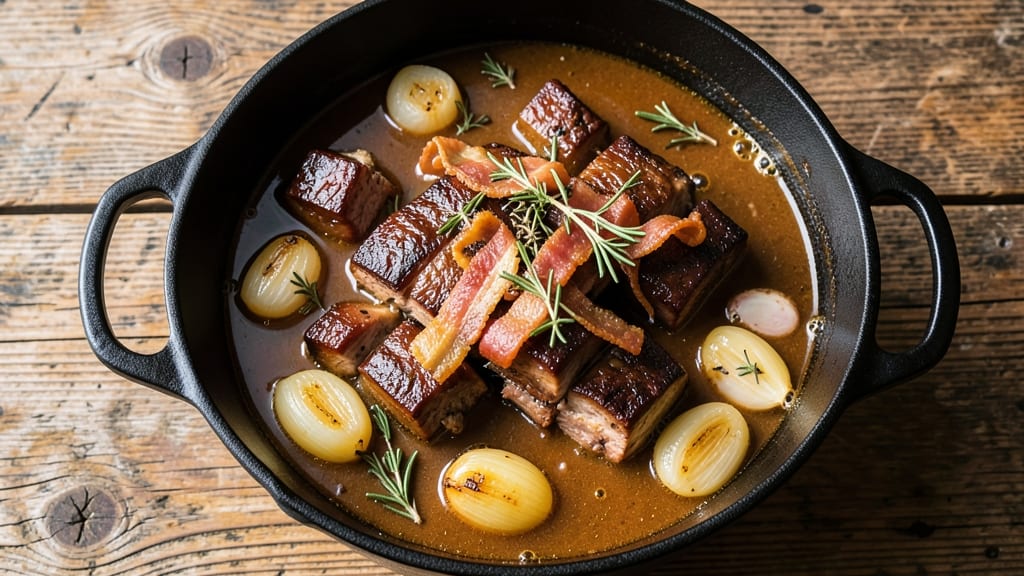
Mastering a pork butt stew transforms tough meat into melt-in-your-mouth perfection through slow simmering and layered flavors. Growing up in small-town Georgia, I learned that patience and proper technique—like searing the meat first—make all the difference.
This recipe delivers restaurant-quality depth with crispy bacon and tender pork that practically falls apart.
The secret lies in balancing rich aromatics—caramelized onions, garlic, and thyme—with a deep-red broth that simmers for hours until the meat is fork-tender.
I use a dry rub of smoked paprika and brown sugar to enhance the pork’s natural sweetness, while the bacon adds a satisfying crunch that contrasts beautifully with the velvety stew.
By the time you serve this, your kitchen will smell like a Southern kitchen should—warm, smoky, and inviting. The stew’s natural richness pairs perfectly with crusty bread or buttery mashed potatoes, making it a hearty centerpiece for any meal.
Every bite is a reminder of why slow-cooked pork belongs at the table.
This method works equally well for weeknight dinners or holiday gatherings, scaling effortlessly to feed a crowd. The key is letting the flavors develop over time, turning simple ingredients into something extraordinary. Let’s get started on creating your own deep-simmered masterpiece.
Ingredients for pork butt stew
Rich, slow-simmered pork butt stew with bacon crunch—this is Southern comfort at its finest.
| Ingredient | Amount | Notes |
|---|---|---|
| Pork Butt (Boston Butt) Roast 🐖 | 4 lb | Cut into 2-inch cubes, skin removed |
| Bacon 🍻 | 1 lb | Thick-cut, chopped into lardons |
| Yellow Onions 🧅 | 3 whole | Thinly sliced for caramelization |
| Garlic Cloves 🧄 | 8 cloves | Mince for aromatic depth |
| Dried Thyme 🌿 | 1 tbsp | Fresh thyme at half the amount |
| Dried Rosemary 🌿 | 1 tbsp | Crushed for stronger flavor |
| Smoked Paprika 🌶️ | 1 tbsp | For smoky depth in rub |
| Brown Sugar 🍚 | 2 tbsp | Enhances natural pork sweetness |
| Diamond Crystal Kosher Salt 🧂 | 2 tbsp | For seasoning and curing |
| Black Pepper 🌶️ | 1 tsp | Freshly ground, coarse |
| Carrots 🥕 | 3 whole | Cut into batons for texture |
| Celery Stalks 🧅 | 3 whole | Chopped into 1-inch pieces |
| Beef Bone Broth 🍲 | 4 cups | Homemade or high-quality jarred |
| Dry Red Wine 🍷 | ½ cup | Cabernet or Merlot preferred |
| Tomato Paste 🍅 | ¼ cup | High-quality canned, unsweetened |
| Unsalted Butter 🧈 | 2 tbsp | For finishing richness |
The pork butt is where the magic happens. Look for a well-marbled roast—the fat renders into flavor as it cooks. I always buy mine from Costco when I'm prepping for a crowd, but even the butcher counter at Whole Foods delivers quality. Cut it into even 2-inch cubes to ensure tender results. Don't skip the skin removal—it turns rubbery if left on. For extra depth, cure the pork with a mix of salt and brown sugar for 2 hours before cooking, letting the flavors penetrate.
No dry red wine? Beef broth with a splash of balsamic vinegar gets you close. Fresh thyme is ideal but dried works at one-third the amount—just crush those leaves first. The tomato paste? San Marzano canned is the gold standard—sweeter and less acidic. Bacon prices skyrocketing? Smoked turkey bacon works in a pinch, though it lacks the same depth. The carrots and celery can be baby varieties if that's what you've got—just adjust the quantity to keep the ratio balanced. And trust me on the butter finishing—it's worth the extra minute to swirl it in at the end.
This stew tastes even better the next day as flavors meld. Portion into airtight containers and store in the fridge for up to 5 days. For longer storage, freeze portions for 3 months. I always cook a double batch—half goes into the freezer, half gets eaten over the week. The broth reduces beautifully, so uncover the pot for the last 30 minutes of simmering to concentrate the flavors. Serve with crusty bread to soak up every last drop of that rich, smoky goodness.
Why You'll Love This Recipe
- One-Pot Magic: I swear by this recipe because it’s all in one pot—no chopping boards, no extra pans, just the pork butt, onions, and bacon simmering together until the flavors meld. Honestly, I’ve made stews that required three pots and still turned out dry; this one’s foolproof.
- Bacon-Crisped Perfection: That first bite? Crispy bacon edges clinging to tender pork that falls apart at the touch—it’s the kind of contrast that makes you groan with pleasure. The thyme and garlic? They’re the unsung heroes here, turning simple ingredients into something dangerously addictive.
- Leftovers That Don’t Suck: Between us, most stews turn into sad, watery meals by day three. Not this one. The pork stays juicy, the bacon adds richness, and I’ve reheated portions for days without a single complaint. (Yes, even on a Tuesday night.)
- Budget-Friendly Crowd-Pleaser: A whole pork butt feeds eight, costs less than takeout, and still feels like a special occasion. I’ll be real: my college roommates and I lived on this for weeks—it’s hearty, filling, and way cheaper than ordering out when friends drop by.
Step-by-step instructions for pork butt stew
Here's how to build a stew so rich it practically melts in your mouth.
Prepare the Pork and Build the Flavor Base
Cut the 4 lb pork butt roast into 2-inch cubes, removing any remaining skin. In a large Dutch oven, cook the 1 lb bacon over medium heat until crispy, about 8-10 minutes. Remove the bacon with a slotted spoon and set aside, leaving the rendered fat in the pot.
In the same Dutch oven, add the 3 whole yellow onions and cook over medium heat for 10-12 minutes, stirring occasionally, until they begin to caramelize and turn golden brown. This slow cooking develops deep sweetness that forms the stew's foundation. Add the 8 minced garlic cloves and cook for an additional 30 seconds until fragrant.
Stir in the 1 tablespoon dried thyme, 1 tablespoon dried rosemary, 1 tablespoon smoked paprika, 2 tablespoons brown sugar, and 2 tablespoons diamond crystal kosher salt. Cook for 1 minute to toast the spices and bloom their flavors. You'll notice the kitchen filling with warm, aromatic steam—this is where the magic begins.
Brown the Pork and Develop the Stew
Working in batches, brown the pork cubes in the Dutch oven over medium-high heat for 2-3 minutes per side until deeply colored. This step is crucial for developing the stew's rich, meaty flavor. As you brown each batch, remove the pork and set it aside.
Once all the pork is browned, stir in the 3 whole carrots cut into batons and the 3 whole celery stalks chopped into 1-inch pieces. Cook for 3-4 minutes until the vegetables begin to soften slightly. Pour in the 0.5 cup dry red wine and scrape up any browned bits from the bottom of the pot. This deglazing step captures all the concentrated flavors that would otherwise be lost.
Add the 0.25 cup tomato paste and cook for 2 minutes, stirring constantly, until it darkens slightly. This creates a beautiful, glossy base that will thicken your stew as it simmers. The aroma should be intense and inviting—this is your signal that the foundation is properly developed.
Simmer Until Tender and Rich
Pour in the 4 cups beef bone broth, stirring to combine all the ingredients. Bring the mixture to a gentle boil, then reduce the heat to low. Cover the Dutch oven and let it simmer for 2-2.5 hours, stirring occasionally, until the pork is fork-tender and easily pulls apart. This long, slow cooking process is what transforms tough pork into melt-in-your-mouth perfection.
About 30 minutes before the stew is finished, stir in the crispy bacon you set aside earlier. This adds a delightful crunch and salty contrast that elevates the entire dish. The bacon should warm through but remain slightly crispy—this is the moment that matters.
Taste the stew and adjust the seasoning if needed, adding more salt or pepper as necessary. The stew should be rich and flavorful, with the pork falling apart at the touch of a fork. If the stew is too thick, you can add a splash of water or additional broth to reach your desired consistency.
Finish with Butter and Rest
Remove the stew from heat and stir in the 2 tablespoons unsalted butter. This final step adds a luxurious richness that ties all the flavors together beautifully. The butter should melt into the stew, creating a silky texture that coats every bite.
Let the stew rest for 10-15 minutes before serving. This resting period allows the flavors to meld and the stew to thicken slightly, ensuring each spoonful is packed with deep, complex taste. Serve the pork butt stew hot, with crusty bread to soak up every last drop of that rich, aromatic broth.
Pro Tips For Making Pork Butt Stew
- Brown the Bacon First: DESCRIPTION: Render that bacon fat in a cold pan first—no rush, just let it slow-cook until crispy. That fat becomes the stew’s flavor base, and skipping this step means you’re missing out on the rich, smoky depth that makes the difference between good and really good.
- Salt the Pork Twice: DESCRIPTION: Dry the pork butt thoroughly, then season it generously with salt before searing—this builds a crust. Later, when you add the bacon and aromatics, give the meat another light sprinkle. I learned this the hard way: under-salted pork stays bland no matter how long it cooks.
- Sear the Pork Butt Hard: DESCRIPTION: Get those sear marks deep brown, even if it takes 10 minutes per side. A hot, dry pan and patience pay off—it locks in juices and gives the stew a restaurant-worthy look. I used to rush this, and the meat always tasted duller.
- Deglaze with Beer or Broth: DESCRIPTION: After removing the pork, dump in a splash of dark beer (or broth) and scrape every last bit of browned bits from the pan. That crust holds flavor, and skipping this step means losing half the taste. (Yes, even if you’re not a beer drinker—use what you’ve got.)
Pro cooking tips for this dish
Dutch Oven Mastery
Your choice of cookware makes all the difference here. I swear by a Le Creuset 6-quart Dutch oven—it retains heat beautifully and distributes it evenly. If you don’t have one, a heavy-bottomed stainless steel pot works too, but avoid nonstick—it can’t handle the high heat needed for proper browning.
The Dutch oven’s tight lid traps steam, which helps tenderize the pork faster. Preheat it for 10 minutes before starting to ensure even cooking from the first batch of bacon. 🔥
Batch Browning
Don’t overcrowd the pot when browning the pork! Cook in 2 batches to get that deep, golden crust on each piece. Overcrowding steams the meat instead of searing it, which means less flavor development.
I use a slotted spoon to remove each batch, letting excess fat drip back into the pot—this fat becomes the flavor base for your stew. If your pork releases too much liquid, pat it dry with paper towels first for better browning. 💡
Caramelization Control
Those onions need 10-12 minutes of undisturbed cooking to caramelize properly. Resist the urge to stir constantly—this breaks up the fond (the browned bits) that pack serious flavor. Instead, stir once every 2 minutes and let the onions develop that deep amber color.
If they start to burn, reduce heat to medium-low and give them a few extra minutes. The longer they cook, the sweeter and more complex the flavor becomes. 🌶️
Deglazing Like a Pro
After browning the pork and veggies, don’t skip the deglaze—this is where flavor magic happens. Use ½ cup dry red wine (Cabernet or Merlot) and scrape every last bit from the bottom with a wooden spoon. The wine dissolves those browned bits, creating a rich, velvety sauce.
If you’re avoiding alcohol, substitute with ½ cup beef broth + 1 tbsp balsamic vinegar for similar depth. Let the liquid reduce by half before adding the tomato paste—this concentrates the flavors. ⚡
Simmering Secrets
Low and slow is key—2-2.5 hours at a gentle simmer (small bubbles, not a rolling boil). If your stew boils vigorously, it’ll toughen the pork. Cover the pot and let it work its magic, stirring once every 30 minutes to prevent sticking.
I check the internal temperature of the pork with a thermometer—it should hit 203°F for perfect tenderness. Pro tip: Add the bacon 30 minutes before serving so it stays crispy but warm. 💪
Butter Finish
The final 2 tablespoons of butter isn’t just for richness—it adds a luxurious mouthfeel and helps distribute flavors evenly. Swirl it in off the heat for 30 seconds until fully melted. This step is non-negotiable; it’s what turns a good stew into a restaurant-worthy masterpiece.
For extra decadence, finish with a sprinkle of fresh parsley or a crack of black pepper. Let it rest 10-15 minutes before serving—this lets the juices redistribute, ensuring every bite is moist and flavorful. ✨
Nutrition facts
Frequently asked questions
Can I substitute pork butt with another cut of pork?
While pork butt is ideal, you can use pork shoulder (they're essentially the same cut) or pork loin in a pinch. For best results, choose a cut with good marbling. Avoid lean cuts like tenderloin—they won't develop the same rich flavor and texture. If using pork loin, increase the cooking time by 30 minutes to ensure tenderness.
How do I know when the pork is fully tender?
Use a meat thermometer for accuracy—the pork should reach 203°F internally. Alternatively, test with a fork: gently pierce a piece of pork. If it falls apart easily with minimal resistance, it's perfectly tender. The stew should also have reduced to a thick, rich consistency with a glossy surface.
Can I make this stew in a slow cooker?
Brown the pork and bacon first in a skillet, then transfer everything to a 6-quart slow cooker. Add all remaining ingredients and cook on low for 8 hours or high for 5-6 hours. The slow cooker's gentle heat works perfectly for tenderizing the meat. Just remember to add the bacon 30 minutes before serving to maintain its crispiness.
What's the best way to reheat leftovers?
Reheat gently on the stove over medium-low heat for 10-15 minutes until warmed through. Avoid microwaving as it can make the pork dry. For extra richness, add a splash of beef broth or water to maintain the stew's consistency. Leftovers keep well for 5 days in the fridge or 3 months in the freezer.
Why did my stew turn out too thin?
This usually happens when the broth isn't reduced enough or the pork releases too much liquid. To fix it, simmer uncovered for 10-15 minutes to evaporate excess liquid. For future batches, use 1 cup less broth or add 1 tablespoon cornstarch mixed with water as a slurry. The ideal consistency should coat the back of a spoon but still be spoonable.