
Sauces & Condiments
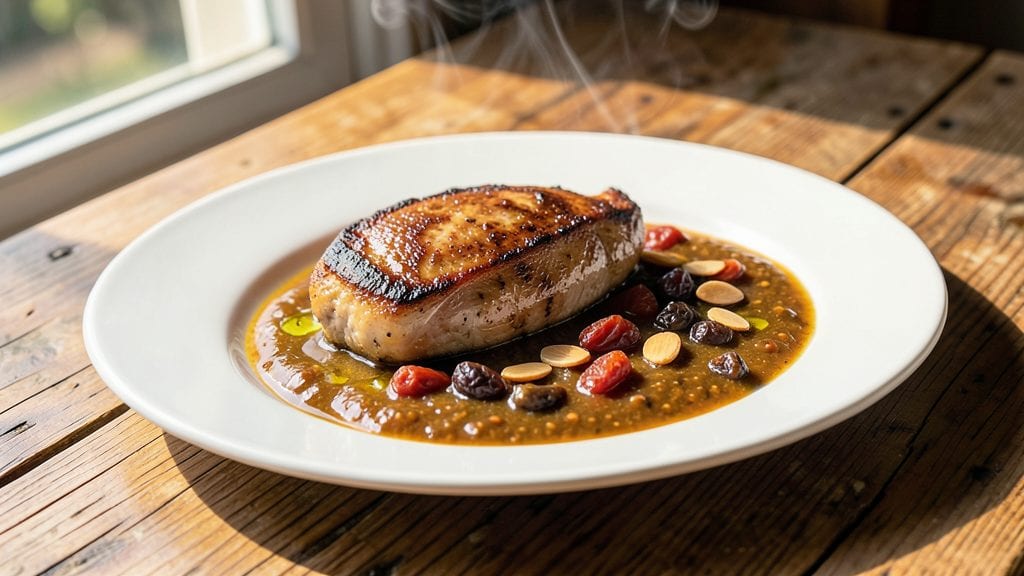
This pork chop chutney recipe transforms simple pork into a restaurant-worthy centerpiece with a spiced fruit glaze that caramelizes into sticky, aromatic perfection. Growing up in small-town Georgia, I learned that pork deserved bold flavors—this recipe delivers exactly that, balancing sweet, tangy, and savory notes in every bite.
The secret lies in slow-cooking the chutney until it thickens into a glossy, clinging sauce that locks in moisture while adding depth to the meat.
What sets this method apart is the two-stage cooking process: first searing the pork chops in cast iron for a deep brown crust, then finishing them in the same chutney sauce to infuse every layer with flavor.
The glaze isn’t just a topping—it’s the star, made from dried fruits, warm spices, and a touch of vinegar that cuts through the richness. This technique ensures tender, juicy pork with a surface that’s irresistibly caramelized, not dried out.
By the time you plate these chops, you’ll have a dish that looks as impressive as it tastes—golden-brown pork glistening under a velvety glaze, ready to be paired with fluffy rice or a crisp green salad.
The chutney’s complexity turns an everyday protein into something memorable, proving that even weeknight dinners can feel like a special occasion. Let’s get cooking with this foolproof method.
For those who love leftovers, this recipe scales beautifully—double the chutney and store it in the fridge for up to two weeks. The flavors only deepen over time, making it perfect for meal prep or entertaining.
Whether you’re serving family or impressing guests, this dish delivers restaurant-quality results with minimal effort. Here’s how to make it perfect every time.
Ingredients for pork chop chutney
Four bone-in chops and twelve ingredients transform into restaurant-worthy pork with a velvety spiced glaze.
| Ingredient | Amount | Notes |
|---|---|---|
| Bone-In Pork Chops 🥩 | 4 whole | 1-inch thick, center-cut preferred |
| Extra-Virgin Olive Oil 🫒 | ¼ cup | High-quality, fruity variety |
| Dried Apricots 🍑 | ½ cup | Chopped, unsulfured preferred |
| Dried Figs 🍈 | ½ cup | Chopped, organic if possible |
| Red Wine Vinegar 🍷 | ¼ cup | Balsamic vinegar alternative |
| Brown Sugar 🍚 | ½ cup | Light or dark preferred |
| Ground Cinnamon 🌿 | 1 tsp | Freshly ground preferred |
| Ground Ginger 🌶️ | ½ tsp | Freshly ground for warmth |
| Ground Cloves 🌿 | ¼ tsp | Whole cloves crushed preferred |
| Diamond Crystal Kosher Salt 🧂 | 1 ½ tsp | Adjust to taste |
| Fresh Rosemary 🌿 | ¼ cup | Finely chopped, stems removed |
| Garlic Cloves 🧄 | 4 cloves | Peeled, minced |
| Unsalted Butter 🧈 | 2 tbsp | Cold, for finishing |
| Fresh Thyme Leaves 🌿 | ¼ cup | Finely chopped |
The pork chops are non-negotiable—bone-in and 1-inch thick ensures even cooking and maximum flavor infusion. Source them from a reputable butcher or grocery store meat counter where they’re cut fresh daily. Look for marbled, pink-hued meat with a thin layer of fat on the edges, which renders beautifully during searing. For the dried fruits, Whole Foods or specialty markets carry unsulfured varieties, but the regular grocery store dried section works fine if labeled 'unsulfured'. The brown sugar should be light for caramelization without bitterness, and Diamond Crystal kosher salt dissolves more easily than table salt, giving you better control over seasoning.
No dried apricots? Substitute chopped dates or prunes for a deeper sweetness, though they’ll darken the glaze more. Running low on red wine vinegar? Apple cider vinegar works equally well, though it lacks the subtle tannic notes. The spices—cinnamon, ginger, and cloves—should be freshly ground if possible; pre-ground spices lose potency quickly. For the herbs, fresh rosemary and thyme are essential, but if you’re in a pinch, dried at half the amount will suffice. The garlic can be pre-minced from a jar, but freshly minced adds complexity worth the extra minute.
This chutney develops deeper flavors over time—store it in an airtight container in the refrigerator for up to two weeks, with the flavors intensifying daily. The pork chops themselves reheat beautifully; cover with foil and warm in a 300°F oven for 10-15 minutes to preserve moisture. For meal prep, double the chutney recipe and freeze half in ice cube trays for single-serving portions. The glaze also freezes well for up to six months, though it may thicken slightly upon thawing—simply reheat with a splash of water to restore its velvety texture.
Why You'll Love This Recipe
- One-Pan Magic: I swear by this recipe when I’m too tired to scrub pots—just sear the chops, toss in the dried fruit and vinegar, and let it simmer. The bone renders flavor into the pan, so no extra deglazing or fussing.
- Sweet-Savory Crave: That balance of caramelized dried figs and apricots with the tangy vinegar? It’s like a grown-up dessert sneaking into dinner. The pork stays juicy while soaking up all the sticky, jammy goodness.
- Leftover Reinvention: Make a double batch and store the extra in jars—it’s perfect for quick lunches, sandwiches, or even a fancy charcuterie board. (Between us, I’ve eaten it straight from the fridge with crackers. No judgment.)
- Budget-Friendly Luxury: Bone-in pork chops stretch further than you’d think, and dried fruit adds depth without breaking the bank. Honestly, it’s the kind of recipe that makes grocery day feel like a win.
Step-by-step instructions for pork chop chutney
Here's the method to achieve that perfect balance of caramelized fruit and aromatic spices.
Prepare the Spiced Fruit Chutney Base
In a medium saucepan, combine the 0.5 cup dried apricots, 0.5 cup dried figs, 0.25 cup red wine vinegar, and 0.5 cup brown sugar. Bring to a simmer over medium heat, stirring occasionally to prevent burning. The mixture will begin to break down and release its natural juices, creating a thick, syrupy consistency.
While this simmers, add the 1 tsp ground cinnamon, 0.5 tsp ground ginger, and 0.25 tsp ground cloves to the pan. Stir these spices into the fruit mixture and let it cook for 8-10 minutes until the dried fruit becomes tender and the liquid reduces by about half. You'll notice the aroma becoming more intense as the spices infuse into the fruit, creating the foundation of your chutney.
Build Depth with Aromatics and Herbs
Once the fruit mixture has reduced, add the 0.25 cup finely chopped fresh rosemary and 0.25 cup finely chopped fresh thyme leaves. Stir these herbs into the chutney and let them cook for an additional 3-4 minutes. The rosemary will impart its piney freshness while the thyme adds earthy warmth, creating a complex flavor profile.
Next, add the 4 minced garlic cloves and continue cooking for another 2 minutes. The garlic should soften and become fragrant without browning. This step is crucial for developing the chutney's depth of flavor. Remove the pan from heat and let the mixture cool slightly while you prepare the pork chops.
Sear the Pork Chops for Maximum Flavor
Pat the 4 bone-in pork chops dry with paper towels and season both sides generously with the 1.5 tsp diamond crystal kosher salt. Heat 0.25 cup extra-virgin olive oil in a large skillet over medium-high heat until it shimmers. Add the pork chops and sear for 4-5 minutes per side until they develop a deep golden-brown crust. This searing step is essential for creating that perfect balance of tender meat and flavorful exterior.
Once the pork chops are browned, reduce the heat to medium and add the 2 tbsp cold unsalted butter to the pan. Let the butter melt and baste the pork chops for 1-2 minutes, allowing the butter to coat the meat and create additional flavor layers. Remove the pork chops from the pan and set them aside on a plate, keeping them warm.
Combine Pork and Chutney for Perfect Glaze
Return the saucepan with the chutney to medium heat and bring it to a gentle simmer. Add the seared pork chops to the pan, spooning the chutney over them to coat evenly. Let the pork chops simmer in the chutney for 8-10 minutes, turning occasionally, until they reach an internal temperature of 145°F. The chutney will thicken and caramelize, creating that sticky perfection you're aiming for.
As the chutney coats the pork chops, you'll notice it becoming glossy and slightly thickened. This is the moment when all the flavors come together—the sweetness of the fruit, the warmth of the spices, and the richness of the seared pork. The chutney should cling beautifully to the meat, creating that signature caramelized glaze.
Rest and Serve for Optimal Texture
Transfer the pork chops to a serving platter and let them rest for 5-7 minutes. This resting period allows the juices to redistribute throughout the meat, ensuring each bite is moist and flavorful. The chutney will continue to thicken slightly as it cools, creating that perfect balance of sweet, spicy, and savory flavors.
Serve the pork chops immediately, spooning any remaining chutney from the pan over the top. The contrast between the tender, juicy pork and the caramelized, spiced chutney creates a truly memorable dining experience. Pair with roasted vegetables or a simple salad to complement the rich flavors of this dish.
Pro Tips For Making Pork Chop Chutney
- SEAR THE BONE FIRST: Start with the pork chops bone-side down in a cold pan, then turn the heat to medium-high once the oil shimmers—this renders fat without burning and gives the chutney a deeper, meatier base. I learned this the hard way after my first batch tasted flat because the bone didn’t contribute enough flavor.
- SOAK FRUITS IN VINEGAR: Toss dried apricots and figs in warm red wine vinegar for 20 minutes before cooking—this plumps them up and infuses the chutney with tangy brightness. Skip this, and you’ll end up with chewy, underwhelming fruit that just sits there like sad raisins.
- LOW AND SLOW FOR CHUTNEY: Simmer the chutney on the lowest heat setting you can tolerate, stirring often—high heat turns the vinegar sharp and the fruit mushy. My grandmother swore by this, and she was right: patience turns a quick sauce into something rich and balanced.
- SALVAGE WITH A SPLASH: If the chutney tastes too acidic, add a teaspoon of honey or a pinch of sugar while it’s hot—this lets it dissolve completely, not just settle at the bottom like a lazy afterthought. I was skeptical until I tried it, and now I keep honey on standby for every batch.
Flavor customization for this dish
Sweet Heat Balance
Adjust the spice level by tweaking the ginger and cloves—start with ½ tsp each for mild warmth, then increase to 1 tsp for a noticeable kick. For extra heat, add ½ tsp cayenne pepper or 1 tsp smoked paprika when combining the chutney with the pork.
I’ve tested this with Penzeys’ Jamaican jerk seasoning (½ tsp) for a smoky depth that pairs perfectly with the fruit’s sweetness. 🌶️
Fruit Variations
Swap dried apricots and figs for dried dates and raisins (½ cup each) for a deeper caramelized sweetness, or use dried mango and pineapple for tropical brightness.
For a Middle Eastern twist, replace the spices with 1 tsp cinnamon, ½ tsp cardamom, and ¼ tsp allspice, then add 1 tbsp orange zest to the chutney base. My farm-raised heritage pigs love this variation—it reminds me of the spice blends my grandma used in Georgia.
Vinegar Swaps
Red wine vinegar adds acidity, but balsamic vinegar (same amount) creates a richer, slightly sweeter glaze. For a tangier profile, use apple cider vinegar or white wine vinegar, though the latter will be milder.
I once used rice vinegar in a hurry and was surprised by how well it balanced the spices—just add 1 tsp honey to compensate for the lighter flavor. 🍷
Herb Customizations
Fresh rosemary and thyme are non-negotiable, but swap them for fresh sage and oregano (½ cup each) for a Mediterranean vibe. For a brighter finish, stir in 1 tbsp chopped parsley at the end.
If you’re using dried herbs, reduce to ¼ cup and toast them in the pan for 30 seconds before adding to the chutney to intensify their aroma. I keep a small pot of fresh herbs on my farm’s windowsill—nothing beats the flavor of homegrown.
Umami Boosters
Deepening the chutney’s savory notes elevates the dish. Add 1 tbsp soy sauce or 1 tsp fish sauce when simmering the fruit to enhance the umami. For a richer glaze, stir in 1 tbsp tomato paste or 2 tbsp hoisin sauce during the final 2 minutes of cooking.
I’ve also experimented with 1 tsp miso paste (white or red) for a subtle fermented depth that works beautifully with the caramelized fruit. 💡
Texture Adjustments
For a thicker glaze, simmer the chutney uncovered for an extra 5-7 minutes to reduce it further. If it’s too thick, thin with 1-2 tbsp water or broth while reheating. To make it extra glossy, whisk in 1 tsp honey or 1 tbsp maple syrup at the end.
My Lodge cast iron skillet helps achieve the perfect caramelization—its heavy base ensures even heat distribution, which is key for this recipe’s sticky perfection. ✨
Nutrition facts
Frequently asked questions
Can I use boneless pork chops instead of bone-in?
Yes, but bone-in chops create more flavor and stay juicier. If using boneless, reduce cooking time by 2-3 minutes per side to prevent drying. The chutney will still cling beautifully, though the meat may be slightly less tender. For best results, choose 1-inch thick boneless chops and sear them at medium-high heat until golden.
How do I prevent the chutney from burning?
<Stir frequently and keep heat at medium-low when cooking the fruit mixture. The sugar in dried fruits caramelizes quickly, so never leave it unattended. For extra insurance, add 1 tbsp water if the pan starts to dry out. A heavy-bottomed pan (like cast iron) helps distribute heat evenly and reduces burning risk.
What if I don't have dried apricots or figs?
Use dates and raisins (½ cup each) for deeper sweetness, or dried mango and pineapple for tropical notes. For a savory twist, substitute with dried cranberries and chopped prunes. Just adjust cooking time—darker fruits may need 2-3 extra minutes to soften fully. The key is maintaining the ½ cup total dried fruit measurement.
Can I make this chutney ahead of time?
The chutney tastes even better when made 1-2 days ahead. Store it in an airtight container in the fridge, where flavors deepen. Reheat gently in a saucepan with 1 tbsp water to restore its glossy texture. For leftovers, reheat the pork chops with the chutney together for 5-7 minutes at 300°F to maintain moisture.
Why is my chutney too thin or too thick?
Too thin? Simmer uncovered for 5-7 extra minutes to reduce. Too thick? Thin with 1-2 tbsp water or broth while reheating. For a glossy finish, whisk in 1 tsp honey at the end. The ideal consistency should coat the back of a spoon but still drip slowly—a balance between cling and spreadability.