
Main Courses
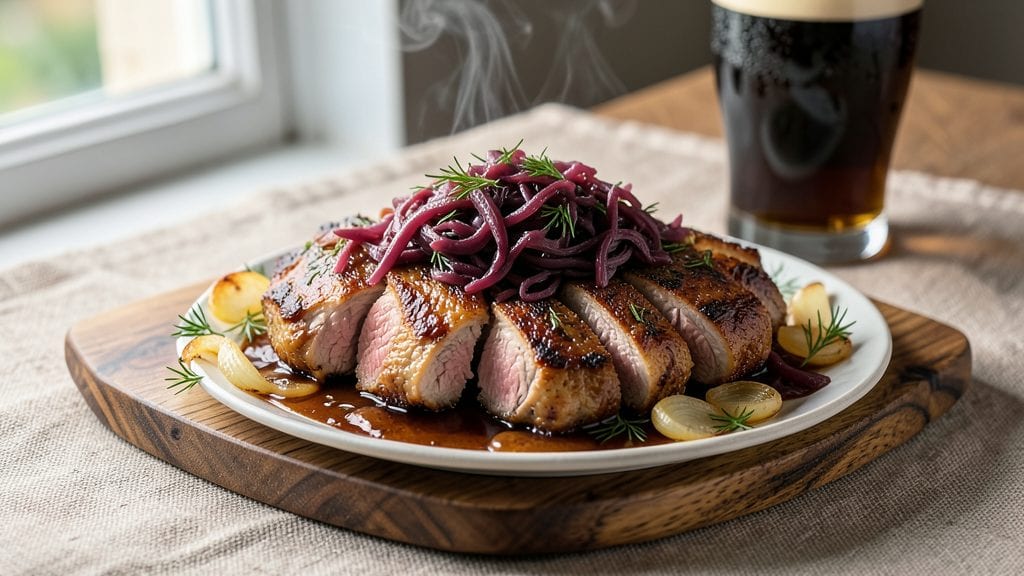
This pork chops, sauerkraut, and beer recipe transformed my approach to German comfort food—simple techniques yield restaurant-quality results. Growing up in small-town Georgia, I learned pork chops deserved bold flavors, and this recipe combines crispy seared chops with tangy sauerkraut and rich beer sauce for a perfect balance.
The secret lies in searing the pork to lock in juices while building layers of flavor through slow simmering.
This method requires just 15 minutes of active prep followed by 30 minutes of hands-off cooking, making it ideal for weeknight dinners. The beer sauce, made from deglazing the pan with dark lager, creates a velvety texture that complements the sauerkraut's acidity.
I use bone-in chops for extra flavor, but boneless works just as well when pan-seared properly. The key is patience—letting the sauce reduce until thick and glossy ensures every bite is packed with depth.
What you'll end up with is golden-brown pork chops with crisp edges and tender centers, served atop warm, caramelized sauerkraut in a rich beer sauce that's tangy yet smooth. The combination of smoky pork, fermented cabbage, and malty beer creates a harmony that's both comforting and sophisticated.
This dish pairs beautifully with buttery mashed potatoes or crusty rye bread to soak up every last drop of sauce.
For those with extra time, braising the chops instead of pan-searing adds even more tenderness. The beer sauce also freezes well, so make a double batch for future meals. Let's get cooking—this recipe delivers hearty, satisfying results that feel like a home-cooked feast.
Ingredients for pork chops sauerkraut and beer
Four bone-in pork chops, tangy sauerkraut, and malty beer transform simple ingredients into restaurant-quality German comfort.
| Ingredient | Amount | Notes |
|---|---|---|
| Bone-In Pork Chops 🥩 | 4 pieces | 1-inch thick, center-cut preferred |
| Unsalted Butter 🧈 | 3 tbsp | For searing, high smoke point |
| Dark Lager Beer 🍺 | 1 cup | Like Guinness or Samuel Adams |
| Sauerkraut 🥬 | 2 cups | Unrinsed, thick-cut preferred |
| Yellow Onion 🧅 | 1 whole | Diced, medium size |
| Garlic Cloves 🧄 | 3 cloves | Minced, fresh preferred |
| All-Purpose Flour 🌾 | 1 tbsp | For dredging, light coating |
| Salt 🧂 | 1 ½ tsp | Kosher or sea salt |
| Black Peppercorns 🌶️ | ½ tsp | Freshly cracked, coarse |
| Thyme Leaves 🌿 | 1 tsp | Fresh or dried, dried at 1/3 amount |
| Bay Leaf 🍃 | 1 whole | For simmering, remove before serving |
| Apple Cider Vinegar 🍏 | 1 tbsp | Balances beer acidity |
| Fresh Parsley 🌿 | ¼ cup | Chopped, for garnish |
The bone-in pork chops are non-negotiable for flavor—center-cut, 1-inch thick pieces develop the best crust. Butcher sections often have these pre-cut, but if buying whole, ask for the thickest cuts. Sam's Club or Costco typically carry high-quality pork chops at better prices than grocery stores. For the beer, dark lagers like Guinness or Samuel Adams add depth, but any malty beer (even stout) works. The sauerkraut? Unrinsed, thick-cut—the juice is flavor gold. If your store only sells pre-rinsed, skip the rinse entirely and drain excess liquid before cooking.
No dark lager? Stout or porter in a pinch, but avoid light beers—they won’t carry the same richness. Fresh thyme is ideal, but dried works at one-third the amount (and lasts longer). Short on parsley? Chives or cilantro add a bright finish. The apple cider vinegar balances the beer’s bitterness—substitute lemon juice if needed, but reduce to 1 teaspoon. For extra umami, add 1 teaspoon soy sauce to the pan sauce. And if you’re using boneless chops, pound them to even thickness before searing to ensure even cooking.
This dish reheats beautifully—store in an airtight container with sauce for up to 4 days. The beer sauce freezes well for 3 months, though texture may separate slightly upon thawing. For leftovers, reheat gently in a skillet with a splash of water to restore richness. The sauerkraut can be prepped ahead and stored separately for 5 days. Double the beer sauce recipe—it’s perfect over mashed potatoes or eggs the next morning.
Why You'll Love This Recipe
- One-Pan Magic: I swear by this—just sear the chops, toss in the beer and kraut, and let it simmer. No chopping boards, no extra pots, and honestly? The mess stays in one spot. That dark lager cuts through the richness while the onions caramelize right in the pan—minimal effort, maximum flavor.
- Beer-Kraut Crunch: The tang of sauerkraut with the malty depth of beer? It’s a match made in flavor heaven. The butter makes those pork chops so tender, but the real star is the way the kraut softens just enough to soak up all the juices—like a tangy, savory hug in every bite.
- Weeknight to Weekend: Make it for a lazy Tuesday, and it’ll still impress at a dinner party. The bone-in chops feel fancy (but cost less than fancy cuts), and the beer adds a casual vibe. Plus, my kids actually eat their veggies when it’s hidden in this—no complaints, just clean plates.
- Budget-Friendly Leftovers: This recipe stretches further than you’d think. The kraut and beer keep well, so I often double the batch and reheat the next day for sandwiches or tacos. Between us, it’s one of those dishes where you’ll want to make extra—because the second round tastes just as good as the first.
Step-by-step instructions for pork chops, sauerkraut, and beer recipe
This German-inspired method delivers perfectly seared pork chops with a rich, tangy beer-sauerkraut sauce every time.
Season and Sear the Pork Chops
Pat the 4 pieces bone-in pork chops dry with paper towels, removing any surface moisture. Season both sides generously with 1 teaspoon of the 1.5 teaspoons salt and ¼ teaspoon of the 0.5 teaspoon black peppercorns. Let them sit at room temperature for 15 minutes while you prepare the rest.
Heat a large oven-safe skillet over medium-high heat. Add 2 tablespoons of the 3 tablespoons unsalted butter and let it melt completely. Place the pork chops in the skillet and cook for 3-4 minutes per side until golden brown and cooked to an internal temperature of 145°F. The bone-in cut helps retain moisture while creating a flavorful crust.
Build the Beer-Sauerkraut Sauce
Remove the pork chops from the skillet and set them aside on a warm plate. Reduce heat to medium and add the diced 1 whole yellow onion to the same skillet, cooking for 4-5 minutes until softened. Add the 3 cloves minced garlic cloves and cook for 30 seconds until fragrant.
Sprinkle the 1 tablespoon all-purpose flour over the onions and garlic, stirring constantly for 1 minute to cook out the raw flour taste. Pour in the 1 cup dark lager beer and the 1 tablespoon apple cider vinegar, scraping up any browned bits from the bottom of the pan. Add the 2 cups sauerkraut, 1 teaspoon thyme leaves, and 1 whole bay leaf, stirring to combine.
Simmer and Finish the Sauce
Return the pork chops to the skillet, spooning the sauce over them. Cover and transfer to a preheated 375°F oven for 10-12 minutes, allowing the flavors to meld. The pork chops should reach an internal temperature of 160°F when done.
Remove the skillet from the oven and increase heat to medium. Simmer uncovered for 5-7 minutes until the sauce thickens slightly and coats the back of a spoon. Taste and adjust seasoning with additional salt if needed. Remove the bay leaf before serving.
Plate and Garnish
Transfer the pork chops to serving plates, spooning the beer-sauerkraut sauce generously over the top. Garnish with the 0.25 cup chopped fresh parsley. The sauce should be tangy from the beer and vinegar, with a perfect balance of sweetness from the caramelized onions and acidity from the sauerkraut.
Serve immediately with crusty bread or roasted potatoes to soak up the flavorful sauce. The bone-in pork chops will be tender and juicy, with a crispy exterior that contrasts beautifully with the creamy sauce.
Pro Tips For Making Pork Chops Sauerkraut And Beer
- SEAR THE CHOPS FIRST: Bone-in pork chops need that deep brown crust to hold up through the long cooking with beer and sauerkraut. Hit them over high heat with butter until the edges are dark golden—about 3-4 minutes per side—before pulling them out. I used to rush this, and the chops ended up dry and flavorless by the end.
- DRAIN AND RINSE SAUERKRAUT: That tangy liquid in sauerkraut is great for flavor, but too much in the pan will turn your beer sauce into a thin, watery mess. Drain the kraut well and give it a quick rinse under cold water to remove excess brine. Then, squeeze out any remaining moisture with your hands—yes, it’s gross, but it makes a real difference.
- USE STOUT, NOT LAGER: Dark lager is fine, but stout or porter adds a richer, maltier depth that pairs better with the pork and sauerkraut’s acidity. If you’re set on lager, at least pick one with a deep amber color—it’ll give you more caramelized sweetness in the sauce. I was skeptical until I tried it, and now I won’t go back.
- SIMMER LOW AND SLOW: After searing the chops and deglazing the pan with beer, resist the urge to crank the heat. Let the sauce bubble gently at a low simmer—you want it to reduce and thicken over 15-20 minutes, not boil off like a thin glaze. This is the thing that matters most for a sauce that clings to the chops instead of pooling in the pan.
Troubleshooting this recipe
Overcooked Pork Chops
If your pork chops emerge dry or tough, you likely overcooked them. Bone-in chops should reach 145°F internal temperature for medium doneness—use a meat thermometer for accuracy. I’ve found Lodge cast iron skillets distribute heat evenly, preventing hot spots.
For thicker chops (over 1.5 inches), reduce cooking time to 2-3 minutes per side and finish in a 375°F oven for 5-8 minutes to carry through without drying. 🌡️
Sauerkraut Too Watery
Excess liquid in your sauerkraut means it needs more cooking time. After adding the beer and vinegar, simmer uncovered for 10-15 minutes to reduce the sauce. If it’s still too thin, remove the pork chops and reduce the sauce alone over medium-high heat until syrupy.
For extra thickness, stir in 1 teaspoon cornstarch mixed with 1 tablespoon cold water at the end. My Le Creuset Dutch oven handles this reduction beautifully.
Beer Sauce Too Bitter
Dark lagers and stouts can overpower if not balanced. If your sauce tastes harsh, add 1 teaspoon honey or brown sugar to round out the bitterness. A splash of apple cider vinegar (up to 1 tablespoon) also brightens the flavor.
For a smoother finish, simmer the sauce longer—15-20 minutes—to mellow the beer’s roasted notes. I keep a bottle of Samuel Adams Black Lager on hand for its balanced maltiness.
Sauerkraut Underseasoned
Store-bought sauerkraut often needs extra flavor. Boost it with ½ teaspoon smoked paprika or 1 teaspoon caramelized onion powder while cooking. A pinch of mustard seeds (toasted in the pan for 30 seconds) adds depth.
For a smoky touch, I sometimes add ¼ teaspoon liquid smoke to the beer sauce. Taste as you go—sauerkraut absorbs flavors quickly.
Pan Sauce Not Browning
If your beer sauce lacks color, the heat isn’t high enough. After deglazing with beer, increase heat to medium-high and simmer vigorously until it reduces by 30-40%.
For deeper color, add 1 tablespoon apple cider vinegar at the end—it reacts with the beer’s sugars to create a glossy, caramelized finish. A heavy-bottomed stainless steel pan (like my All-Clad) handles this better than nonstick.
Pork Chops Sticking
Moisture is the enemy of a good sear. Pat chops thoroughly dry with paper towels before seasoning. Let them sit at room temperature for 15 minutes to dry the surface further. For extra insurance, heat your skillet until smoking hot before adding butter.
I swear by medium-high heat—too low, and the butter burns before the chops release. A 12-inch cast iron is ideal for this technique. 🔥
Nutrition facts
Frequently asked questions
Can I use boneless pork chops instead of bone-in?
Boneless chops work perfectly—just pound them to ½-inch thickness for even cooking. Since they lack the bone's moisture retention, sear them over medium-high heat for 2-3 minutes per side until golden, then finish in the oven at 375°F for 8-10 minutes with the sauce. The beer sauce will still cling beautifully to the meat.
What's the best beer to use if I don't have dark lager?
Any malty beer works—try a porter, stout, or even amber ale. Avoid light lagers or pilsners, as they lack the depth needed to balance the sauerkraut's acidity. For extra richness, use a 12-ounce bottle of Guinness (it's more concentrated than a cup) or a Belgian-style dubbel for fruity notes. The key is 2-3% ABV or higher to carry the flavors.
How do I make this recipe without sauerkraut?
Swap the sauerkraut for 2 cups cooked cabbage (sautéed with 1 tablespoon apple cider vinegar and ½ teaspoon caraway seeds) or 1 cup each of red cabbage and apples (quick-pickled in 1 tablespoon vinegar for 10 minutes). For a German-inspired twist, use 1 cup sauerkraut + 1 cup cooked red cabbage to keep the tangy profile.
Can I prepare this ahead of time?
Yes! The beer sauce freezes perfectly for 3 months—store it in an airtight container with a lid. Reheat gently in a skillet with 1 tablespoon water to restore richness. For make-ahead meals, cook the pork chops and sauerkraut separately, then reheat in the oven at 350°F for 10 minutes with fresh sauce. The chops stay juicy if wrapped in foil.
Why does my beer sauce turn cloudy?
Cloudiness happens when beer proteins react with heat. To prevent it, simmer the sauce over medium-low heat (not boiling) and avoid stirring too vigorously. For a clearer sauce, strain it through a fine-mesh sieve after cooking. If you prefer the rustic look, embrace it—the cloudiness adds body and depth. A splash of apple cider vinegar at the end also helps stabilize the texture.