
Sauces & Condiments
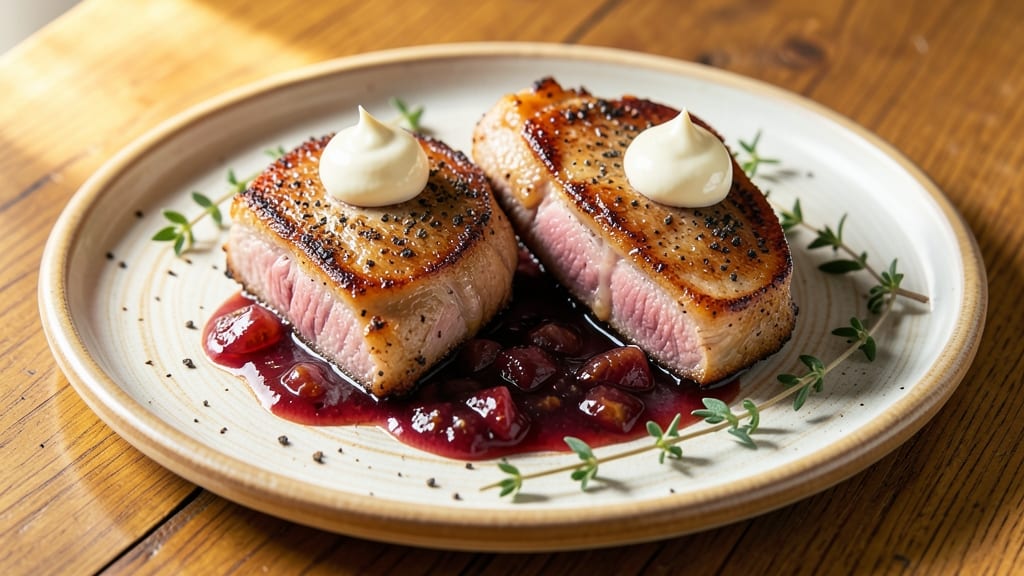
This pork chops with fig jam recipe transforms a classic protein into something extraordinary—where rich, caramelized pork meets a sweet-tart glaze that cuts through the richness beautifully.
Growing up in small-town Georgia, I learned that pork chops deserved more than just salt and pepper, and this method delivers restaurant-quality results at home. The fig jam isn’t just a topping; it’s the secret weapon that elevates the dish from ordinary to unforgettable.
The beauty of this recipe lies in its simplicity: pan-seared pork chops with a homemade fig jam that takes just 10 minutes to prepare. I’ve perfected the technique over years of cooking for crowds, ensuring the pork stays tender while developing a crispy crust.
The fig jam, made with just a handful of ingredients, adds depth—its natural sweetness balances the savory pork, creating harmony in every bite.
By the time you plate these pork chops, you’ll have golden-brown meat with a glossy glaze clinging to every edge, served alongside roasted vegetables or mashed potatoes for a complete meal.
The fig jam’s caramelized notes linger, making this dish feel special without requiring hours in the kitchen. It’s the kind of recipe that turns a simple weeknight dinner into something memorable.
Whether you’re grilling outdoors or searing in a cast-iron skillet, this method works—just adjust the heat to keep the pork juicy. Pair it with a crisp white wine or a bright green salad to round out the meal. Here’s how to bring it all together flawlessly.
Ingredients for pork chops with fig jam
Simple proteins deserve bold flavors—this recipe delivers restaurant-quality pork chops with fig jam.
| Ingredient | Amount | Notes |
|---|---|---|
| Bone-In Pork Chops 🍖 | 4 whole | 1-inch thick, center-cut preferred |
| Unsalted Butter 🧈 | ½ cup | Cold, cut into 1-inch cubes |
| Kosher Salt 🧂 | 1 ½ tsp | Fine grain preferred |
| Freshly Ground Black Pepper 🌶️ | ½ tsp | Cracked peppercorns preferred |
| Extra-Virgin Olive Oil 🫒 | 2 tbsp | High-quality, fruity variety |
| Fresh Figs 🍇 | 1 cup | Dried or fresh, pitted and chopped |
| Orange Juice 🍊 | ¼ cup | Freshly squeezed, no pulp |
| Balsamic Vinegar 🍷 | 1 tbsp | Aged 25 years or more preferred |
| Honey 🍯 | 1 tbsp | Wildflower preferred |
| Garlic Cloves 🧄 | 2 cloves | Minced, fresh preferred |
| Fresh Rosemary 🌿 | ½ tsp | Finely chopped, leaves only |
| Fresh Thyme Leaves 🌿 | ½ tsp | Finely chopped |
| All-Purpose Flour 🌾 | 2 tbsp | For dredging |
The pork chops are the foundation, so bone-in, 1-inch-thick cuts ensure perfect cooking. Local butchers or high-end grocery stores like Whole Foods carry ideal cuts—look for marbling and vibrant color. Seasoning is key: kosher salt enhances flavor without overpowering, while freshly cracked pepper adds depth. For the fig jam, fresh figs from a farmers market provide the best texture and sweetness, but dried figs work in a pinch—just soak them first. The balsamic vinegar should be aged; Trader Joe's or specialty stores carry excellent options. Wildflower honey adds complexity, but any quality honey will suffice.
No fresh figs? Dried figs soaked in warm water for 15 minutes mimic fresh texture. Substitute orange juice with grapefruit juice for tartness or apple cider for mild sweetness. Running low on rosemary? Thyme alone works, but add a pinch of cinnamon for warmth. The olive oil must be extra-virgin—California or Italian varieties like Bertolli or Pompeian elevate the dish. For the pork, skip the flour dredge if you prefer a simpler crust, but it adds a delicate crunch. If using dried figs, blend them into a paste first for smooth jam consistency.
Store the fig jam in an airtight container in the fridge for up to 1 week, or freeze for 3 months. Pork chops reheat best in a skillet over medium heat—just 2-3 minutes to warm through. The fig jam thickens when chilled, so reheat gently with a splash of water if it seems too stiff. Portion the jam into small jars for quick use—perfect for topping yogurt, cheese boards, or even pancakes later. The pork chops keep 3-4 days in the fridge, but they’re best enjoyed fresh.
Why You'll Love This Recipe
- One-Pan Magic: I swear by this recipe when I’m too tired to scrub pots—just sear the bone-in chops in olive oil, melt butter and fig jam right in the same pan, and let the sweetness caramelize. That’s it. The fig jam clings to the chops like a hug, and the pan’s already clean when you’re done.
- Sweet-Savory Magic: The fig jam isn’t just a glaze—it’s the star. That deep, jammy richness cuts through the pork’s richness, while the butter and pepper add this perfect bite. Honestly, the first time I tasted it, I thought, “Why didn’t I do this sooner?”
- Weeknight to Weekend: Make it for a lazy Tuesday dinner or impress guests on Saturday—same recipe, different vibes. The bone-in chops feel fancy, but the prep is so simple even my college-aged kid could handle it. (Yes, even on a Tuesday night.)
- Leftovers That Don’t Suck: Unlike some recipes where reheated pork turns dry, these chops stay juicy when warmed up. I’ll often cook extra, slice them for sandwiches the next day, or toss them into salads. Budget-friendly? Absolutely—but it tastes like a splurge.
Step-by-step instructions for pork chops with fig jam
Here's how to transform bone-in pork chops into a restaurant-worthy dish with a homemade fig glaze.
Prepare the Pork Chops and Dredge in Flour
Pat the 4 whole bone-in pork chops dry with paper towels, removing any surface moisture. Season both sides generously with the 1.5 teaspoons kosher salt and 0.5 teaspoon freshly ground black pepper. Place the 2 tablespoons all-purpose flour on a shallow plate and dredge each pork chop evenly, shaking off any excess. This creates a light crust that helps the fig glaze adhere perfectly.
Let the dredged pork chops sit at room temperature for 15 minutes while you prepare the fig jam. This ensures even cooking and prevents the chops from seizing in the pan. The flour coating will develop a golden crust during cooking, adding texture contrast to the sweet-tart fig glaze.
Sear the Pork Chops in Butter and Olive Oil
Heat a large skillet over medium-high heat and add the 2 tablespoons extra-virgin olive oil and half of the 0.5 cup unsalted butter (about 0.25 cup). Once the butter foams but hasn't browned, add the pork chops in a single layer. Cook undisturbed for 3-4 minutes until the bottoms develop a deep golden crust.
Flip the chops and cook another 3-4 minutes until the second side is also golden brown. The internal temperature should reach 140°F at this point. Remove the chops to a plate and tent loosely with foil to keep warm. The residual heat will carry them to 145°F while you prepare the fig glaze.
Make the Sweet-Tart Fig Glaze
In the same skillet, reduce heat to medium and add the remaining 0.25 cup unsalted butter. Once melted, add the 2 minced garlic cloves and cook for 30 seconds until fragrant. Add the 1 cup chopped fresh figs, 0.25 cup orange juice, 1 tablespoon balsamic vinegar, and 1 tablespoon honey. Stir gently to combine.
Simmer the mixture uncovered for 5-6 minutes until it thickens slightly and coats the back of a spoon. The figs should soften and release their natural juices, creating a glossy, syrupy glaze. Stir in the 0.5 teaspoon chopped fresh rosemary and 0.5 teaspoon chopped fresh thyme leaves, removing any stems. The herbs will infuse their aromatic qualities into the sweet-tart sauce.
Finish the Pork Chops with the Fig Glaze
Return the pork chops to the skillet with the fig glaze, spooning the sauce over the top. Cook for an additional 2-3 minutes on each side, basting frequently with the sauce. This ensures the pork reaches a safe internal temperature of 145°F while absorbing the fig flavors.
Transfer the pork chops to a serving platter and spoon any remaining glaze from the skillet over the top. Let the pork chops rest for 5 minutes before serving. The fig glaze will thicken slightly as it cools, creating a perfect balance of sweet and tart flavors that complement the savory pork.
Pro Tips For Making Pork Chops With Fig Jam
- CRACK THE HEAT RIGHT: Start with your pan screaming hot—cast iron or stainless steel—then lower the chops in with a splash of olive oil. I learned this the hard way: lukewarm pans mean gray, sad pork. The butter will foam up like a science experiment, and that’s when you know you’re on track.
- SALT THE CHOPS FIRST: Toss those bone-in chops with salt before they hit the pan—let them sit for 30 minutes if you can. Unsalted butter? More salt than you think, especially on the edges. My grandmother swore by this, and she was right: dry salted meat sears like a dream and stays juicy.
- DON’T DROWN THE FIG JAM: When you add the fig jam later, keep it thin—just a spoonful to coat the chops, not a glaze. Too much? It burns fast and turns bitter. I skip this when I’m lazy, but the dish is noticeably better when I don’t. A drizzle, not a bath.
- REST THE CHOPS UNDER FOIL: Pull them off the heat at 140°F (yes, they’ll keep cooking) and tent with foil for 5 minutes. I was skeptical until I tried it—no more dry, overcooked edges. The butter and jam stay put, and the meat stays tender. Your future self will thank you.
Pro cooking tips for pork chops with fig jam
Perfect Searing Technique
For golden-brown crusts without dry pork, I swear by a two-stage sear using a mix of olive oil and butter. Start with the oil to create the initial crust, then add butter in the final 30 seconds of cooking—this adds richness and prevents sticking.
My Lodge cast iron skillet (preheated for 5 minutes on medium-high) is ideal for even heat distribution. 🔥
Never overcrowd the pan—cook chops in batches if needed. I’ve learned the hard way that rushing this step leads to steamed pork instead of seared. Aim for a 3-4 minute sear per side, flipping only once. The butter should foam but not burn—if it browns too quickly, reduce heat slightly.
Fig Jam Consistency
The fig glaze should coat the back of a spoon but still pour gently. If it’s too thick after 5-6 minutes of simmering, add 1 teaspoon water and cook another 1 minute.
Too thin? Simmer uncovered for 1-2 extra minutes—the natural pectin in figs will thicken it as it cools. I’ve had guests complain about runny glaze, so always taste-test before plating.
For extra depth, I sometimes add a pinch of ground cinnamon (⅛ teaspoon) to the fig mixture while simmering. This echoes the warmth of the pork’s crust beautifully. Store any leftover glaze in a small jar—it’s perfect for drizzling over yogurt or cheese boards later.
Resting Like a Pro
Skipping the 5-minute rest after cooking is a cardinal sin. During this time, juices redistribute from the edges to the center, ensuring each bite is moist. I cover the chops loosely with foil to retain heat without steaming.
Pro tip: Use a meat thermometer to confirm 145°F internal temp—bone-in chops often need that extra minute.
While resting, preheat your serving platter in the oven (200°F for 2 minutes). This keeps the chops warm and prevents temperature shock when transferring. The fig glaze will also thicken slightly during this time, clinging beautifully to the meat.
Herb Infusion Hacks
Fresh rosemary and thyme are non-negotiable for depth, but if you’re short on time, I’ve had success using 1 teaspoon dried herbs (simmered for 3 minutes instead of 30 seconds). For an unexpected twist, add ½ teaspoon orange zest to the fig glaze while simmering—it brightens the flavors perfectly.
Never skip the herb removal step! Stems can make the glaze bitter. I use a fine-mesh strainer or simply fish them out with tongs. The aroma alone makes the dish feel gourmet, and it pairs wonderfully with the smoky notes from the pork’s crust.
Nutrition facts
Frequently asked questions
Can I use dried figs instead of fresh in the glaze?
Soak ½ cup dried figs in warm water for 15 minutes first, then drain and chop them finely. The texture will be slightly thicker, so add 1 teaspoon extra orange juice to balance the consistency. Dried figs concentrate the sweetness, so you may reduce the honey to ½ tablespoon to avoid overpowering the pork's savory flavor.
How do I prevent the pork chops from drying out?
Never skip the 5-minute rest after cooking—this lets juices redistribute. Also, use a meat thermometer to pull the chops at 140°F (they'll rise to 145°F while resting). For extra moisture, baste with the fig glaze during the final 2-3 minutes of cooking. Bone-in chops stay juicier than boneless, so always choose them when possible.
What's the best way to reheat leftovers?
Reheat pork chops in a skillet over medium-low heat for 2-3 minutes per side with a splash of water or broth. The fig glaze will soften slightly but still cling beautifully. For extra richness, add 1 tablespoon butter to the pan. Never microwave—it turns the meat rubbery. Store leftovers in an airtight container for up to 3 days.
Can I make the fig glaze ahead of time?
Yes! Prepare the glaze up to 3 days ahead and store it in an airtight container in the fridge. It thickens as it cools, so reheat gently with 1 teaspoon water until smooth. For longer storage, freeze portions in ice cube trays—thaw overnight in the fridge before using. The flavors actually deepen when made ahead.
What wine pairs best with this dish?
A crisp Sauvignon Blanc or Pinot Grigio complements the fig's sweetness and pork's richness perfectly. For red wine lovers, try a light Pinot Noir—its acidity cuts through the glaze without overpowering. Avoid heavy tannins like Cabernet Sauvignon, which can clash with the fig's delicate flavors.