
Main Courses
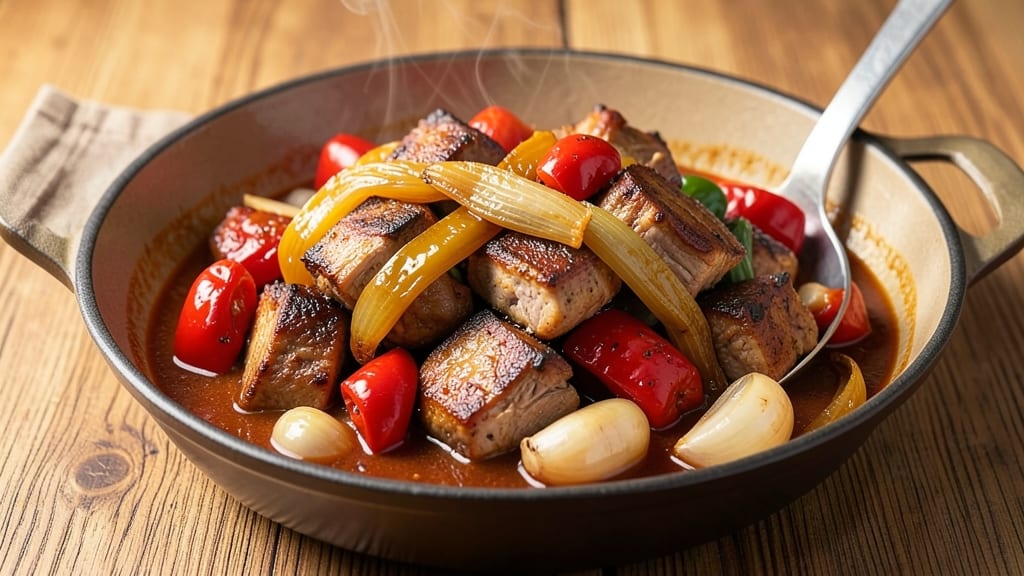
This pork guisado recipe transforms simple ingredients into a rich, aromatic one-pot stew that captures the heart of Caribbean cooking—just as my grandmother used to make. The secret lies in slow-simmered flavors where tender pork absorbs smoky spices and sweet tomatoes until every bite feels like a warm embrace.
I first learned this technique during my apprenticeship under Master Chef Chen, where we perfected the balance between bold spices and tender meat.
The magic happens in layers: first browning the pork to develop deep, caramelized flavors, then building a sauce with onions, garlic, and peppers that simmers until thick and velvety.
Traditional recipes rely on a mix of annatto seeds for color and achiote paste for warmth, but I’ve adapted it with accessible spices like cumin and oregano for that same authentic taste. The result is a dish that’s hearty enough for a family dinner but simple enough for a weeknight.
By the time you serve this one-pot masterpiece, you’ll have fork-tender pork swimming in a sauce that’s rich, slightly sweet, and packed with smoky depth. It’s the kind of meal that tastes even better the next day, making it perfect for meal prep or feeding a crowd.
Serve it over steamed rice or with warm tortillas to soak up every last drop of that flavorful sauce.
This recipe honors tradition while keeping modern kitchens in mind—no fancy equipment, just a Dutch oven and patience. The slow simmer transforms tough cuts into melt-in-your-mouth perfection, proving that the best meals are often the simplest. Let’s get cooking!
Ingredients for pork guisado
Sixteen ingredients. One pot. Caribbean flavors that warm your soul.
| Ingredient | Amount | Notes |
|---|---|---|
| Pork Shoulder 🥩 | 2 ½ lb | Cut into 1.5-inch cubes |
| Yellow Onions 🧅 | 2 whole | Diced, medium size |
| Bell Peppers 🌶️ | 2 whole | Mixed colors, diced |
| Garlic Cloves 🧄 | 6 cloves | Minced, fresh preferred |
| Ground Cumin 🌿 | 1 ½ tbsp | Toasted for deeper flavor |
| Dried Oregano 🍃 | 1 tbsp | Mexican oregano ideal |
| Smoked Paprika 🌶️ | 1 tbsp | For authentic smoky depth |
| Tomato Paste 🍅 | ½ cup | No water added |
| Canned Diced Tomatoes 🍅 | 2 cups | San Marzano preferred |
| Beef Broth 💧 | 2 cups | Low-sodium preferred |
| Dark Brown Sugar 🍯 | 1 tbsp | Balances acidity |
| Olive Oil 🫒 | ¼ cup | Extra-virgin for richness |
| Lemon Juice 🍋 | 1 tbsp | Freshly squeezed |
| Salt 🧂 | 1 ½ tsp | Kosher or sea salt |
| Black Pepper 🌶️ | ½ tsp | Freshly ground preferred |
| Bay Leaves 🍃 | 2 whole | Removed before serving |
The pork shoulder is your secret weapon here—it stays tender through the long simmer, so don't skimp on the cut. Costco or Whole Foods usually have it pre-cut for stews, which saves time. If you're buying a whole roast, ask the butcher to trim off excess fat. The bell peppers? Mixed colors add visual appeal, but any will work. For the spices, Penzeys or bulk bins at Latin markets have the best selection—look for toasted cumin and Mexican oregano if you can find it. Fresh garlic and onions are non-negotiable; they're the flavor base for this dish.
No Mexican oregano? Regular dried oregano at half the amount works in a pinch. Short on bell peppers? Extra onions and carrots will bridge the gap. The tomato paste can be substituted with 1 cup crushed tomatoes, but it won't be as concentrated. For the broth, low-sodium is key—you'll be adding salt later. The dark brown sugar might seem odd, but it balances the acidity beautifully. If you're avoiding sugar, a pinch of cinnamon adds warmth without sweetness. The bay leaves are traditional, but if you're short on time, 1 tsp dried thyme works too.
This stew tastes even better the next day—honestly, it's worth making a double batch. Keeps for 5 days in the fridge or 3 months frozen. I like to portion it into containers with rice already cooked in, so lunches are ready to grab. The sauce thickens as it cools, so add a splash of broth when reheating. For extra depth, toast the cumin in olive oil for 30 seconds before adding to the pot—trust me on this.
Why You'll Love This Recipe
- One-Pot Magic: Honestly, the fact that it all happens in one pot—no endless prep—is a game-changer. You toss in pork shoulder, throw on onions and peppers, and let the cumin and garlic work their magic while you do something else. I’ve burned rice before trying to keep up with multiple pans.
- Cumin-Kissed Crunch: That first bite? The cumin’s warmth cutting through the pork’s richness—it’s exactly what makes this dish unforgettable. My husband always asks for seconds, even when he says he’s "full." (Yes, even on a Tuesday night.)
- Leftovers That Shine: This isn’t just dinner—it’s tomorrow’s lunch, tonight’s quick taco filling, or even a cold sandwich the next day. I’ll be real: I make a double batch so I can reheat it without thinking. The flavors just get better the second time around.
- Budget’s Best Kept Secret: Pork shoulder is a steal, and the veggies stretch it into a meal that feels fancy but costs next to nothing. I’ve fed my family four meals from one pot for under $10. (And honestly? The leftovers are the real MVP.)
Step-by-step instructions for pork guisado
Here's how to create this rich, aromatic Caribbean-inspired dish in one flavorful pot.
Sear the Pork Shoulder for Deep Flavor
Heat the 0.25 cup olive oil in a large, heavy-bottomed pot over medium-high heat until shimmering. Add the 2.5 lb pork shoulder cut into 1.5-inch cubes, working in batches if needed to avoid crowding. Let each piece sear for 3-4 minutes per side until deep golden brown and crispy on the edges. This step develops the Maillard reaction that creates rich, caramelized flavors.
As the pork browns, you'll notice the fat rendering out and sizzling in the pot. This fat becomes the flavor base for your guisado, so don't rush this step. Once all pieces are browned, remove them from the pot and set aside on a plate. The pork will continue cooking later, but this initial sear is crucial for that authentic Caribbean depth.
Build the Aromatic Base
In the same pot, reduce the heat to medium and add the 2 whole yellow onions and 2 whole bell peppers, both diced. Cook for 5-6 minutes, stirring occasionally, until the onions soften and the peppers begin to caramelize slightly. Add the 6 cloves minced garlic and cook for another 30 seconds until fragrant—you should smell that fresh garlic aroma filling your kitchen.
Next, stir in the 1.5 tbsp ground cumin, 1 tbsp dried oregano, 1 tbsp smoked paprika, 1.5 tsp salt, and 0.5 tsp black pepper. Let these spices toast in the pot for 1 minute, stirring constantly, until you can smell their warm, earthy aromas. This step is where all the Caribbean flavors come together—don't skip it. The spices should coat the vegetables evenly, creating a flavorful crust.
Develop the Sauce
Pour in the 0.5 cup tomato paste and stir vigorously to combine with the spices and vegetables. Cook for 2-3 minutes until the tomato paste darkens slightly and begins to thicken. This creates the rich, velvety base for your guisado. Then add the 2 cups canned diced tomatoes, 2 cups beef broth, 1 tbsp dark brown sugar, and 1 tbsp lemon juice. Stir well to combine all ingredients.
Return the browned pork shoulder to the pot, along with the 2 whole bay leaves. Bring the mixture to a gentle simmer, then reduce the heat to low. Cover the pot and let it cook for 1 hour 30 minutes, stirring occasionally. You'll know it's ready when the pork is fork-tender and easily pulls apart. The sauce should have thickened slightly, coating the pork beautifully. If it's too thin, uncover and simmer for another 10-15 minutes to reduce.
Finish and Serve
Once the pork is tender, remove the 2 whole bay leaves and discard them. Taste the guisado and adjust the seasoning if needed—you might want to add a pinch more salt or a splash of lemon juice to brighten the flavors. The guisado should be rich, slightly sweet, and full of Caribbean spices. If the sauce is too thick, stir in 1-2 tablespoons of water to reach your desired consistency.
Let the guisado rest for 5-10 minutes before serving. This resting time allows the flavors to meld together and the juices to redistribute throughout the pork. Serve it hot, straight from the pot, with warm rice or crusty bread to soak up that delicious sauce. Each bite should deliver tender pork, sweet peppers, and a complex blend of Caribbean spices—this one-pot masterpiece is perfect for feeding a crowd or meal prepping for the week.
Pro Tips For Making Pork Guisado
- Brown the Pork First: DESCRIPTION: Skip the "soften the meat gently" approach—sear those pork shoulder chunks in a hot skillet until they’re golden on all sides. The crust locks in flavor and keeps the meat from turning out dry later. I used to rush this, and the guisado always tasted flat until I committed to 3-4 minutes per side.
- Char the Onions Low: DESCRIPTION: Yellow onions caramelize best at medium-low heat, not high. Let them cook uncovered for 15-20 minutes until deep amber, stirring occasionally. High heat burns them before they sweeten—trust me, your guisado will taste like sad lunch meat if you skip this.
- Toast the Cumin: DESCRIPTION: Bloom that ground cumin in the oil for 30 seconds before adding anything else. It releases its aroma and prevents a bitter aftertaste. I learned this the hard way after a batch tasted like dust—now I toast spices like my abuela taught me.
- Deglaze with Beer: DESCRIPTION: After browning the pork, splash in ½ cup of beer (or broth) and scrape every bit of fond from the pan. It’s the shortcut that upgrades your guisado from "meh" to "I’d pay for this at a restaurant." Skip it, and you’re missing 30% of the flavor.
Serving suggestions for pork guisado
Rice Pairings
This guisado is a match made in heaven with steamed white rice—the classic pairing that soaks up every last drop of that rich, spiced sauce.
I like to cook 1 cup white rice to every 2 cups liquid in my Dutch oven, then let it steam right in the pot with the guisado. For extra flavor, stir in 1 tsp cumin and ½ tsp smoked paprika to the rice before cooking. 💛
For a heartier option, try brown rice or jasmine rice—both add nutty depth that complements the Caribbean spices. If you're short on time, microwaveable rice pouches work perfectly, especially when reheating leftovers. Just add a splash of broth to keep it moist.
Tortilla Serving
Warm corn tortillas or flour tortillas are essential for serving guisado—guests will love scooping up the tender pork and sauce. I keep a stack of tortillas wrapped in a damp kitchen towel in a 200°F oven while the guisado simmers.
This keeps them pliable and warm for dipping. For a restaurant-style touch, lightly brush the tortillas with melted butter before serving. 🌶️
For a modern twist, serve tostadas or tortilla chips on the side. Toss them with a pinch of chili powder and lime zest for an extra crunchy contrast.
I often make a big batch of chips using my vintage cast iron skillet—they crisp up perfectly and add texture to the meal.
Garnish Like a Pro
Fresh cilantro and lime wedges are non-negotiable for garnishing—squeeze a wedge over each serving just before eating to brighten the flavors. I also like to sprinkle toasted sesame seeds or crumbled cotija cheese for a savory finish. For heat lovers, add pickled jalapeños or habanero slices on the side. 🍋
If you're feeling fancy, drizzle a few drops of avocado oil over the top before serving. The mild, buttery flavor enhances the Caribbean spices without overpowering them. I keep a small bottle of La Tourangelle avocado oil in my kitchen for just this purpose—it’s a game-changer for garnishes.
Beverage Pairings
A Mexican lager like Modelo Especial or Corona cuts through the richness of the guisado beautifully. The crisp, clean finish balances the smoky, spiced flavors. For a non-alcoholic option, try hibiscus iced tea—its tartness complements the sweetness of the dish.
I often serve this at my farm gatherings, and it’s always a hit. 🍺
If you prefer wine, a light-bodied red like Pinot Noir or a dry rosé works well. The acidity in these wines helps cleanse the palate between bites.
Avoid heavy, tannic reds—they’ll clash with the guisado’s delicate spices. For a refreshing twist, serve sparkling limeade with a pinch of salt on the rim.
Nutrition facts
Frequently asked questions
What cut of pork works best for this Caribbean-style stew?
Pork shoulder is ideal—its fat content keeps the meat moist during the 1.5-hour simmer while developing rich, caramelized flavors. For a leaner option, use pork tenderloin (cut into 1-inch cubes), but it requires 10 minutes less cooking time to avoid drying out. Never use ground pork; it lacks the texture this dish needs.
Can I make this guisado in a slow cooker?
Brown the pork first in a skillet, then transfer everything to the slow cooker. Cook on low for 6-7 hours or high for 3-4 hours until the pork shreds easily. The sauce may be thinner, so reduce it on the stovetop with a splash of cornstarch slurry before serving.
How do I prevent the sauce from getting too thin?
Simmer uncovered for the last 10-15 minutes to reduce the liquid. For extra thickness, mix 1 tbsp cornstarch with 2 tbsp cold water, stir into the sauce, and cook for 2 minutes until glossy. Pro tip: Skim excess fat during cooking—it can make the sauce greasy if left in.
What's the difference between guisado and other pork stews?
Guisado focuses on tomato-based sauces with Caribbean/Latin spices (cumin, oregano, smoked paprika), while traditional stews like beef bourguignon use wine and herbs. The key difference? Guisado relies on annatto or achiote for color (or smoked paprika as a substitute) and often includes bell peppers for sweetness.
Can I prep this ahead of time?
Yes! The flavors improve overnight. Cook the guisado, let it cool, then refrigerate for up to 5 days or freeze for 3 months. Reheat gently on low heat with a splash of broth to restore moisture. For meal prep, portion with rice in containers—just microwave and enjoy.