
Main Courses
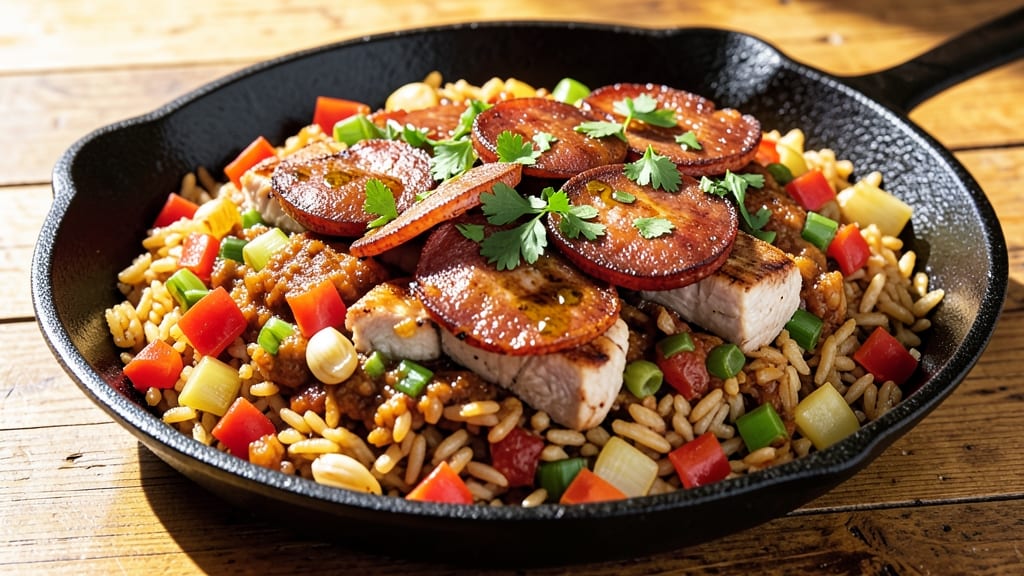
This pork jambalaya recipe delivers the creamy, smoky harmony of Cajun country in one flavorful pot. Growing up in small-town Georgia, I learned that the secret to perfect jambalaya lies in balancing rich andouille sausage with tender pork and the holy trinity of onions, bell peppers, and celery.
The slow simmer transforms simple ingredients into a dish that tastes like home—deep, complex, and impossible to resist.
The foundation of this recipe is a precise method that builds flavor layer by layer. You'll start with the holy trinity, then add andouille and pork shoulder, letting everything brown before adding rice and broth.
The key is simmering low and slow, allowing the tomatoes to develop their natural sweetness while the spices meld into a cohesive, aromatic base. My version keeps the tradition alive while adding a touch of creaminess that makes it stand out.
By the time you serve this jambalaya, you'll have a dish that's restaurant-quality at home—golden rice at the bottom, tender pork and sausage throughout, and a sauce that's creamy yet bright.
The aroma alone will have everyone gathering around the table, and the first bite delivers that perfect balance of smoky, spicy, and savory. This is the kind of meal that turns a simple weeknight into a celebration.
While this recipe focuses on pork, the technique works beautifully for seafood or vegetarian swaps—just adjust the cooking time. The beauty of jambalaya is its versatility, but the pork version remains my favorite. Let's get cooking and bring a taste of the South to your kitchen.
Ingredients for pork jambalaya
Pantry staples meet Cajun magic in this smoky, creamy jambalaya. Nothing fancy—just good ingredients that sing together.
| Ingredient | Amount | Notes |
|---|---|---|
| Andouille Sausage 🌭 | 1 lb | High-quality smoked sausage, sliced |
| Boneless Pork Shoulder 🥩 | 1 ½ lb | Cut into 1-inch cubes |
| Yellow Onion 🧅 | 1 whole | Diced, medium size |
| Green Bell Pepper 🌶️ | 1 whole | Diced, any color |
| Celery Stalks 🥬 | 3 whole | Diced, fresh preferred |
| Garlic Cloves 🧄 | 4 cloves | Minced, fresh preferred |
| Long-Grain White Rice 🍚 | 1 cup | Uncooked, medium grain |
| Canned Tomato Sauce 🍅 | 15 oz | No-salt-added preferred |
| Chicken Broth 💧 | 1 ½ cups | Low-sodium preferred |
| Heavy Cream 🥛 | ½ cup | Full-fat for richness |
| Cajun Seasoning 🌶️ | 1 ½ tbsp | Homemade or store-bought |
| Smoked Paprika 🌶️ | 1 tsp | For extra smokiness |
| Salt 🧂 | 1 tsp | Adjust to taste |
| Black Pepper 🌶️ | ½ tsp | Freshly ground |
| Olive Oil 🫒 | 2 tbsp | For browning meat |
The andouille sausage is non-negotiable—Johnsonville or Zatarain's are my go-tos, but any quality smoked sausage works. Pork shoulder should have good marbling for tenderness. Trader Joe's usually has pre-cubed pork shoulder, which saves time. For the holy trinity (onion, bell pepper, celery), fresh is best, but frozen chopped veggies work in a pinch. The tomato sauce? No-salt-added keeps flavors balanced—Muir Glen is my favorite. If you can't find it, just add extra salt at the end.
No andouille? Italian sausage works in a pinch (swap the smoky flavor for something spicier). Short on pork shoulder? Chicken thighs hold up well—just add 10 minutes to the cooking time. The Cajun seasoning can be homemade (paprika, garlic powder, onion powder, thyme, oregano, cayenne) or store-bought. Tony Chachere's is the gold standard. Heavy cream giving you pause? Half-and-half or coconut milk keeps it creamy without overpowering. The rice? Jasmine or basmati works too—just don't skimp on the broth ratio.
This jambalaya tastes even better the next day—leftovers keep for 5 days in the fridge. Freezes beautifully for up to 3 months. I always make a double batch because it disappears fast. Store in airtight containers with a sprinkle of extra paprika on top to keep it fresh. The rice gets drier over time, so reheat with a splash of broth or water.
Why You'll Love This Recipe
- One-Pot Magic: I swear by the simplicity—just brown the sausage and pork, toss in the holy trinity (onion, bell pepper, celery), then let the rice and broth work their magic. No flipping pans, no stress.
- Smoky, Savory Soul: That andouille sausage? It’s the star—smoky, spicy, and packed with flavor. The pork shoulder melts into tender chunks, and the bell pepper adds a bright, fresh crunch that cuts through the richness.
- Meal Prep MVP: This dish tastes even better the next day, which means I make a big batch on Sundays and stash it for lunches. (Yes, even on a Tuesday night when I’m too tired to cook.)
- Budget-Friendly Feast: Pork shoulder and andouille stretch for miles, and the veggies add bulk without breaking the bank. It’s the kind of meal that feeds a crowd but won’t leave you counting pennies.
Step-by-step instructions for pork jambalaya
Here's how to create a rich, smoky dish with tender pork and creamy tomato undertones.
Brown the Meat and Sauté the Holy Trinity
Heat a large, heavy-bottomed pot over medium-high heat. Add the 2 tablespoons olive oil and let it shimmer for about 30 seconds. Add the 1 pound andouille sausage, sliced into rounds, and cook for 3-4 minutes until lightly browned on all sides. Remove the sausage and set it aside temporarily.
In the same pot, add the 1.5 pounds boneless pork shoulder, cut into 1-inch cubes. Brown the pork in batches if needed, working in 30-second intervals to avoid overcrowding. You want deep golden-brown color on all sides—this builds flavor. Once browned, remove the pork and set it aside with the sausage.
Now for the foundation: reduce heat to medium and add the diced 1 whole yellow onion, 1 whole green bell pepper, and 3 whole celery stalks. Sauté for 5-6 minutes, stirring occasionally, until the vegetables soften and begin to release their juices. Add the 4 cloves minced garlic and cook for another 30 seconds until fragrant. This classic "holy trinity" combo forms the aromatic base of jambalaya.
Build the Flavor Base with Spices and Sauce
Stir in the 1.5 tablespoons Cajun seasoning and 1 teaspoon smoked paprika, letting the spices toast in the pot for 30 seconds to deepen their aroma. This is where the dish gets its signature smoky kick. Immediately add the 15 ounces canned tomato sauce and stir well to combine with the vegetables.
Pour in the 1.5 cups chicken broth and bring everything to a gentle simmer. Let it cook uncovered for 8-10 minutes, stirring occasionally, until the liquid reduces slightly and the flavors meld together. You'll notice the mixture becoming thicker and more concentrated—this is crucial for developing depth.
Return the browned pork and sausage to the pot. Stir gently to coat everything in the sauce. The meat will begin to reabsorb some of the liquid, which helps keep it tender. Let the mixture simmer for another 5 minutes while you prepare the rice.
Cook the Rice to Perfect Texture
Rinse the 1 cup long-grain white rice under cold water until the water runs clear. This removes excess starch that can make the rice gummy. Add the rice to the pot and stir gently to distribute it evenly among the meat and vegetables. The rice should be completely submerged in the liquid.
Bring the mixture back to a simmer, then reduce heat to low. Cover the pot with a tight-fitting lid and cook for 20 minutes without disturbing it. The rice needs this undisturbed time to absorb the liquid and steam evenly. After 20 minutes, check the rice—it should be tender but still slightly firm in the center.
Here's the secret to creamy jambalaya: stir in the 0.5 cup heavy cream and the remaining seasonings—1 teaspoon salt and 0.5 teaspoon black pepper. The cream will blend into the sauce, creating that luxurious texture while adding richness. Let it simmer uncovered for another 5 minutes to allow the flavors to fully integrate.
Rest and Serve for Maximum Flavor
Remove the pot from heat and let the jambalaya rest, covered, for 10 minutes. This resting period allows the rice to finish absorbing any remaining liquid and the flavors to settle. Don't skip this step—it makes a noticeable difference in texture and taste.
Before serving, give everything a final stir. The jambalaya should have a thick, creamy consistency with tender rice grains, perfectly cooked pork, and smoky sausage throughout. Taste and adjust seasoning if needed—sometimes the Cajun seasoning needs a little extra salt to balance it.
Serve immediately with crusty bread or over steamed rice if you prefer a lighter base. The dish will continue to improve as it sits, with flavors becoming even more harmonious. Each bite should deliver that perfect balance of smoky, spicy, and creamy elements that make jambalaya so special.
Pro Tips For Making Pork Jambalaya
- CRISP THE ANDOUILLE FIRST: Slice the sausage into ½-inch rounds and sear them in a dry pan over medium-high heat for 2-3 minutes per side until the edges crisp. This adds smoky depth and prevents the sausage from turning mushy later—trust me, skipping this step makes the jambalaya taste like it’s missing something.
- SWEAT THE HOLY TRINITY LOW: After browning the pork, reduce heat to low when adding onions, bell peppers, and celery. If you rush this, the veggies steam instead of soften, and you’ll end up with a watery base. Stir occasionally and let them cook for 10-12 minutes until the onions are translucent and the peppers just yield.
- DON’T OVERSTIR THE POT: Once the roux is formed and the liquid is added, resist the urge to poke or stir constantly. Overmixing can break the roux and turn your jambalaya into a thin stew. Let it bubble gently—just a few stirs every few minutes—so the flavors meld instead of separating.
- USE COLD PORK SHOULDER: Cut the boneless pork shoulder into 1-inch chunks and let it sit in the fridge for 30 minutes before searing. Cold meat releases more fat when it hits the pan, giving you better browning and a richer flavor. I learned this the hard way after burning two batches of pork that stuck like glue.
Pro cooking tips for this dish
Holy Trinity Mastery
The holy trinity—onion, bell pepper, and celery—is non-negotiable for jambalaya. I dice them all to a ¼-inch consistency using a sharp chef's knife for even cooking. For extra flavor, I sometimes char the edges slightly in my Lodge cast iron skillet before adding them to the pot.
This adds a subtle smokiness that complements the andouille beautifully. 🌶️
Meat Browning Secrets
Don't rush browning your pork—this is where deep flavor develops. Work in 30-second batches to avoid steaming instead of searing. I use a meat thermometer to check doneness: pork should reach 160°F before removing it.
For the andouille, slice it into ¼-inch rounds—thicker slices stay chewy while thinner ones render beautifully. 🥩
Spice Toasting Technique
Toasting your Cajun seasoning and smoked paprika for 30 seconds before adding liquid unlocks their full aroma. This step is often skipped but makes a world of difference. I use a fine-mesh strainer to sift the spices over the hot oil first, then stir constantly to prevent burning.
The nutty, smoky notes will fill your kitchen—trust me, it's worth it. 🌶️
Rice Texture Control
Rinsing your rice until the water runs clear removes excess starch that causes gummy jambalaya. For perfect texture, use long-grain white rice (like Uncle Ben's Converted) and stir it into the simmering liquid just until combined.
The rice should absorb all the liquid in 20 minutes—if it's still firm, add ¼ cup hot broth and cook another 5 minutes. 🍚
Creamy Finish Trick
The heavy cream is my secret weapon for that restaurant-quality finish. I stir it in off the heat during the final 5 minutes to prevent curdling. For an even richer version, I sometimes add 1 tablespoon butter along with the cream.
This creates a velvety sauce that coats every bite without overpowering the smoky flavors. 🥛
Resting for Flavor
Letting the jambalaya rest for 10 minutes after cooking is crucial—it allows the rice to finish absorbing liquid and the flavors to meld completely. I cover the pot with a clean kitchen towel under the lid to trap steam.
This resting period also makes the meat more tender and the sauce more cohesive. Patience here pays off big time. ⏳
Nutrition facts
Frequently asked questions
Why does this jambalaya recipe call for andouille sausage?
Andouille sausage is the traditional choice for jambalaya because it delivers that authentic smoky, spicy kick the dish is known for. The fat renders beautifully, adding richness while the paprika and Cajun spices in the sausage enhance the overall flavor profile. If you can't find it, Italian sausage works in a pinch—just add a pinch more cayenne for extra heat!
What’s the best way to avoid mushy rice in jambalaya?
Rinsing your rice until the water runs clear removes excess starch that causes gummy texture. Use long-grain rice and stir it gently into the simmering liquid just once—no stirring after that! If the rice looks undercooked after 20 minutes, add ¼ cup hot broth and cook another 5 minutes without peeking.
Can I make this dish ahead of time?
Jambalaya tastes even better the next day—just store it in an airtight container for up to 5 days in the fridge. For freezing, portion it out and freeze for up to 3 months. Reheat gently on the stovetop with a splash of broth to restore creaminess.
What’s the secret to getting that creamy texture?
The heavy cream is your secret weapon—add it off the heat during the final 5 minutes to prevent curdling. For extra richness, stir in 1 tablespoon butter along with the cream. This creates a velvety sauce that coats every bite without overpowering the smoky flavors.