
Main Courses
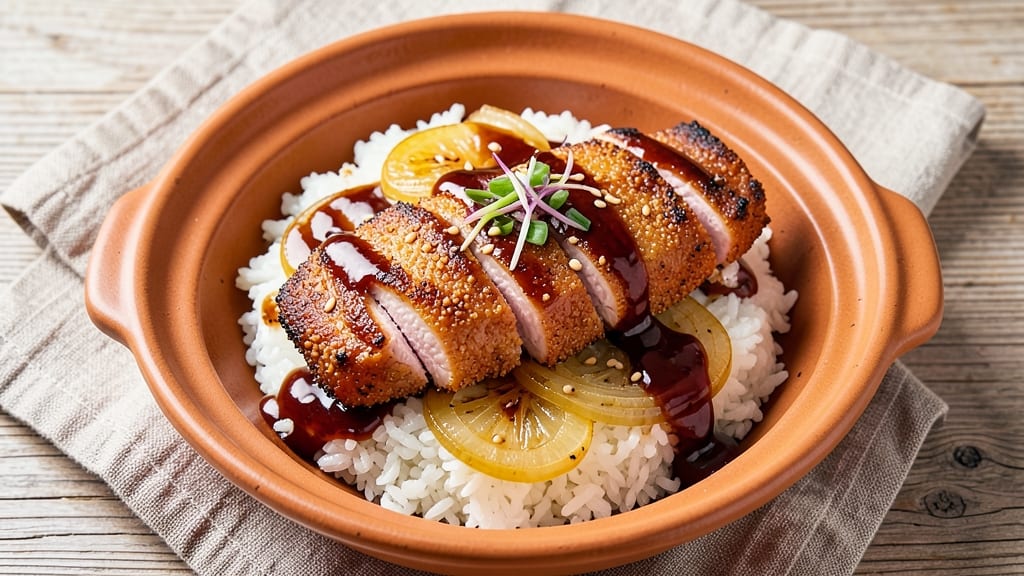
Mastering pork katsudon means achieving that perfect balance of crispy cornmeal crust and tender, juicy pork cutlet—all resting atop steaming miso-glazed rice. Growing up in small-town Georgia, I learned pork deserves respect, and this dish honors that tradition with Japanese precision.
The secret lies in the double-dredge technique and precise pan-frying, ensuring every bite delivers that satisfying crunch while keeping the interior succulent.
This recipe transforms simple ingredients into a restaurant-worthy meal in under 30 minutes—no advanced techniques required. The caramelized onions add depth, while the dashi broth ties everything together with its umami richness.
What makes this version special is the miso glaze, which infuses the rice with subtle sweetness and earthy notes, creating the perfect foundation for the crispy pork crown.
By the time you plate this dish, you’ll have golden-brown pork cutlets with crackling edges, perfectly caramelized onions, and rice that’s tender yet firm enough to hold the glaze. The aroma alone will draw everyone to the table, and the first bite delivers that perfect harmony of textures and flavors.
This is comfort food elevated to an art form.
Serve with a side of steamed greens or a simple cucumber salad to balance the richness. The leftovers reheat beautifully, making this an ideal meal for both weeknight dinners and special occasions. Let’s get cooking—your taste buds will thank you.
Ingredients for pork katsudon
Simple ingredients transform into a crispy, umami-packed masterpiece with Japanese precision.
| Ingredient | Amount | Notes |
|---|---|---|
| Pork Tenderloin 🥩 | 1 ¼ lb | Cut into 4 even cutlets, pounded to 1/2-inch thickness |
| Fine Cornmeal 🌽 | ¾ cup | Stone-ground preferred for best texture |
| All-Purpose Flour 🌾 | ½ cup | Sifted for smooth batter |
| Large Eggs 🥚 | 2 whole | Cold, beaten until frothy |
| Yellow Onions 🧅 | 1 whole | Thinly sliced, caramelized until golden |
| Japanese White Miso Paste 🍶 | 2 tbsp | Aged miso for richest flavor |
| Dashi Broth 💧 | 1 cup | Homemade or quality store-bought |
| Japanese Rice Vinegar 🍶 | 1 tbsp | For bright acidity |
| Granulated Sugar 🍚 | 1 tbsp | Balances miso sweetness |
| Vegetable Oil 🫒 | ½ cup | High smoke point for frying |
| Short-Grain White Rice 🍚 | 2 cups | Uncooked, Japanese sushi rice preferred |
| Salt 🧂 | 1 ½ tsp | Kosher or sea salt |
| Ground Black Pepper 🌶️ | ½ tsp | Freshly cracked for heat |
| Sesame Oil 🥜 | 1 tsp | Toasted for aroma |
The pork tenderloin is your star—look for well-marbled cuts at Whole Foods or your local butcher shop for the best texture. Pounding it to even thickness ensures perfect cooking, and cutting into 4 even cutlets guarantees restaurant-style presentation. Japanese miso paste is non-negotiable here; Miso Master or Hawaiian Gold brands deliver that authentic depth. If you can't find dashi broth, make your own with kombu and bonito flakes—it's a game-changer for that umami punch. For the rice, Koshihikari is ideal, but any short-grain rice will work in a pinch.
No Japanese miso? White miso plus a pinch of soy sauce gets you close, though it won't be identical. Running short on dashi? Vegetable broth with a splash of soy sauce mimics the base flavor. The cornmeal crust is crucial—stone-ground gives the best texture, but regular cornmeal works if that's what you've got. For the rice, if you're in a hurry, microwaveable sushi rice from Trader Joe's saves time without sacrificing quality. The sesame oil? Toast it lightly in a dry pan before using to bring out its nutty aroma—worth the extra minute.
This dish reheats beautifully—just warm the rice with a splash of water and crisp the pork in a hot pan. Keeps for 3 days in the fridge, though it's best enjoyed fresh. For meal prep, cook the rice and onions ahead, then fry the pork fresh when ready to serve. The miso glaze can be made a day in advance and reheated gently. Store the sesame oil separately to preserve its flavor, and keep the miso paste in the fridge after opening for maximum freshness.
Why You'll Love This Recipe
- One-Bowl Magic: I swear by this—just toss the pork, cornmeal, flour, and egg in a bowl, mix, and let it rest. No fancy equipment, no mess, and honestly? The cornmeal crust makes it taste like you slaved for hours.
- Crispy-Creamy Payoff: That first bite of the tenderloin—crispy outside, juicy inside—paired with caramelized onions? It’s the kind of flavor that makes you pause mid-bite. (Yes, even on a Tuesday night.)
- Leftover Hero: This keeps perfectly for days. Reheat slices in a skillet or pop them in the oven, and they’re just as good as day one. My lunchbox’s new best friend.
- Budget Meal Star: Pork tenderloin stretches far, and the ingredients won’t break the bank. Feed four for under $15, and I’ll be real—my wallet thanks me every time.
Step-by-step instructions for pork katsudon recipe
Here's how to create restaurant-quality crispy pork crowns and rich miso rice in perfect harmony.
Prepare the Pork Crowns with Perfect Crisp
Start by pounding the 1.25 lb pork tenderloin into four even cutlets, each about ½-inch thick. This ensures even cooking and maximum crispiness. In a shallow bowl, whisk together the 0.75 cup fine cornmeal, 0.5 cup all-purpose flour, 1.5 tsp salt, and 0.5 tsp ground black pepper. The cornmeal will give those crowns their signature crunch.
Beat the 2 whole large eggs until frothy but not stiff—just enough to create a light coating. Heat 0.25 cup vegetable oil in a skillet over medium-high heat until shimmering. Dip each cutlet into the egg wash, letting excess drip off, then coat evenly in the cornmeal mixture. Press gently to adhere. Fry for 3-4 minutes per side until golden brown and crispy—you'll see those beautiful crackly edges form. Transfer to a paper towel-lined plate to drain excess oil while you prepare the rice.
Create the Miso-Glazed Rice Foundation
Rinse the 2 cups short-grain white rice thoroughly until the water runs clear, then combine with 1 cup dashi broth and 1.5 tsp salt in a pot. Bring to a boil, then reduce to a simmer, cover, and cook for 15 minutes on low heat. This steaming method ensures perfectly fluffy, separate grains.
While the rice cooks, caramelize the 1 whole yellow onion in the same skillet (no need to clean it—the pork fat adds flavor). Slice thinly and cook over medium heat for 8-10 minutes until deep golden brown and sweet-smelling. This step builds the umami depth that makes katsudon extraordinary.
Build the Signature Miso-Glaze
In a small saucepan, combine the 2 tbsp Japanese white miso paste, 1 tbsp Japanese rice vinegar, 1 tbsp granulated sugar, and remaining 0.25 cup vegetable oil. Warm over low heat for 2-3 minutes until the miso dissolves completely and the mixture becomes silky smooth. The sugar balances the miso's saltiness while the vinegar adds bright acidity—this is where the magic happens.
Add the 1 cup dashi broth and simmer for 3-4 minutes until slightly thickened. Stir in 1 tsp toasted sesame oil just before removing from heat. The glaze should coat the back of a spoon but remain pourable. Here's the thing—don't rush this step. The miso needs time to develop its complex, savory depth that'll make your rice unforgettable.
Assemble the Perfect Katsudon
Return the crispy pork crowns to the skillet and warm through for 1 minute to reactivate their crispiness. Spoon the miso-glazed rice onto each plate, creating a mound in the center. Place one warm pork crown atop each serving, then generously drizzle with the remaining miso glaze. The crowns should sit proudly on the rice, their golden crust contrasting beautifully with the dark miso rice.
Garnish immediately with the caramelized onions—those sweet, jammy slices add both visual appeal and flavor contrast. Serve while piping hot, with the pork crowns still maintaining that satisfying crunch. The first bite should deliver that perfect harmony of crispy exterior, tender pork, and rich miso rice that makes this dish so addictive.
Pro Tips For Making Pork Katsudon
- Chill the Pork First: Take your pork tenderloin out of the fridge 30 minutes before breading—cold meat releases too much moisture when it hits the pan, and that’s how you end up with a soggy crust instead of a crispy one. I learned this the hard way after frying three batches that looked golden but tasted like wet cardboard.
- Sift the Cornmeal: Don’t just dump fine cornmeal straight from the bag—sift it through a fine-mesh sieve to break up any clumps. Uneven cornmeal means uneven crispiness, and you’ll end up with patches of floury paste instead of that perfect, airy crust. It’s an extra 30 seconds that makes a real difference.
- Fry in Batches: Resist the urge to fry all the pork cutlets at once—crowding the pan drops the temperature and turns your golden crust into a greasy mess. Two cutlets max per batch, and give them space to sizzle without steam. Sounds obvious, but I still catch myself overloading the pan.
- Caramelize the Onions Slow: Skip the high heat on the onions—cook them low and slow for 15-20 minutes until they’re deep golden and almost jammy. Rushing this step means you’ll just get a sad, watery base instead of that rich, sweet flavor that ties the whole dish together. (Yes, even if you’re impatient like me.)
Serving suggestions for leftovers
Plating Presentation
Plate the miso-glazed rice in a generous mound at the center of each bowl or plate, using a wide rice paddle for that restaurant-style spread. Place the crispy pork crown slightly off-center atop the rice—this creates visual balance and makes it the undeniable star.
I like to use black lacquered bowls from Sur La Table to enhance the dish's elegant Japanese roots while keeping it approachable for home cooks. 🥣
Garnish Like a Pro
The caramelized onions should be arranged in a fan shape around the pork crown, with a few slices gently draped over the top. Add a drizzle of toasted sesame oil along the edge of the rice for extra aroma and visual appeal.
For a pop of color, scatter toasted sesame seeds or thinly sliced scallions over the top. I always keep a small bowl of extra sesame seeds on the table for guests to sprinkle to taste.
Sauce Serving Style
Serve the remaining miso glaze in a small lidded ceramic dish on the side—this keeps it warm and allows guests to drizzle to their preference. For extra flair, I sometimes add a tiny scoop of pickled ginger to the sauce dish; the bright acidity cuts through the richness beautifully.
The glaze should be thick enough to cling to the rice but still pourable—this is where that 2-3 minute simmer pays off. 🍶
Side Dish Pairings
A simple steamed bok choy with sesame or quick-pickled cucumbers balances the richness of katsudon perfectly. For something heartier, serve with miso soup made from the leftover dashi broth.
I often make a batch of Japanese-style tamagoyaki (sweet rolled omelet) on the side—it adds another layer of texture and sweetness that complements the savory pork. The key is to keep sides light so the katsudon remains the star.
Drink Recommendations
A crisp Japanese lager like Asahi Super Dry or Sapporo cleanses the palate between bites without overpowering the dish. For something more robust, try a dry sake like Dassai—its clean finish enhances the umami flavors.
If you prefer wine, a light-bodied white like Pinot Grigio works surprisingly well. I always keep a pitcher of iced green tea on hand for a refreshing contrast to the rich pork. 🍶
Family-Style Serving
For gatherings, serve katsudon family-style with the rice and pork crowns in the center of the table. Let everyone build their own plates—this makes it interactive and fun, especially for kids.
I like to set out small bowls of extra glaze, sesame seeds, and pickled ginger so guests can customize their portions. The communal aspect makes this dish feel special without requiring extra effort. Plus, it's a great way to use up any leftover rice or pork from previous meals. 💛
Nutrition facts
Frequently asked questions
Why does the cornmeal crust need to be extra crispy?
The crispy cornmeal crust is the star of katsudon—it creates that satisfying contrast against the tender pork and soft rice. The double-dredge technique (egg wash + cornmeal) locks in moisture while building that crackling texture. For best results, fry in medium-high heat until golden brown, and resist the urge to flip too soon—wait for those edges to set.
Can I substitute regular flour for the cornmeal?
You can try, but you'll lose that signature crunch and nutty flavor. Cornmeal's texture is key for the "crown" effect. If you're out of cornmeal, mix ½ cup cornmeal + ¼ cup flour for a compromise. For extra crispiness, add 1 tsp baking powder to the cornmeal mix—it creates air pockets for better texture.
How do I fix undercooked pork in the center?
If your pork feels rubbery or undercooked, don't panic! Remove it from the pan and let it rest for 5 minutes, then slice thinly against the grain. The residual heat will carry through. For next time, use a meat thermometer—pork crowns should reach 145°F internally. If you prefer it pink, aim for 135°F and cook slightly less time.
What's the secret to making the miso glaze not too salty?
The sugar and rice vinegar balance the miso's saltiness perfectly. For extra control, taste the miso paste before adding broth—adjust with 1-2 tsp sugar or a splash of vinegar. If your miso is very strong, reduce the amount to 1 tbsp and add ½ tbsp soy sauce to deepen flavor without extra salt. Always simmer the glaze to let flavors meld.
Can I make katsudon ahead of time?
Cook the rice and caramelize the onions first—they keep well for 2 days in the fridge. Fry the pork crowns fresh before serving to maintain crispiness, or reheat them in a 350°F oven for 5-7 minutes on a wire rack. Store the miso glaze separately and warm gently before drizzling. The flavors actually improve overnight!